Guides
Black Media Walls Look Incredible. Here's How to Keep Them That Way

Black media walls are the most-requested look in our inbox. And they come with the most-whispered worry: “is it going to show every fingerprint, every speck of dust, every scratch?” Usually followed by a story about a black car or a black glass table somebody regrets.
Honest answer up front: yes, black shows more than white. It's physics, and anyone who tells you otherwise is selling something. But how much it shows comes down almost entirely to two decisions we make before a drop of paint is sprayed. The sheen, and the finish itself. Those two calls are the difference between a daily annoyance and a once-a-month wipe. Let's get into it.
Why black photographs so well (and shows so much)
Black works on a media wall for the same reason movie theaters paint everything dark: it swallows distraction. The TV disappears into the wall instead of hanging on it. The fireplace flames read sharper. Any LED accent lighting glows like it's floating. That's why the photos you've been saving are almost all black walls.
The flip side of a surface that plays with light that well is that it shows everything else too. Dust reads as gray specks. Fingerprints are skin oil, and oil catches light. Black doesn't hide things, and we won't pretend it does. The real game is controlling how the surface handles light. Which brings us to sheen.
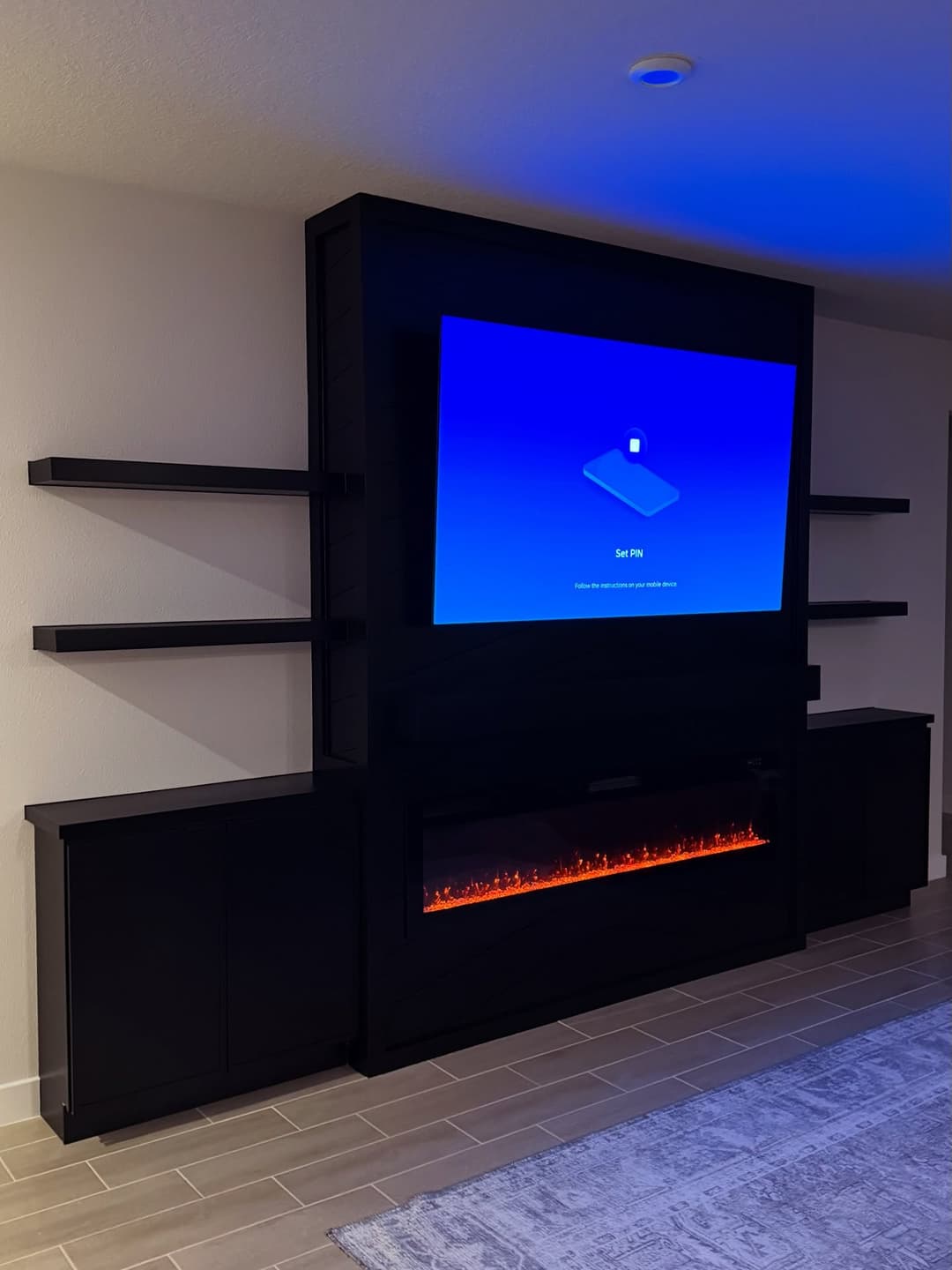
Sheen is the whole game
Sheen, meaning how reflective the finish is, matters more on a black wall than the color itself. Gloss black is a mirror. It looks right for the ten minutes it's clean, and then every fingerprint, smudge, and swirl mark announces itself. We almost never recommend it for a family living room.
Dead-flat matte hides fingerprints well but brings its own problem: on many paints, a flat finish burnishes. Rub it during cleaning and you leave a shiny spot that's just as visible as the smudge was. The sweet spot for most of our builds is matte-to-satin. Low enough sheen that light rakes across it softly and prints don't flash at you. Hard enough surface to wipe without polishing a shiny patch into it. The matte black wall above lives in that zone: deep in person, and forgiving to live with.
The finishes we spray, and why they wipe clean
The second half of the answer is what the finish is made of, not just how shiny it sits. Rolled wall paint is soft. Fine on drywall nobody touches. Wrong for cabinet doors that get handled every day. We spray our black millwork with hard-curing cabinet-grade enamels, the same category of coating your kitchen cabinets wear. They cure to a tougher, tighter film, so oils sit on top instead of soaking in, and a damp microfiber cloth takes prints off without lifting the color.
There's also a design decision that quietly does maintenance work: texture. Slat panels, shiplap lines, and wood elements break up big flat planes, so the eye reads shadow and rhythm instead of scanning an unbroken surface for flaws. A natural wood mantel against black, like the wall below, gives the eye a warm place to land. And it's no accident that our most-photographed black walls almost all have one.
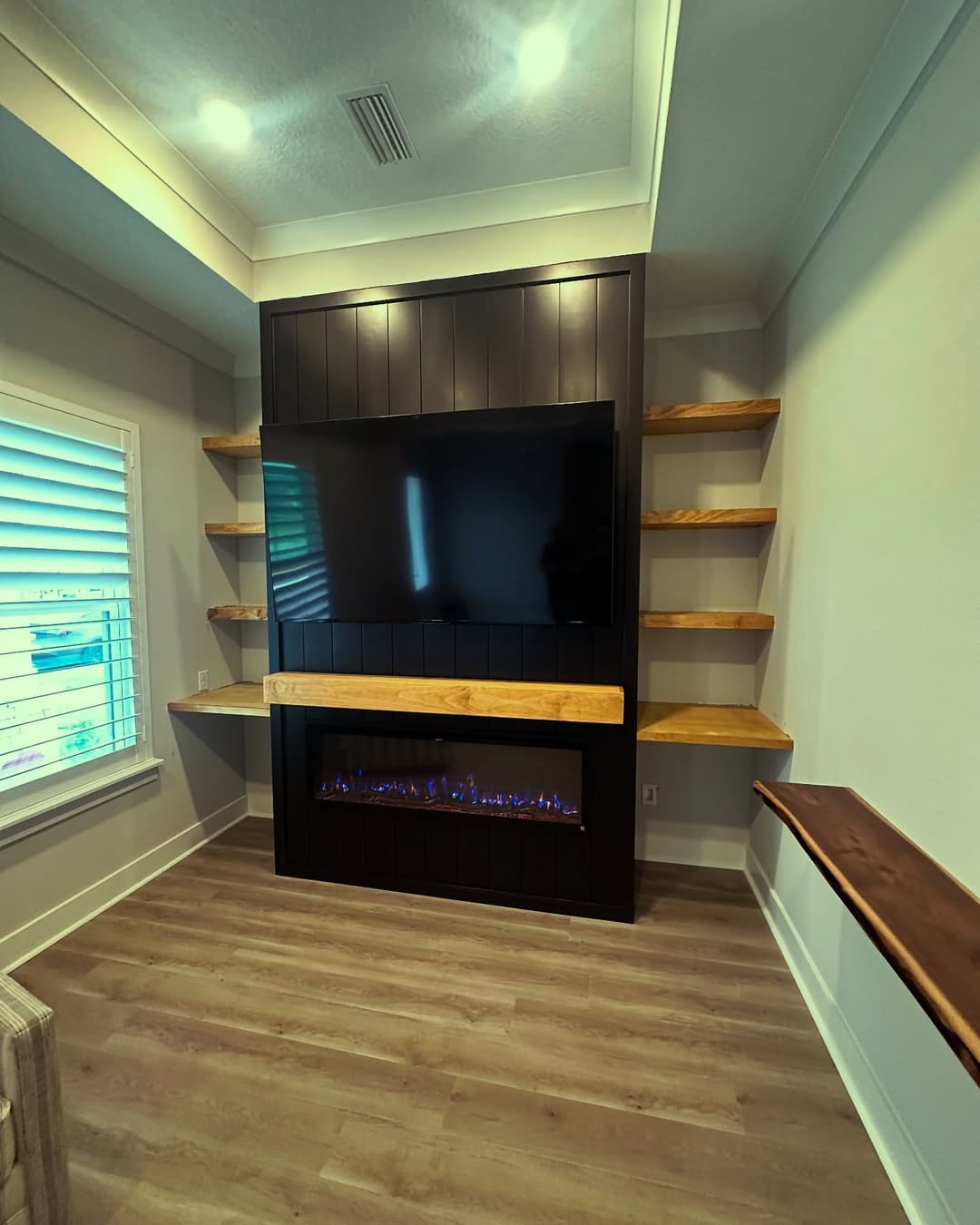
Living with black: the 60-second monthly routine
Here's what maintenance actually looks like for our clients. Dust the flats and shelf tops with a dry microfiber cloth. Once a month covers it in most homes, more if the wall gets afternoon sun that spotlights dust. For fingerprints around handles and the fireplace controls, a barely damp microfiber cloth, then dry. That's it. No sprays with wax or silicone in them. Those leave streaks on dark finishes that look worse than the prints did.
Two habits help more than any product. Put door hardware where hands actually go, so fingers touch metal instead of paint (a detail we design in, not an afterthought). And keep a microfiber cloth in one of the media wall's own drawers. The sixty-second wipe you'll actually do beats the deep clean you keep postponing.
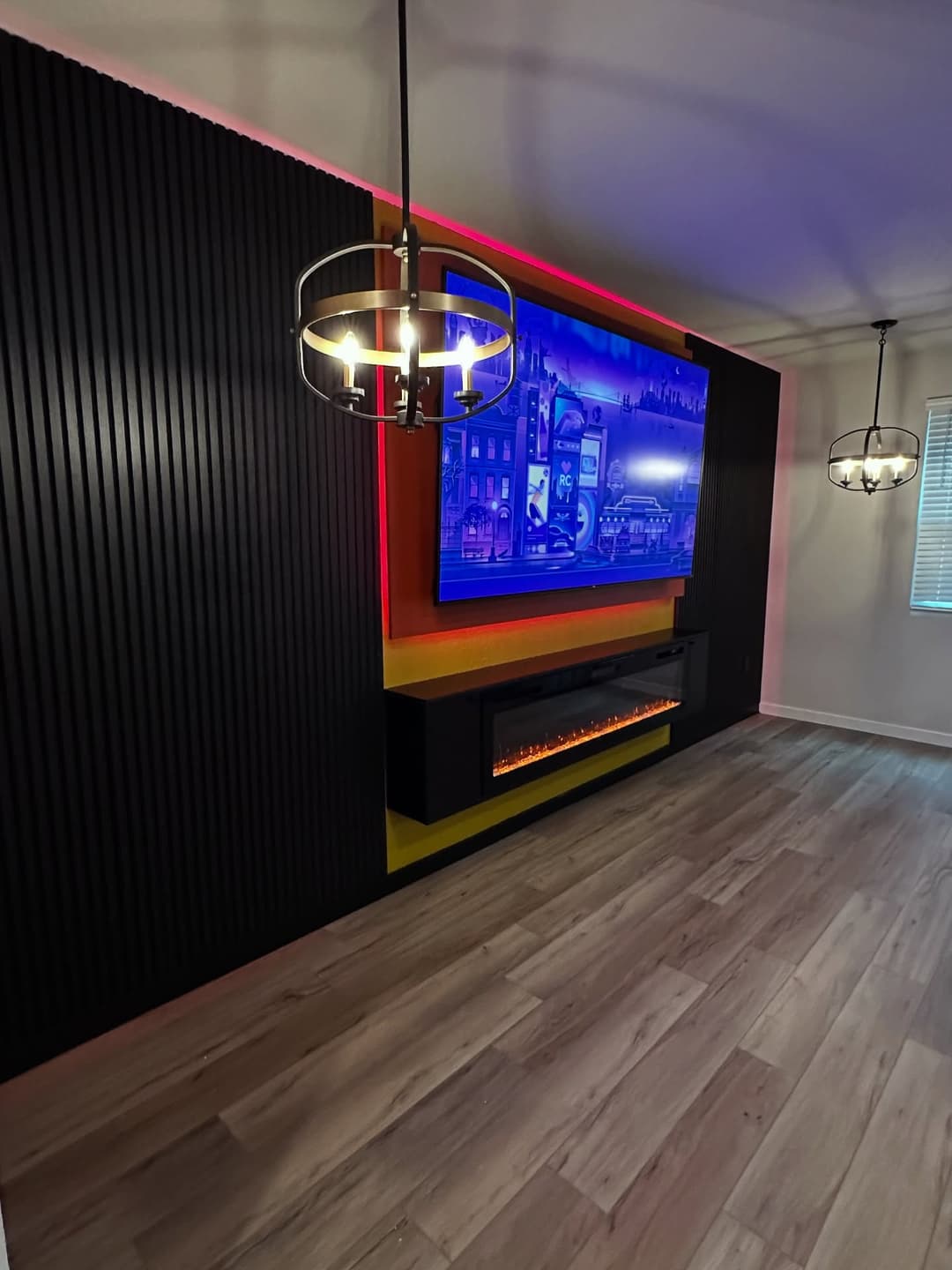
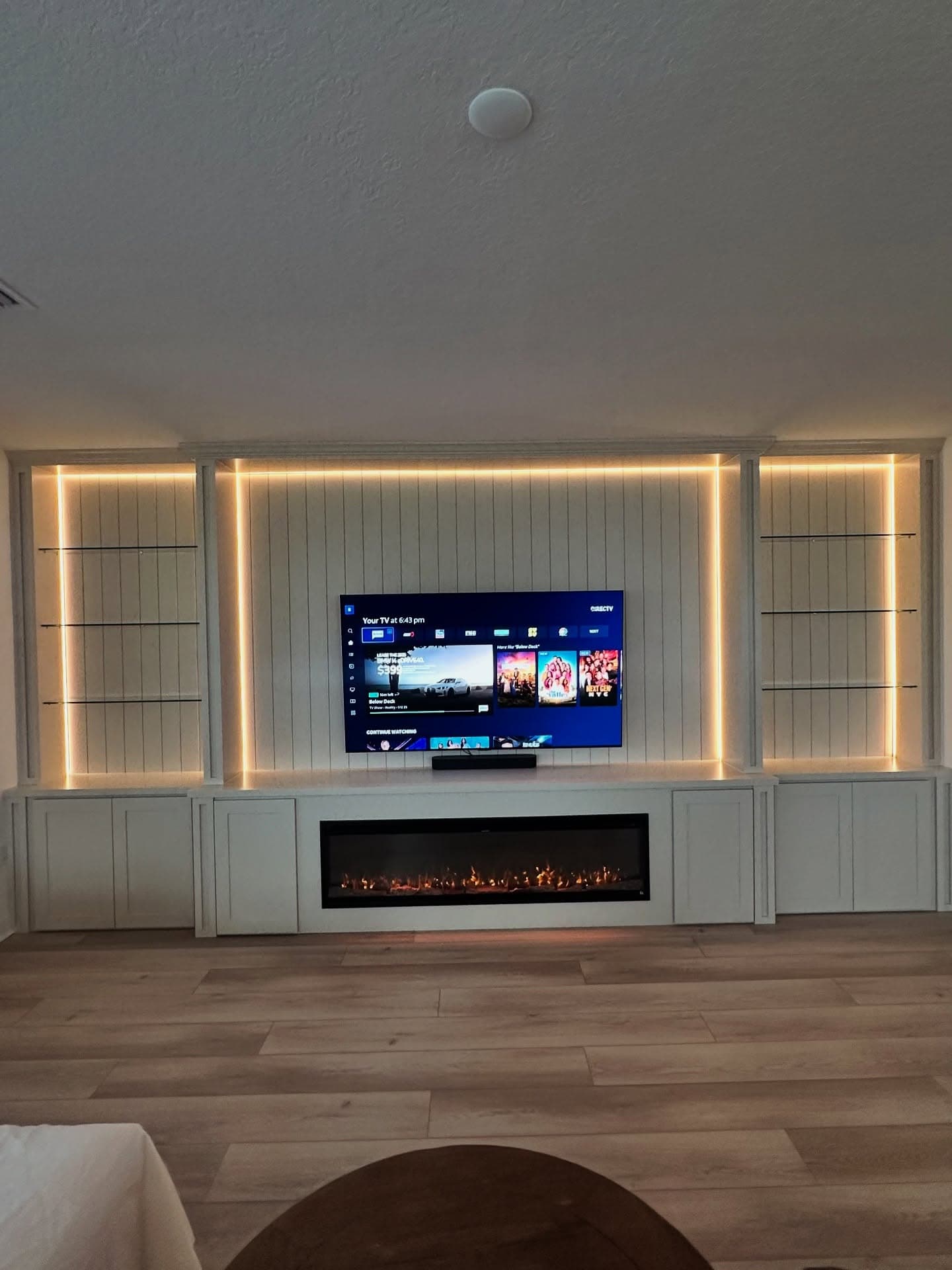
The LED lighting on a slat build like the one above is doing maintenance work too, not just decoration. Controlled, warm accent light flatters the finish. A bare ceiling fixture blasting straight down a black wall will spotlight every speck. Lighting design and maintenance are more connected than most people expect.
Rooms where we'd steer you lighter
Now for the part where we might talk you out of it. A black wall wants either good natural light or generous built-in lighting. In a small, dim room it tips from cozy to cave. Households with young kids and sticky fingers at cabinet-door height will simply see more prints on black. Some families shrug at that. Some don't. And if the rest of your home runs toward bright coastal white, a lone black monolith feels like it belongs to a different house.
In those cases we'll suggest a charcoal, a deep green-gray, or a two-tone build that keeps the drama up high and puts wood tones at hand height. You can compare plenty of black, white, and wood-tone walls side by side in our portfolio, and see what a full dark feature wall looks like in a real client's home in this fireplace TV wall we built in Jacksonville Beach.
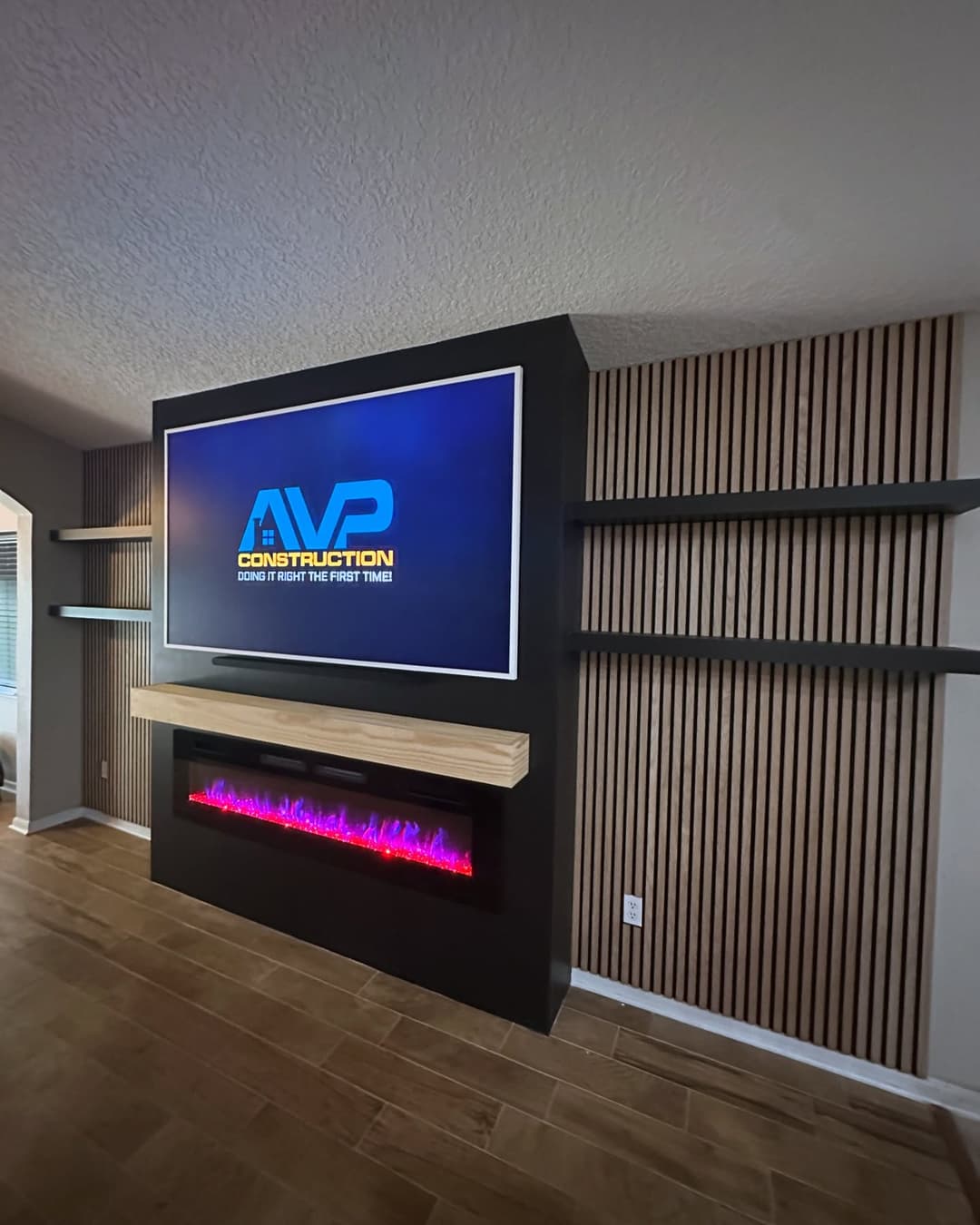
So here's where it lands. Black walls really do show more. With the right sheen, a sprayed cabinet-grade finish, and sixty seconds a month, they keep looking like the photo above for years. Those finish decisions get baked in at build time, though, which is one more reason to work with a crew that builds these walls every week. If you're weighing moody against practical, come talk it through with us. We've had this exact conversation more times than we can count.
Some product links above are affiliate links. If you buy through them we may earn a small commission, at no extra cost to you. We only point you to materials we actually use on the job.
By consultation
Built to last.
Finished to impress.
We take on a limited number of projects each season so each home gets our full attention. Share your project and we’ll respond within 24 hours to see if it’s the right fit.
Insured · $1M general liability · 230+ Google reviews, 5.0