Guides
What If the Fireplace Dies in Five Years? How We Build for That
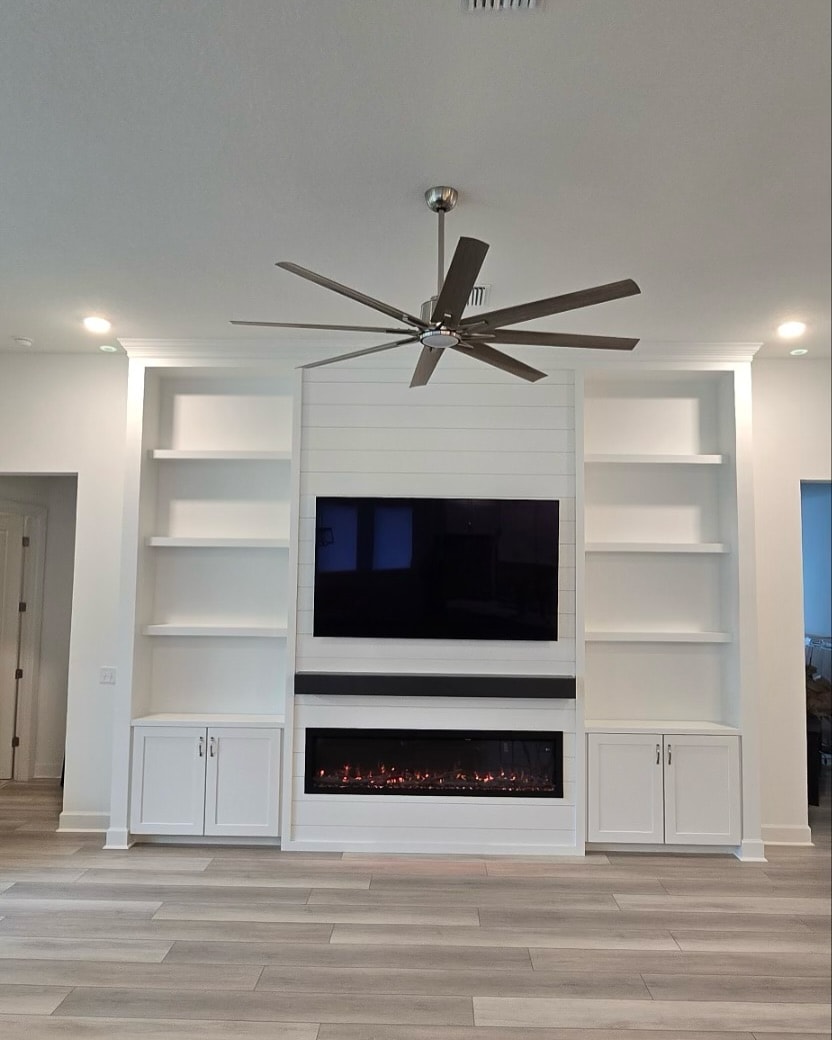
Every so often a client stops mid-consultation and asks the question they've been sitting on: "Wait — you're building this thing into the wall. What happens when it breaks?" It's a sharp question. An electric fireplace is an appliance, and appliances don't last forever. Nobody wants to discover in year six that fixing a fan means taking a saw to their custom millwork.
So let's answer it directly: on every wall we build, the insert comes out from the front without touching the woodwork. That's not an accident — it's a framing decision we make on day one. Here's how it works, and what actually happens if your fireplace quits someday.
It's a fair fear — and some builders earn it
We've seen the walls that inspire this worry. An insert shoehorned into an opening with no wiggle room, trim glued over the flange, the outlet buried somewhere unreachable. On a wall like that, a dead fireplace really does mean demolition, and whoever built it wasn't thinking past install day.
That's a builder problem, not an electric fireplace problem. The inserts themselves are simple machines — LEDs, a fan, a heating element, a control board — with no combustion, no soot, and nothing corroding. Most of them will quietly run for many years. But "probably fine" isn't a plan, so we build every wall as if the insert will need to come out, because eventually, whether it's year six or year sixteen, it will.
We frame the opening so the insert slides out
Linear electric fireplaces are designed to be front-serviceable: they slide into a framed cavity from the room side and a trim flange covers the edge of the opening. We frame that cavity to the manufacturer's spec — snug enough to look built-in, with the clearances the unit calls for — and we fasten, never glue, anything that crosses the insert's path.
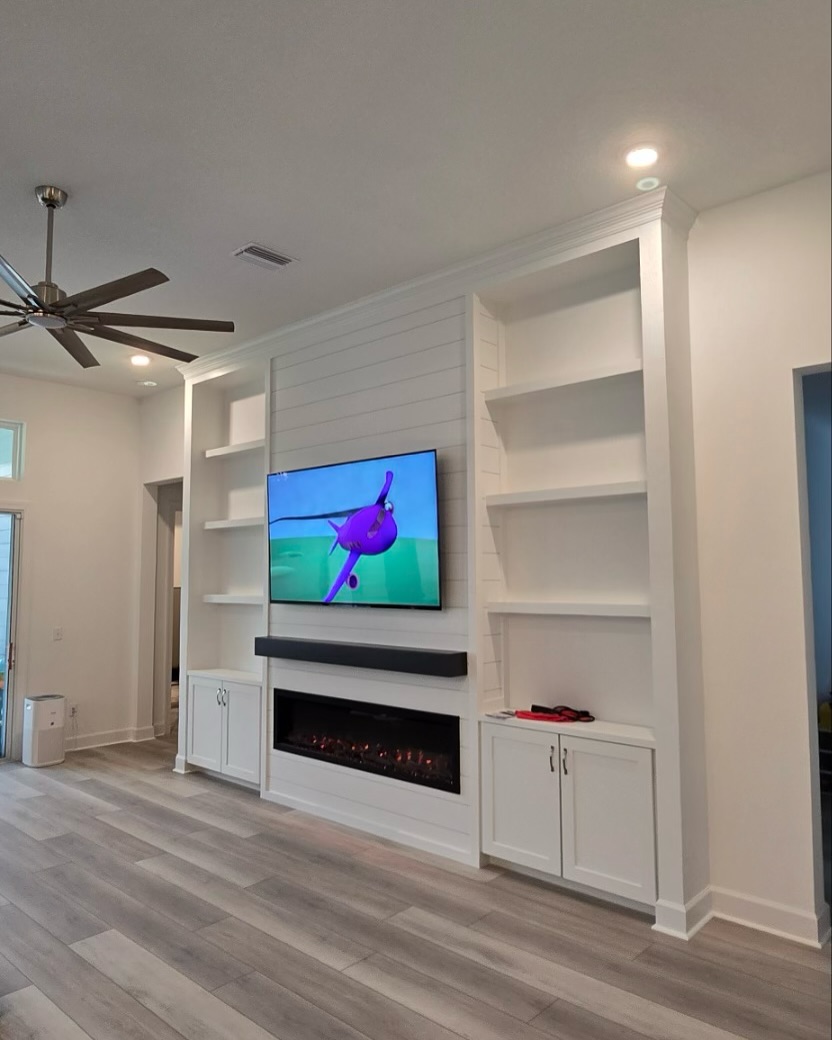
That means the removal procedure on a wall like the shiplap built-in above is: unplug it, back out a handful of screws, slide the unit out. The surround, the shelves, the cabinetry — none of it moves. The outlet lives inside the cavity where you can reach it once the insert is out, which also matters for the small stuff, like a technician getting to the unit without an archaeology project.
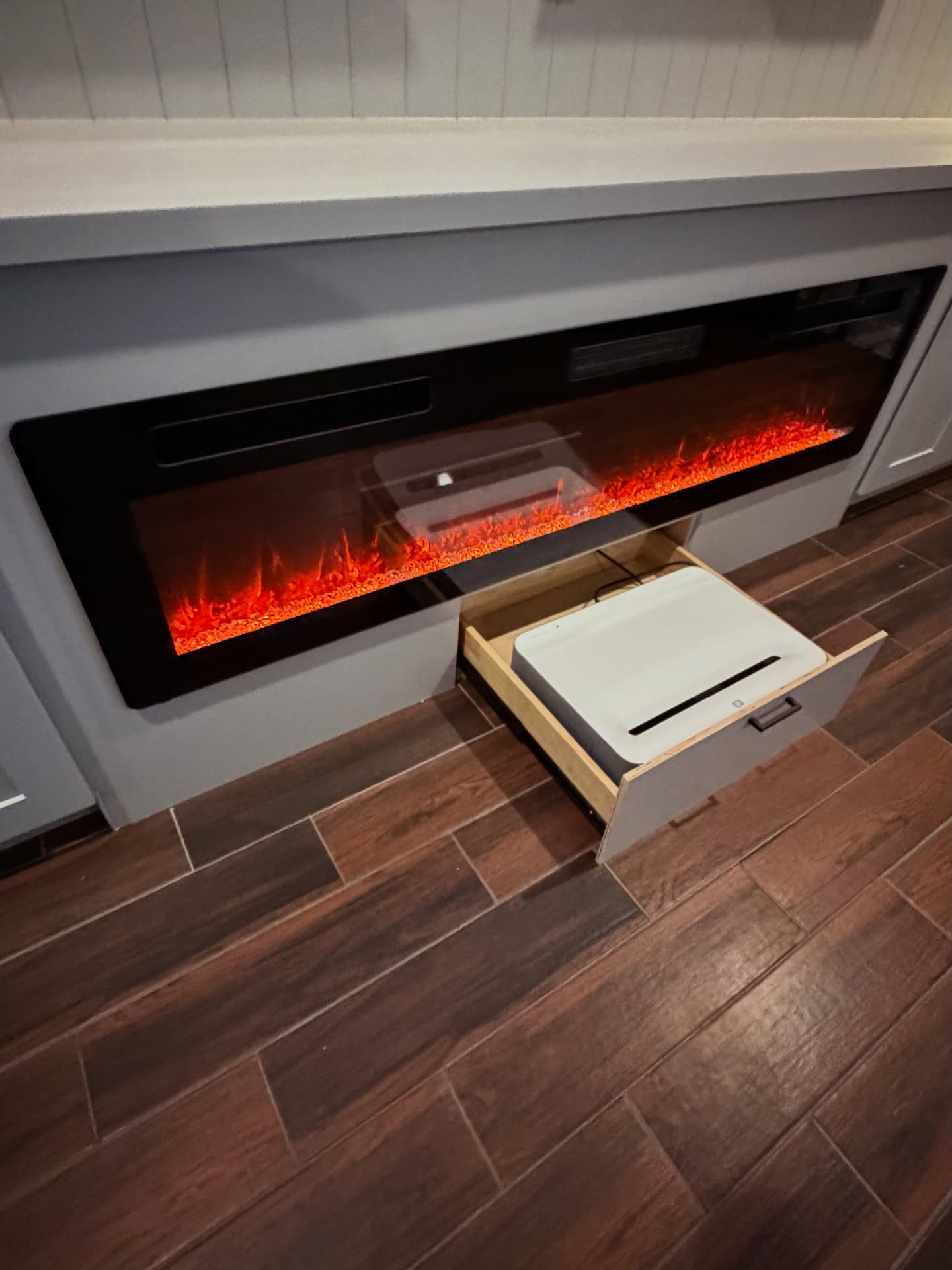
We carry that access-minded thinking through the whole build. The gray built-in below hides a printer drawer in the toe-kick — the same philosophy, pointed at a different problem. A good built-in keeps its practical parts reachable and just doesn't advertise them.
Standard sizes are your insurance policy
Here's the part that should really put your mind at ease: linear inserts come in standard widths — 50, 60, 72 inches and so on — and those sizes are consistent across the market. When we frame a cavity for a standard-width unit, we're not framing for one fragile product. We're framing for a whole category.
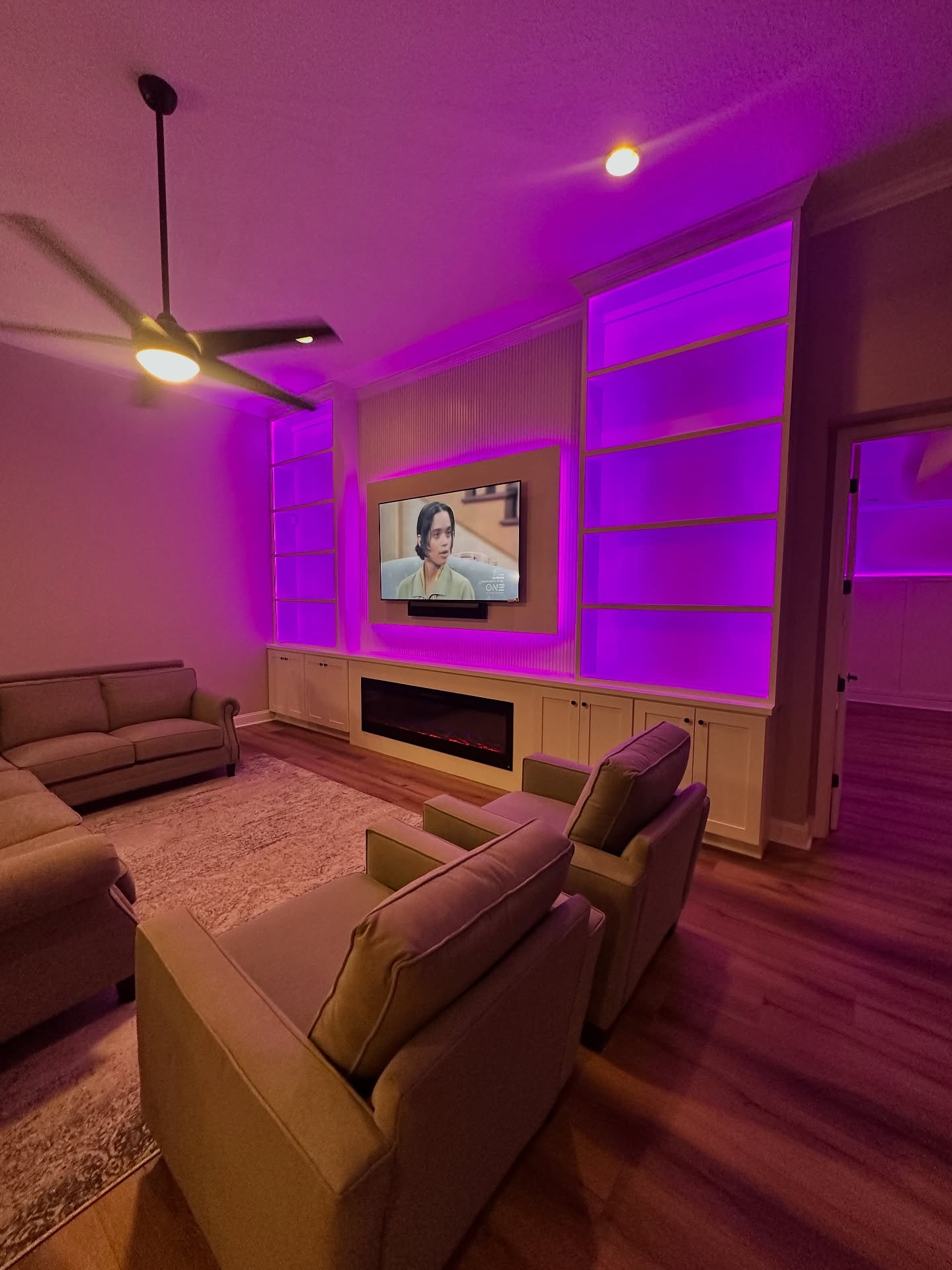
So if your insert dies years from now and that exact model is long discontinued, you buy a current unit in the same width, and it slides into the same opening. This is one reason we usually point clients toward Touchstone linear units and other established players rather than a no-name special: mainstream brands stick to the standard footprints, so the wall we build around one — like the fluted build above — stays compatible with whatever you'd replace it with. Off-brand units with odd dimensions are where you can end up framed around an orphan.
Warranties, in plain English
We're carpenters, not an appliance brand, so we won't recite warranty terms that vary by manufacturer and change over time. But here's the practical version of what you should do, and what we walk every client through.
Check the warranty length before the unit is purchased — it's one honest signal of how much the manufacturer trusts its own product, and another reason the established brands beat the bargain bin. Register the unit and keep the receipt; if you buy through us, we hand you the paperwork at the end of the job. And know that a warranty claim on a properly installed insert means sliding the unit out and dealing with the manufacturer — not touching the wall. Our workmanship on the build itself is a separate conversation, and we stand behind it; we've been building these across Jacksonville and St. Johns County since 2020, and how a builder answers the serviceability question is a good filter when you're choosing who to hire.
The maintenance list (it's short)
People expect a fireplace to come with chores. An electric one mostly doesn't. There's no chimney, no gas service call, no ash. The whole routine is: dust the intake and outlet vents now and then so the fan breathes easy, and wipe the glass when it needs it. That's the list.
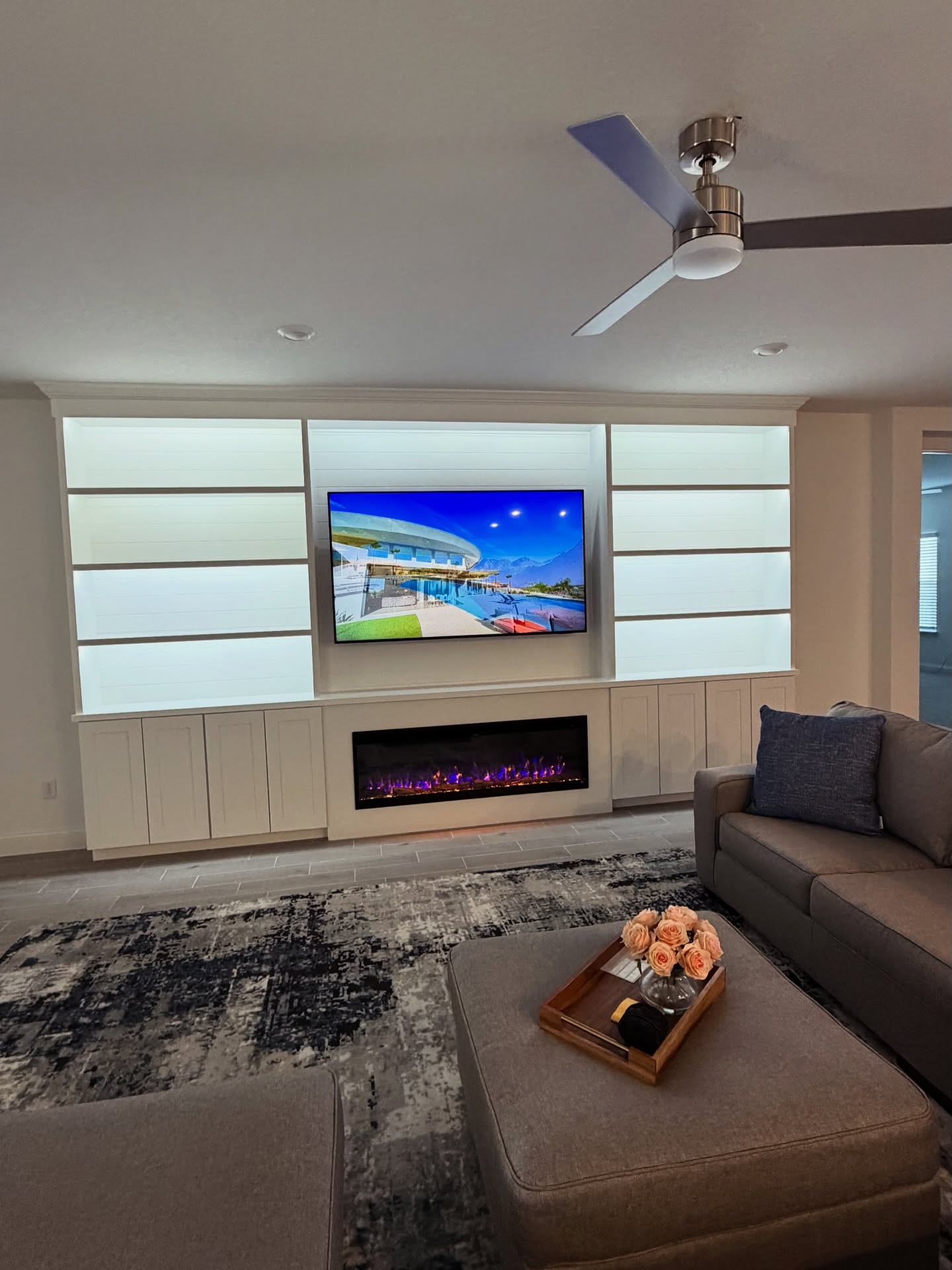
The wall around it asks even less — the finishes we use wipe clean, and a build like the lit shelving unit above needs nothing beyond normal dusting. If the day comes when the insert does give up, you're a standard-size swap away from new flames, and the woodwork never knows the difference. When you're budgeting for a build like this, the insert is one line item among several — our guide to what custom work costs in Jacksonville walks through how we quote the whole picture.
If the "appliance entombed in millwork" fear has been holding you back from a fireplace wall, bring it up at a consultation — we'll show you exactly how the insert comes out of a built-in like ours before we ever build yours.
Tell us what you want built.
We'll tell you if it's a fit. We take a limited number of projects and respond within 24 hours.
Florida Licensed & Insured · Serving Jacksonville & St. Johns County