Guides
Do Electric Flames Look Fake? What Today's Inserts Actually Look Like
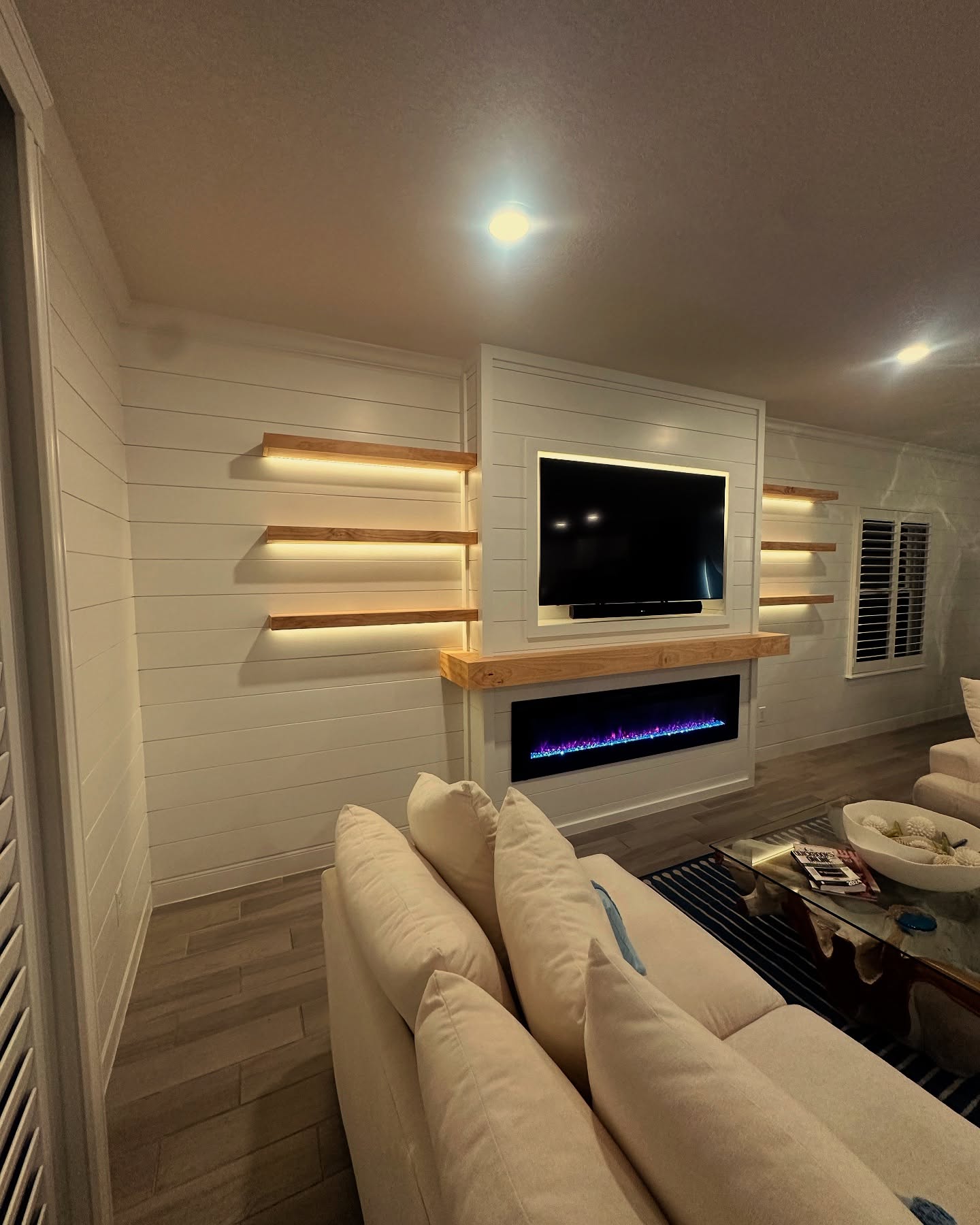
We hear this in almost every first conversation: "I love the look of the media wall, but... do the flames look fake?" Usually said a little apologetically, like it's a rude question. It isn't. You're about to make an electric insert the centerpiece of your living room, and the last thing you want is for that centerpiece to look like a toy.
Honest answer: if the last electric fireplace you saw was in a big-box furniture unit fifteen years ago, your skepticism is completely earned. And the technology you're skeptical of basically doesn't exist anymore. Here's what actually changed.
Fair concern. The old ones were rough.
The electric fireplaces people remember from the 2000s were a light bulb, a spinning reflector, and a plastic log with flames painted on it. The "fire" was a flat orange flicker that repeated on a loop you could memorize in about a minute. If that's your reference point, no wonder electric means cheap in your head.
Those units still exist at the bottom of the market. That's part of why we don't love clients grabbing whatever's cheapest online and asking us to build a wall around it. The gap between a bargain insert and a good one is enormous. And it's exactly the gap between "looks fake" and "guests ask if it's gas."
What changed: LED flame tech, ember beds, and glass media
Modern linear inserts generate the flame effect with LEDs projected through a randomized pattern, so the movement doesn't loop in any way your eye can catch. We usually suggest Touchstone units in our builds. The flames have depth and layering instead of a single flat plane, and they move the way fire actually does: irregular, soft-edged, taller in the middle.
Underneath, there's an ember bed. Crushed glass, faux logs or stones depending on the unit, glowing from below and giving the fire something to sit on. That base layer matters more than people expect. A flame floating on nothing reads fake instantly. A flame rising out of a glowing bed reads like fire. Most units let you swap or mix the media, so the look can go modern and glassy or more traditional depending on what you're after.
Are we going to tell you it's indistinguishable from burning wood at arm's length? No. Up close, fire is fire. But from the couch, in a room with the lights turned down, which is how you'll actually live with it, a good insert is genuinely convincing. And it never smokes, sparks, or needs feeding.
Flame colors: everyone tries all of them the first night
Most modern inserts let you change the flame color: classic orange, orange-blue mixes, full blue, sometimes a whole range along with brightness levels. We can tell you from experience what happens on install day. The whole family sits on the couch and cycles through every single mode. Twice.
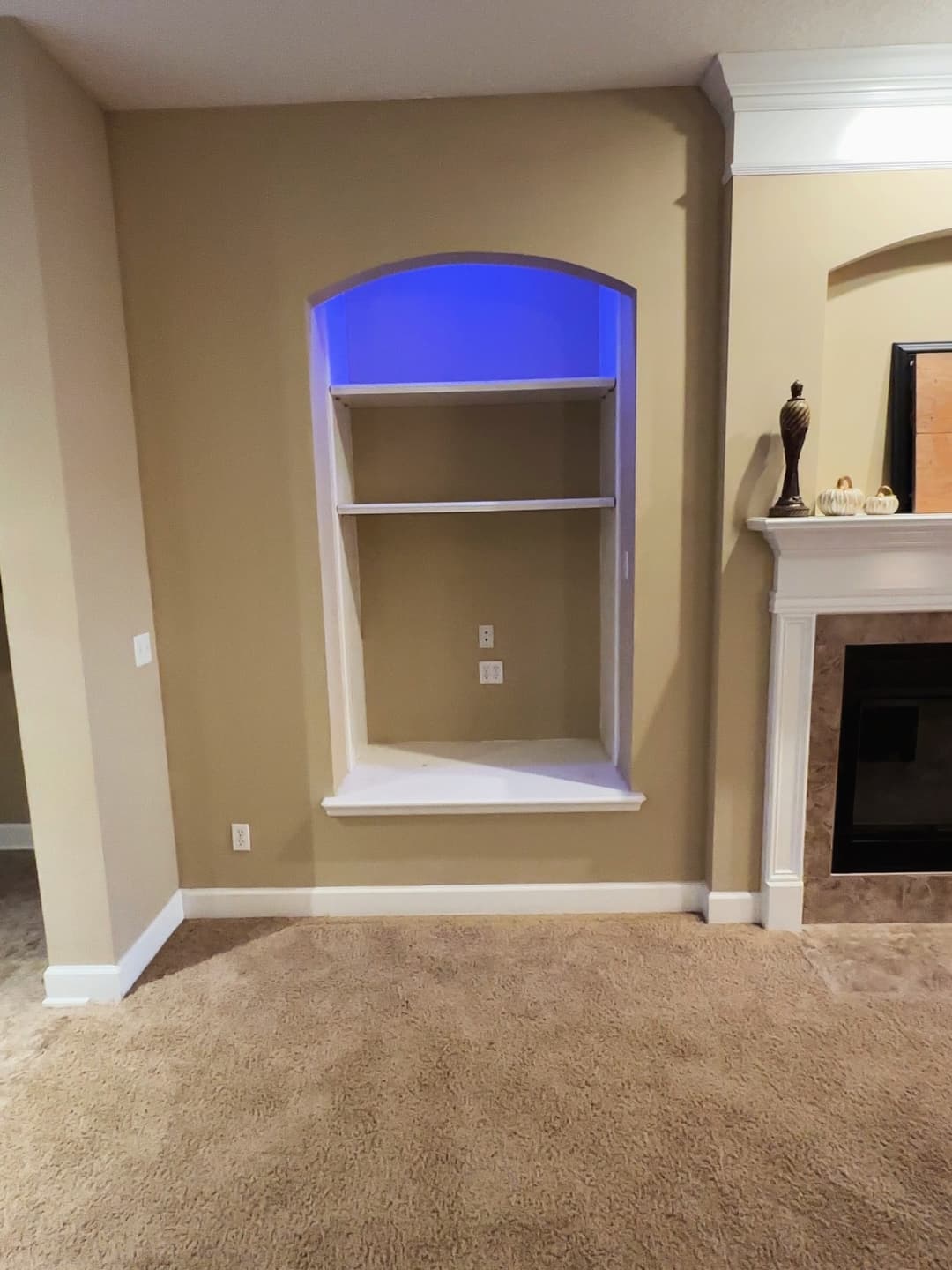
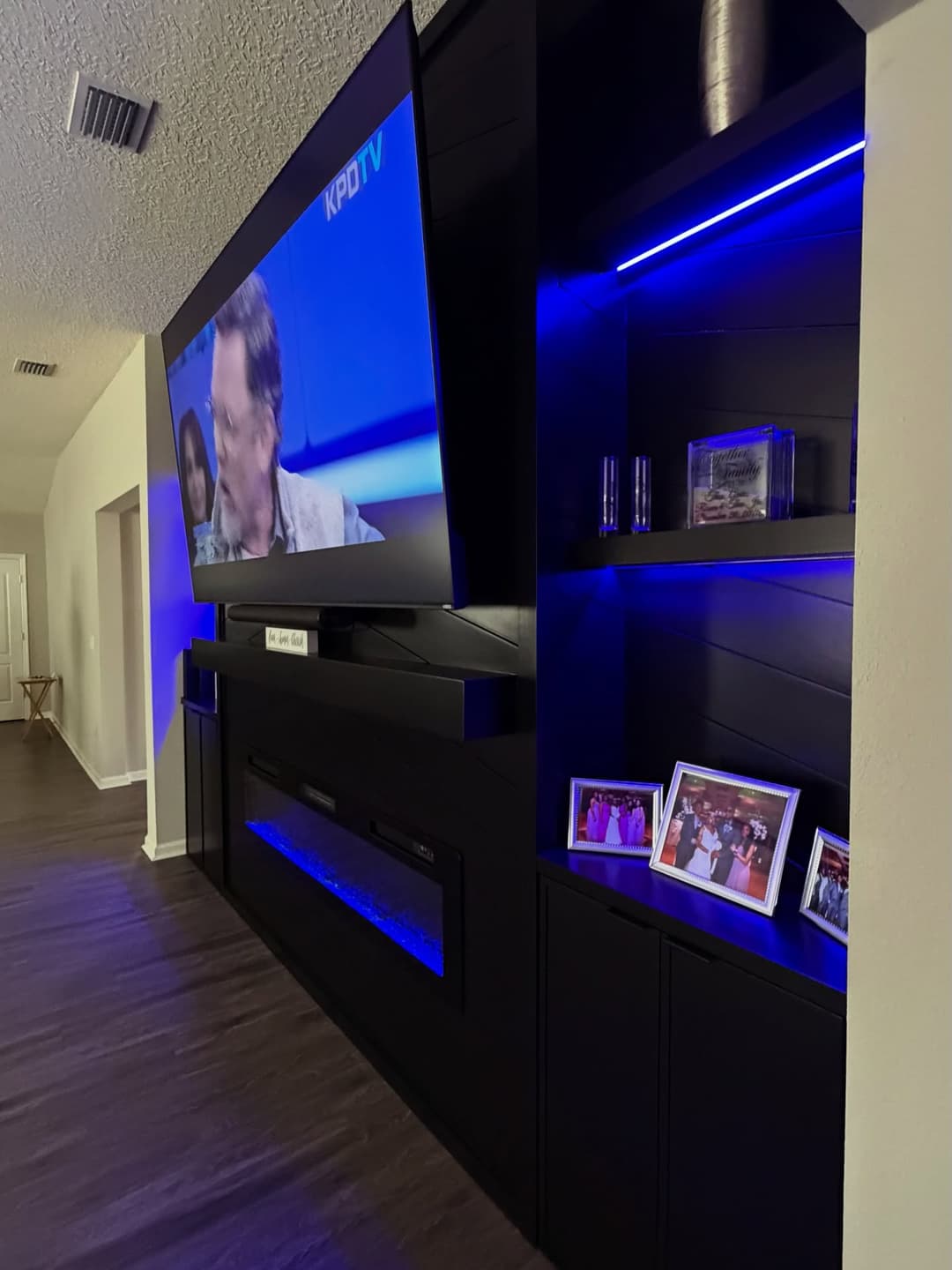
Then, within a week or two, almost everyone settles on one of two looks: the realistic orange for cozy nights, or a blue flame when they want the wall to feel a little more modern and moody. The blue-toned setups read well against dark walls. The arched niche above with its soft blue glow is a good example of how a cooler palette can tie the fireplace into the rest of the built-in. The point isn't that you'll use twelve colors. It's that the two you keep will both look right.
The wall around the fireplace does half the work
Here's the part nobody selling inserts will tell you: how real the flames read depends heavily on what's around them. A good insert dropped into a bare drywall cutout looks like a screen. The same insert set into a surround with depth, texture, and layered lighting looks like a fireplace.
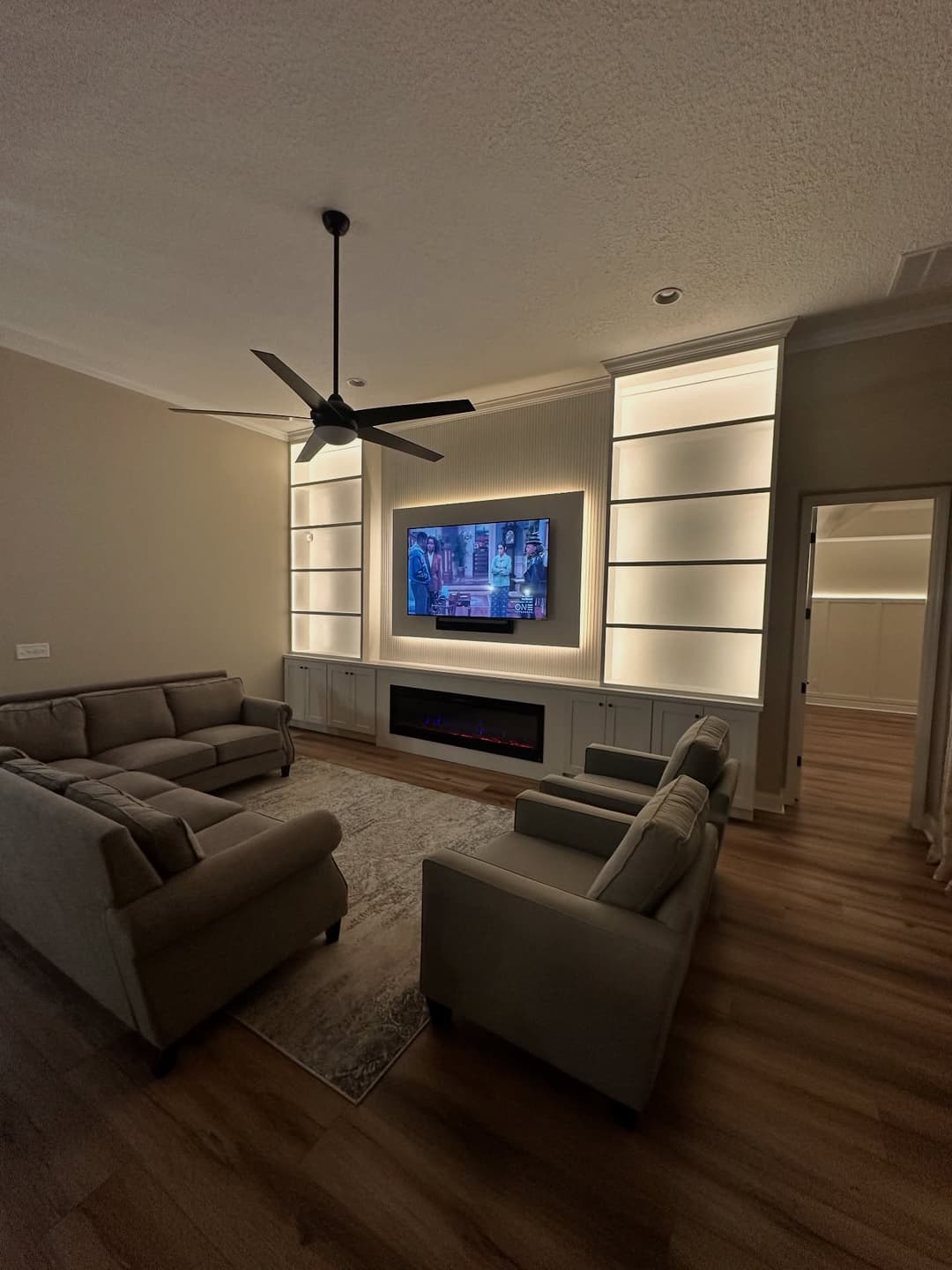
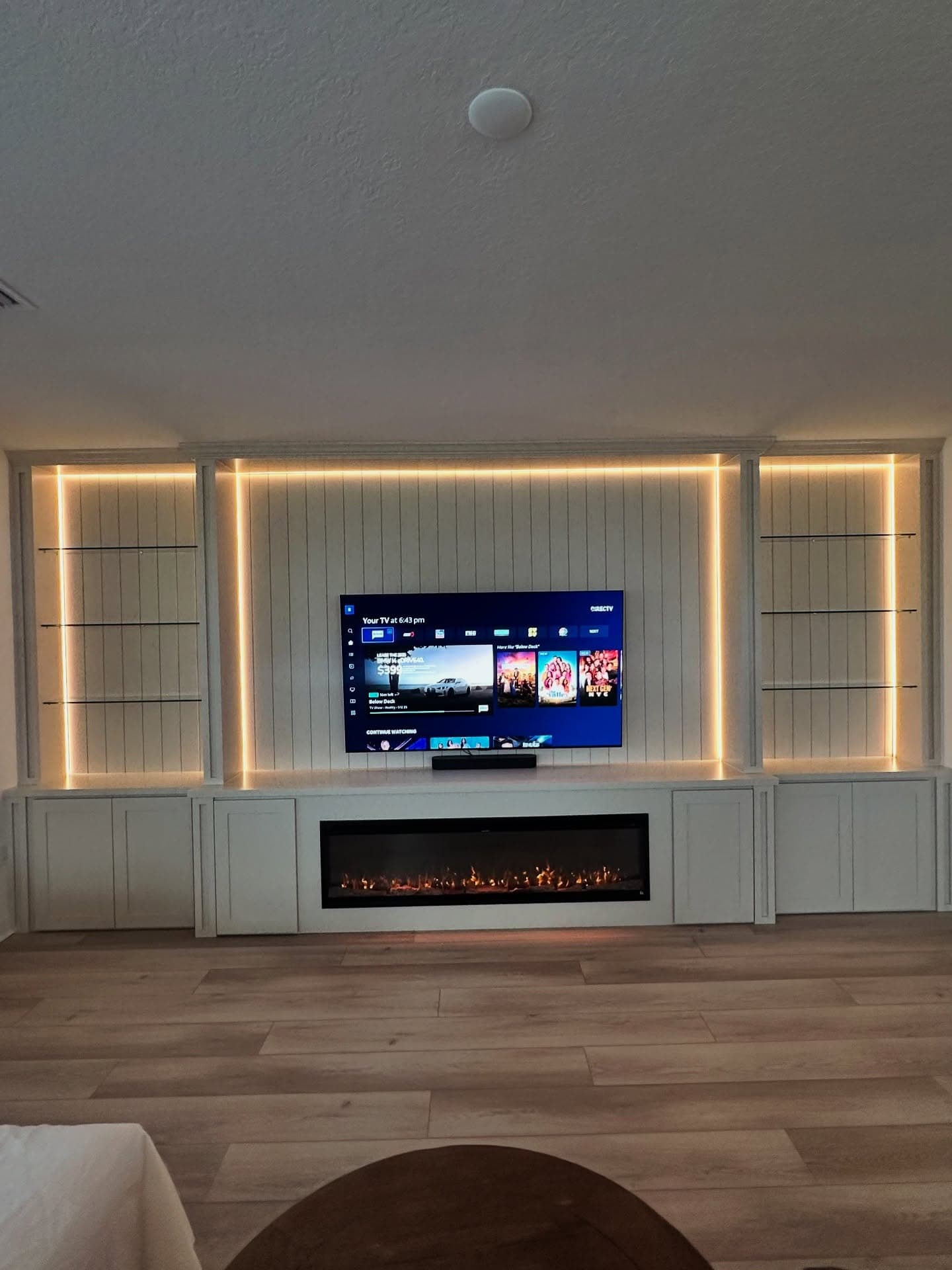
That's why LED accent lighting is a signature of our entertainment wall builds. When the shelving is backlit and the TV panel has a soft glow behind it, like the fluted wall above, the fireplace stops being the only light source in a dark rectangle. It becomes one warm layer in a lit composition, and your eye reads the whole thing as intentional. The flames borrow realism from everything glowing around them.
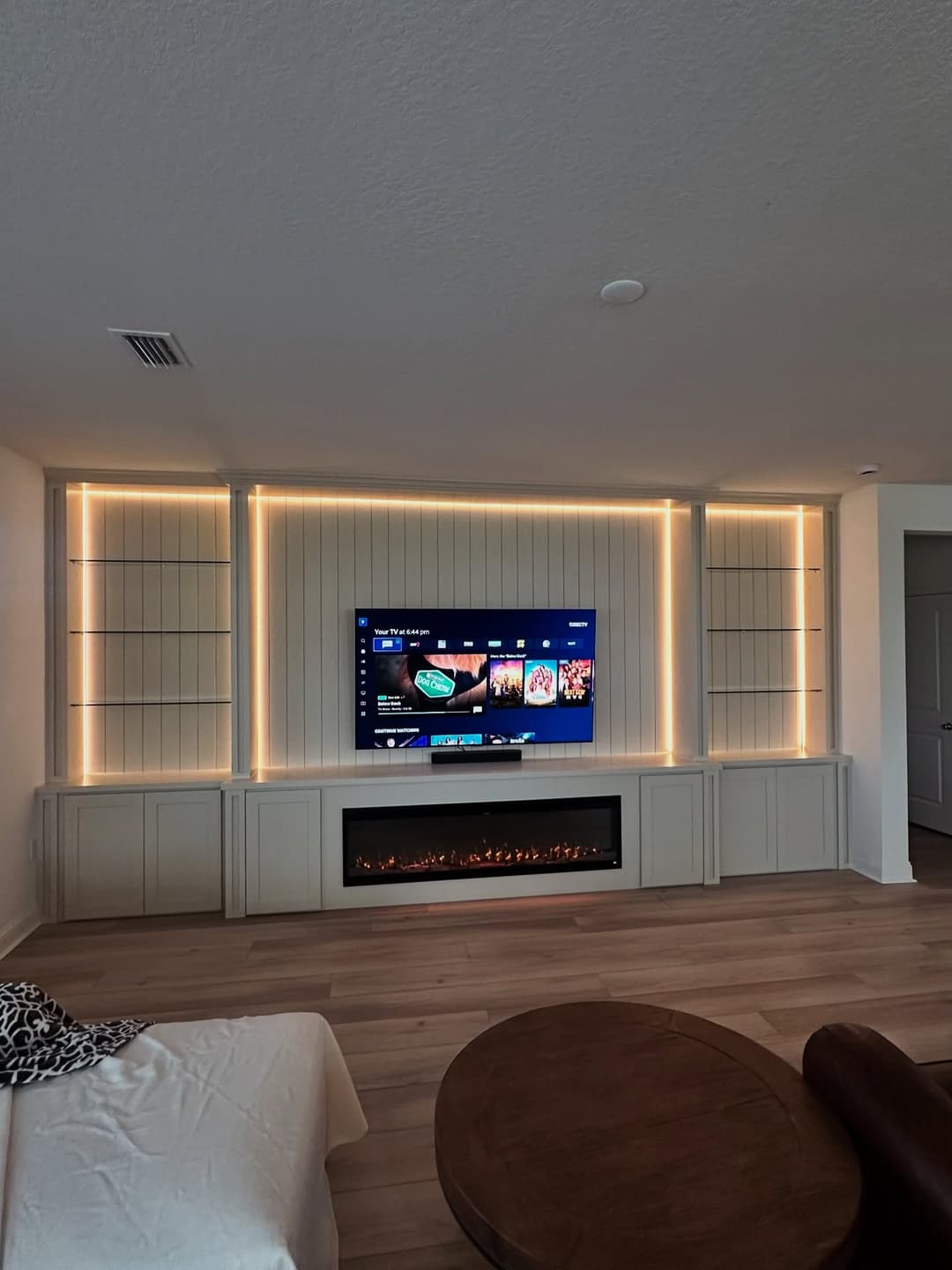
Texture helps too. Flame light moving across a fluted panel, a plank wall like the cream one above, or a stone surround gives you flicker and shadow on real material. Which is most of what a wood fire gives a room anyway.
See one running before you judge
Our standing advice: don't make this decision from a product photo. Manufacturer images are renders half the time, and even honest photos can't show you movement. Movement is the whole trick.
Watch video of the specific unit you're considering, in the dark, at normal viewing distance. Better yet, see one installed. We've built fireplace walls all over Northeast Florida. The beachside build in our Jacksonville Beach project post is a good look at a finished wall with the flames doing their thing, and our portfolio has dozens more. Every one of them a real job we built, not a stock photo.
Skepticism is healthy. It means you care how the room turns out. If you want to talk through which insert suits your wall and see what it looks like in a real living room, reach out and we'll set up a consultation.
Some product links above are affiliate links. If you buy through them we may earn a small commission, at no extra cost to you. We only point you to materials we actually use on the job.
By consultation
Built to last.
Finished to impress.
We take on a limited number of projects each season so each home gets our full attention. Share your project and we’ll respond within 24 hours to see if it’s the right fit.
Insured · $1M general liability · 230+ Google reviews, 5.0