Guides
The Floating Fireplace Look: How High Should It Actually Sit?
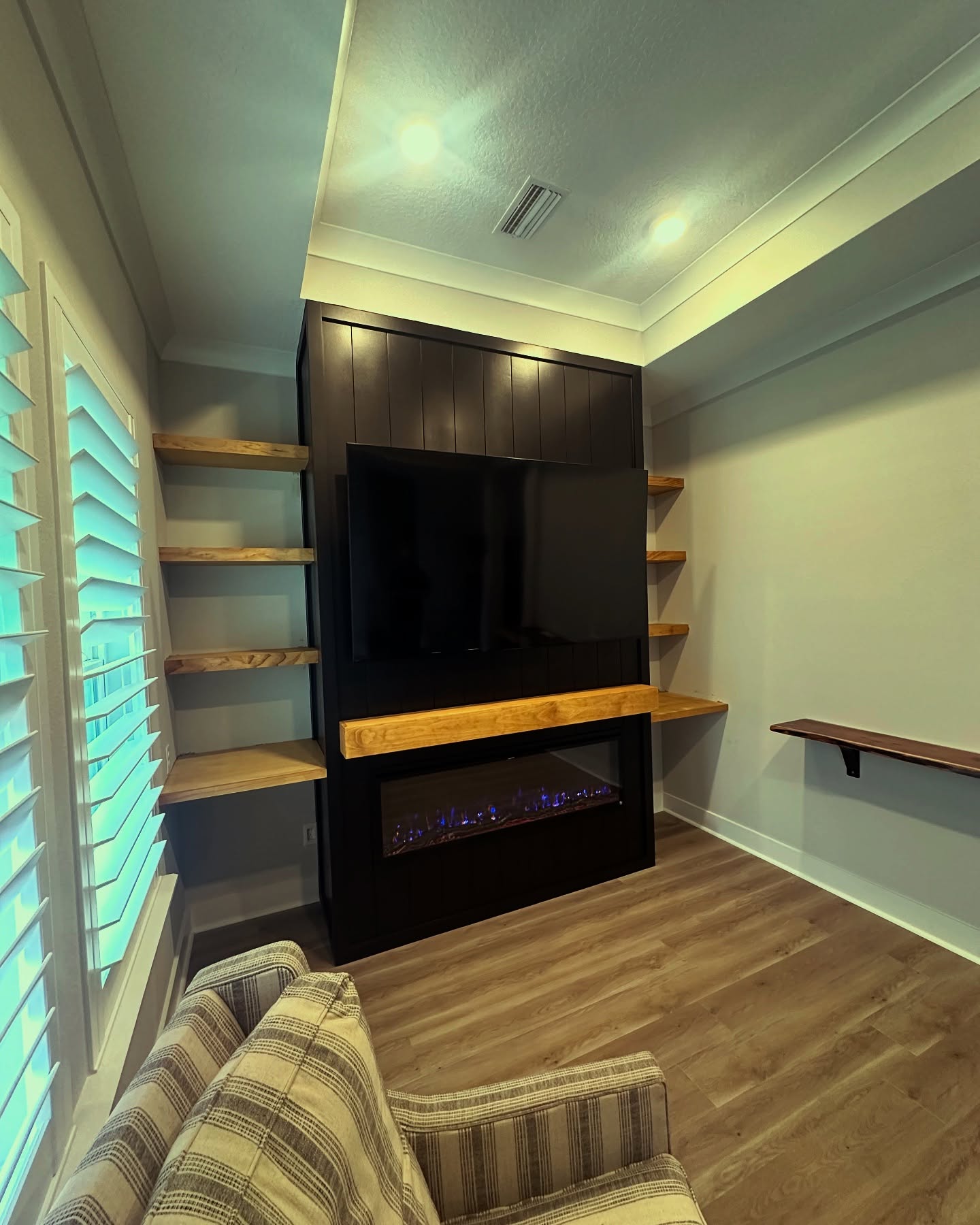
You've seen it on Instagram: a linear fireplace hovering partway up a feature wall, nothing under it, flames floating in space. And you've got the same two worries everybody brings us. Will that look odd in a normal living room instead of a staged photo? Is it practical, or is it one of those looks that only works with no furniture and no life happening in the room?
Honest answer: the floating fireplace is one of our favorite things to build, and it's also a look we talk people out of a few times a year. The difference is almost entirely about height and what's around it.
What "floating" actually means in a media wall
Traditionally a fireplace sits at the floor, hearth-level, the way a wood-burning firebox had to. A floating install ignores that history. Since a linear electric insert doesn't need a hearth, a flue, or a floor connection, we can recess it at any height in the wall. Lift it up and the fire reads as a design element in the composition rather than a hole at the bottom of the wall.
It pairs naturally with the rest of the modern media wall: a recessed or backlit TV above, LED accent lighting, and a slab-like surround in stone, tile, plaster-look, or dark paneling. Scroll our portfolio and you'll spot the floating treatment on many of the most considered walls in there.
The height range we use and why
Our usual landing zone is somewhere between about a foot and two feet off the floor to the bottom of the insert. Roughly coffee-table height. That's high enough that the fire is visible over furniture from anywhere in the room, and low enough that it still feels anchored, like a fireplace rather than a wall sconce.
The real reference point isn't a tape-measure number, though. It's your eye line from the couch. Sitting down, you want the flames comfortably in view without looking over the arm of the sofa or craning up. That's why we set the height in your actual room, with your actual furniture, before we frame the opening. Ten minutes with painter's tape on the wall settles it better than any formula.
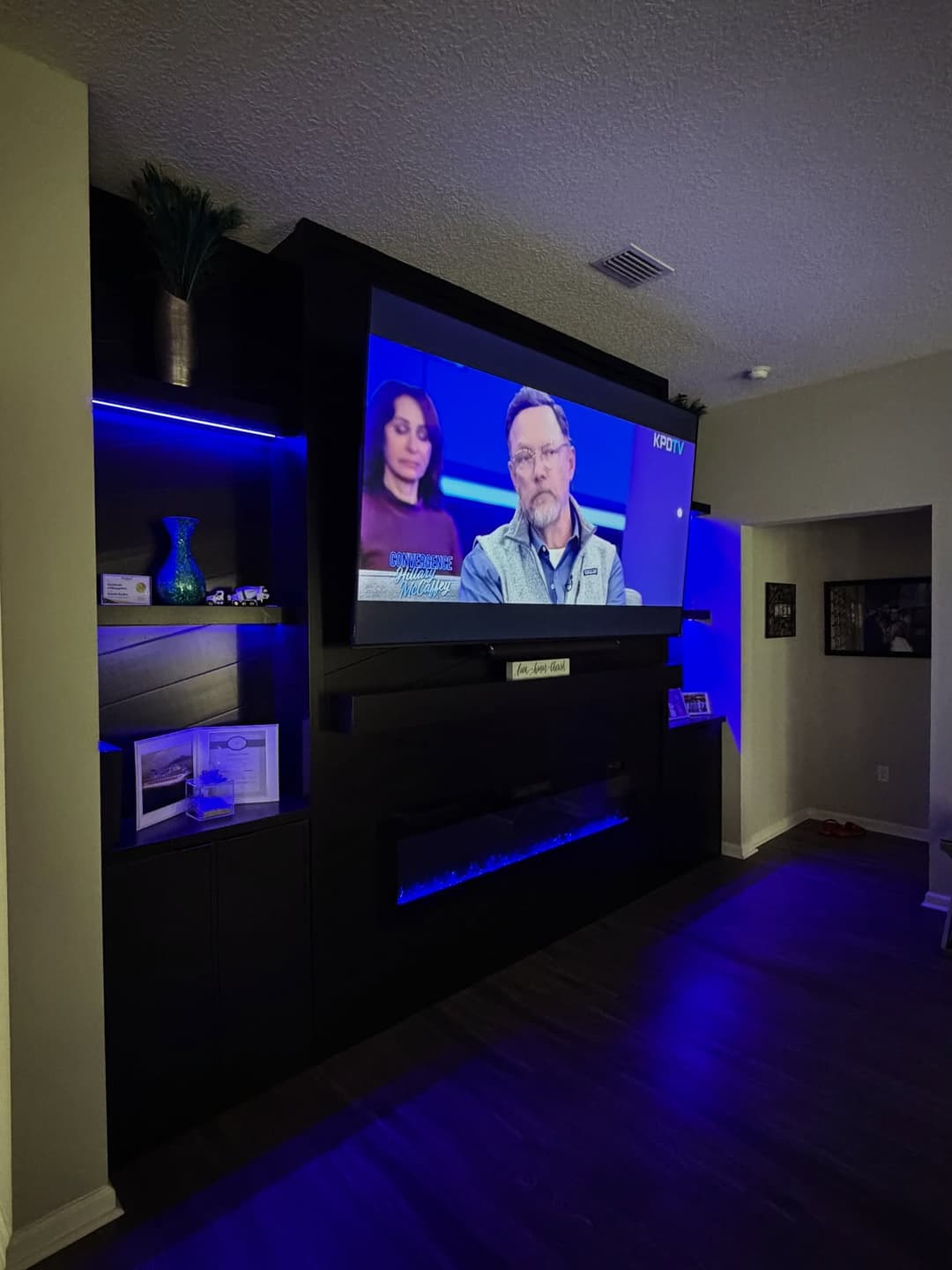
There's a practical bonus hiding in the look, too. Raising the insert puts the glass and the heater vent above kid-and-dog height, and it leaves room for a mantel shelf between fire and TV. Like the dark wall above, where the mantel gives the composition a waistline and the lit shelves fill out the sides.
How ceiling height changes the answer
Standard eight- or nine-foot ceilings keep things simple: fireplace in the lower third, TV above it, everything lands close to that coffee-table-height zone. Go much higher than that and the fire starts crowding the TV and shrinking the wall visually.
Two-story great rooms flip the problem. Northeast Florida builds have a lot of them. On an eighteen-foot wall, a fireplace at strict formula height can look like it's sitting in a hole at the bottom of a cliff. There we'll often nudge the insert a bit higher and, more importantly, go wider, so the fire holds its own against all that vertical wall. The fireplace, TV, and lighting need to read as one composed column, not three small things stacked on a big wall. That's the thinking behind builds like our two-story feature wall in Jacksonville Beach.
What goes under it: nothing, a hearth, or cabinets
Once the fire leaves the floor, you have to decide what happens in the space below it. Three good answers.
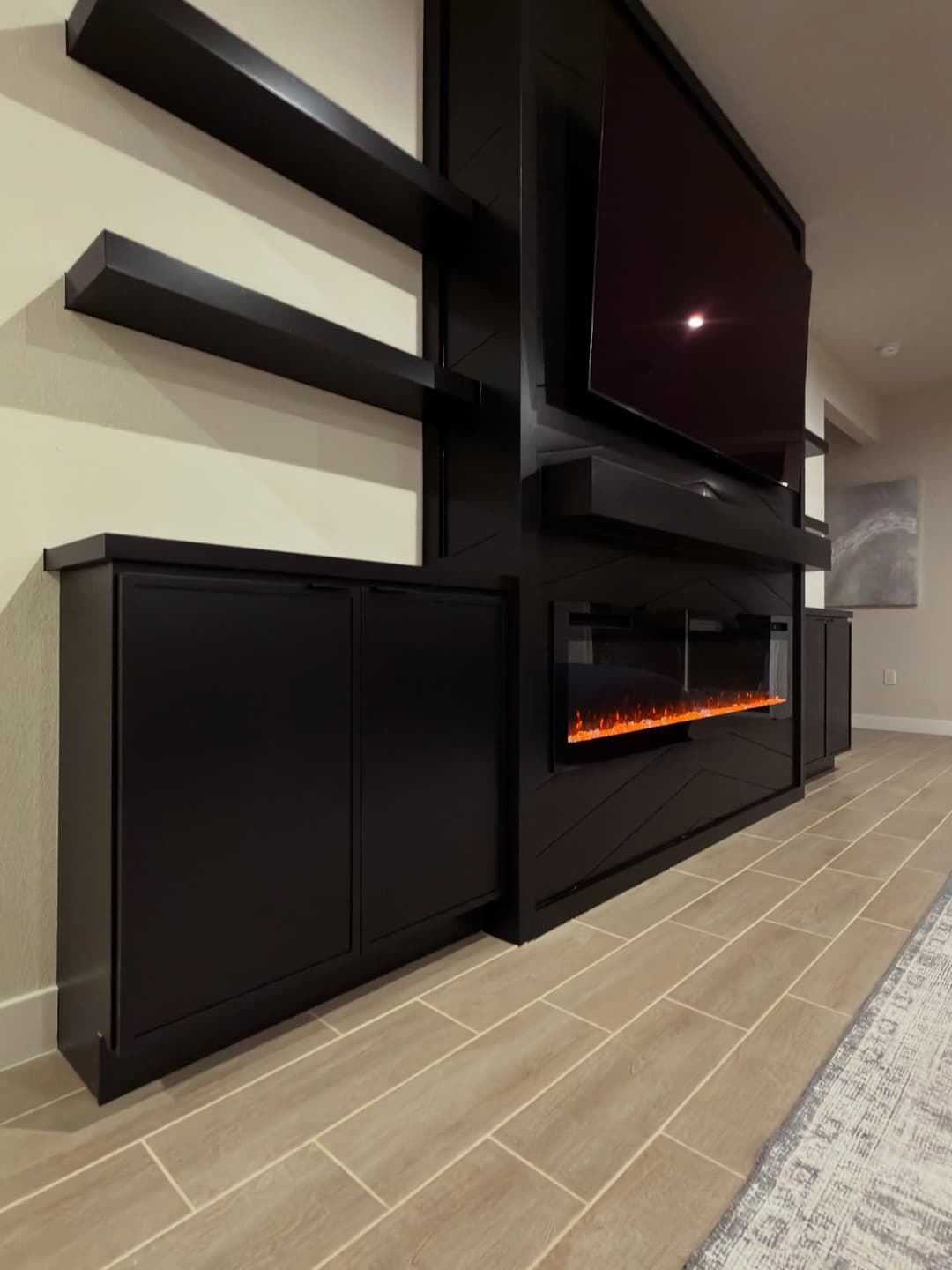
Nothing. Clean surround material running straight to the baseboard. This is the pure Instagram version, and it works best when the wall material is doing something worth seeing. The matte black wall above pulls it off because the paneling, shelves, and cabinetry flanking it carry the lower half of the composition.
A floating hearth or bench. A thick shelf under the fire, often white oak in our builds, gives the eye a base line and gives you a spot for lanterns, plants, or holiday decor. It keeps a hint of traditional fireplace DNA without dragging the whole design back to 1995.
Cabinets or a console. The most practical answer. Base cabinets under a floating fireplace swallow the game consoles, soundbars, and general living-room clutter, and they raise the fire to the top of the casework naturally.
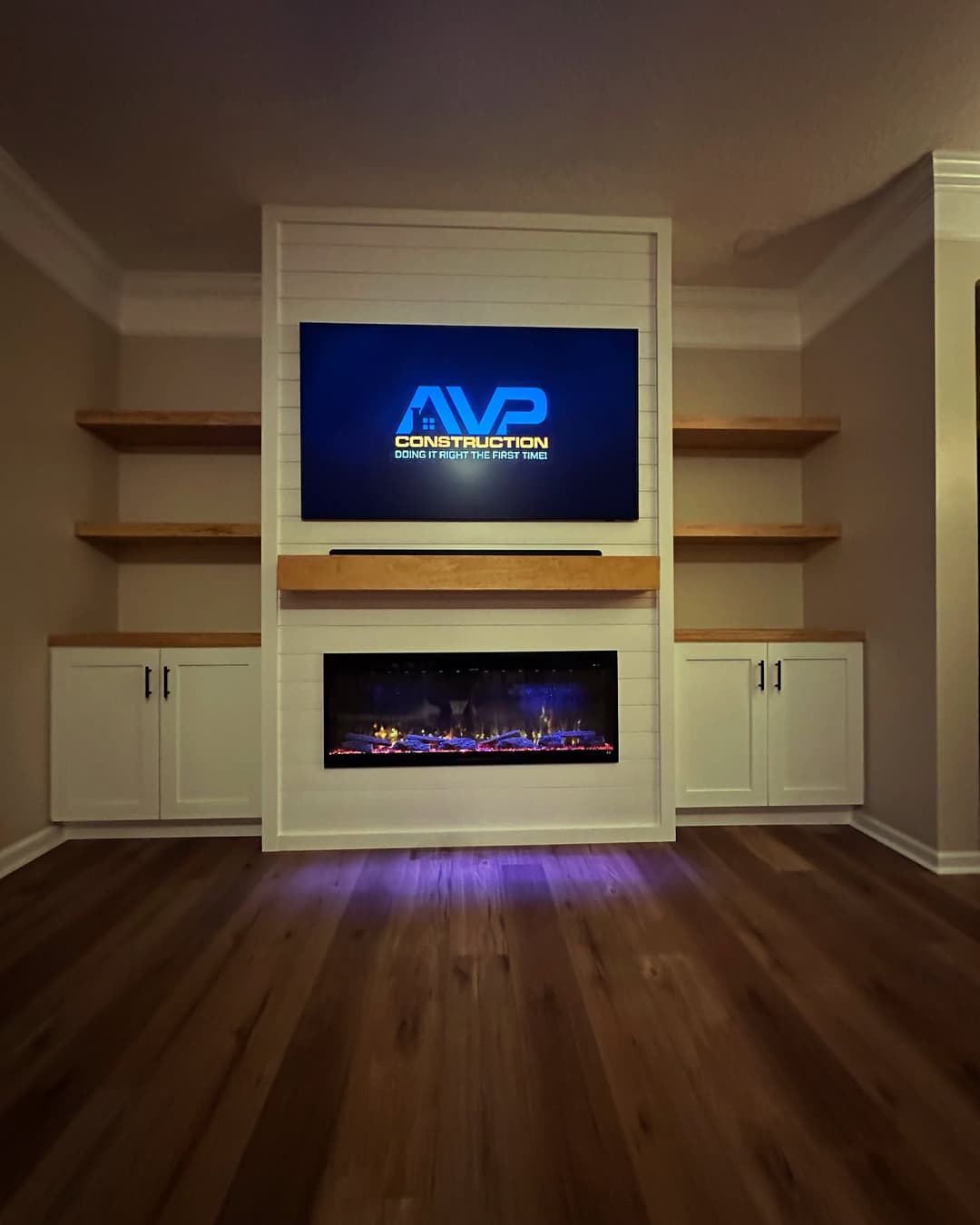
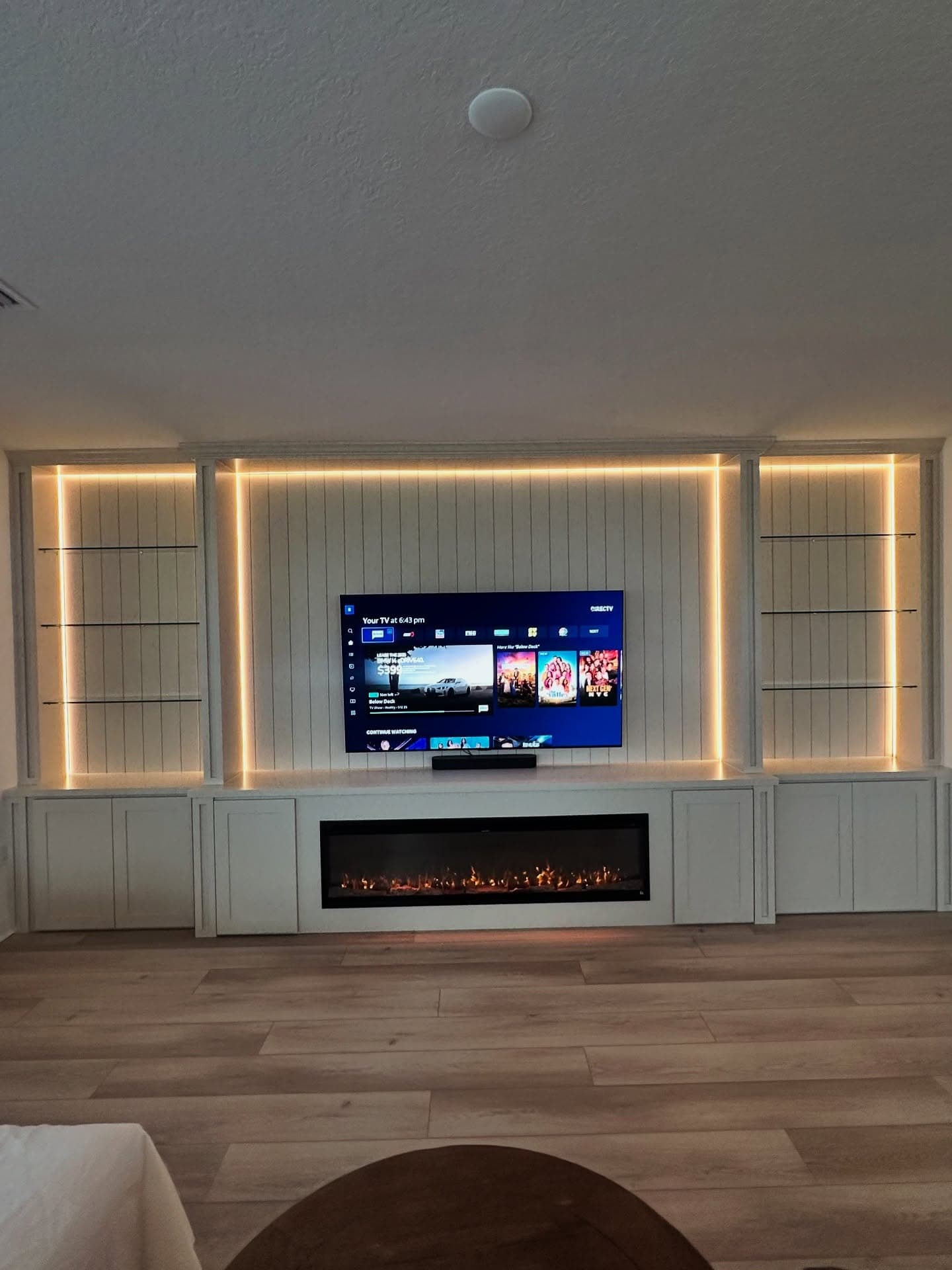
The white shiplap wall above takes that route: shaker cabinets below, wood mantel above, fire floating between. It's the version we suggest most for family rooms, and it's the bread and butter of our entertainment center builds.
When we'd talk you out of it
A few honest cases. If your heart's set on a traditional room, classic mantel, symmetrical built-ins, that Christmas-morning look, a floating fire will always feel slightly off in it. We'll say so. If the room is small with a low ceiling, floating the fire under a wall-mounted TV can stack everything into a cramped totem pole. At that point the fireplace usually belongs at the floor, or the TV belongs beside it rather than above.
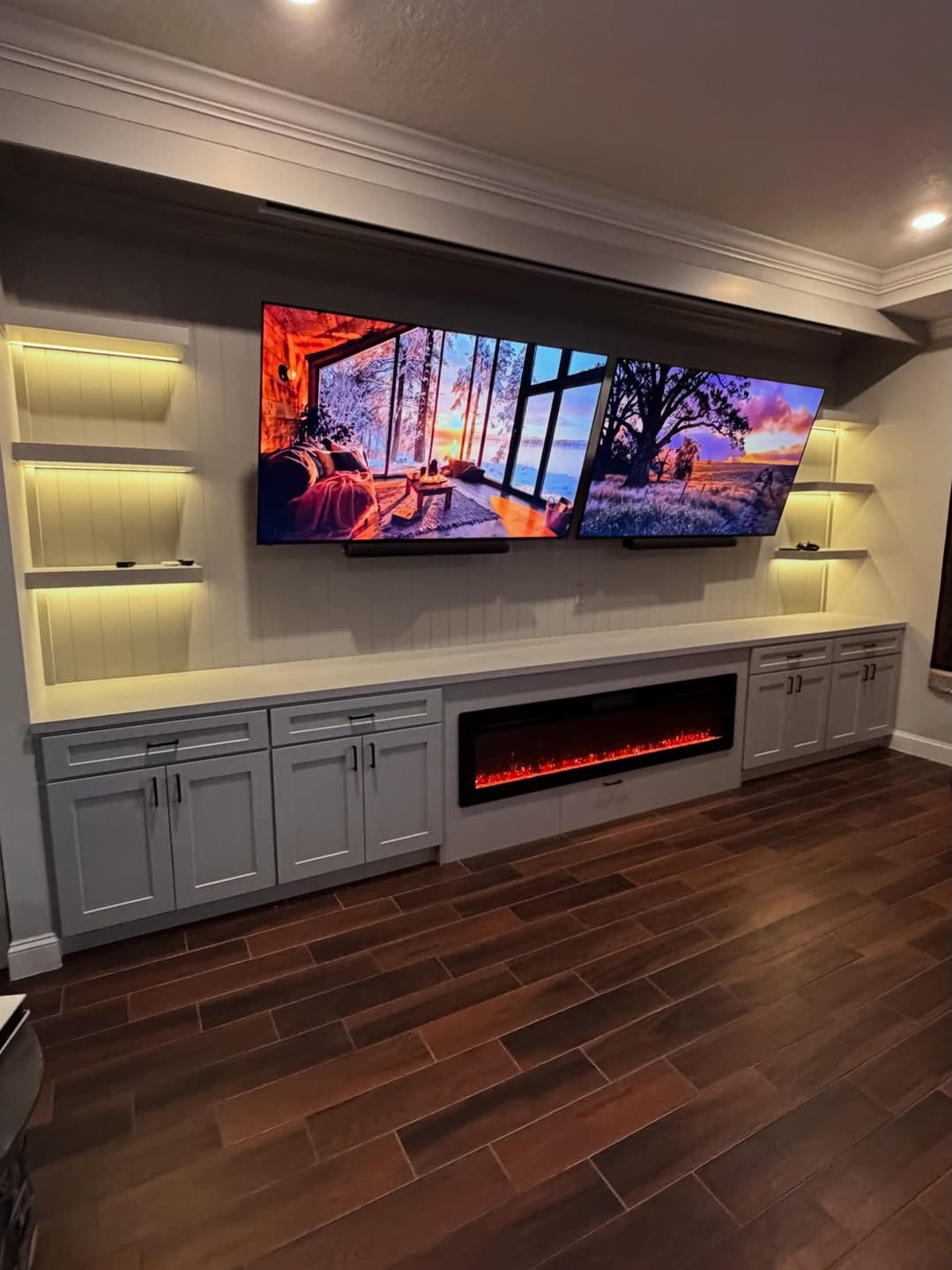
And if your real goal is storage and function, media gear, two TVs, display shelving, the works like the gray built-in above, the fireplace becomes one element among many. Chasing the minimalist floating look can cost you the cabinets you actually need. Design is trade-offs, and we'd rather you love the wall for ten years than love the photo for ten days.
Not sure which side of that line your room falls on? Send us a photo and a rough ceiling height, and we'll give you a straight answer before anyone draws a thing.
Some product links above are affiliate links. If you buy through them we may earn a small commission, at no extra cost to you. We only point you to materials we actually use on the job.
By consultation
Built to last.
Finished to impress.
We take on a limited number of projects each season so each home gets our full attention. Share your project and we’ll respond within 24 hours to see if it’s the right fit.
Insured · $1M general liability · 230+ Google reviews, 5.0