Guides
LED Accent Lighting: Classy or Tacky? It's All in the Details
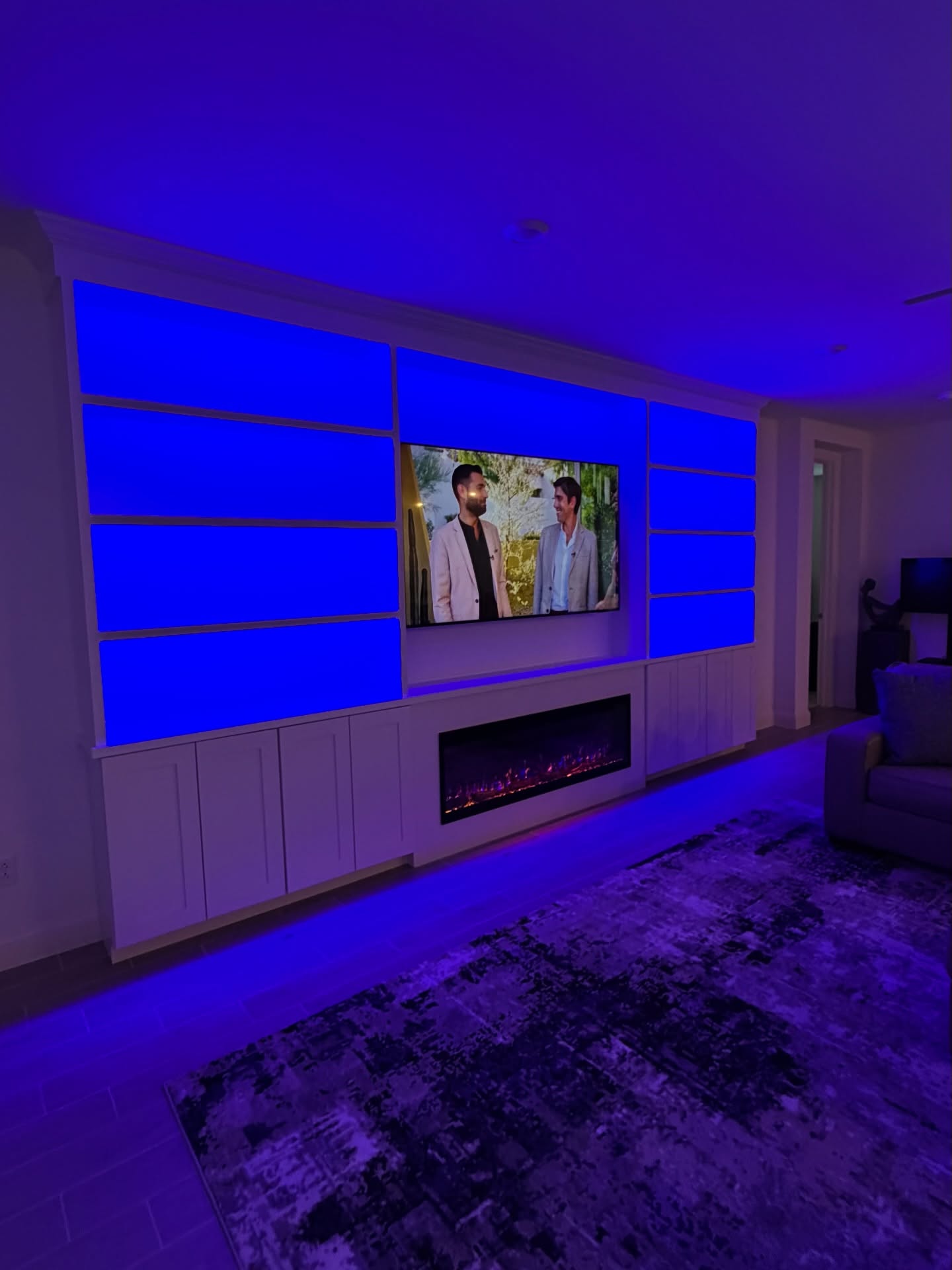
Almost every lighting conversation we have starts the same way: "We like the glow, but we don't want it to look like a gamer setup." Fair enough. Everybody's seen that photo. Nice living room, ceiling glowing purple, little dots of light bouncing off the TV screen like a nightclub at 2am.
Here's the honest version. LED accent lighting shows up in most of the media walls we build across Jacksonville and St. John's County, and whether it reads well or reads cheap comes down entirely to a handful of installation details. Walk through them with us.
Why LED got a bad reputation
Blame the peel-and-stick strip. For years, the typical LED job was a bare strip stuck to the front edge of a shelf. Every diode visible. No diffuser, no dimmer, and one color: saturated blue. It looked like what it was. An accessory added after the fact.
The technology was never the problem. A strip you can see directly will always look like a strip. A strip hidden inside the millwork, bouncing light off wood or paint, just looks like glow. You notice the wall, not the fixture. That's the entire trick, and it has to be planned before the wall is built, not after.
Warm white vs. color-changing, and who actually uses which
Clients often assume they have to pick a side: tasteful warm white or full RGB chaos. In practice, the good color-changing systems do an excellent warm white too, so you're really choosing between "warm white only" and "warm white plus options."
Here's what actually happens after we hand over the remote. Families run warm white almost all the time, because it reads like candlelight or a picture light. Furniture-store lighting, not arcade lighting. The colors come out for a football Saturday, Halloween, Christmas, a kids' movie night. Then it goes right back to warm white.
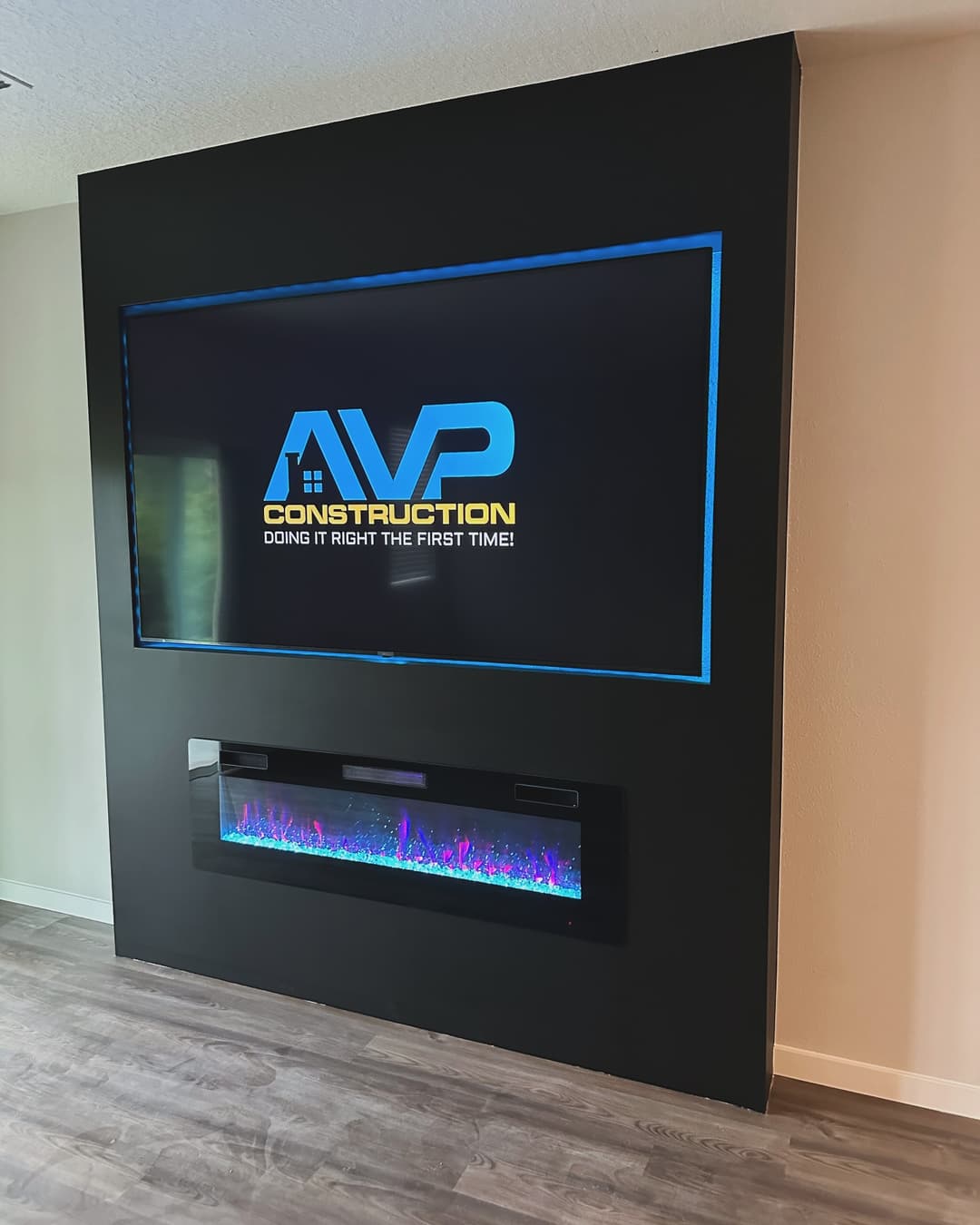
The matte black wall above is a good example of the default setting done right: a soft halo behind the recessed TV, the linear fireplace doing its thing below, and not a single visible light source anywhere. Nobody walks into that room and says "nice LEDs." They say the wall looks expensive.
Where the strips hide (you should never see a dot)
Our rule on every build: if you can see a diode from anywhere you'd normally sit or stand, we've failed. Getting there is carpentry, not electronics.
The strips live in routed channels and recessed reveals we build into the wall itself. Behind the TV panel, tucked under shelf edges with a small lip in front, up inside cabinet tops so light washes down the back. We use aluminum channels with frosted diffusers, which turn a row of dots into one continuous line of light. And we think carefully about what the light lands on. A glow raking across shiplap or a slat panel picks up texture and shadow in a way flat paint never shows.
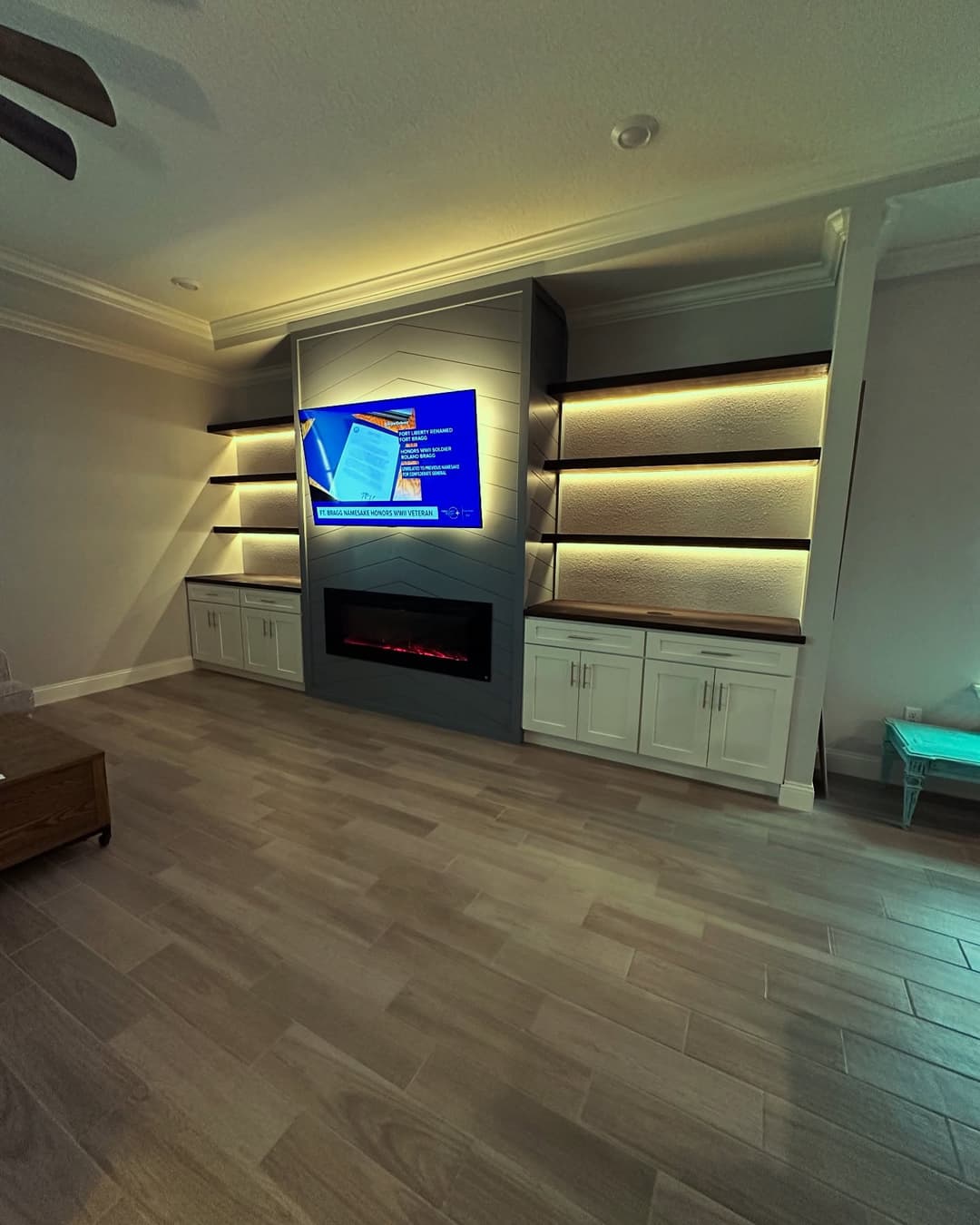
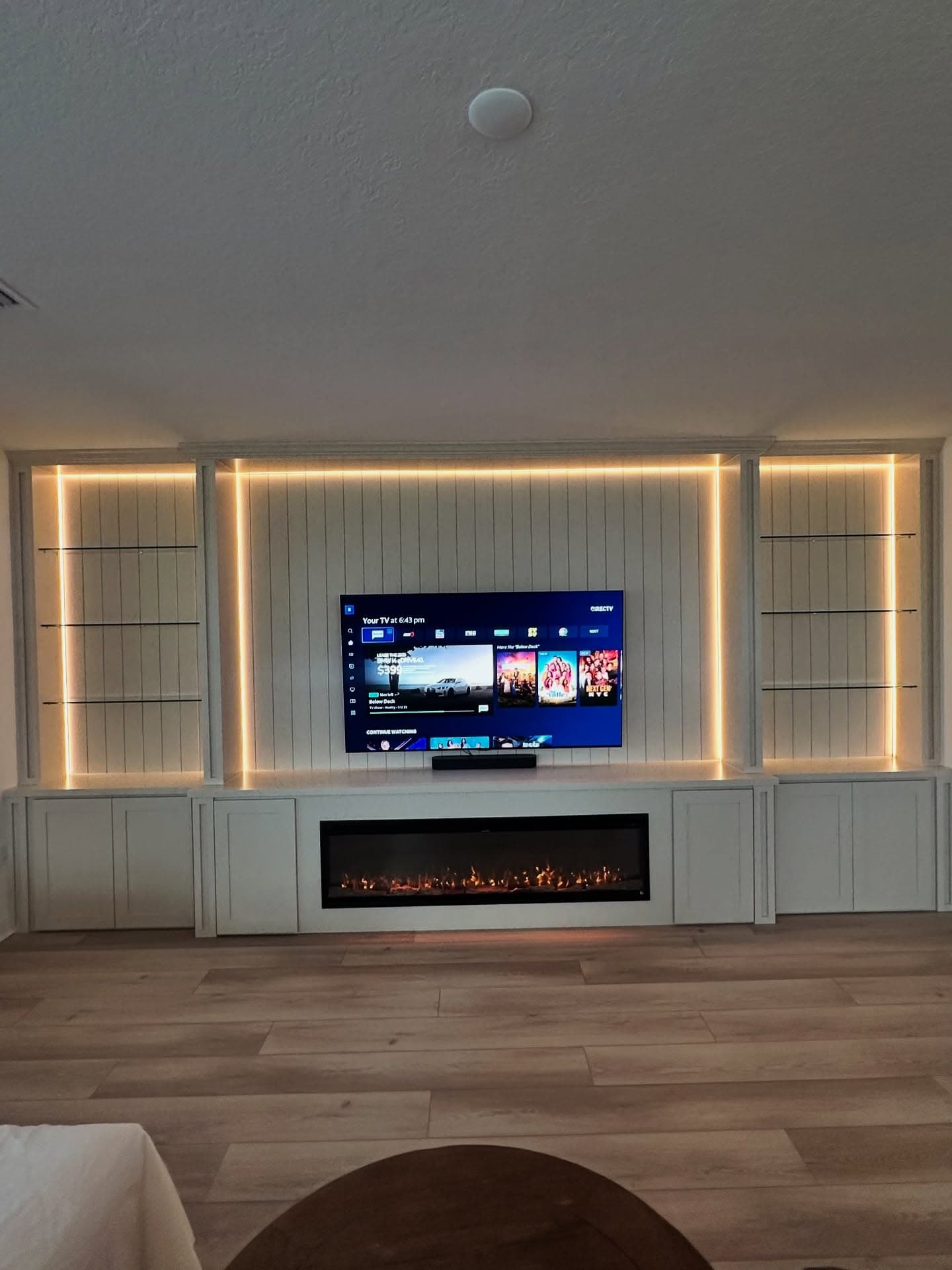
The gray chevron wall above shows the idea. The shelves and cabinets glow, the TV floats on a halo, and there isn't a visible fixture on the entire wall. Every one of those light sources is buried in a detail we cut for it.
Dimmers and scenes: the 9pm setting
Full brightness is for showing the wall off to your in-laws. It is not how you'll live with it. Every lighting job we do gets a dimmer, and most clients end up with a couple of saved scenes. Bright for cleaning and gatherings, and a low, warm evening setting we've started calling the 9pm setting.
That low setting is where the lighting earns its keep. A soft glow behind the TV takes the harsh contrast out of watching a bright screen in a dark room, so it's easier on the eyes, not just quieter on the nerves. And with the fireplace flames running heat-free below, the whole wall settles into something you'll genuinely sit in front of every night.
Jobs where the lighting made the wall
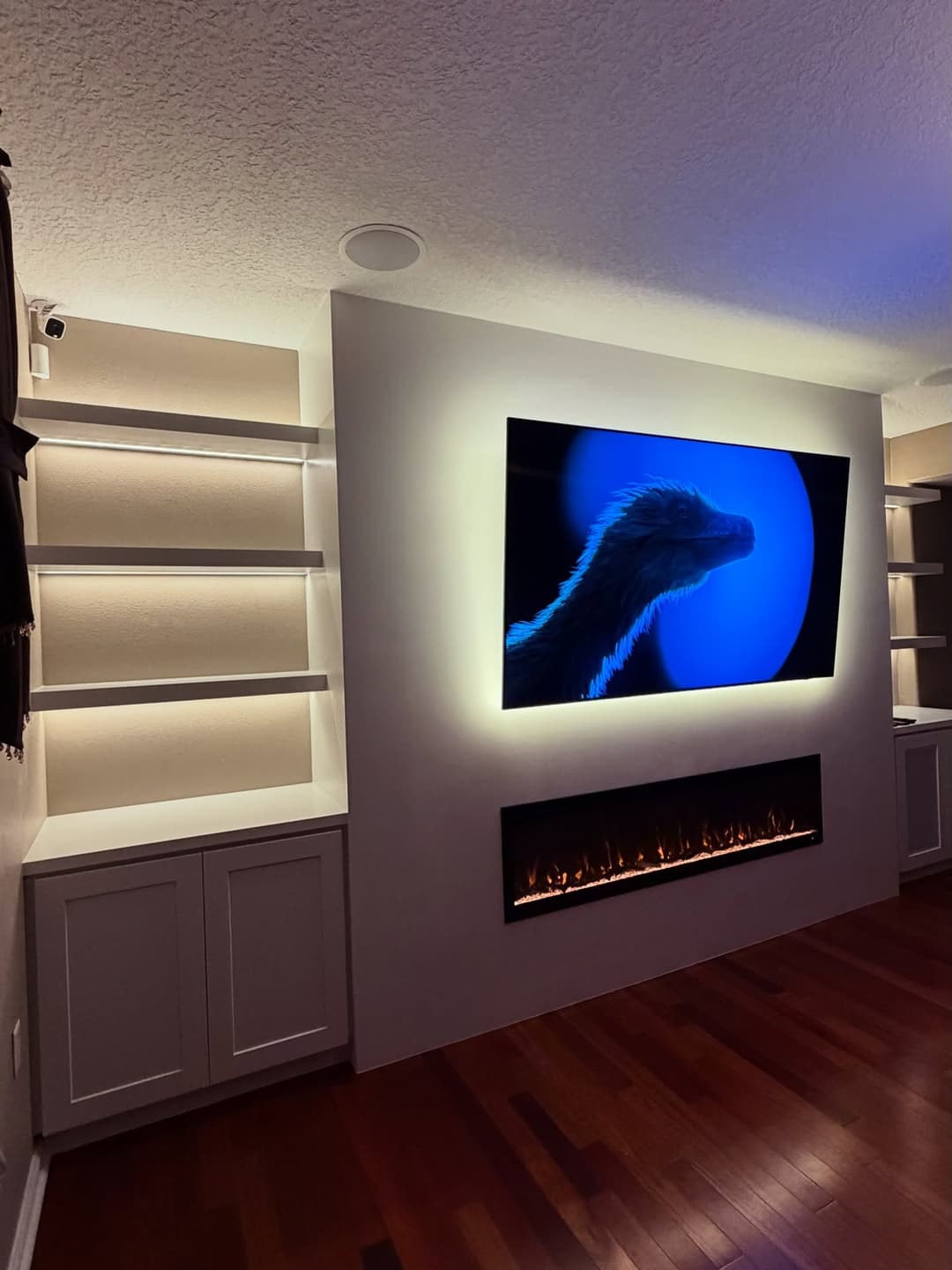
We've built plenty of walls where the lighting is the difference between solid work and something people stop in the doorway to look at. The white built-in above stands on its own as cabinetry. But the lit shelves and backlit TV are what hold the eye. You can see the same effect across our portfolio, and in real client homes like this feature wall we built in eTown or this entertainment center in Tamaya.
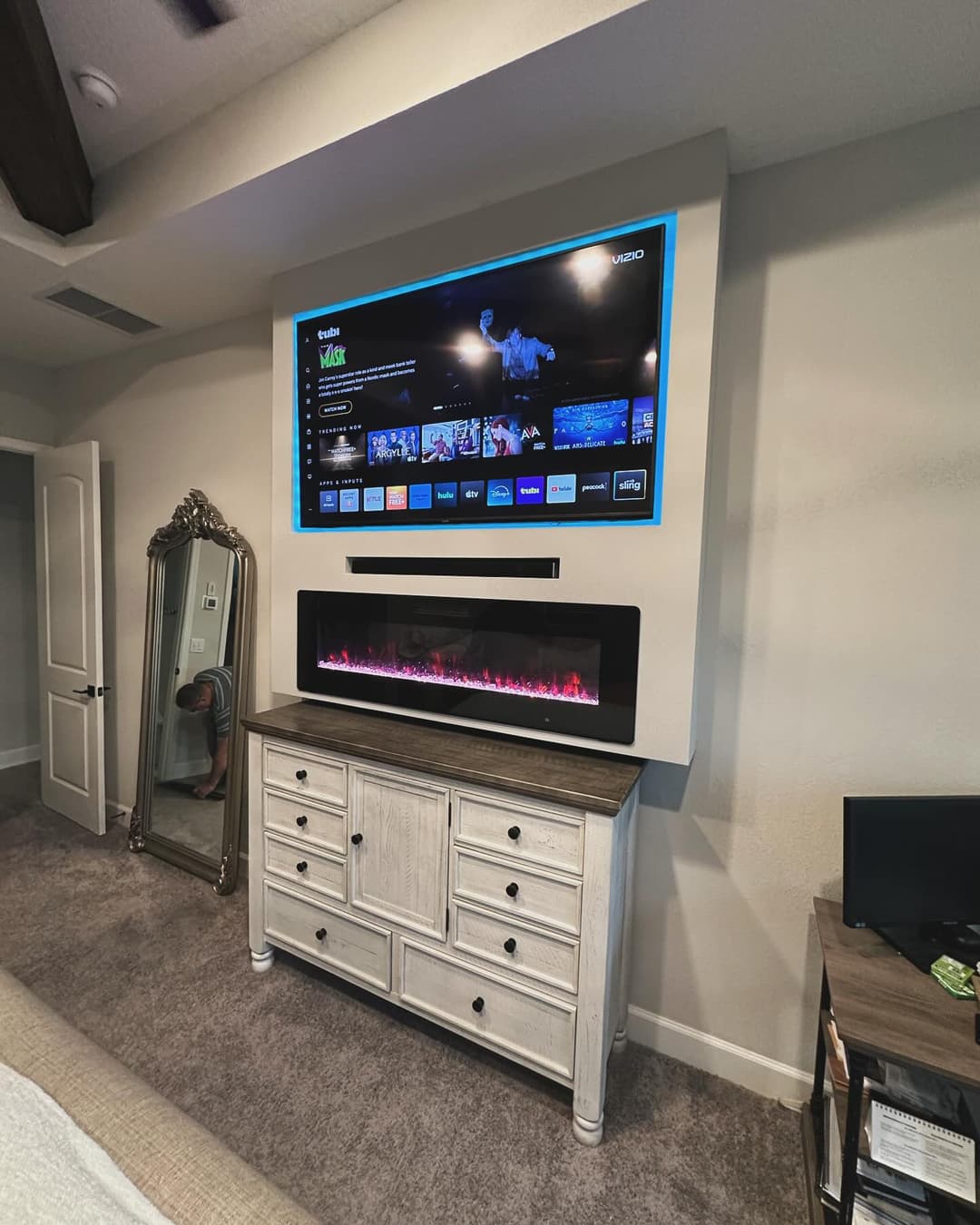
It works in bedrooms too. The panel above uses a backlit TV and a soundbar niche to turn a plain wall into the calmest corner of the house. Lighting scales to the room. It doesn't have to be a two-story statement to be worth doing.
One more practical point: relative to cabinetry and stone, lighting is one of the smaller line items on a media wall, but it has to go in while the wall is open. Adding it later means surgery. If you're budgeting a project, our guide to what custom work costs in Jacksonville explains how we think about where the money goes.
Classy or tacky is a craftsmanship question, not a taste question. Hide the source, warm the color, dim it down, and LED lighting is among the best money you can put into a wall. If you're weighing it for your own project, reach out and we'll walk your room with you.
Some product links above are affiliate links. If you buy through them we may earn a small commission, at no extra cost to you. We only point you to materials we actually use on the job.
By consultation
Built to last.
Finished to impress.
We take on a limited number of projects each season so each home gets our full attention. Share your project and we’ll respond within 24 hours to see if it’s the right fit.
Insured · $1M general liability · 230+ Google reviews, 5.0