Guides
White, Black, or Wood Tone? Picking a Media Wall Color You'll Still Love in Ten Years
Color is the decision clients agonize over most, and I get it. A media wall is not a throw pillow. You can't swap it out when you change your mind. The two fears we hear on repeat: "black will make the room feel like a cave" and "white will look like every builder-grade house on the street."
Both fears are real. Both are avoidable. We've been building these walls all over Jacksonville & St. John's County since 2020, and we've watched every color live in every kind of room. Here's how we'd walk you through the choice.
The three roads and what each does to a room
Strip away the paint decks and there are really three directions: dark (black, charcoal, deep navy or green), light (white, cream, greige), and wood tone (usually white oak or walnut, either as the whole wall or as accents). Dark recedes and adds weight. Light expands and calms. Wood warms.
None of them is the trendy choice or the safe choice on its own. The room decides. Ceiling height, natural light, floor color, and what's staying in the room matter more than what's winning on Instagram this month.
Black: drama, and why it hides the TV beautifully
Here's the argument for black that most people haven't considered: your TV is a big black rectangle, and it's not going anywhere. On a white wall, the TV reads as a hole. On a black or charcoal wall, it nearly vanishes. The whole wall reads as one composed piece, off or on.
Black walls also carry LED accent lighting better than anything else. The glow has contrast to work against. The cave fear is only real when a dark wall gets no relief, which is why almost every dark wall we build gets a warm counterweight. The charcoal wall below, with its white floating shelves breaking up the mass, is a good example of that.

Where we'd pump the brakes: small rooms with one window, or rooms where the wall faces away from the light. Dark paint in a dim room doesn't read moody. It reads heavy.
White: light, never wrong, but it needs texture
White is the workhorse, and there's no shame in it. It brightens the room, matches everything you'll ever own, and doesn't date. The builder-basic fear only comes true when a white wall is flat. A plain drywall box painted white is forgettable because it's featureless, not because it's white.
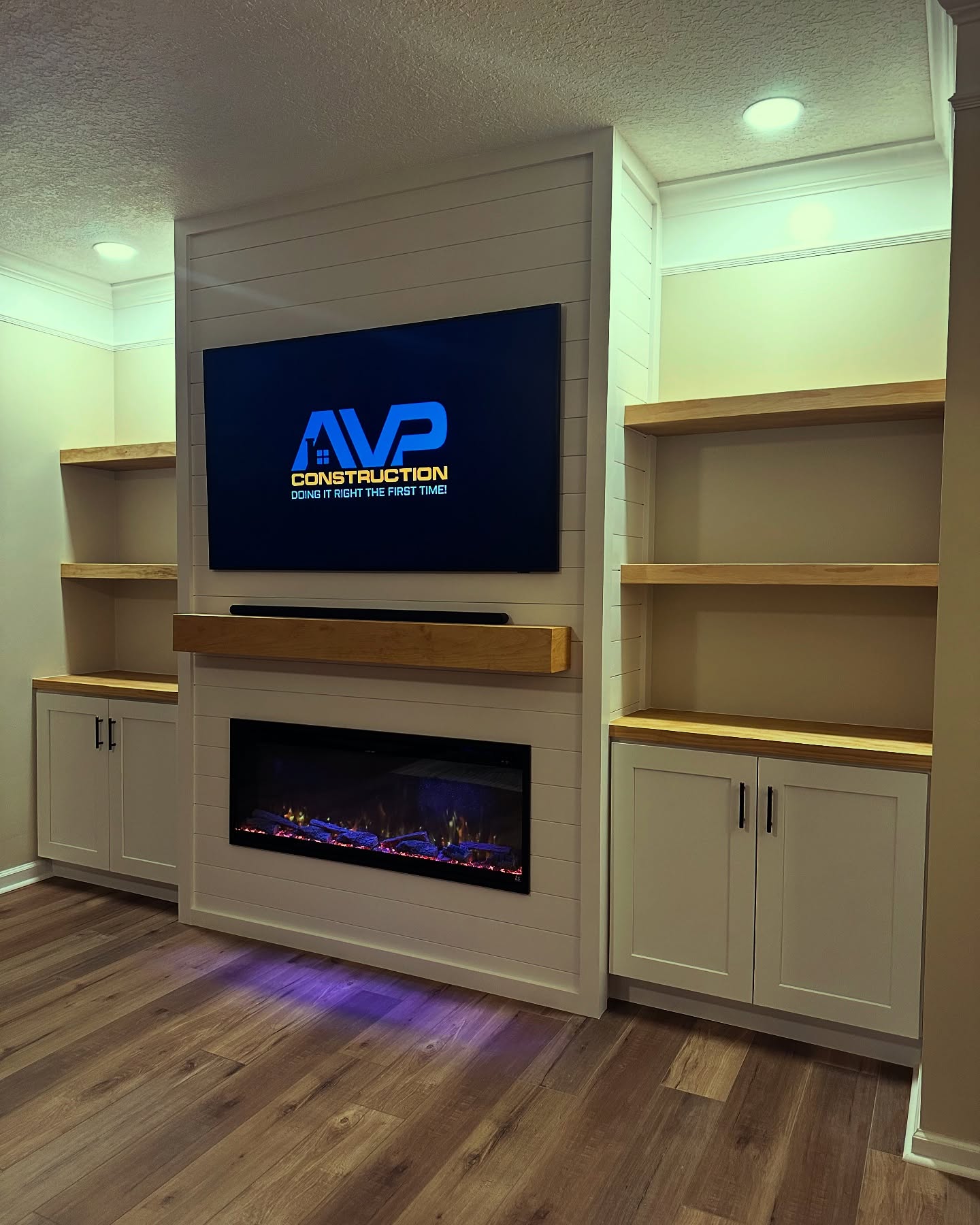
The fix is texture and shadow: shiplap lines, fluted panels, a recessed niche, a chunky wood mantel. The white shiplap wall below doesn't read builder-grade for a second, because the light has something to do on its surface. If you're weighing which paneling treatment gets you that texture, our shiplap vs. board and batten guide is the deeper dive.

Wood tones: the warmth play
Wood-tone walls, white oak slats, a stained mantel, oak floating shelves, bring something paint can't: material warmth. A room with a wood-heavy wall feels settled in a way that's hard to fake. White oak especially has become our most-requested tone because it's warm without going orange, and it plays well with the gray-brown flooring in most newer Northeast Florida homes.
The caution here is matching. Wood tones have to get along with your floors and your furniture, and "close but not quite" reads worse than deliberately different. We'd rather contrast a light oak shelf against a dark floor than chase an exact match and land a shade off.
Two-tone builds: the best of both
Here's the quiet answer to most color paralysis: you don't have to pick one. Many of our favorite walls are two-tone. A dark backdrop with light shelving, a white wall with a stained oak mantel, black cabinets under natural wood floaters. The black chevron wall below, framed by white shelves and cabinets, gets the weight of dark and the lift of light in one build.

Two-tone also ages more honestly. When one element starts feeling dated in eight years, you repaint one color. Not the whole concept.
How we test a color before committing
Whatever direction you lean, we never let a client pick off a one-inch swatch. The routine: get a real sample board, big as a poster, painted in the actual finish. Lean it against the actual wall. Look at it at 8am, at noon, and at night with the lamps on. Florida light is strong and it shifts colors hard through the day. A charcoal that looks sophisticated at noon can go flat black by dinner. A warm white can go yellow at sunset.
We also ask what's staying in the room for the next five years. The sectional, the rug, the floor. The wall has to live with them, not with the inspiration photo. And texture choices interact with color, so we usually settle the paneling style and the color together, the same way we approach every accent wall and media wall design.

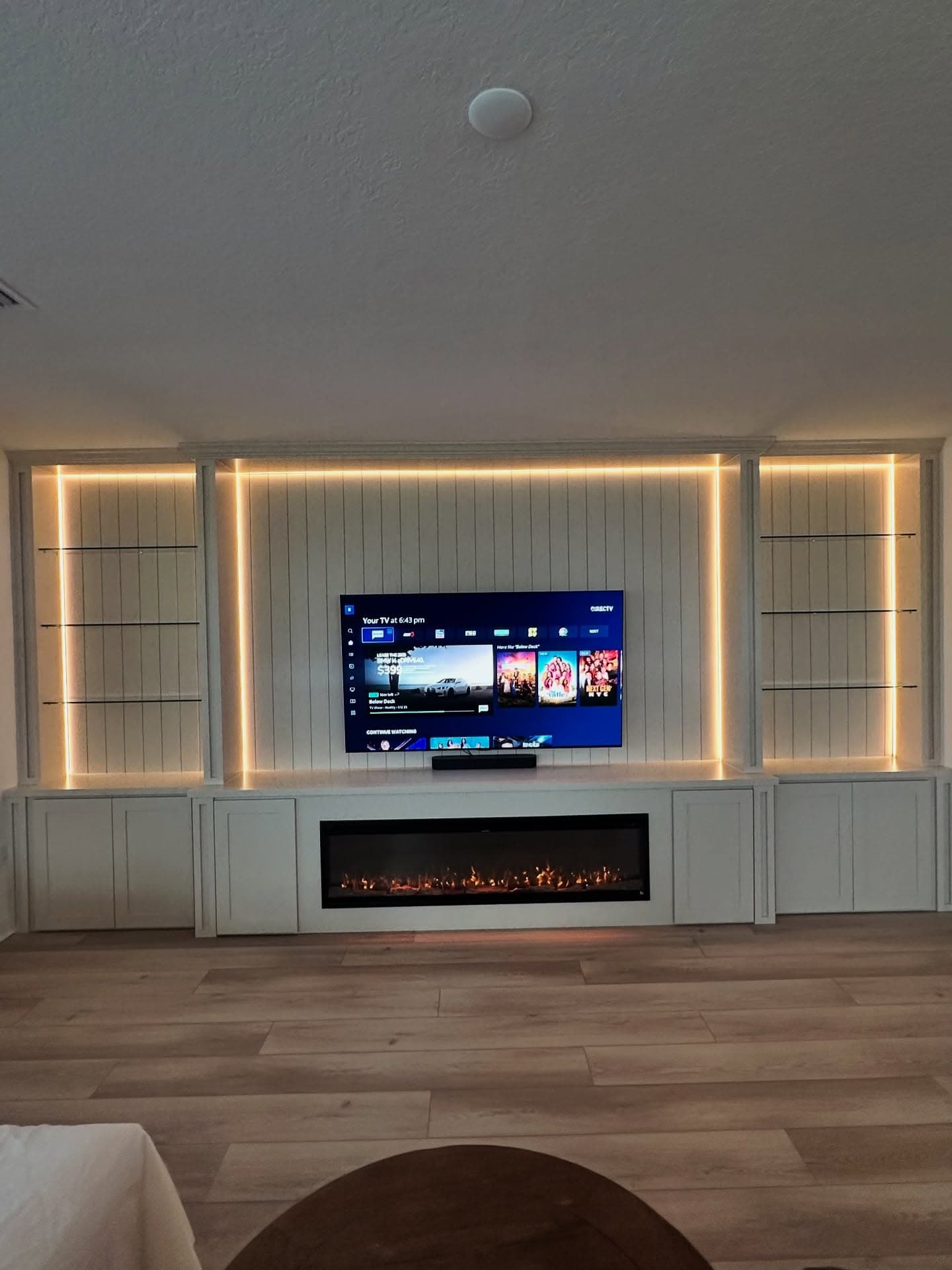
One more reassurance: color is paint, and paint is the most fixable part of the whole build. The carpentry underneath, the niches, the shelves, the mantel, like the lighted shelf wall above, is what you're really investing in, and it survives any repaint. You can see the full range of colors we've built across town in our portfolio.
Still stuck between two finalists? Bring us both. Half our consultations end with a color decision made in twenty minutes, standing in the actual room.
Some product links above are affiliate links. If you buy through them we may earn a small commission, at no extra cost to you. We only point you to materials we actually use on the job.
By consultation
Built to last.
Finished to impress.
We take on a limited number of projects each season so each home gets our full attention. Share your project and we’ll respond within 24 hours to see if it’s the right fit.
Insured · $1M general liability · 230+ Google reviews, 5.0