Guides
Painted or Stained? Choosing a Mantel You Won't Regret
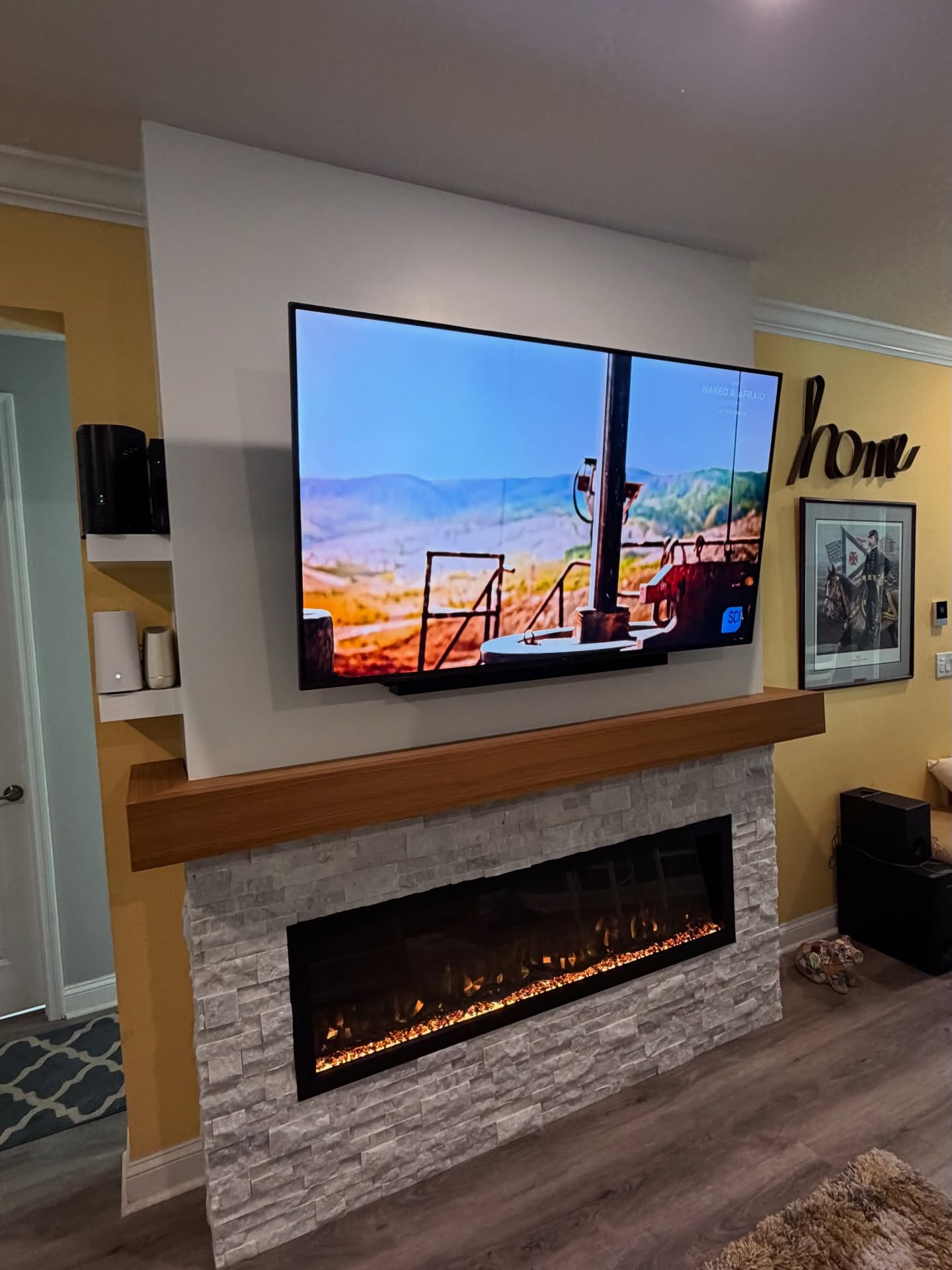
Funny thing about mantels: clients will decide on an entire wall in one meeting, paneling, fireplace, shelving, lighting, all of it, then spend two weeks agonizing over whether the mantel should be painted or stained. Underneath that question are usually two specific fears: "what if the stain goes orange like my parents' oak cabinets" and "won't paint chip or scorch that close to the fire?"
Both fears are worth taking seriously. Both have pretty clean answers. Here's how we walk through it on jobs across Jacksonville & St. John's County.
The mantel is jewelry. It can match or contrast.
Think of the mantel as the one piece on the wall your eye is allowed to land on. Everything else, panels, paint, even the fireplace itself, is the backdrop. That means the mantel has two legitimate jobs: it can contrast (a stained wood beam popping off a painted wall) or it can blend (a painted mantel that reads as part of the architecture).
Neither is more correct. But they produce very different rooms. Knowing which effect you're after settles half the finish question before you've looked at a single stain sample.
Stained beams: the look everyone asks for
If we tallied requests, the stained wood beam on a painted wall would win by a mile. Against white shiplap or a dark plank wall, a stained mantel adds warmth and makes the whole build feel specific to the room. The black diagonal-plank wall below, with its chunky stained mantel and matching hearth bench, is that formula doing exactly what it does best.
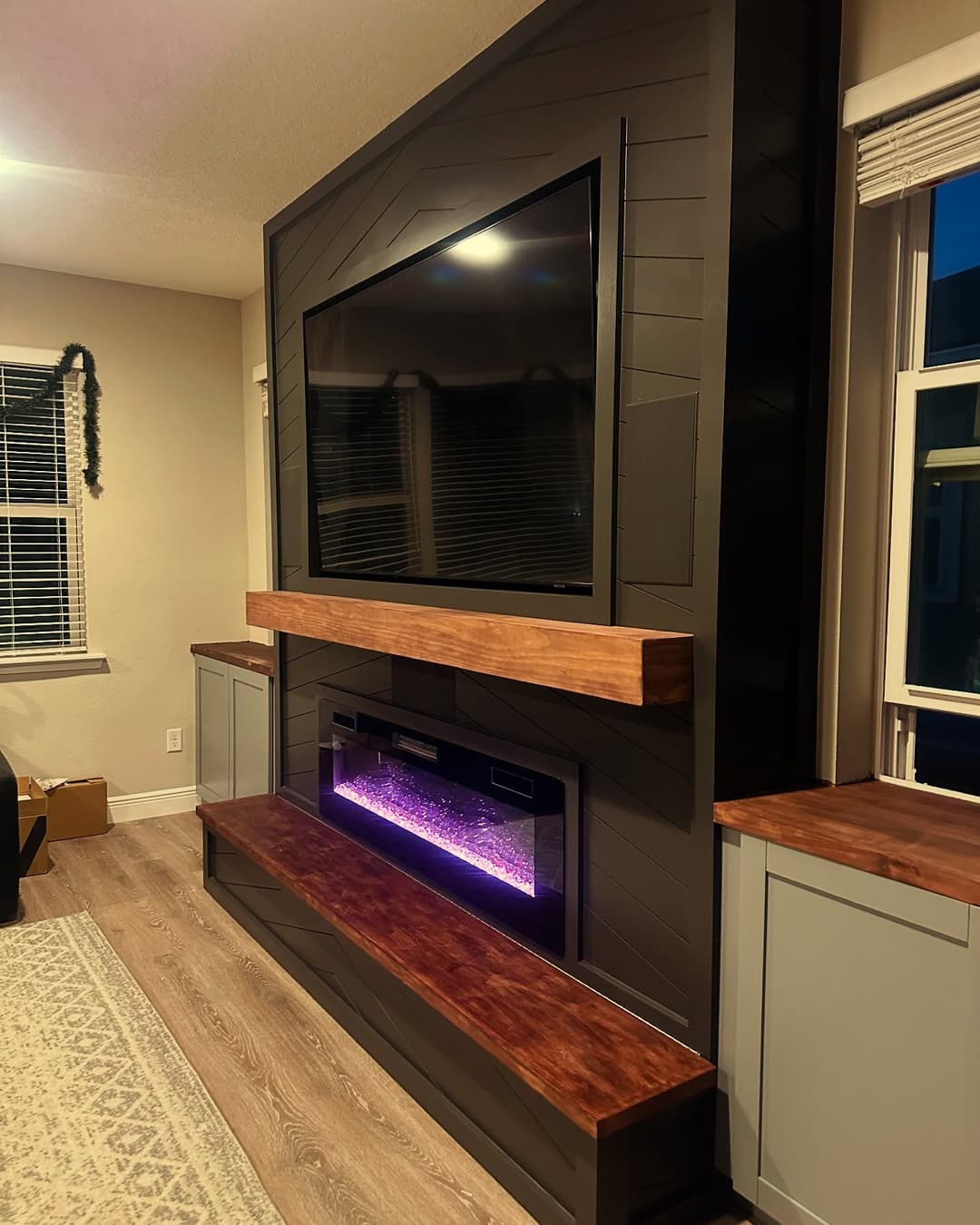
Now, the orange fear. That memory comes from 1990s golden oak with amber polyurethane on top. The finish, more than the wood, is what went orange. Today we build most mantels in white oak, which takes stain evenly and leans naturally toward soft, neutral browns. We finish with clear coats that don't yellow the way old-school poly did. Driftwood grays, warm honey tones, deep walnut-ish browns, all achievable without a hint of orange.
The rule we push hardest: sample the stain on the actual wood your mantel is built from, in your actual room. The same stain reads differently on oak versus pine versus fir. And Florida's bright light shifts everything a notch warmer.
Painted mantels: when they disappear on purpose
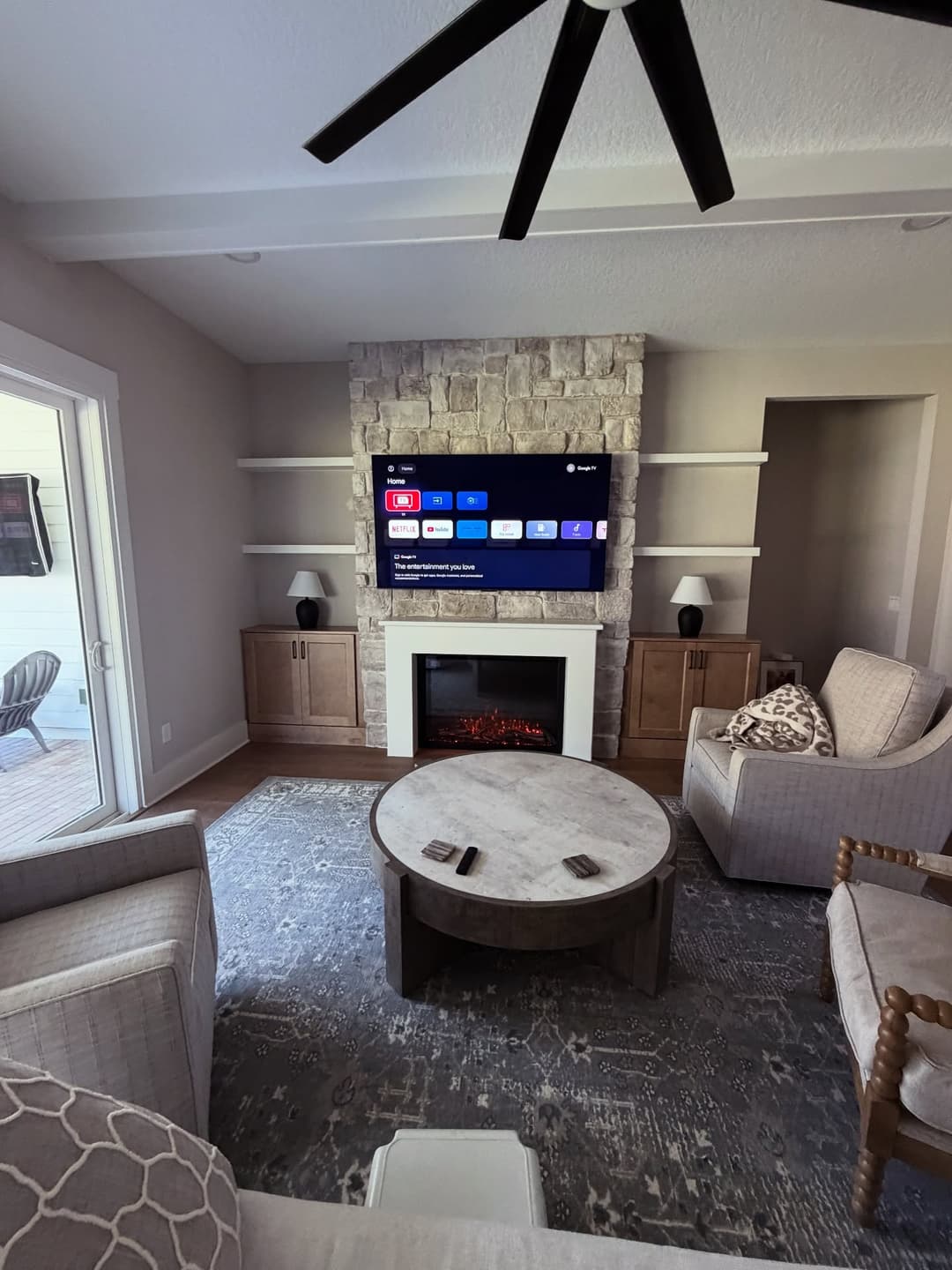
A painted mantel sounds like the safe, plain choice until you see it done right. Painted the same color as the surround, a mantel stops being an accessory and becomes architecture. A strong horizontal shadow line that organizes the wall without demanding attention. The stone fireplace below with its white-painted mantel and surround is a good example: the stone carries the wall, and the mantel frames it quietly.
Painted mantels earn their keep in three situations. When there's already a lot of wood tone in the room (floors, furniture, ceiling beams) and one more would be noise. When the wall's drama lives somewhere else, like a stone or marble-look surround. And when the style leans traditional, where painted millwork mantels have centuries of precedent behind them.
Heat, chipping, and finishes with an electric insert
Here's where electric fireplaces quietly remove a whole category of worry. A wood-burning firebox pushes serious radiant heat up at the mantel, and paint or finish directly above one lives a hard life. The linear electric inserts we install vent their heat out the front of the unit. The heater draws about what a space heater does, and the mantel above it isn't getting cooked. Flames-only mode doesn't produce meaningful heat at all.
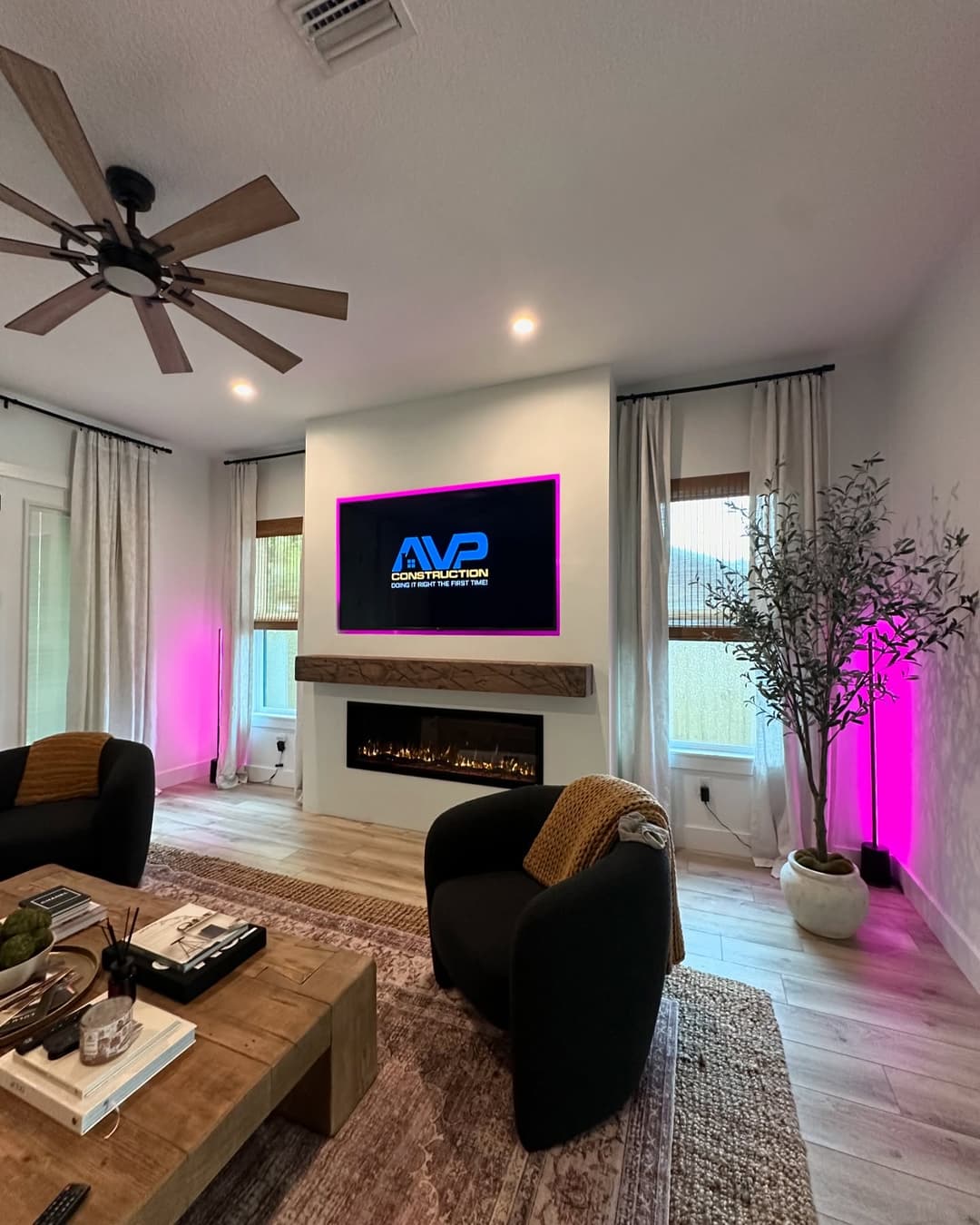
We still respect the manufacturer's clearances on every build. But the practical upshot is this: neither finish is at risk over an electric insert. Paint isn't going to bubble and stain isn't going to bake. Pick the finish for looks, not survival. The white niche wall below with its rustic stained mantel sits right over a linear fireplace, and that beam will look the same in fifteen years.
Durability differences do exist, just not from heat. Paint shows dings and wears at the corners faster. Stain hides small dents because the color goes through the wood. If your mantel is going to hold garland, stockings, and a rotating museum of kid art, stain is the lower-maintenance choice.
Our default when a client can't decide
When someone's truly stuck, here's what we usually suggest: a stained white oak mantel in a mid-tone neutral brown, on a painted wall. It's the combination we've built most, the one that photographs well, and the one no client has ever called us to change. The white chevron wall below is that default in the wild.
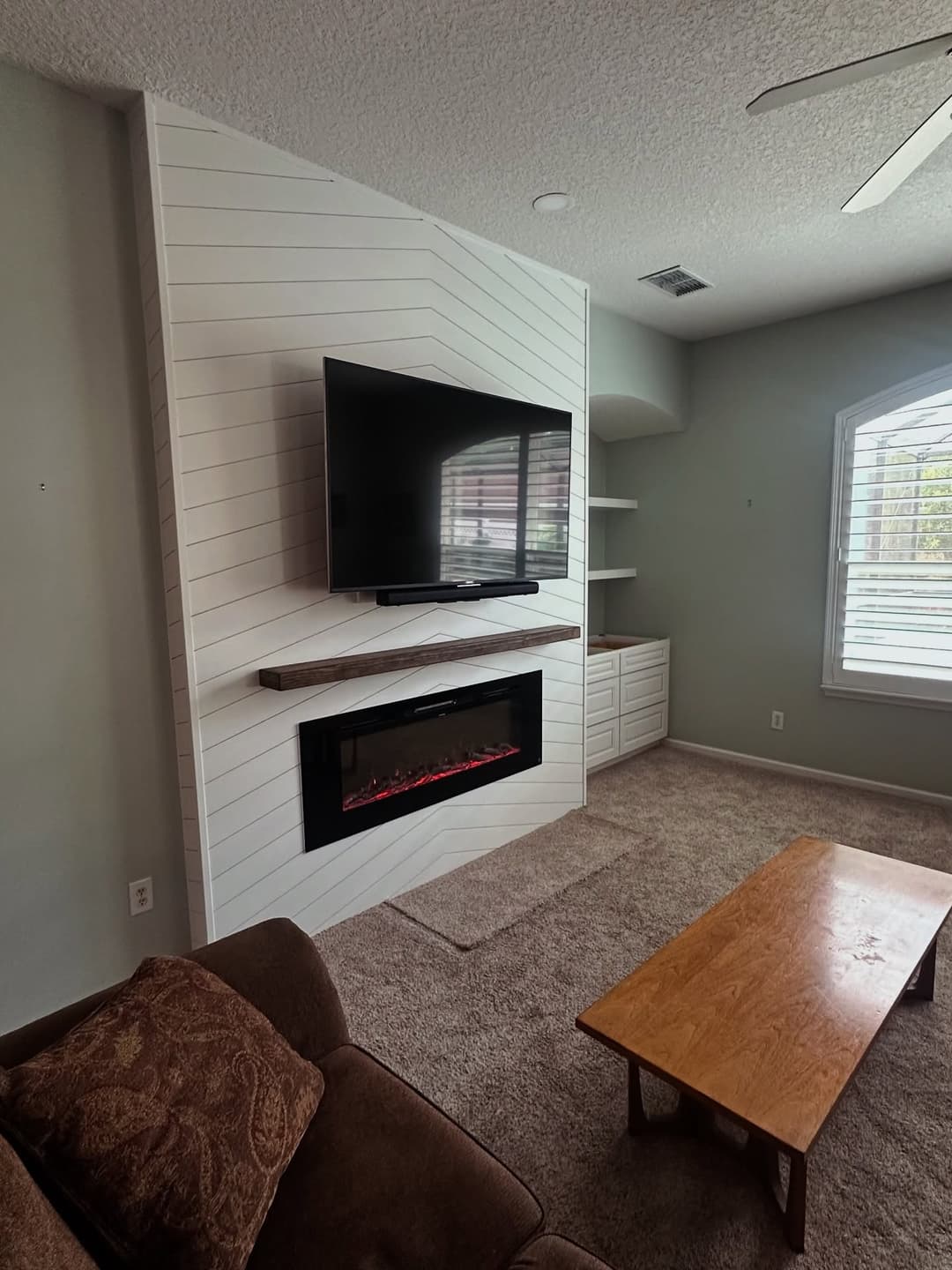
One reassuring footnote: this is one of the most reversible decisions on the whole wall. A stained mantel can be painted later in an afternoon. Paint to stain is the one-way door. Stripping paint out of oak grain is miserable work, so if you're 60/40 toward stain, start there. Cost-wise the two finishes are close enough that it shouldn't drive the decision. The bigger budget levers live elsewhere in the build, which we cover in what custom work costs in Jacksonville.
If you want to see how these mantels live in real rooms, our fireplace mantel build in World Golf Village is a good place to start, and there are dozens more stained-and-painted combinations in the portfolio. Bring us a photo of your floors and we'll tell you which way we'd go in your room.
Some product links above are affiliate links. If you buy through them we may earn a small commission, at no extra cost to you. We only point you to materials we actually use on the job.
By consultation
Built to last.
Finished to impress.
We take on a limited number of projects each season so each home gets our full attention. Share your project and we’ll respond within 24 hours to see if it’s the right fit.
Insured · $1M general liability · 230+ Google reviews, 5.0