Guides
Emerald vs. Emerald Urethane: Same Sherwin-Williams Label, Different Jobs
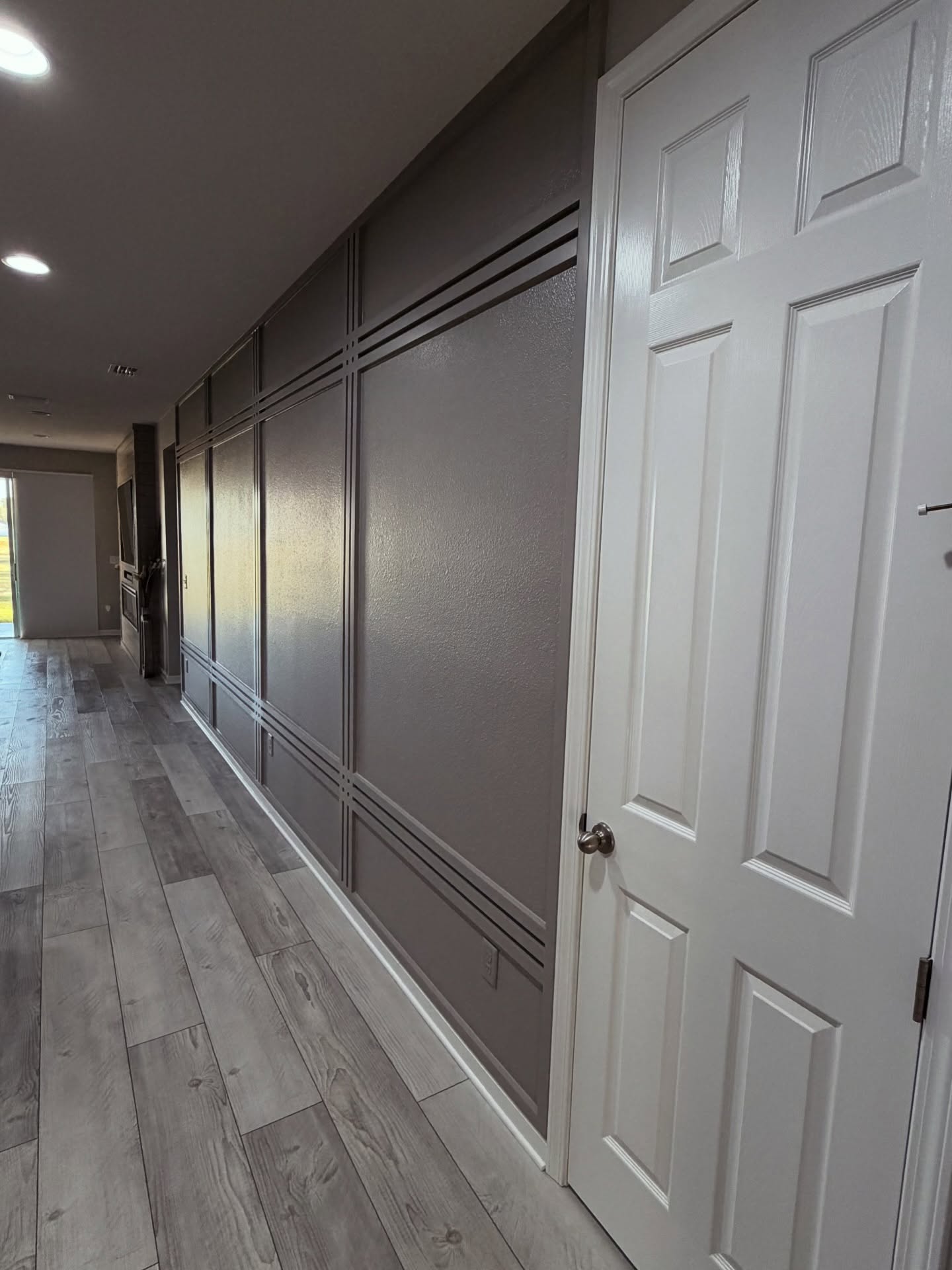
Sherwin-Williams makes two products that share a name: Emerald Interior and Emerald Urethane. Same green label family, same shelf at the paint store, completely different jobs. We watch homeowners mix them up constantly, and the mix-up isn't harmless. Put the wall paint on a bookshelf and you'll be re-doing that shelf.
We use both, on nearly every job we run across Jacksonville and St. John's County, so here's the plain-English version of what each one is and where it belongs.
Two cans, one name. The confusion is fair.
Emerald is Sherwin-Williams' premium line, and they've put the name on more than one product. The two you'll actually be choosing between are Emerald Interior (their top-shelf wall paint) and Emerald Urethane Trim Enamel (their cabinet and trim product). The names are close enough that even paint quotes blur them together, and we've seen "Emerald" written on a proposal with no way to tell which can the painter meant.
That vagueness matters. The two products dry into very different surfaces. One is built for walls you look at. The other is built for surfaces you touch, load, slide things across, and scrub.
Emerald Interior: the wall paint we put on accent walls
Emerald Interior is wall paint. Really good wall paint. It covers well, holds a crisp line, and stands up to the washing and scuffing a wall actually gets. When we build a board and batten or picture-frame molding wall, we spray the whole thing (drywall and trim together) with Emerald Interior, usually in satin. One continuous coat of color over the millwork is what makes those walls read as architecture instead of decoration.
The greige batten wall below, running its staggered pattern up under the tray ceiling, is Emerald Interior doing exactly what it's for: a big, even, sprayed field of color on a surface nobody's going to stack dishes on.
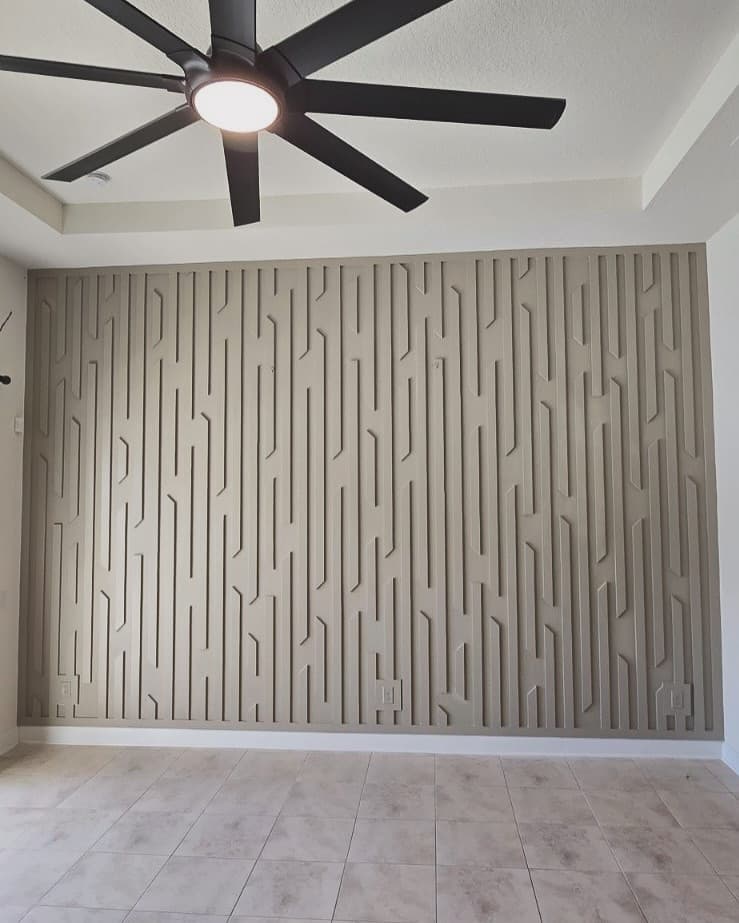
And that's the key. An accent wall gets looked at, dusted, and occasionally wiped. It doesn't get loaded, dragged across, or gripped forty times a day. Wall paint's softer film is fine there. Great, even. If you're still choosing a treatment for a wall like this, our shiplap vs. board and batten guide covers that decision.
Emerald Urethane: the enamel we trust on built-ins
Emerald Urethane Trim Enamel is a different animal. It's a urethane-modified trim enamel that cures to a hard, furniture-grade film. Sprayed through our Graco rigs, it levels out smooth with no brush marks, and once it's cured it behaves less like paint and more like a factory finish.
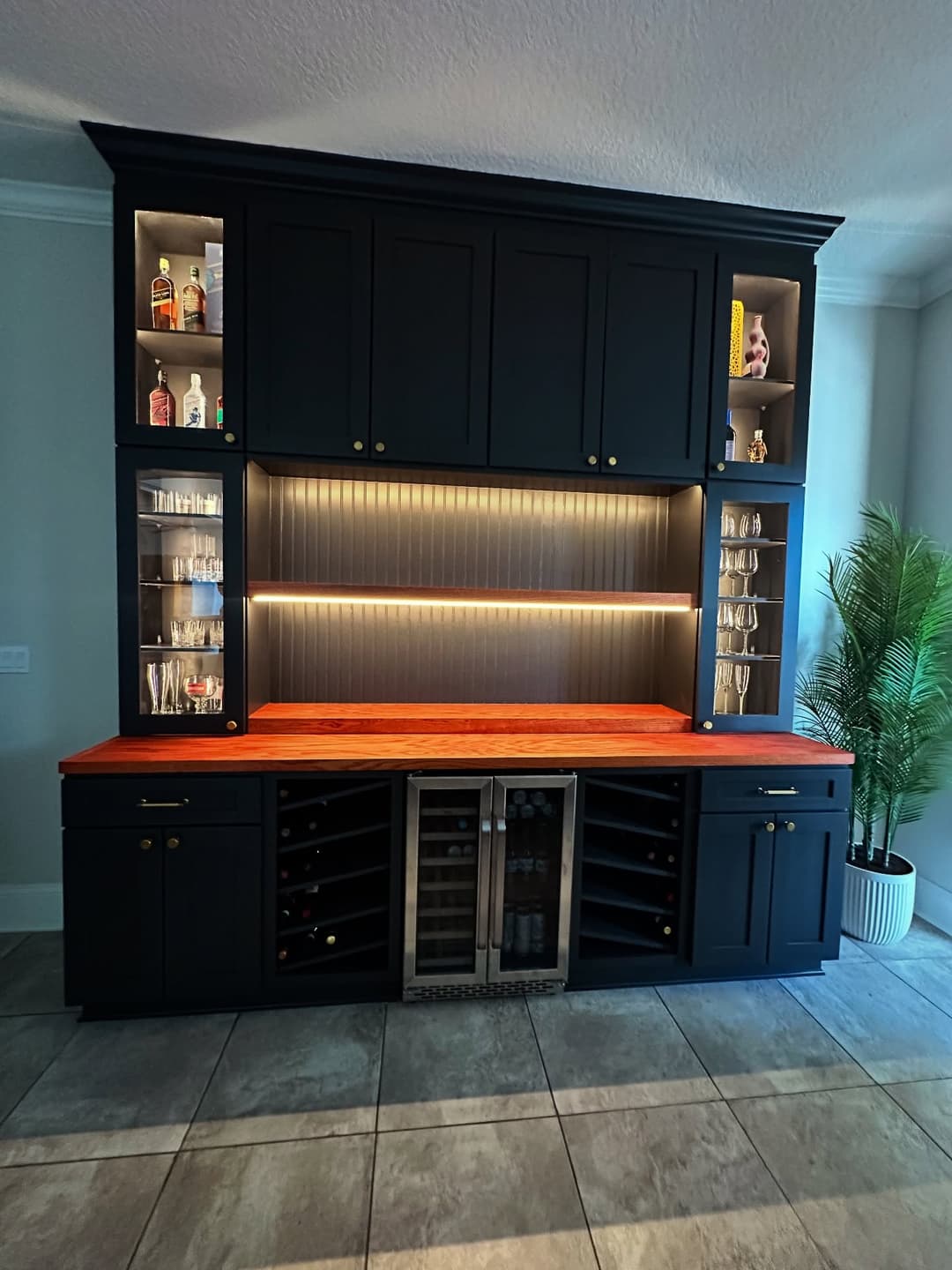
What that hardness buys you, in things you actually feel: shelves that don't stick to the books sitting on them. Painters call that sticking "blocking," and soft paint is terrible about it. Doors and drawers that don't peel where fingers land. Surfaces that wipe clean without burnishing. Every painted cabinet, shelf, desk, and piece of millwork we build gets it. Like the navy dry bar below with the butcher block top and lighted glass cabinets. Those doors and wine racks get handled daily, and that's exactly the duty this enamel is made for.
Where each one goes in a typical AVP build
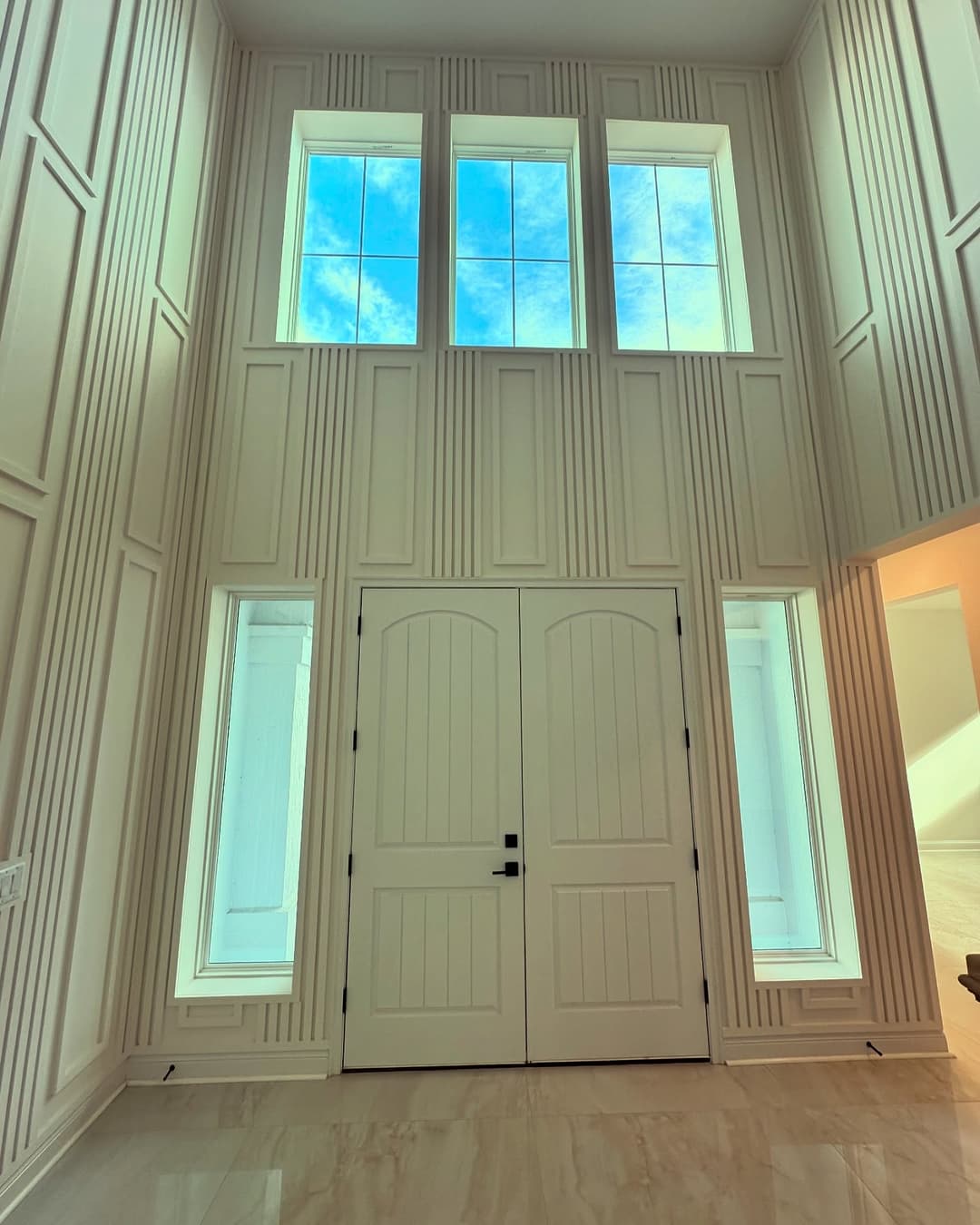
Here's the split on a real project, using the two-story entry below as the example (fluted panels and picture-frame molding wrapping a set of double doors):
- Emerald Interior: the accent wall field. Drywall, battens, panel molding. Anything that's wall. Satin, sprayed as one continuous surface.
- Emerald Urethane: the doors themselves, the door casing, baseboards, and any shelf, cabinet, or built-in attached to the wall. Anything hands and objects live on.
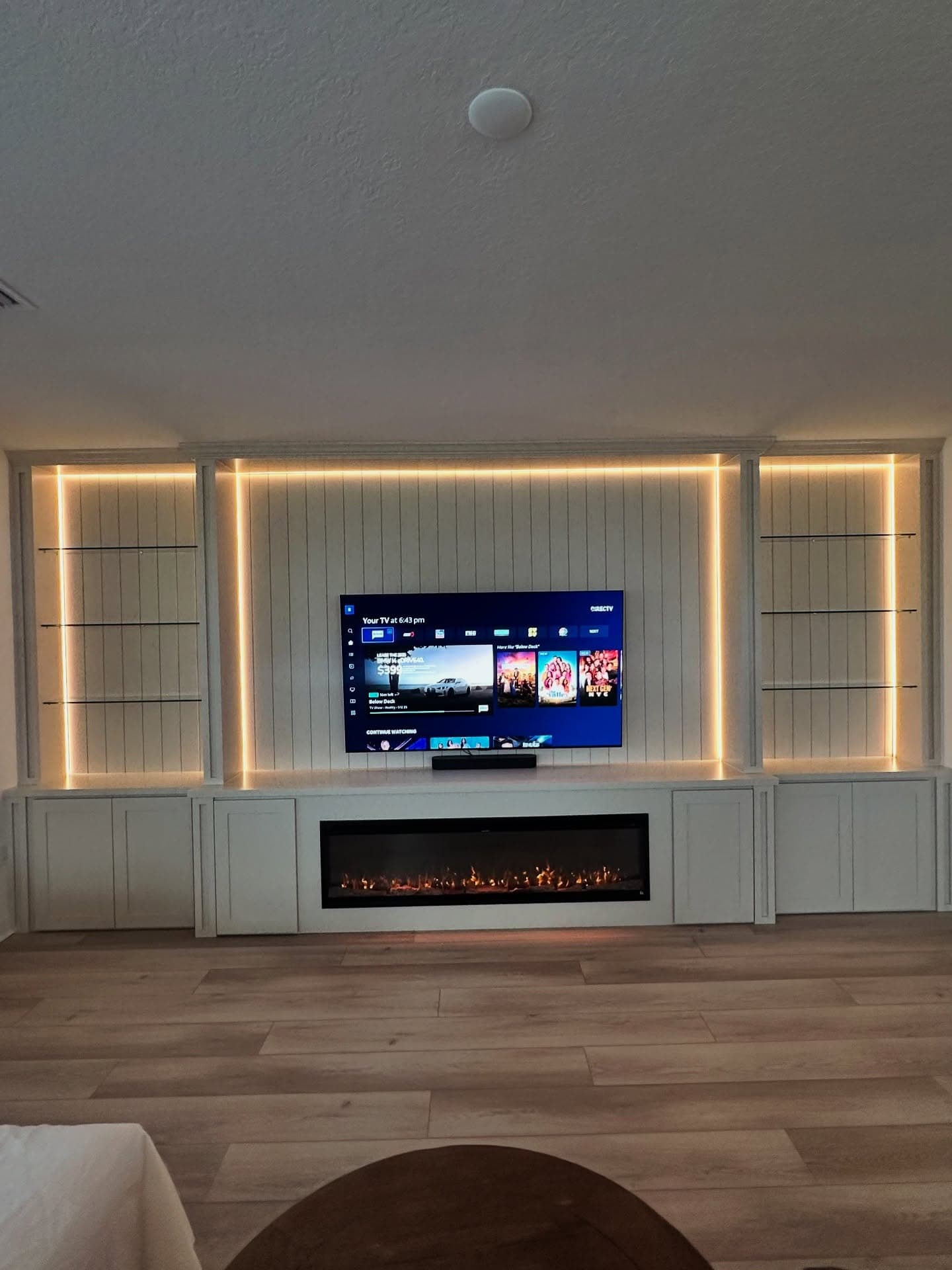
Sometimes the line runs right through the middle of one project. On a media wall, the paneling behind the TV can be wall paint while the cabinets below it are enamel. On accent walls with built-in ledges, the wall is Interior and the ledges are Urethane. It looks like one finish when we're done. The difference is in how each surface holds up.
The mix-up that costs people: wall paint on shelves
This is the failure we get called to fix. Somebody paints a bookcase or a set of cabinets with wall paint (often genuinely good wall paint) and six months later the shelves have ring marks where things stuck, the edges are chipping, and the doors have peeled at the pulls. Wall paint on cabinetry stays softer than an enamel, and handling is what kills it. The paint wasn't bad. It was the wrong product for the duty.
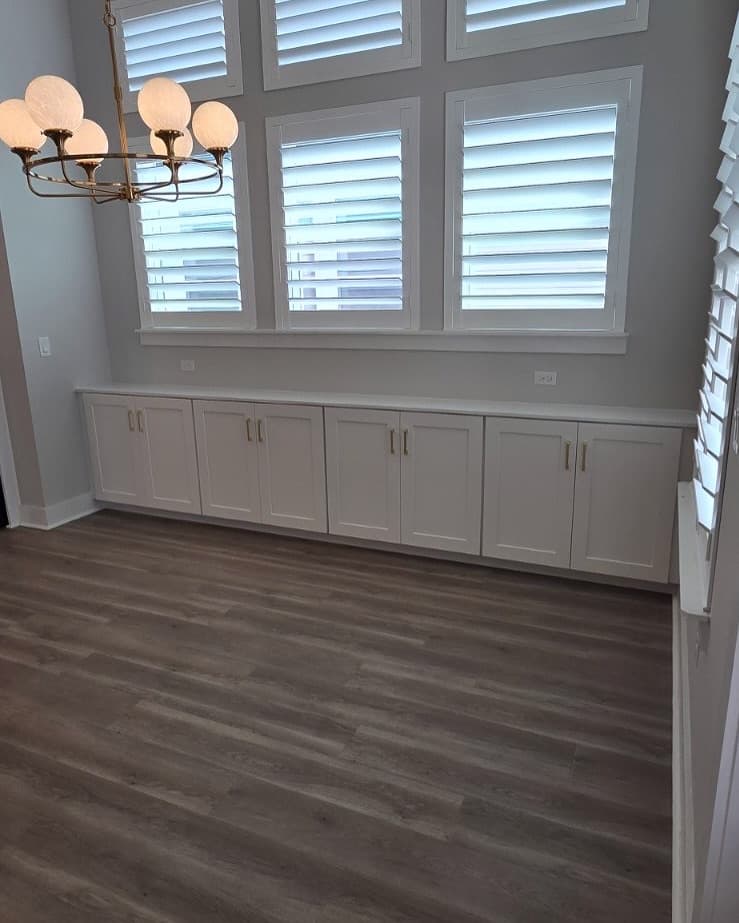
The fix, unfortunately, isn't a coat of the right stuff over the top. The soft layer underneath is still soft. It usually means sanding back and starting over, which is why getting it right the first time is the cheap path. The long white buffet run below, with brass pulls under those shuttered windows, is the kind of piece where this matters most. Every inch of it gets touched.
How to read a paint quote
If you're getting built-ins or cabinets painted, make the quote name the product, not just the brand. A few questions that sort pros from problems fast:
- "Which product exactly: Emerald Interior or Emerald Urethane Trim Enamel?" If the answer is just "Emerald," ask again.
- "Sprayed or brushed?" On cabinetry we spray, because a sprayed enamel levels to that furniture-grade surface a brush can't match.
- "What's the prep?" Enamel over an unsanded, unprimed surface fails no matter how good the can is.
A painter who answers those three without flinching is probably going to do right by you. Same vetting logic as our guide on how to hire a finish carpenter in Jacksonville.
We're not sponsored by Sherwin-Williams. We use what holds up, and after years of custom built-ins in Northeast Florida homes, this pairing is what we trust. If you've got a project and you're not sure which surface needs which can, ask us. Two-minute conversation. Saves a repaint.
Some product links above are affiliate links. If you buy through them we may earn a small commission, at no extra cost to you. We only point you to materials we actually use on the job.
By consultation
Built to last.
Finished to impress.
We take on a limited number of projects each season so each home gets our full attention. Share your project and we’ll respond within 24 hours to see if it’s the right fit.
Insured · $1M general liability · 230+ Google reviews, 5.0