Guides
Floating Shelves That Never Sag: What's Inside Ours
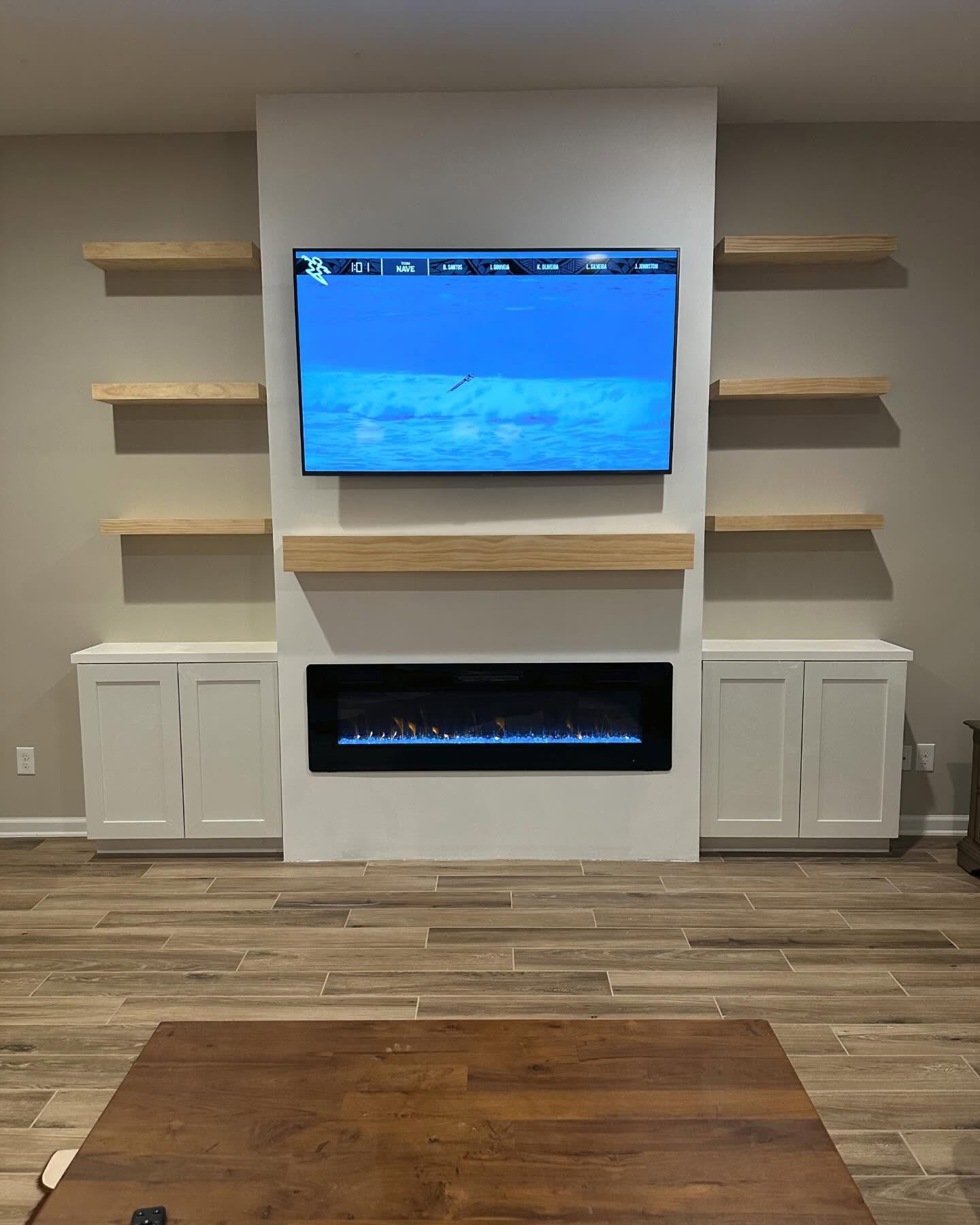
Everybody has seen the sad version: a floating shelf that went up level and, two years later, points at the floor like a diving board. When clients ask us for floating shelves on a fireplace wall, there's usually a second question right behind it. "Will these actually hold books, or are they just for a candle and a picture frame?"
Ours hold books. Real rows of them, plus the heavy pottery and whatever else life stacks on a shelf. The difference isn't magic. It's what's inside the shelf and what it's anchored to. Here's the honest tour.
Why store-bought floaters droop
The typical box-store floating shelf is a hollow shell. Thin skins over a cardboard-ish core, hanging on a small metal cleat, which is itself often screwed into drywall anchors instead of studs. Three weak links in a row.
Under load, one of two things happens. Either the anchors slowly crush the drywall and the whole shelf rotates downward, or the shelf body flexes around the little cleat. Both failures look the same from the couch: the droop. It's not that you overloaded it. It's that "floating" was doing all the work in the product name and none in the engineering.
What's inside a shelf that holds books forever
A floating shelf is a cantilever. All the support has to come from inside the wall, invisibly. So that's where we put the strength. Our shelves hang on heavy steel rods or a welded hidden bracket, lagged directly into studs. Or into blocking we add inside the wall when the studs aren't where we need them. The shelf body is either solid wood or a tightly built torsion box, a rigid internal skeleton skinned with wood, that slides over the steel and locks on.
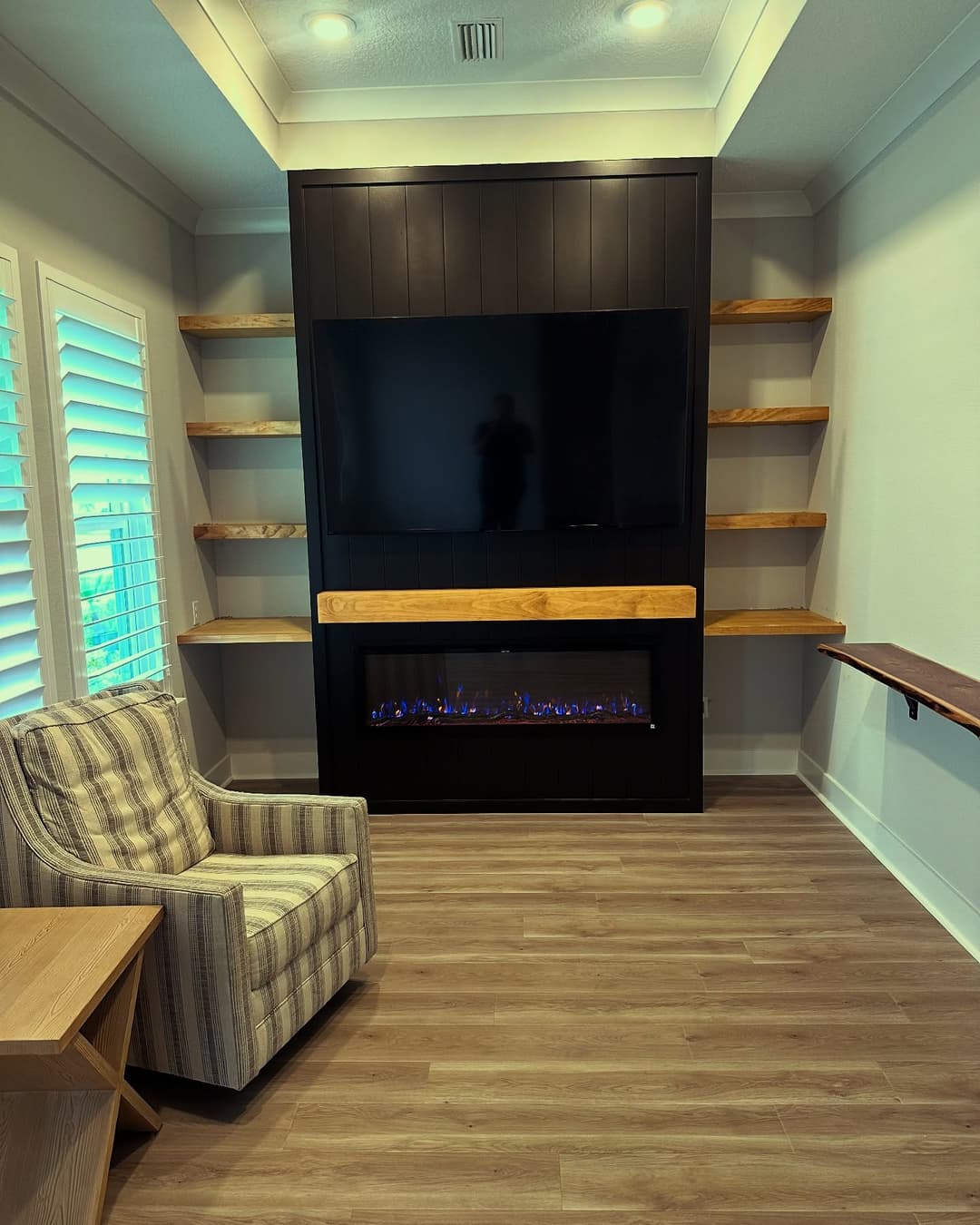
The shelves on the black plank wall above are a good example: thick, solid-looking, and actually solid where it counts. Nothing about that construction changes with time, which is the point. A shelf that's straight because of steel and studs stays straight. A shelf that's straight because the glue hasn't given up yet is on a countdown.
Wood species and thickness
Most of our shelves end up in white oak. It matches the mantels we build, takes stain evenly, and has the grain people picture when they say "real wood shelf." We also do walnut when the room wants something darker, and paint-grade builds when the shelves should read as cabinetry rather than contrast with it.
One Florida-specific note: solid wood moves with humidity, and Northeast Florida has plenty of it. That's why we seal every face of a shelf before it goes on the wall. Top, bottom, ends, and the back edge you'll never see. A shelf finished only on the visible faces takes on moisture unevenly and can cup over time. It's a ten-minute step that a lot of quick installs skip, and it's half the reason our shelves still sit flat years later.
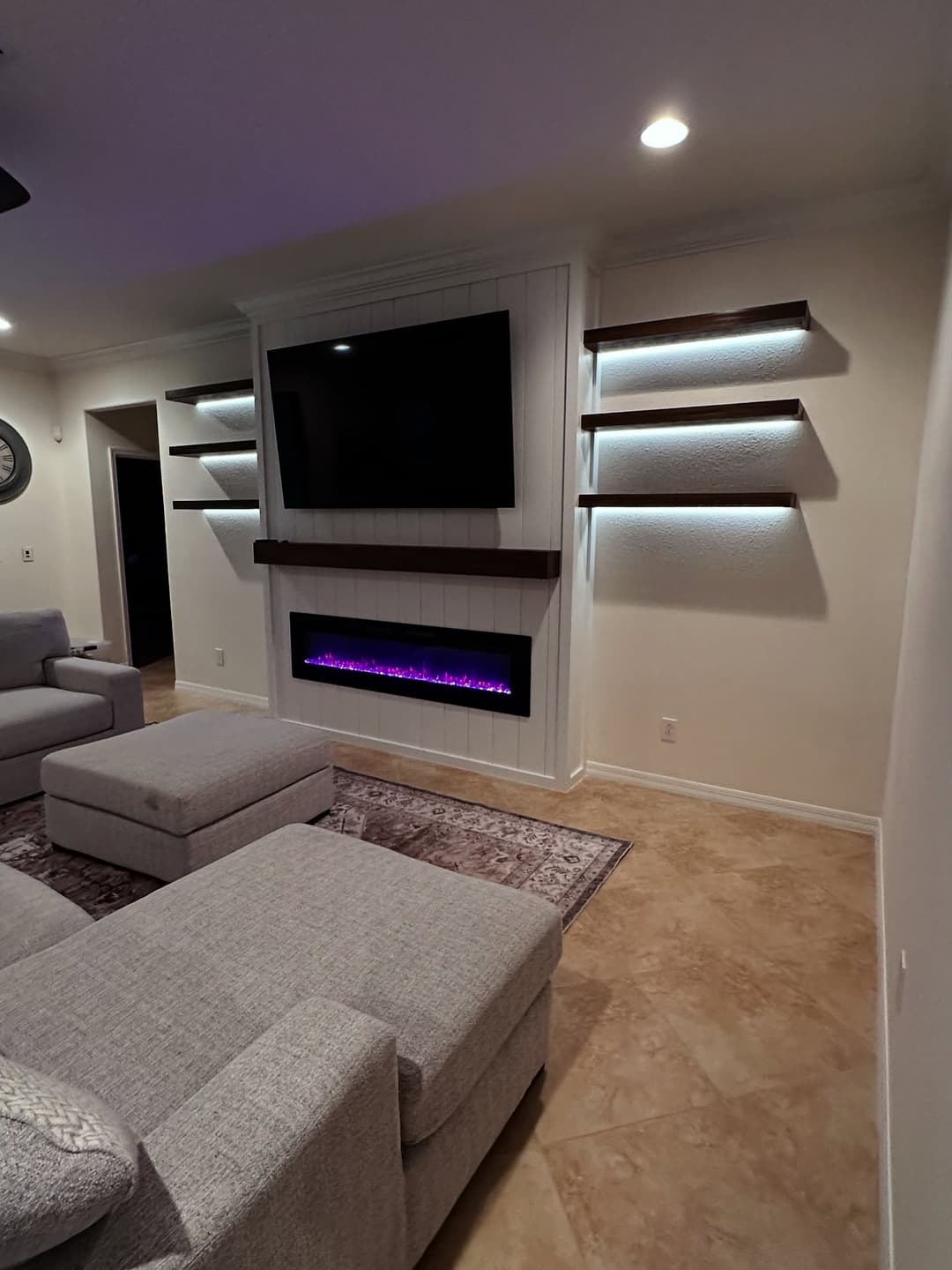
Thickness is a proportion call as much as a strength call. A chunky shelf reads intentional. A thin one reads temporary. On a fireplace wall we usually scale shelf thickness to the mantel so the whole composition feels like one hand built it, like the walnut-toned shelves below with lighting tucked under each one.
Length limits, reveals, and when we add support
Here's a trade-off we'll always be straight about: span. A short shelf on two studs is bulletproof. Stretch that same shelf past a certain length and load it with books, and even good steel starts asking questions. Physics doesn't care how nice the wood is.
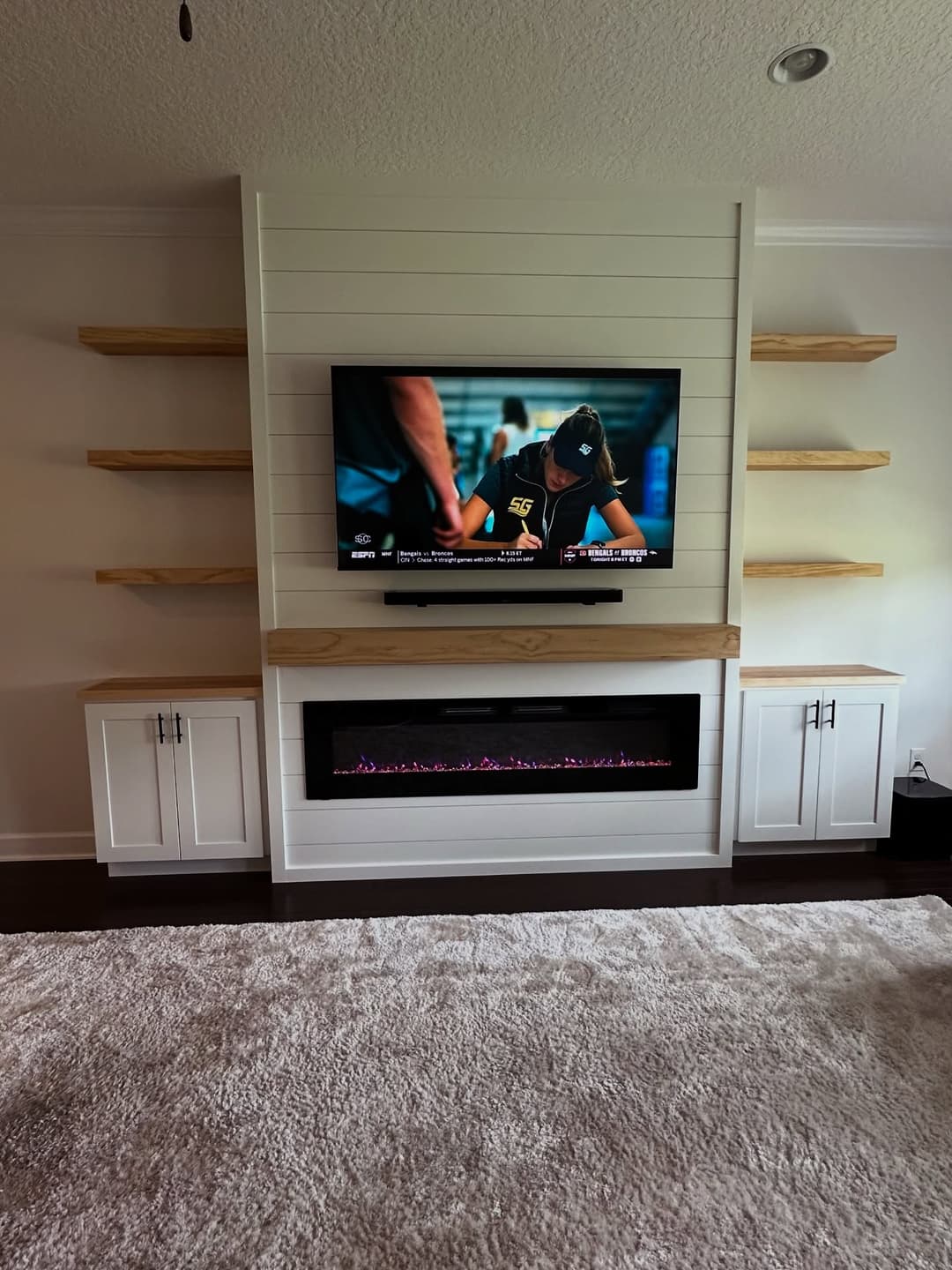
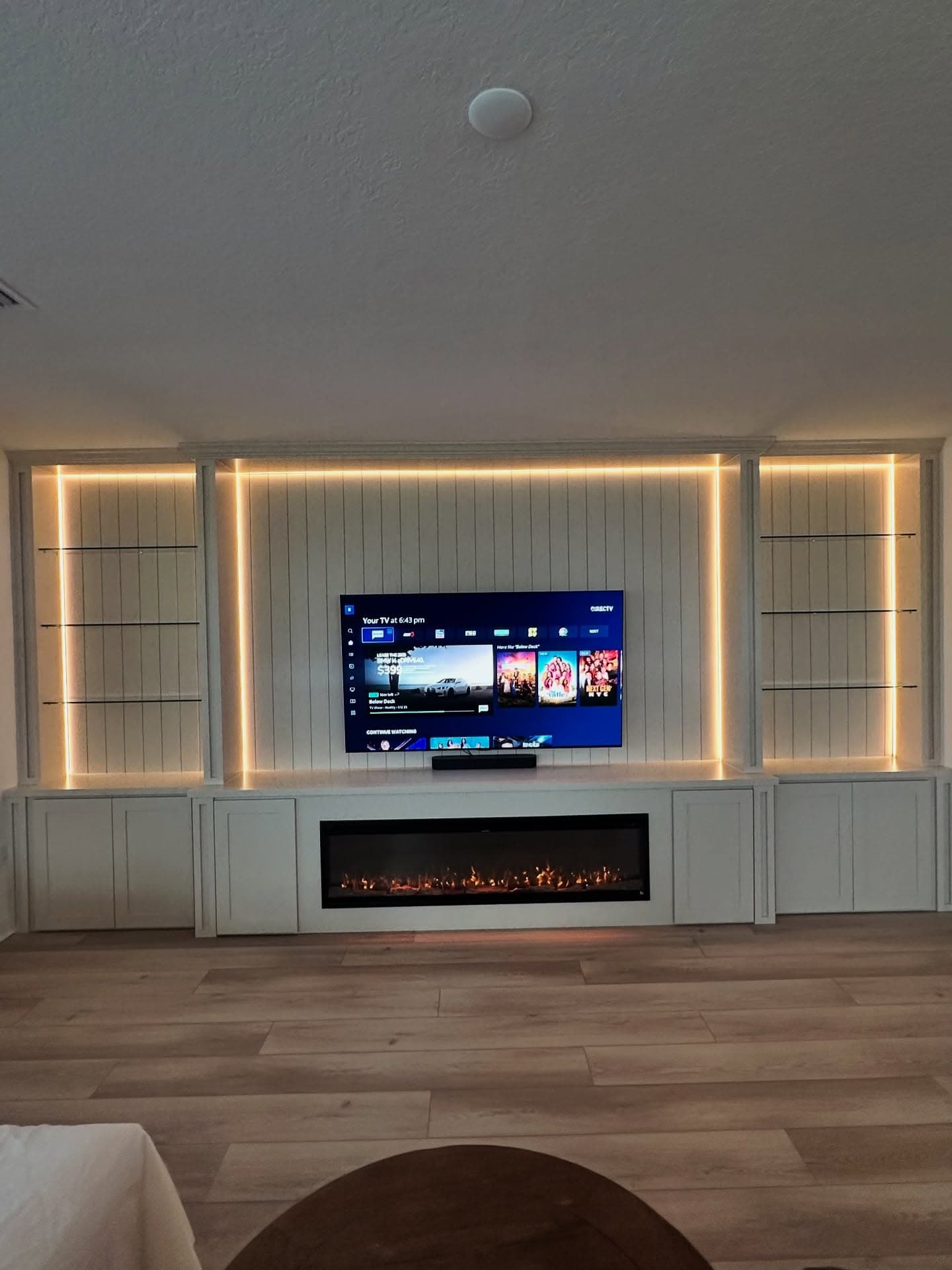
So on long runs we do one of three things. We add more anchor points by catching extra studs or adding blocking. We break one long shelf into two with a small reveal, a deliberate gap that reads as a design line rather than a compromise. Or, where the design allows, we let a shelf die into a cabinet or side wall so it's quietly supported on one end. The white shiplap wall below uses that last approach. The shelves feel like they float, but the composition is carrying more than it admits.
If a client wants a very long, very loaded, totally unsupported shelf, we'd talk you out of it. Or talk you into the version with hidden help. We'd rather lose that argument at the design table than win it and get the callback in three years.
Styling weight vs. real weight
One more honest note: most floating shelves never see their rated load. Styled shelves, a few books, a plant, some ceramics, weigh far less than a packed bookcase run. So part of our job is asking how you'll actually use them. Display shelves flanking a fireplace can be sleeker. A home-office wall of real reference books needs the heavy-duty build, and that's a job for custom built-ins thinking, not decor thinking.
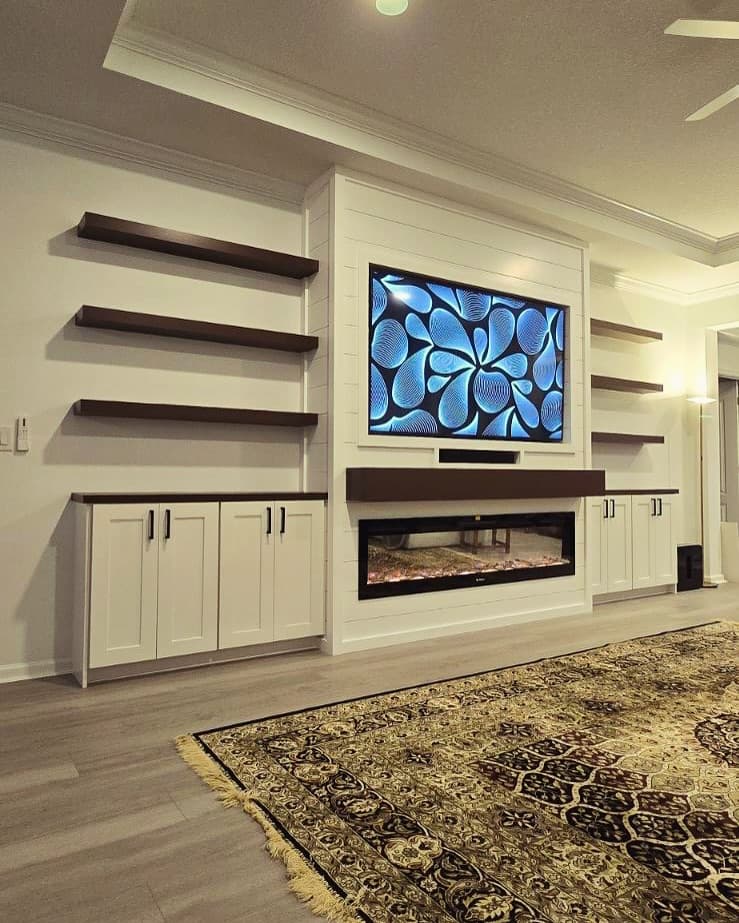
The dark shelves on the shiplap wall above are display shelves, and we built them like freight shelves anyway. The incremental effort to overbuild a shelf during construction is small. The cost of fixing a sagging one later is not. If you're curious how shelving fits into a bigger project, our guide to what custom work costs in Jacksonville covers it, and you can see a full shelf-heavy build in this entertainment center with floating shelves we did in RiverTown.
Droop is a construction choice, not a floating-shelf inevitability. If you want shelves on your wall that your grandkids can load up, we're happy to come take a look.
Some product links above are affiliate links. If you buy through them we may earn a small commission, at no extra cost to you. We only point you to materials we actually use on the job.
By consultation
Built to last.
Finished to impress.
We take on a limited number of projects each season so each home gets our full attention. Share your project and we’ll respond within 24 hours to see if it’s the right fit.
Insured · $1M general liability · 230+ Google reviews, 5.0