Guides
MDF vs. Solid Wood in Florida Humidity: What We Use and Why
At some point in almost every consultation, a client leans in and asks, "Is that MDF?" They ask it the way you'd ask if the crab cakes are real crab. Somewhere along the line, MDF got branded as the cheap stuff and solid wood as the only honest material.
Here's the thing: in a Jacksonville house, with humidity swinging hard all year, the "premium" answer and the right answer aren't always the same. We build with MDF, plywood, and solid hardwood on nearly every job. Each one where it actually belongs. Let me walk you through it the way I would at your kitchen table.
The MDF reputation problem
The bad rap comes from a real place: flat-pack furniture. That stuff is usually particleboard, coarse chips glued together and wrapped in a photo of wood grain. It sags, it swells if you look at it wrong, and it dies in a move. People lump MDF in with it, and that's the mistake.
MDF is a different animal. Dense, dead flat, completely free of the knots, grain reversals, and internal stresses that make solid boards move. When a painter sprays a shaker door made of MDF, the finish comes out like glass, because there's no grain telegraphing through the paint. That's why high-end paint-grade cabinet shops use it on purpose. Not to cut corners.
What humidity actually does to each material
Wood moves with moisture. Always has, always will. In Northeast Florida, indoor humidity swings enough through the year that a wide solid-wood panel will expand and contract across its width. That's where cracked paint lines at the joints come from. Doors that stick in August. Hairline splits. It's not bad craftsmanship. It's physics.
MDF barely moves with seasonal humidity, which is exactly why painted MDF panels hold their crisp paint lines year after year. Its real enemy isn't humid air. It's standing liquid water. A raw MDF edge that sits in a puddle will swell and never come back. So the honest ranking for our climate: MDF handles humidity better than solid wood, solid wood handles a plumbing leak better than MDF, and plywood splits the difference on both.
Where MDF is the right call
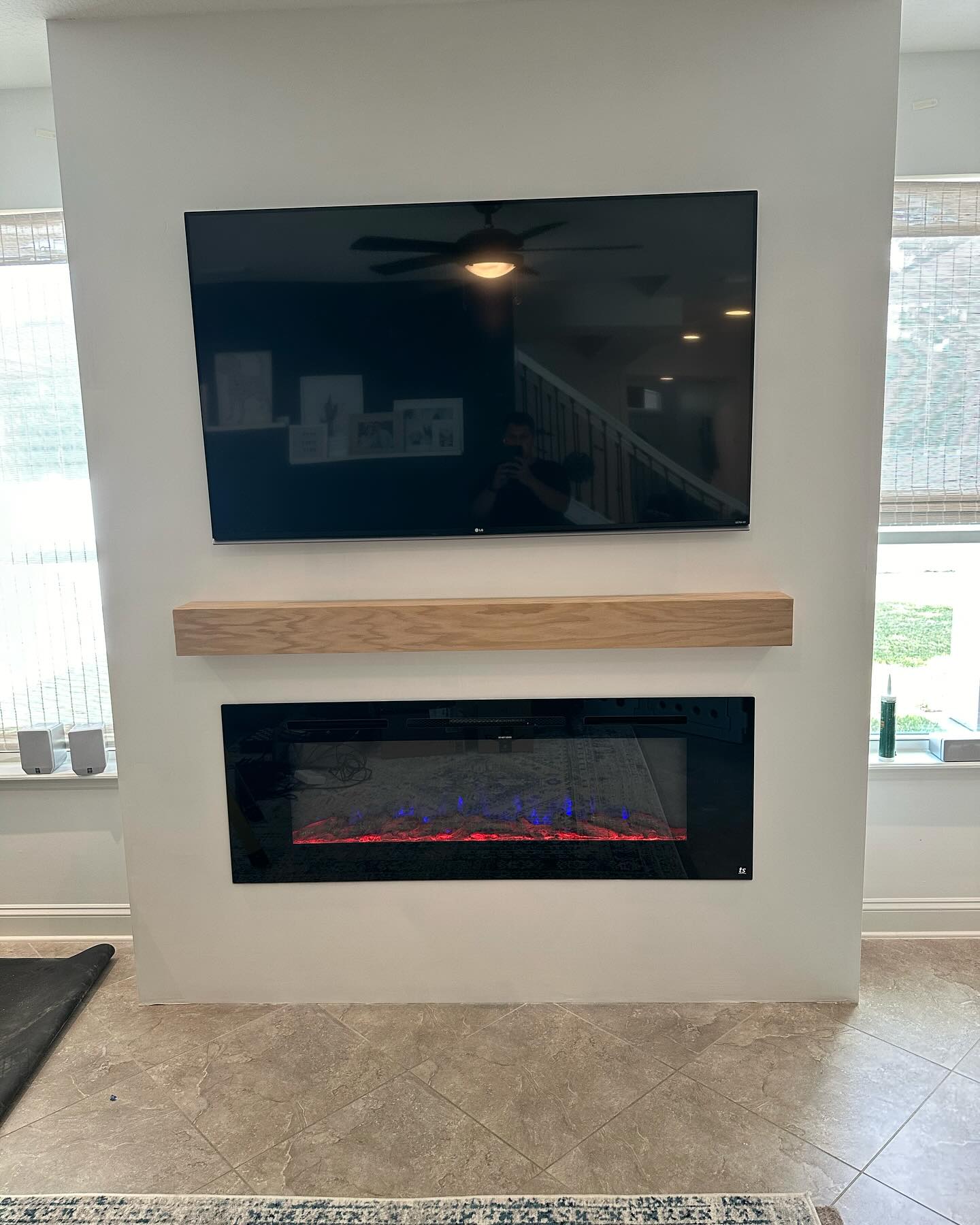
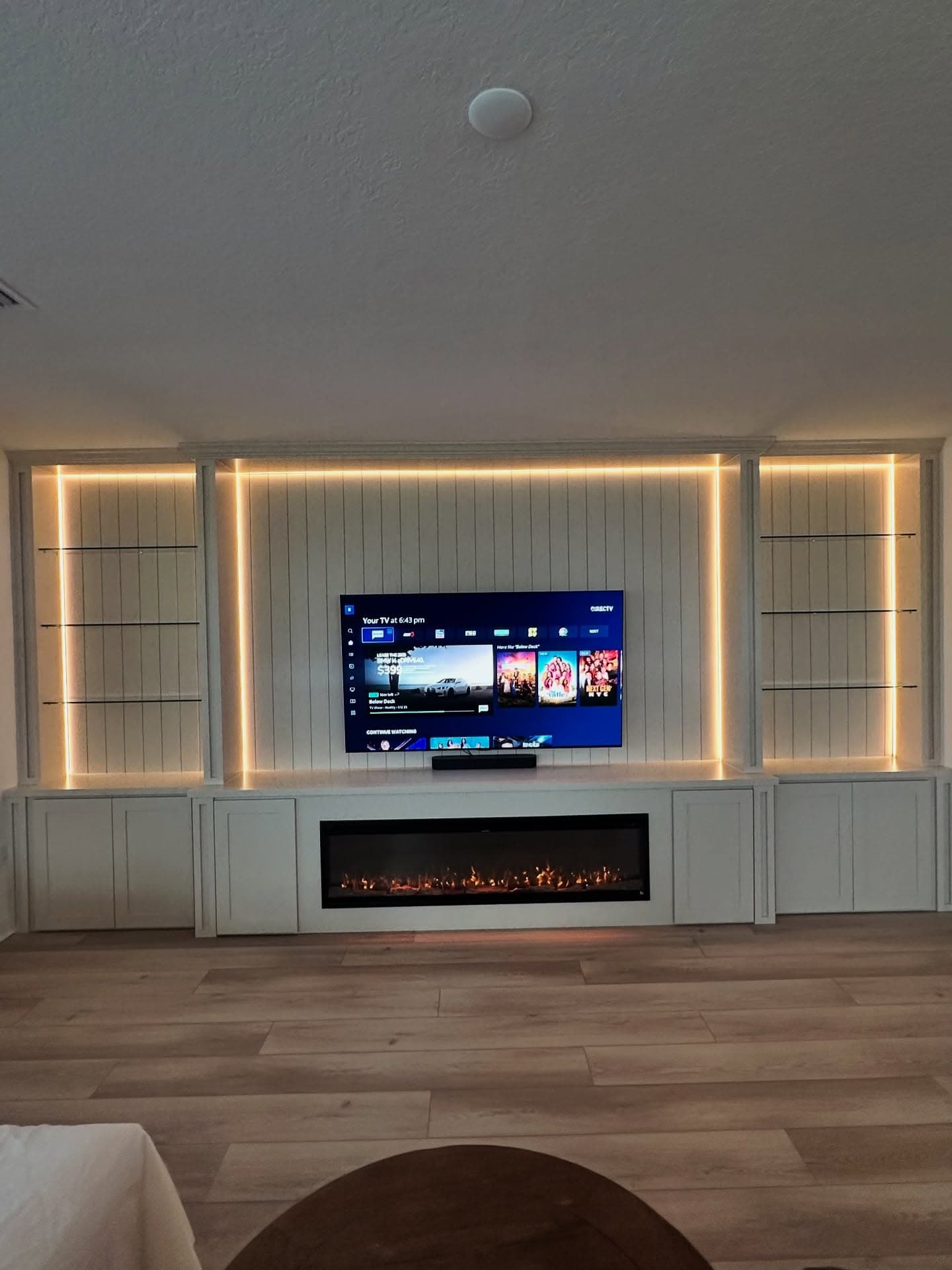
Anything painted and flat: door panels, wall paneling, fluted and shiplap details, face panels on a fireplace wall. The minimalist white fireplace column above is a good example. Those big smooth painted surfaces stay that smooth because they're built from stable sheet stock, not glued-up boards fighting each other under the paint.
We prime every edge, seal everything before finish, and keep MDF away from floors that might see water. Done that way, a painted MDF wall in a Jacksonville living room will outlast the sofa, the TV, and possibly the mortgage.
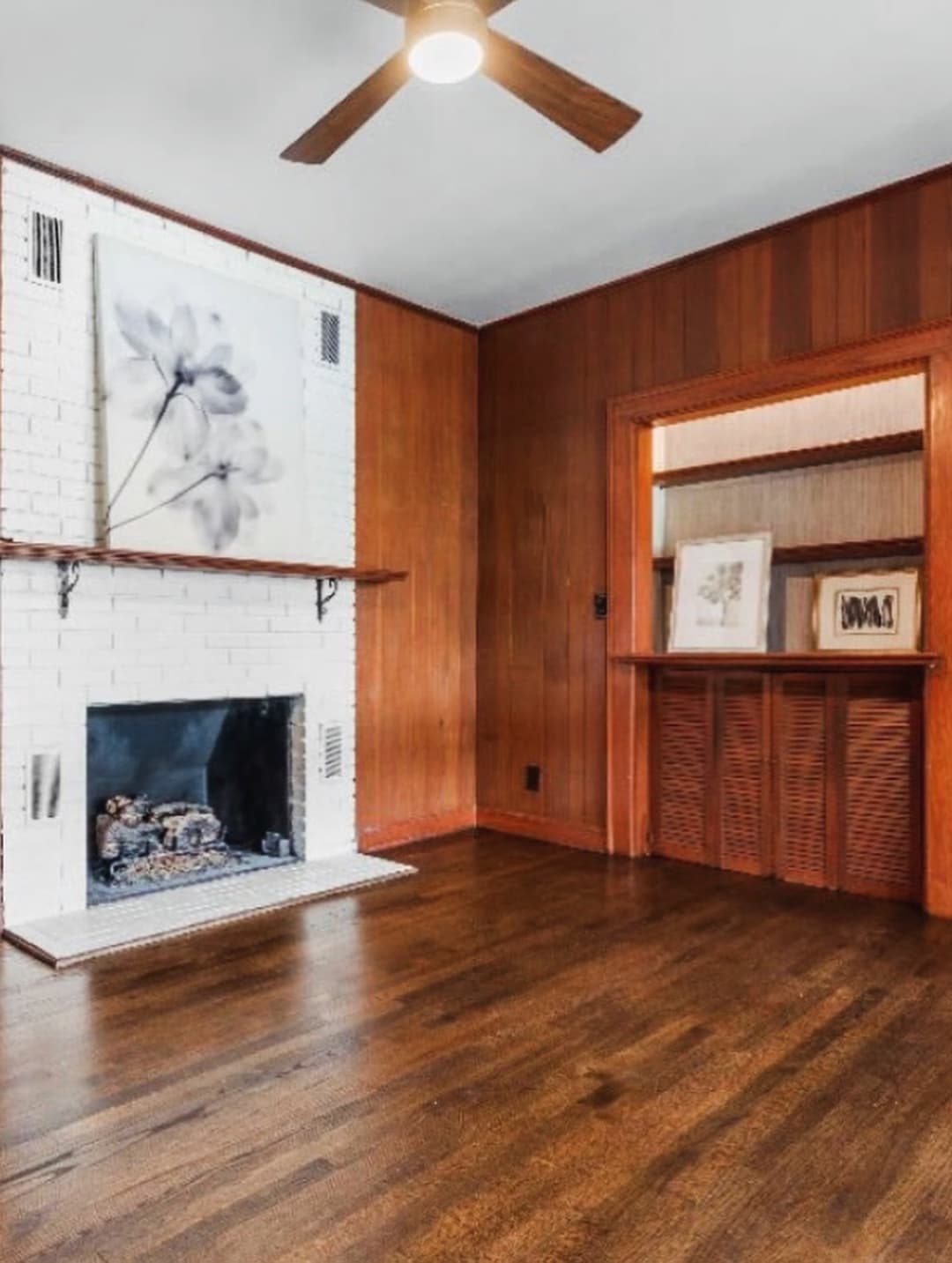
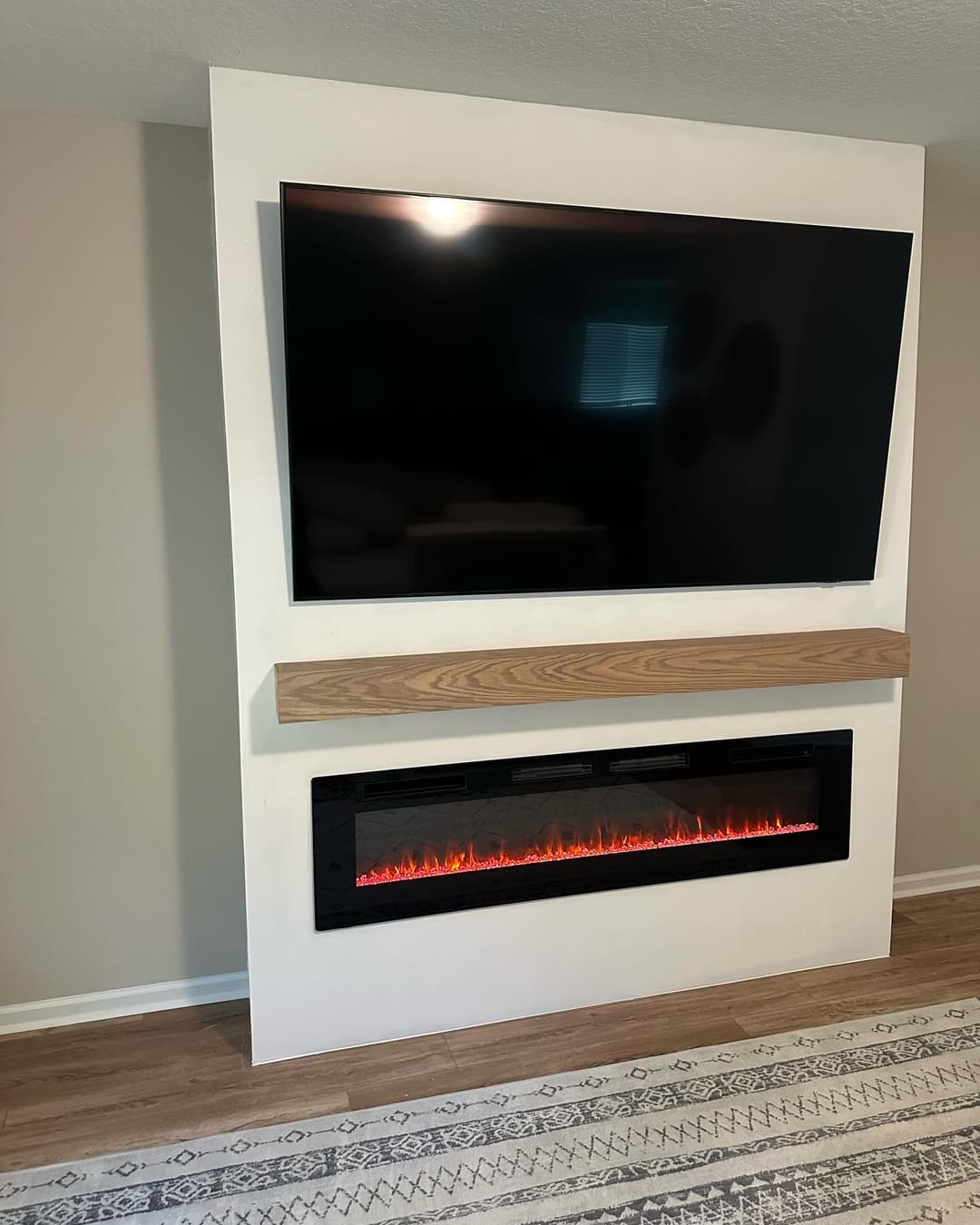
One place we're extra deliberate is painted brick-look and paneled fireplace surrounds. Like the white painted fireplace wall below, where the crisp, even finish is the whole point. Solid wood there would fight you forever.
Where we insist on real wood or plywood
Some parts of a built-in earn their keep structurally, and there we don't compromise.
- Shelves: long spans carrying books need plywood or solid wood. MDF shelves sag over time, slowly and permanently. Every long floating shelf we build has real structure inside it.
- Cabinet boxes: plywood holds screws better, weighs less, and shrugs off the occasional spill inside a cabinet.
- Mantels and anything stained: stain-grade means real wood, full stop. Our mantels are usually solid white oak or a built-up oak beam, because you can't stain a fiberboard.
- Anything near water: mudroom benches, laundry built-ins, bathroom cabinetry get plywood construction.
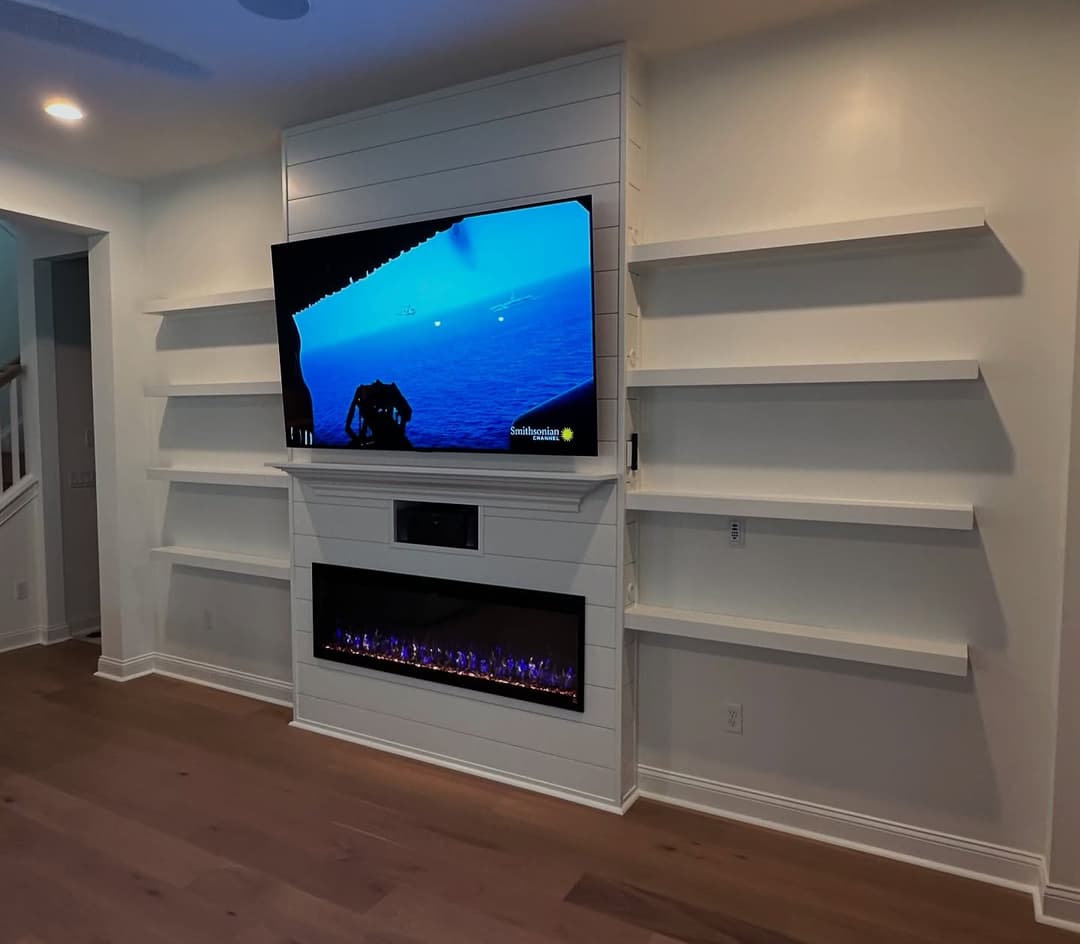
Those long floating shelves flanking the shiplap fireplace column above are exactly the case in point. Paint-grade skins where paint wants to be, real structure inside where gravity is doing its work.
The hybrid approach almost every build uses
So here's the punchline: the question was never "MDF or solid wood." Nearly every media wall and built-in we deliver uses all three materials, each doing the job it's best at. Painted panels and doors in MDF for the flawless finish. Boxes and shelves in plywood for strength. Mantels, floating shelves, and trim details in solid oak for the warmth and the stain.
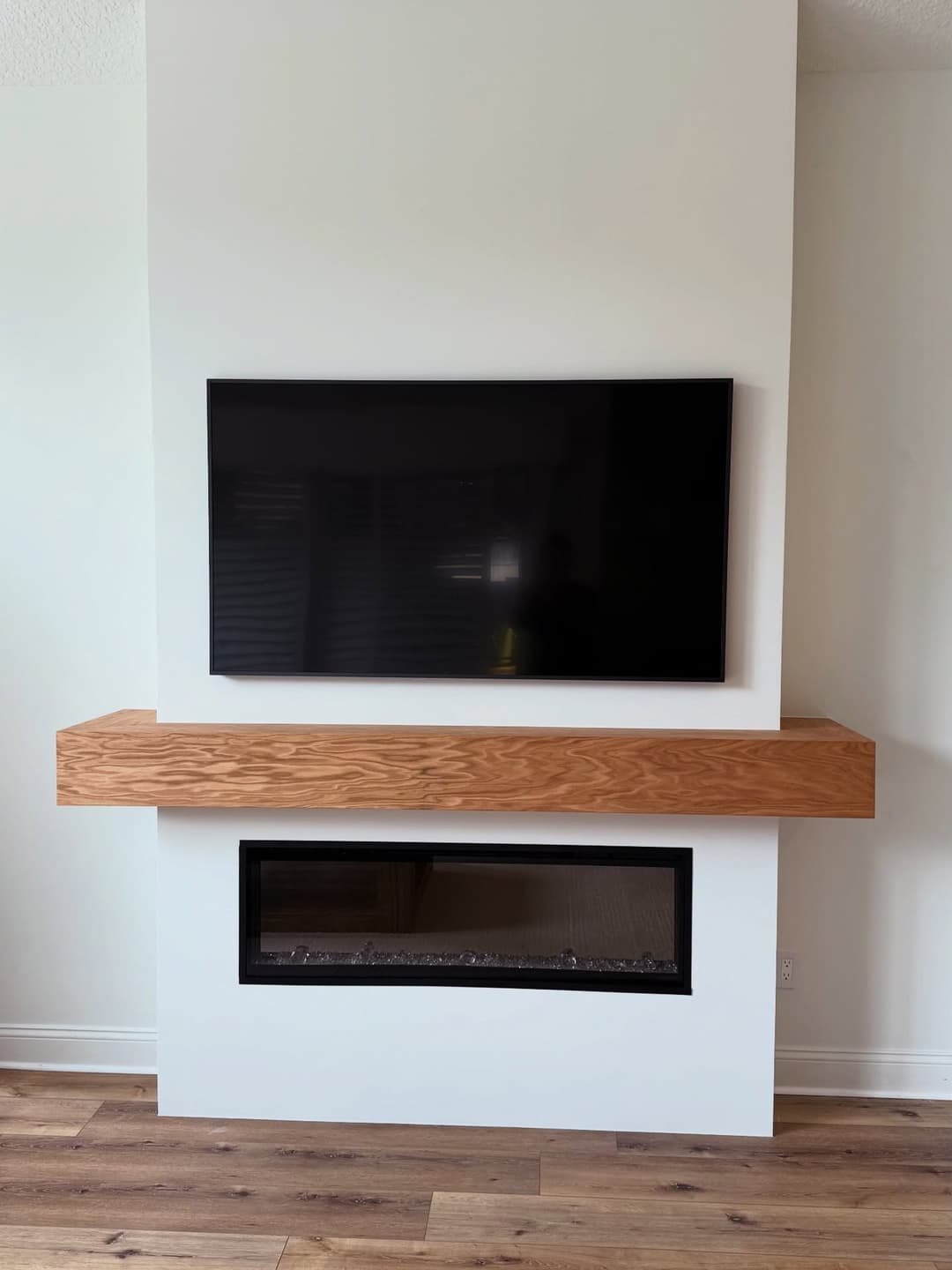
The white wall below with the oak floating mantel is that formula in one photo. Stable painted surfaces everywhere, honest solid wood exactly where your eye and your hands land.
Where you should push back is when someone quotes you "solid wood construction" across the board. You'd be paying a premium for wide solid panels that will move, crack paint lines, and behave worse in our humidity than a hybrid build. Real money for a worse outcome. We get into how to read quotes and vet builders in our guide on how to hire a finish carpenter in Jacksonville, and how materials factor into pricing in our breakdown of what custom work costs in Jacksonville.
What to actually ask your builder
Skip "is it MDF?" and ask these instead: What's the shelf construction, and what span are they carrying? Are the cabinet boxes plywood? Is the mantel solid, and what species? How are MDF edges sealed before paint? Anyone building custom built-ins for a living should answer those without blinking. The answers will tell you far more than a one-word material name ever could.
If you're planning a built-in or media wall and want a straight answer on what we'd use in your specific room, reach out. We're happy to talk materials before you commit to anything.
Some product links above are affiliate links. If you buy through them we may earn a small commission, at no extra cost to you. We only point you to materials we actually use on the job.
By consultation
Built to last.
Finished to impress.
We take on a limited number of projects each season so each home gets our full attention. Share your project and we’ll respond within 24 hours to see if it’s the right fit.
Insured · $1M general liability · 230+ Google reviews, 5.0