Guides
Pantry Layout, Solved: Deep Shelves, Drawers, and the Appliance Garage
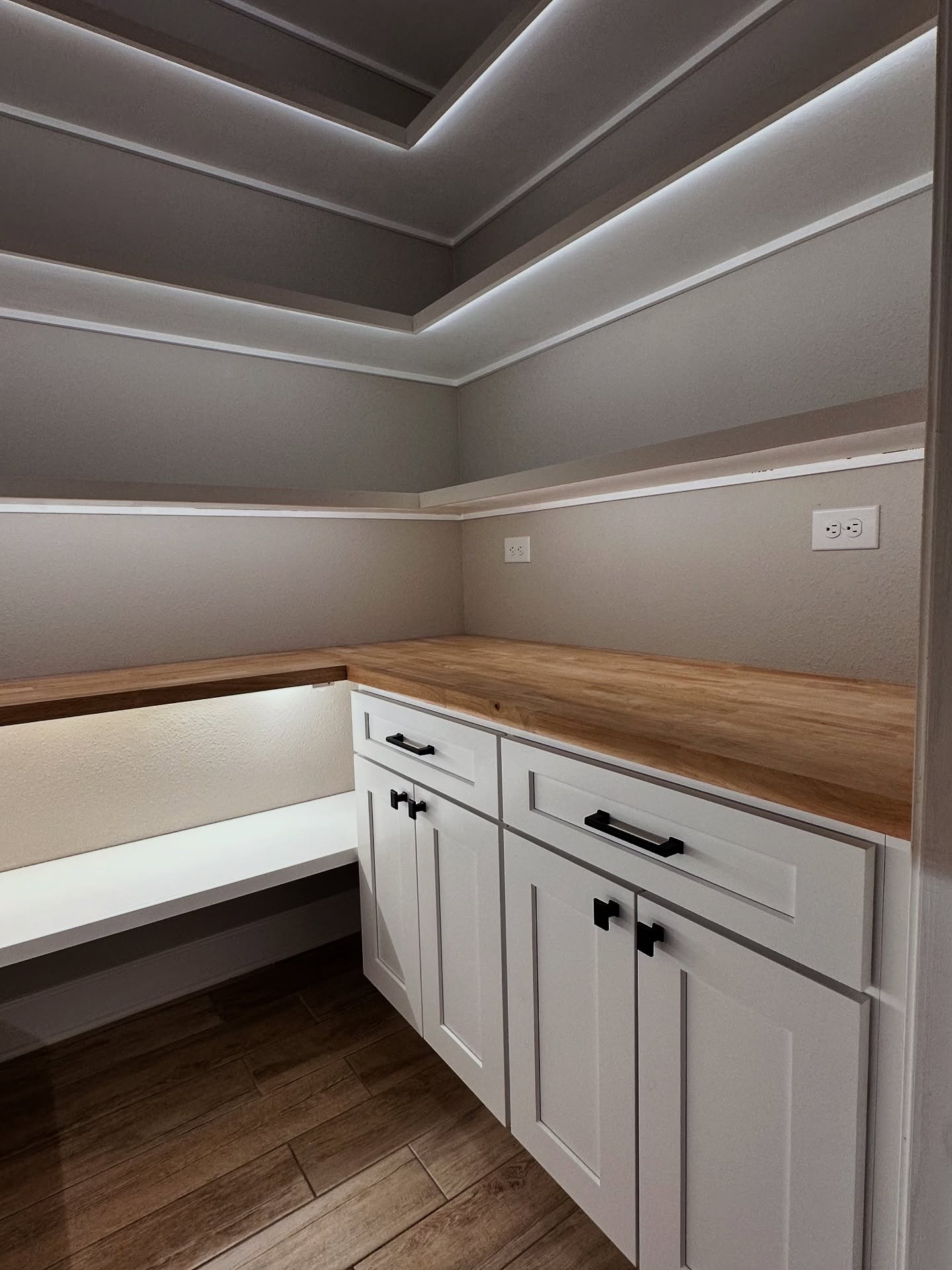
Almost every pantry consultation starts the same way. The homeowner opens the door, waves a hand at the shelves, and says some version of "I know there's food in here somewhere." Three open boxes of the same pasta. A crockpot that hasn't moved since Thanksgiving. And meanwhile the air fryer, the coffee maker, and the toaster are camped out on the kitchen counter because there's nowhere else to plug them in.
None of that is a tidiness problem. It's a layout problem, and layout is fixable. Here's how we think through a pantry when we design one. Same conversation we'd have standing in yours.
The deep-shelf graveyard
Builder pantries almost always come with shelves that are too deep. Deep sounds generous until you live with it. Anything past the front row disappears. You can't see it, so you don't use it, so you buy another one. That's how you end up with the pasta situation.
Deep shelves also encourage stacking, and stacked cans and boxes become an archaeology dig. The stuff on the bottom layer might as well not exist. When we gut a builder pantry, the pile of expired food that comes off those back six inches is genuinely the same pile in every house. Just wearing a different label.
The fix isn't more shelf. It's the right shelf, in the right place, at the right depth.
Match the depth to what sits on it
Our rule: a shelf should be exactly deep enough for one or two rows of whatever lives on it, and no deeper. In practice that means a mix of depths in the same pantry, not one depth repeated floor to ceiling.
- Shallow shelves for cans, jars, spices, oils. One row deep means every label faces you. Nothing hides.
- Medium shelves for cereal boxes, snacks, small baskets. Two rows max.
- Deep shelves and counters reserved for the genuinely big stuff: stand mixer, stockpot, the party platters. Down low or on a counter, where you can see the whole footprint at once.
Eye level gets the everyday food at shallow depth. Up high goes the once-a-year stuff. Down low goes the heavy stuff. It sounds obvious written out, but almost no builder pantry is arranged this way. They're built to a single depth because it's cheap, not because it works.
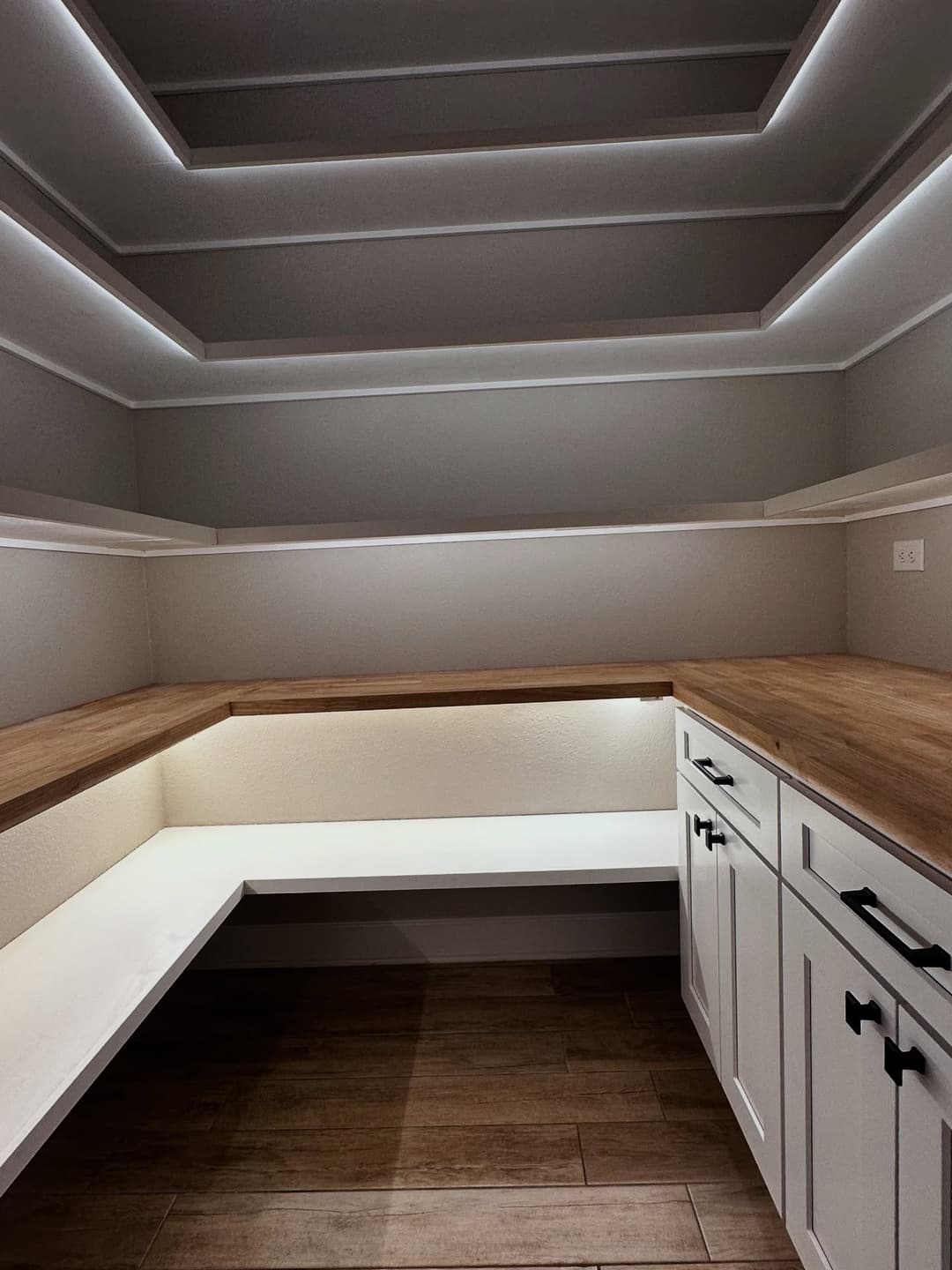
The pantry above shows the mix in practice. Open shelving up top where sight lines matter, white cabinets below where things stay behind doors, and a butcher block counter in between doing the workhorse duty. The LED strips under the shelves aren't decorative. A pantry with no window is a cave, and that lighting is what makes the back of a shelf visible in the first place.
Drawers down low, the change people thank us for
If we could only change one thing in a typical pantry, it would be this: everything below counter height becomes drawers, not shelves.
A low shelf makes you crouch and excavate. A deep drawer on full-extension slides brings the entire contents out into the light. You look down into it and see everything at once. Potatoes and onions, bulk snacks, the bread, pet food, small appliances. One pull, full visibility, no kneeling on the tile with a flashlight.
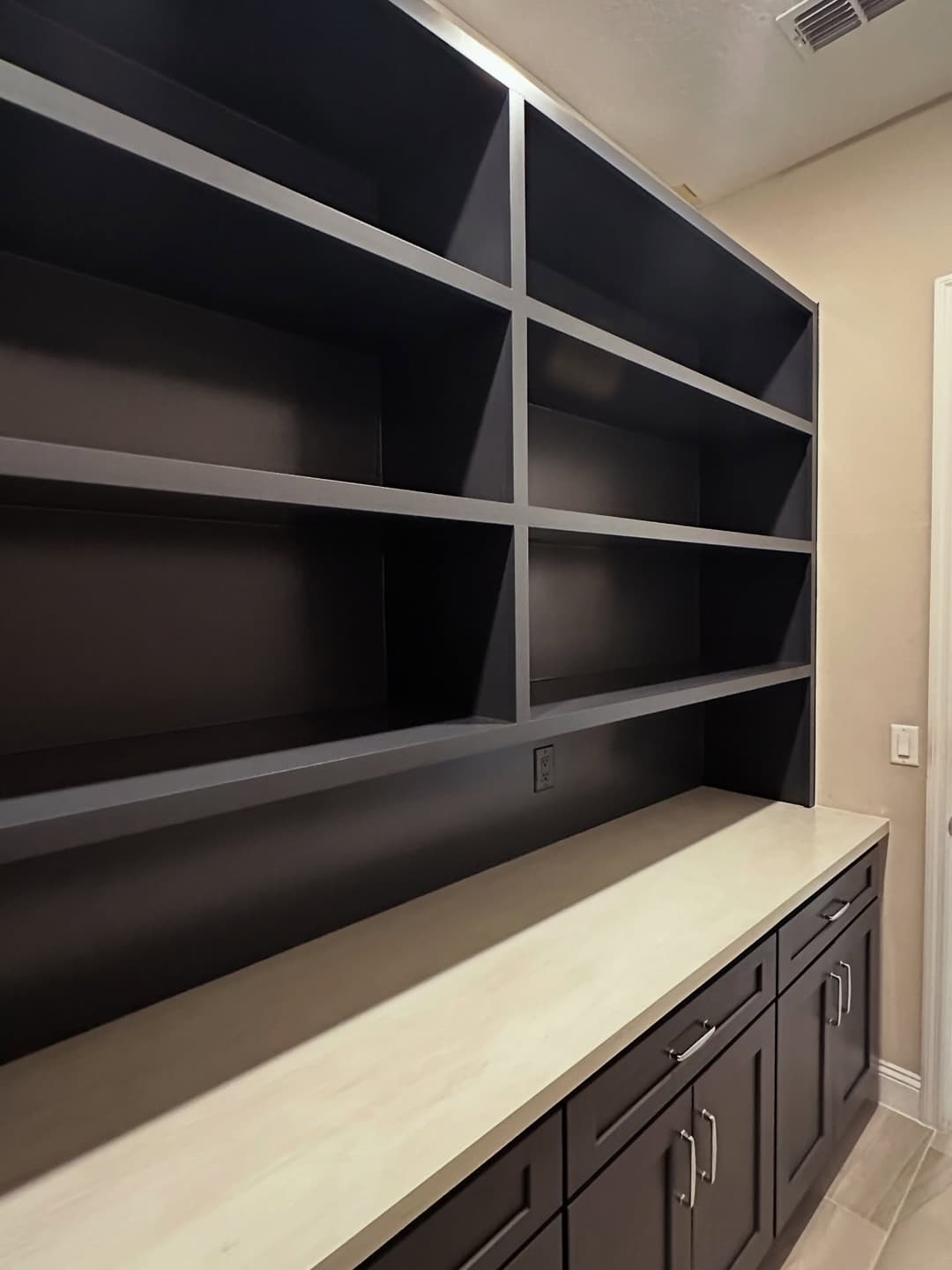
You can see the idea in the pantry above. Charcoal open shelving where you want to see things at a glance, and base cabinets below where drawers do the heavy lifting. We built a version of this for a client off Middlebourne in St. John's County, and you can see how it came together in our custom pantry shelving project post. The drawers are always the part people mention when we follow up.
The appliance garage: hidden but plugged in
Here's the move that clears your kitchen counter for good. We build a counter into the pantry, usually butcher block or quartz, and run outlets along the backsplash. The coffee maker, toaster, and air fryer live there permanently, plugged in and ready. Some clients want them out in the open on the pantry counter. Others want doors in front so the whole station disappears. Either way, that's the appliance garage.
Think about what that actually changes. The air fryer never gets hauled out of a bottom cabinet again, which means it actually gets used. The kitchen counter stops being a parking lot. And the morning coffee routine happens behind a door, so the kitchen itself stays clean even when the pantry is mid-chaos.
One honest note: this requires an electrician to run the circuit, and it works best when it's planned into the cabinetry from the start rather than retrofitted. It's the kind of detail we coordinate as part of our pantry and mudroom build-outs, and it's worth doing right the first time.
Leave room for the baskets, and for next year
A pantry designed to be 100 percent full on day one is a pantry that fails by Christmas. We deliberately leave flex space: an open counter section, a shelf with nothing assigned to it, a gap sized for the baskets you already own or the bins you'll inevitably buy.
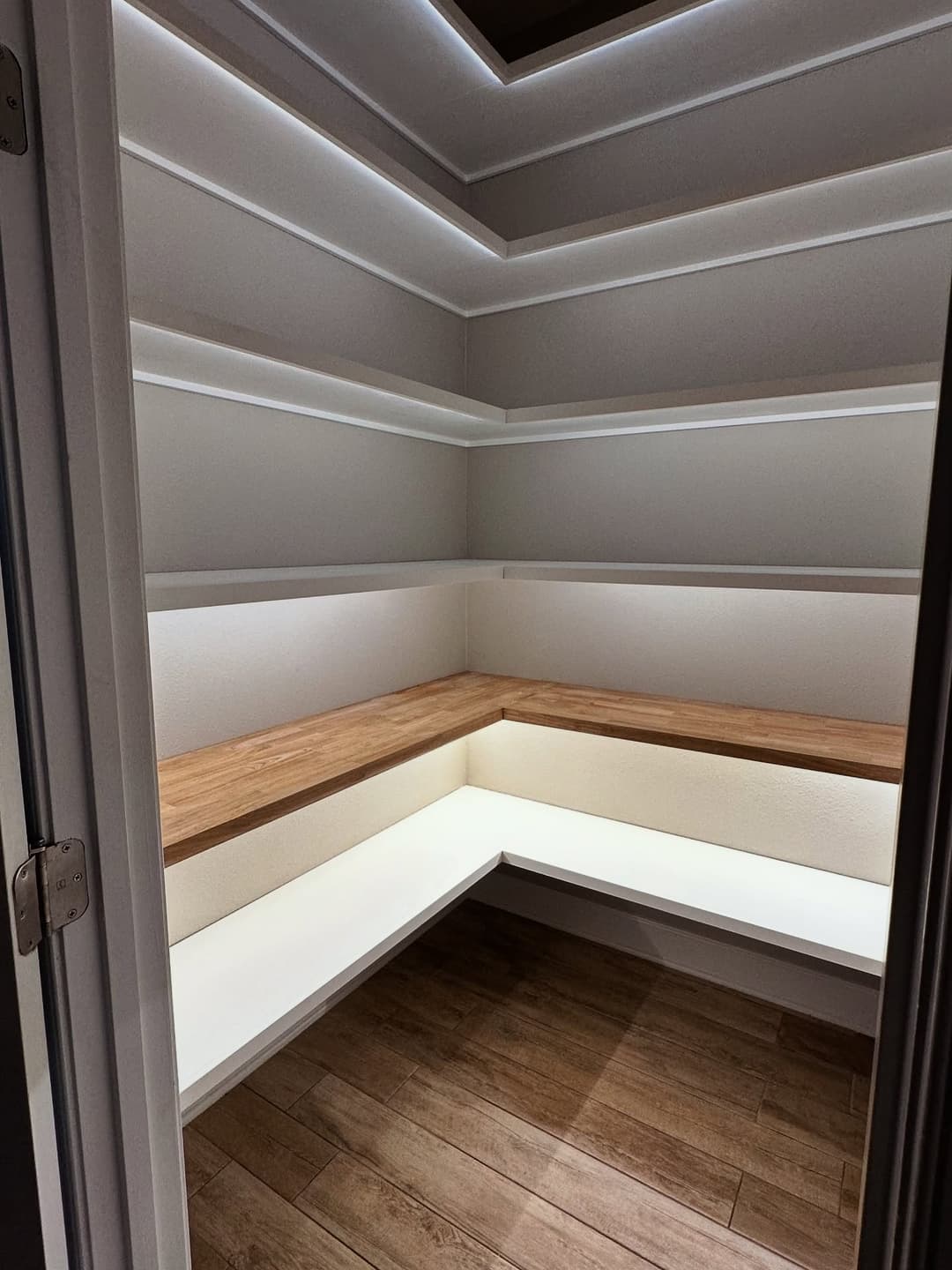
Speaking of baskets, measure them. Or better, let us. A shelf that's half an inch too short for the standard woven bin is a shelf that will annoy you daily. When we design, we ask what containers you actually use and size the openings around them. Same goes for the tall stuff: cereal boxes, the big olive oil, a countertop mixer under an upper shelf. That corner pantry above got its shelf spacing set around the owner's real containers, not a default measurement.
Adjustable shelf pins have their place, but honestly, most people never move a shelf after month one. Getting the spacing right in the design matters more than making it changeable later.
What a real layout looks like
Put it all together and a typical AVP pantry reads like this from the floor up: deep drawers below, a counter at working height with outlets and the appliance station, shallow open shelving at eye level for the everyday food, and high shelves for the seasonal overflow. Lighting under the shelves so nothing lives in shadow.
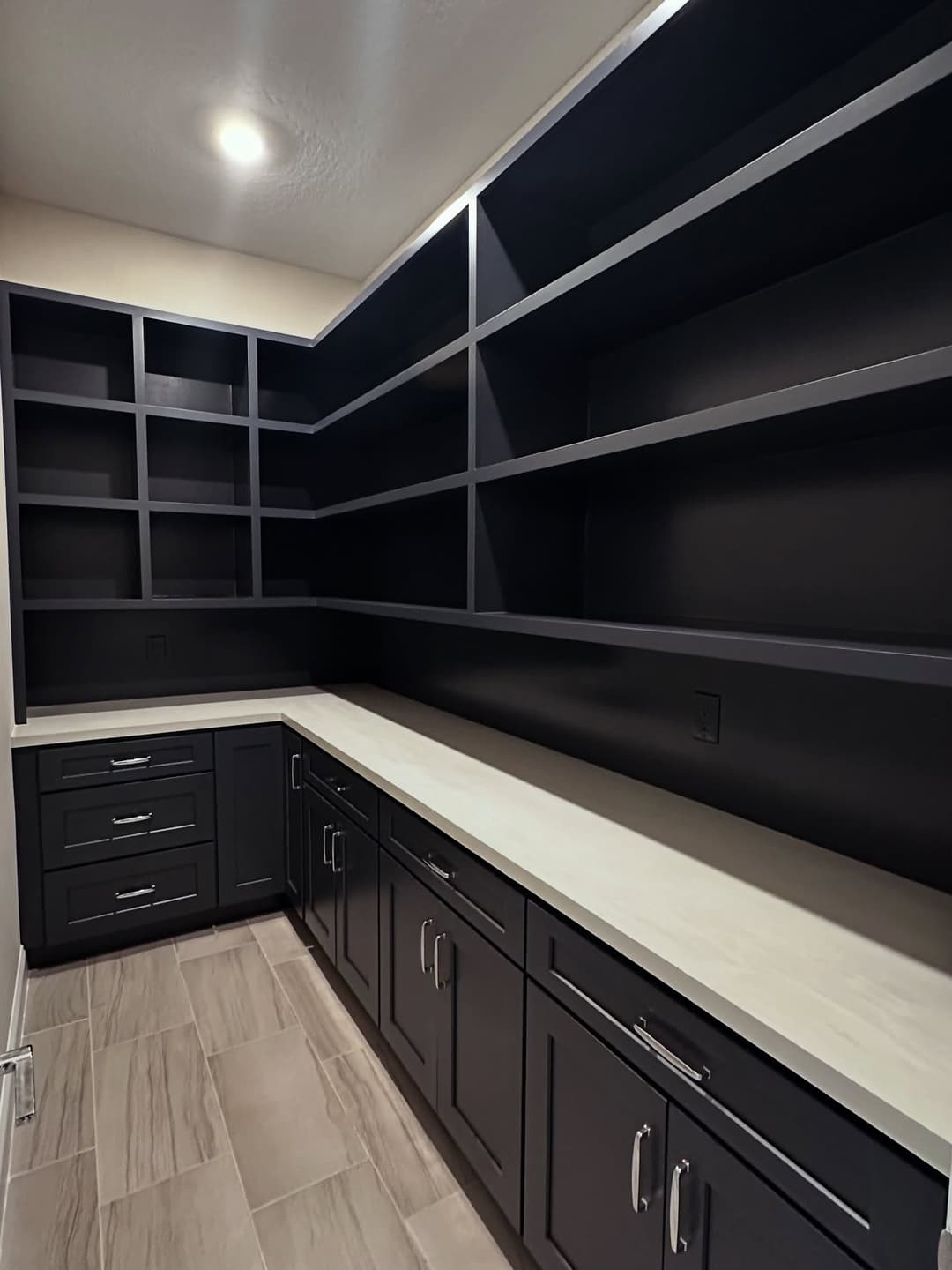
The black pantry above is that exact formula in a bolder finish. Shaker cabinets down low, open shelving up top, light quartz counter in the middle. The palette changes house to house. The logic doesn't. We used the same thinking in a laundry room build in Nocatee, because a laundry room is really just a pantry for detergent.
As for what a project like this runs, it depends on size and how much cabinetry versus open shelving you want. We break down the honest variables in our guide to what custom work costs in Jacksonville.
If your pantry is currently a graveyard with a wire-rack headstone, we'd be glad to come take a look and sketch out what the space could actually do.
Some product links above are affiliate links. If you buy through them we may earn a small commission, at no extra cost to you. We only point you to materials we actually use on the job.
By consultation
Built to last.
Finished to impress.
We take on a limited number of projects each season so each home gets our full attention. Share your project and we’ll respond within 24 hours to see if it’s the right fit.
Insured · $1M general liability · 230+ Google reviews, 5.0