Custom vs. IKEA
Custom built-ins vs. the IKEA hack.
Both can fill a wall with shelving. Only one is built for your wall. Here's the honest comparison, including when IKEA is genuinely the right call.
The "IKEA built-in hack" is everywhere for a reason: take BILLY bookcases or PAX wardrobes, screw them together, add trim, and you get a wall of storage for a fraction of a custom price. For a rental, a first home, or a room you plan to redo in a few years, that can be exactly the right move. We'd rather tell you that than pretend otherwise.
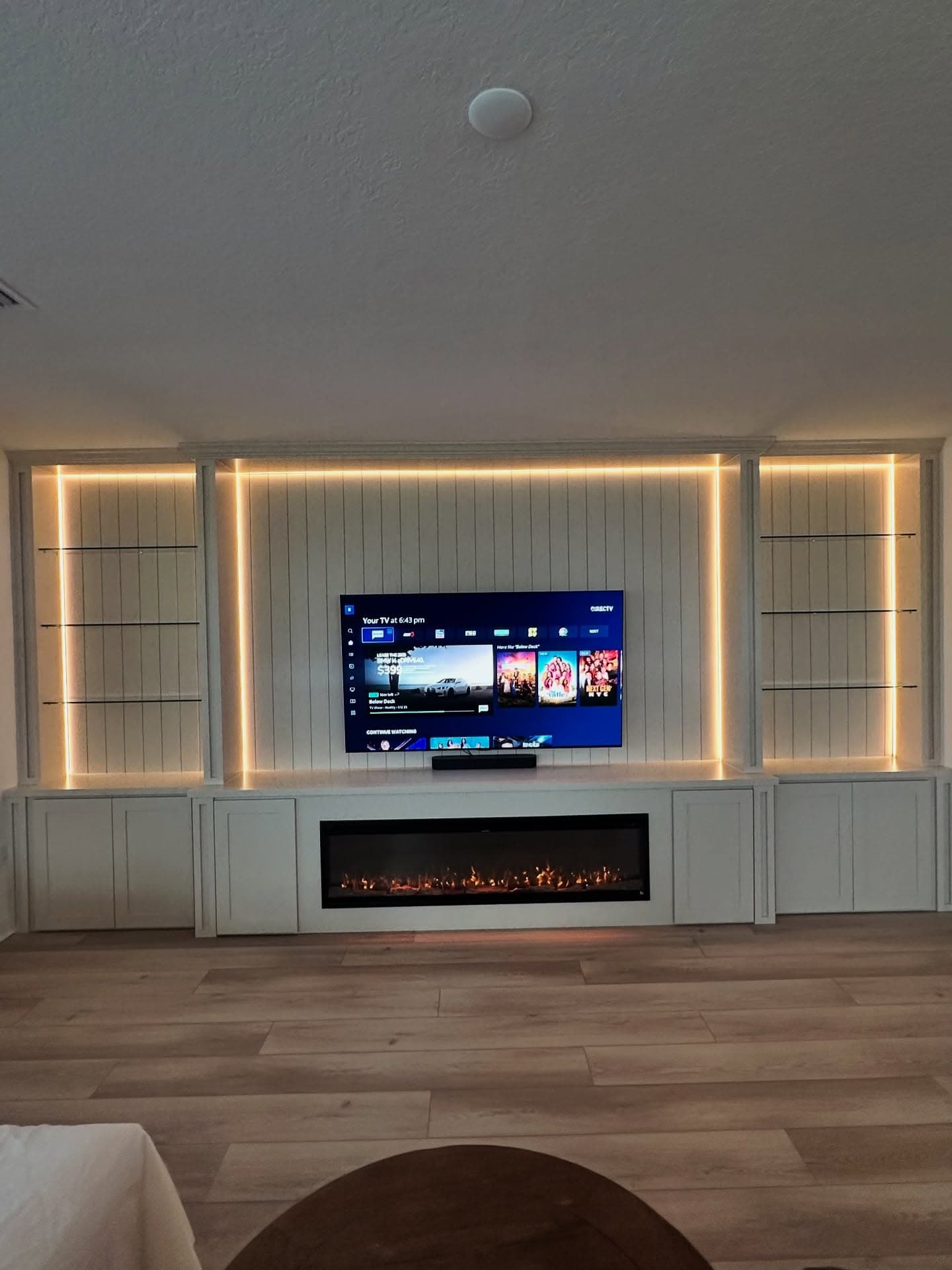
But the two products are not the same thing wearing different prices. An IKEA hack is furniture adapted to a wall; a custom built-in is architecture made for it. The differences show up at the ceiling line, at the baseboards, in an uneven floor, in what happens when a particleboard shelf carries books for five years, and in what a buyer sees when they walk through the room. Here's the full comparison, without the sales pitch.
Side by side
Fit to your wall
Custom built-ins (AVP)
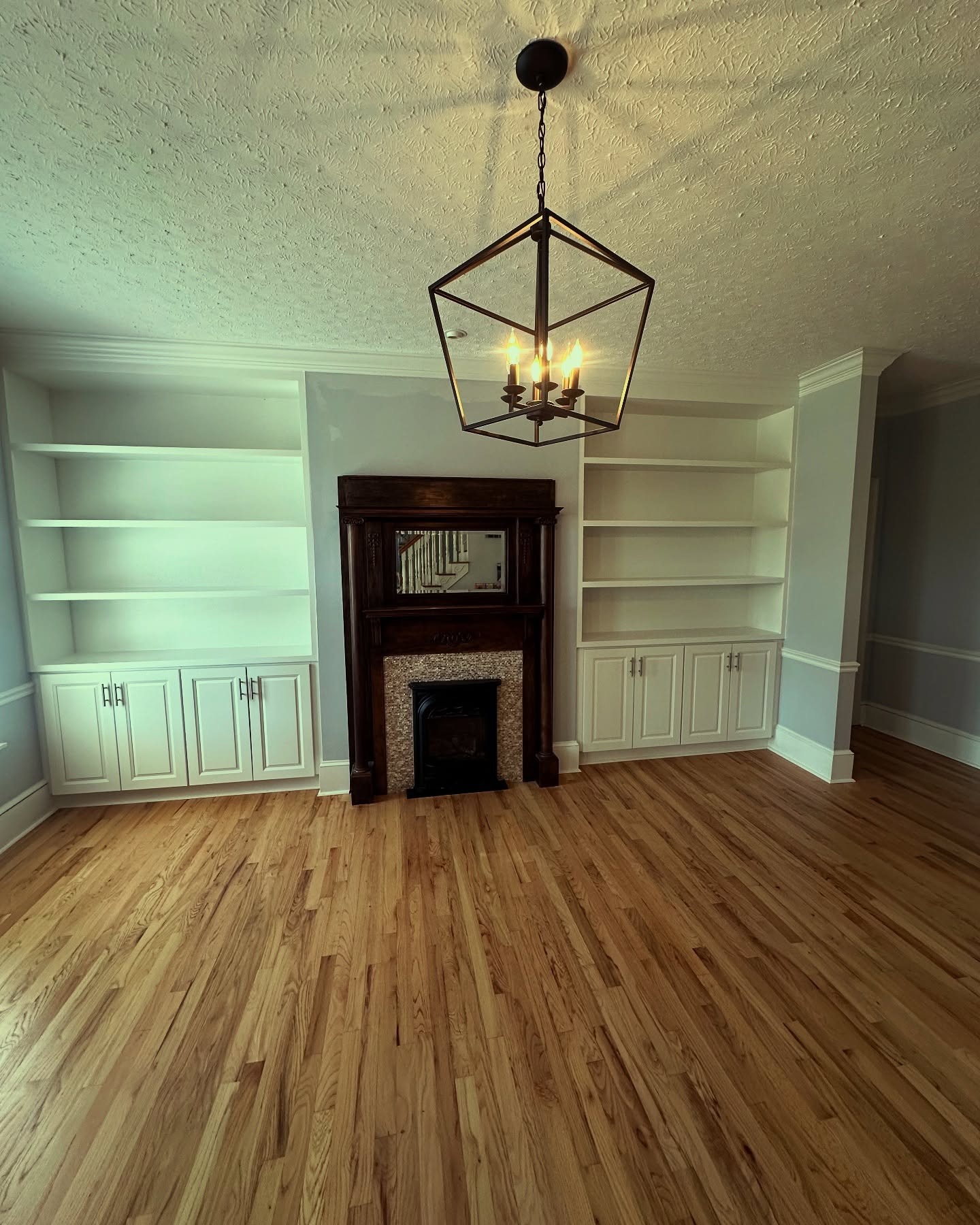
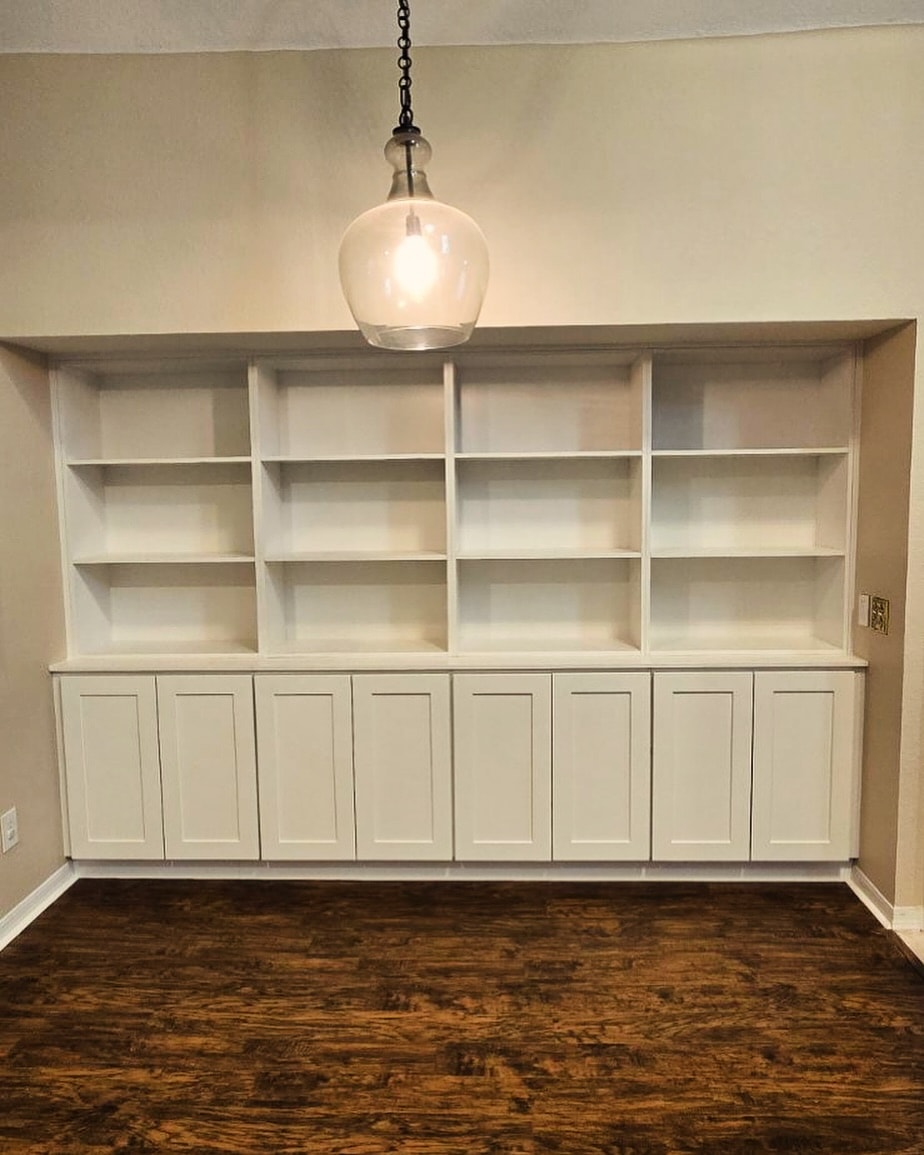
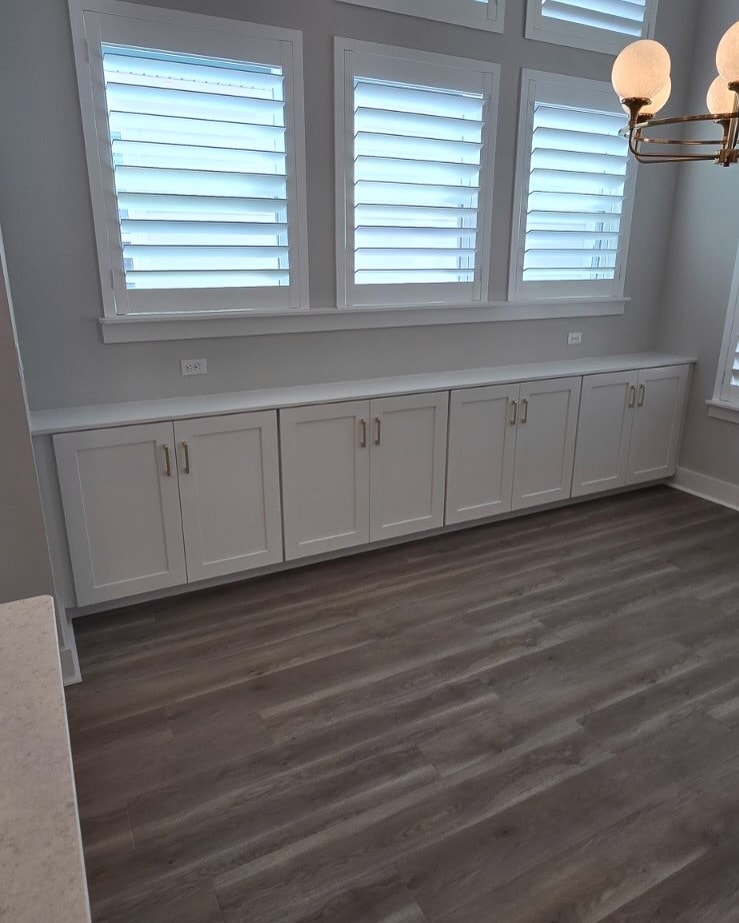
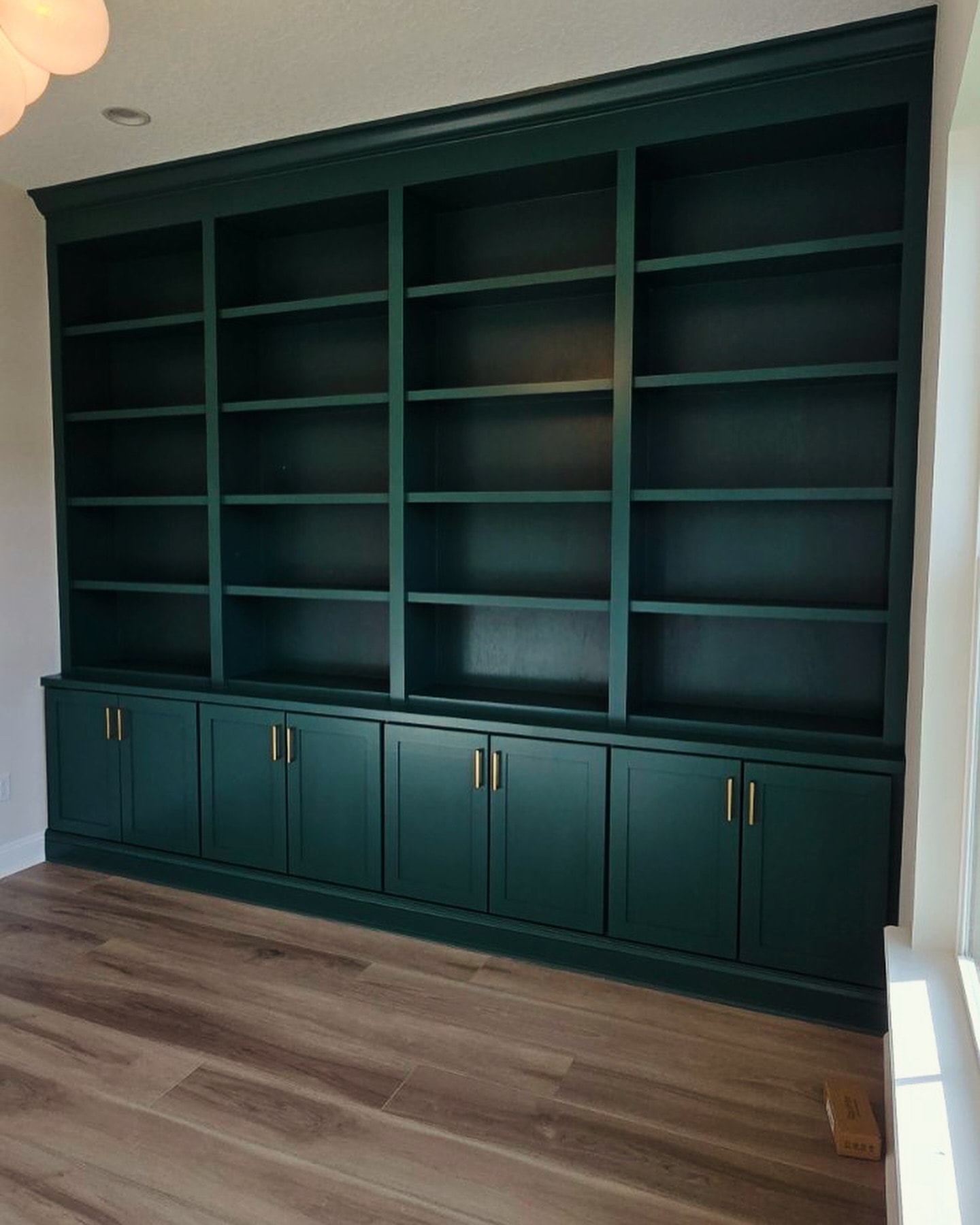
Built to the inch: scribed to the ceiling, walls, and an out-of-level floor, with no filler gaps.
IKEA hack
Fixed cabinet sizes; leftover gaps get hidden with filler strips and caulk, and tall ceilings are left open above.
Materials
Custom built-ins (AVP)
Cabinet-grade plywood and solid wood face frames; shelves that hold books without sagging.
IKEA hack
Mostly particleboard with foil or veneer skins; long shelves sag under real load over time.
Finish
Custom built-ins (AVP)
Filled, sanded, caulked, and sprayed or brushed in place. Reads as original to the home.
IKEA hack
Factory finish is consistent but generic; site-painted IKEA boxes often show seams and edge banding.
Design freedom
Custom built-ins (AVP)
Any depth, height, radius, arch, lighting, fireplace, or bench you can sketch.
IKEA hack
Limited to the catalog's module sizes and door styles.
Durability
Custom built-ins (AVP)
Screwed to studs, solid-wood edges, repairable and repaintable for decades.
IKEA hack
Serviceable for years with light use; moisture and load are the enemies of particleboard.
Resale perception
Custom built-ins (AVP)
Reads as architecture. Appraisers and buyers treat it as part of the house.
IKEA hack
Buyers increasingly recognize the hack; it reads as furniture attached to a wall.
Typical cost
Custom built-ins (AVP)
A multiple of the IKEA route, custom-quoted to scope and finish.
IKEA hack
Catalog modules you assemble yourself, plus your weekends for trim.
Timeline
Custom built-ins (AVP)
Two to five days on-site by our crew, finished and cleaned up.
IKEA hack
A weekend or three of your own labor, depending on ambition.
The honest bottom line
Choose the IKEA hack when the room is a nursery or rental you'll redo later, ceilings are standard height, and you genuinely enjoy the project. Done patiently, it photographs well and stores plenty.
Choose custom when the wall is uneven or tall, when the design needs anything the catalog doesn't make, when the room is one buyers will judge (living room, office, primary closet), or when you want it done once, by someone else, and finished like the rest of your trim. That's the work we do every day, and it's why the two prices are different.
Questions, answered
Still deciding?
Are custom built-ins worth the cost over IKEA?
How much more do custom built-ins cost than an IKEA hack?
Can you make an IKEA hack look fully built-in?
Do custom built-ins add value to a home?
Don't see your question? Request a consultation.
By consultation
Built to last.
Finished to impress.
We take on a limited number of projects each season so each home gets our full attention. Share your project and we’ll respond within 24 hours to see if it’s the right fit.
Insured · $1M general liability · 230+ Google reviews, 5.0