Painted vs. Stained
Painted or stained? How we help clients decide.
One is a color, the other is a material showing itself. The right answer depends on the room, the light, the wood, and how you live.
Every built-in and accent wall project reaches the same fork: paint it, or stain it? It looks like a pure style call, but the two finishes age differently, repair differently, cost differently, and put different constraints on the material underneath. A stained piece must be built from real, matched hardwood, while a painted piece can use paint-grade materials engineered for flatness.
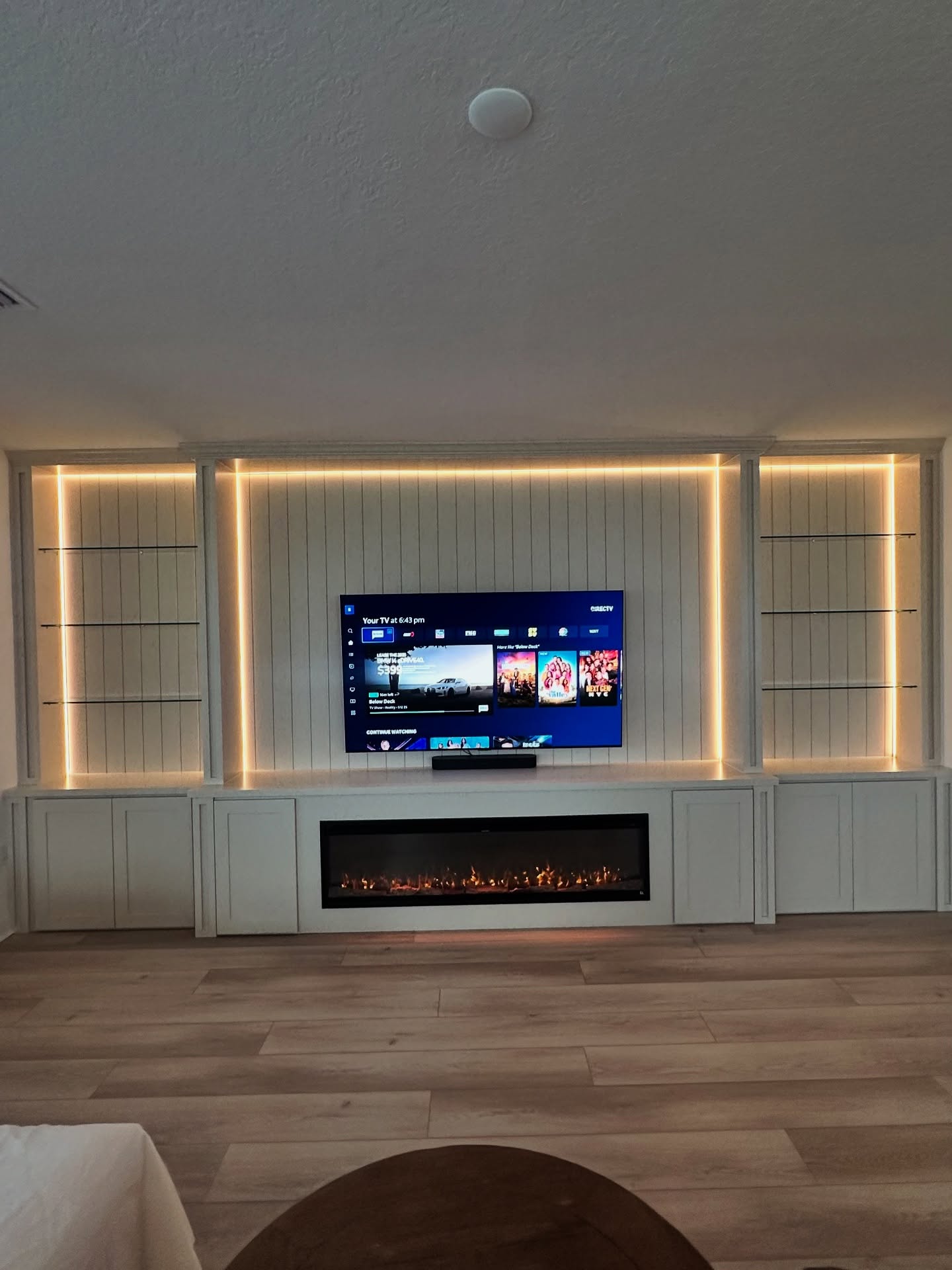
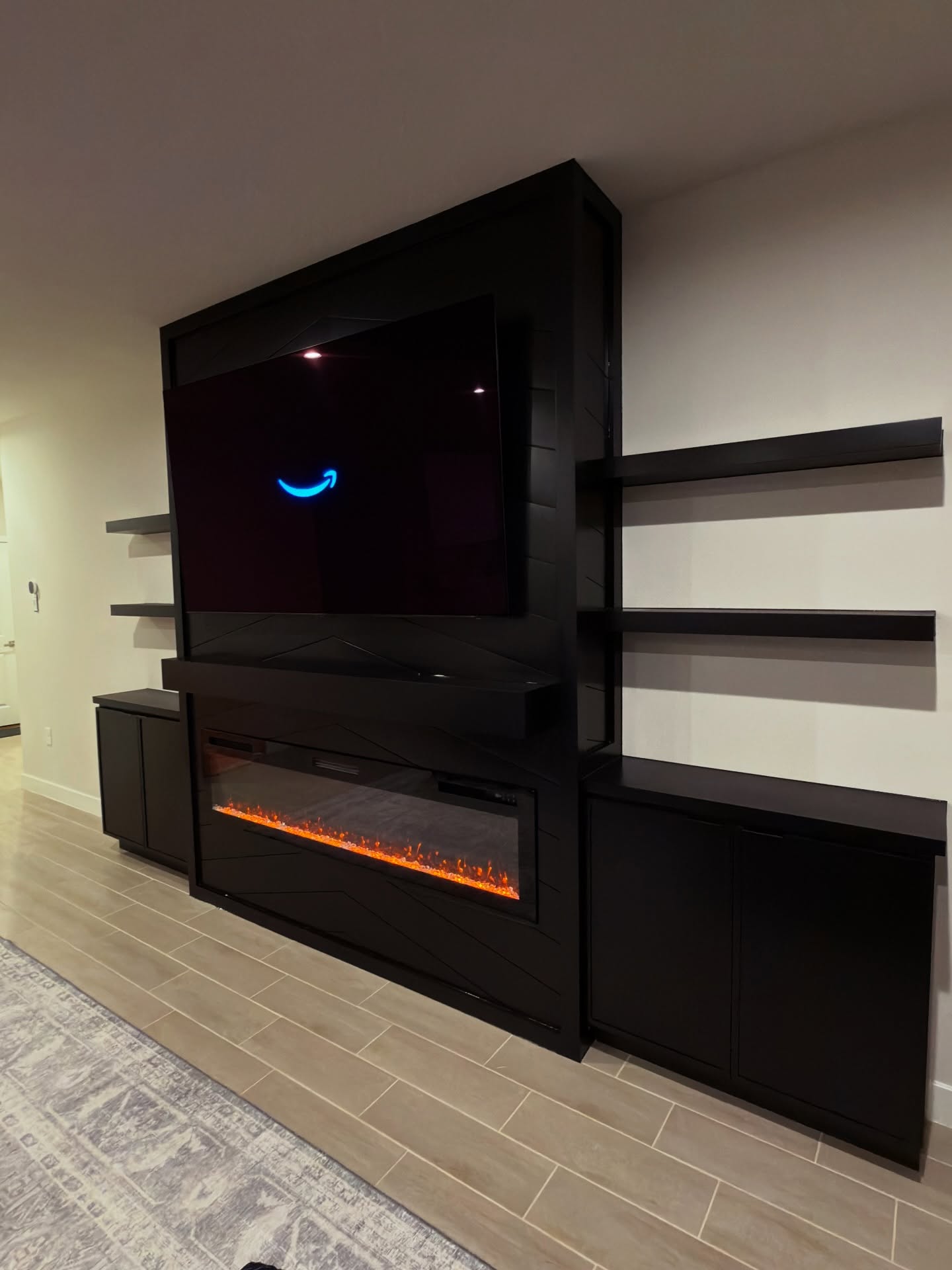
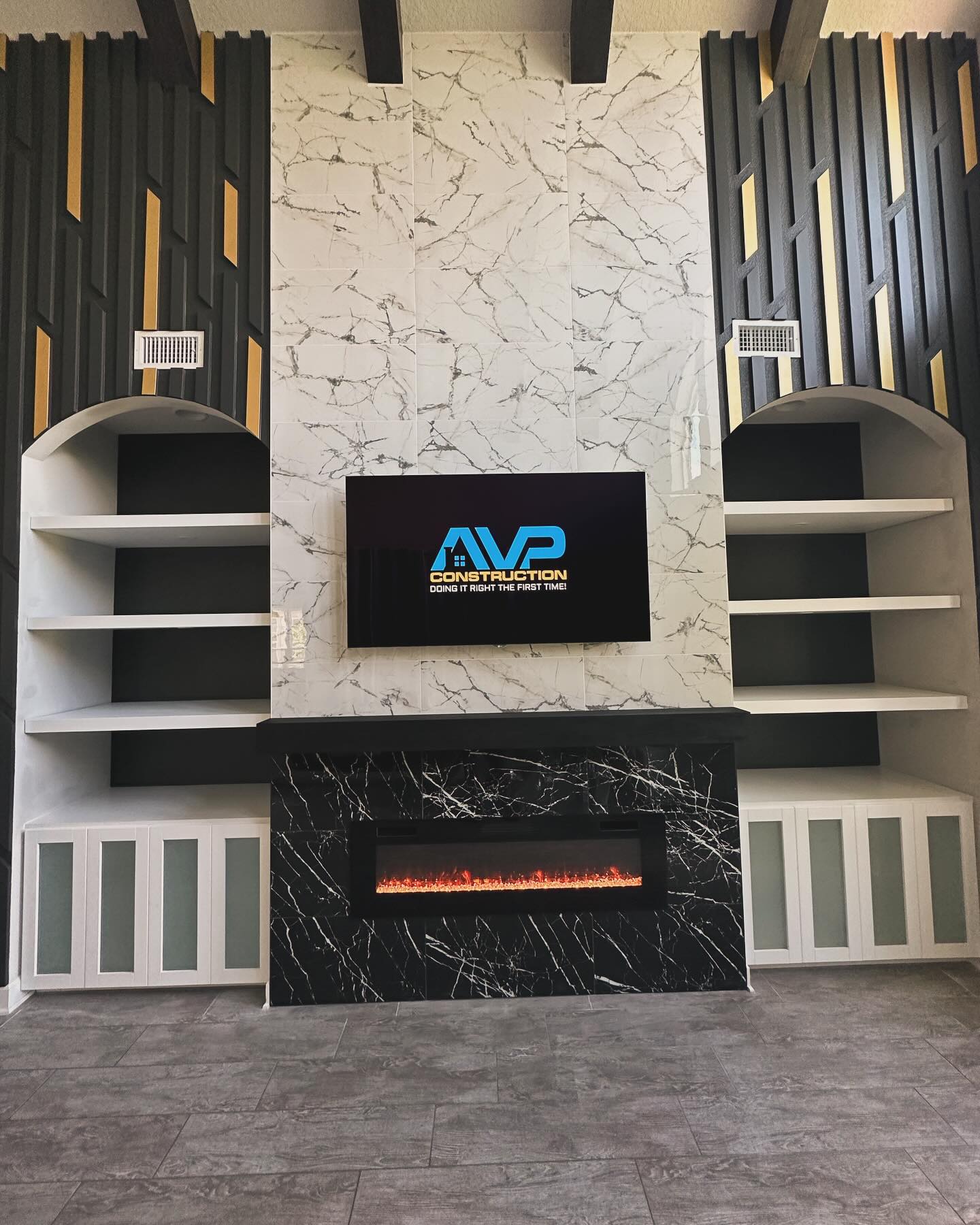
The current look in Northeast Florida homes is a blend: painted cabinetry and paneling for the big surfaces, with stained white-oak accents (floating shelves, a mantel, a hood, a bench top) bringing warmth against the paint. That two-tone approach is popular because it works: paint carries the architecture, wood carries the character. Here's how the two finishes actually compare when you get past the mood board.
Side by side
Look
Painted
Clean, architectural, reads as part of the home's trim; any color, changeable later.
Stained
Warm and organic; the grain is the feature, and no two pieces are identical.
Material required
Painted
Paint-grade MDF and poplar, engineered for flat, smooth painted faces.
Stained
Real hardwood with matched grain and color (white oak, walnut, cherry) throughout every visible face.
Durability & touch-up
Painted
Chips at hard-use edges over the years; touch-ups are easy if you keep the paint code.
Stained
Wears gracefully. Small dings blend into grain; deep repairs need matching stain and a careful hand.
Kids, dogs & high traffic
Painted
A quality enamel (we spray durable urethane enamels) handles scrubbing well.
Stained
Hides fingerprints and micro-scratches better than paint, especially mid-tone stains.
Style longevity
Painted
A white or neutral painted built-in has stayed current for decades; bold colors date faster but repaint.
Stained
Wood tones cycle (golden oak → espresso → natural white oak) but a quality natural stain outlives trends.
Cost
Painted
Generally lower for the same design. Paint-grade materials cost less than matched hardwood.
Stained
Higher: hardwood throughout, more careful material selection, and a less forgiving finishing process.
Changing your mind
Painted
Repaintable in place. A color refresh is a weekend, not a rebuild.
Stained
Stained-to-painted is possible (prime and paint); painted-to-stained is effectively a rebuild.
The honest bottom line
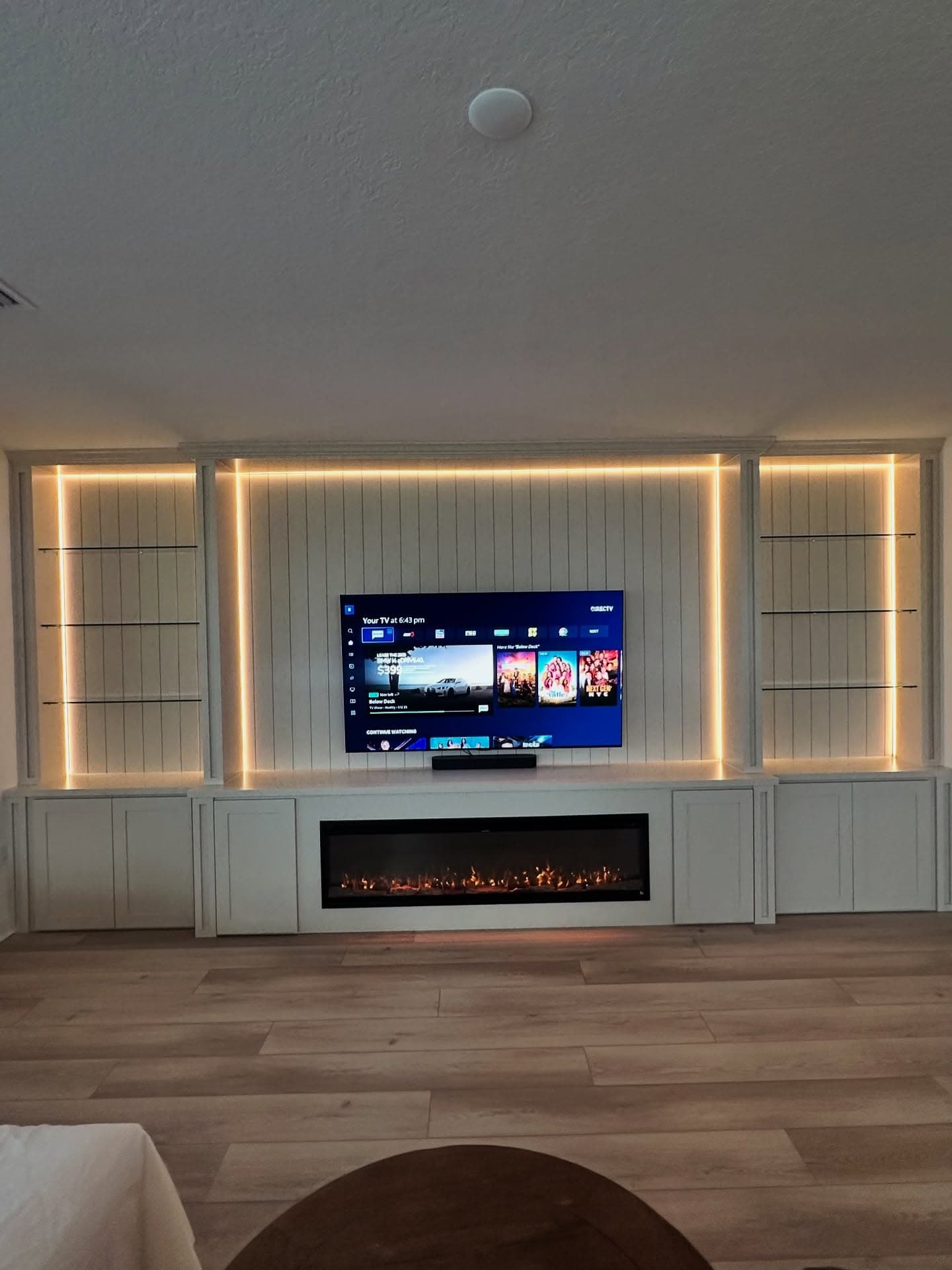
Paint when the piece should read as architecture (wainscoting, trim, most built-ins and media walls), when you want a specific color, or when you want a finish that can be refreshed: paint-grade material takes a clean touch-up. It's the right default for the majority of what we build.
Stain when the wood itself is the point: floating shelves, mantels, hoods, benches, a statement slat wall. And seriously consider the blend (painted casework with stained oak accents), which is the finish combination we build most, because it gets the durability and price of paint where it counts and the warmth of real wood where you'll see and touch it.
Questions, answered
Still deciding?
Is painted or stained more durable for built-ins?
Does painted or stained cost more?
Can I paint over stained built-ins later?
What finish does AVP use on painted built-ins?
Don't see your question? Request a consultation.
By consultation
Built to last.
Finished to impress.
We take on a limited number of projects each season so each home gets our full attention. Share your project and we’ll respond within 24 hours to see if it’s the right fit.
Insured · $1M general liability · 230+ Google reviews, 5.0