Guides
Coffered, Box Beam, or Tray Ceilings: A Finish Carpenter's Guide
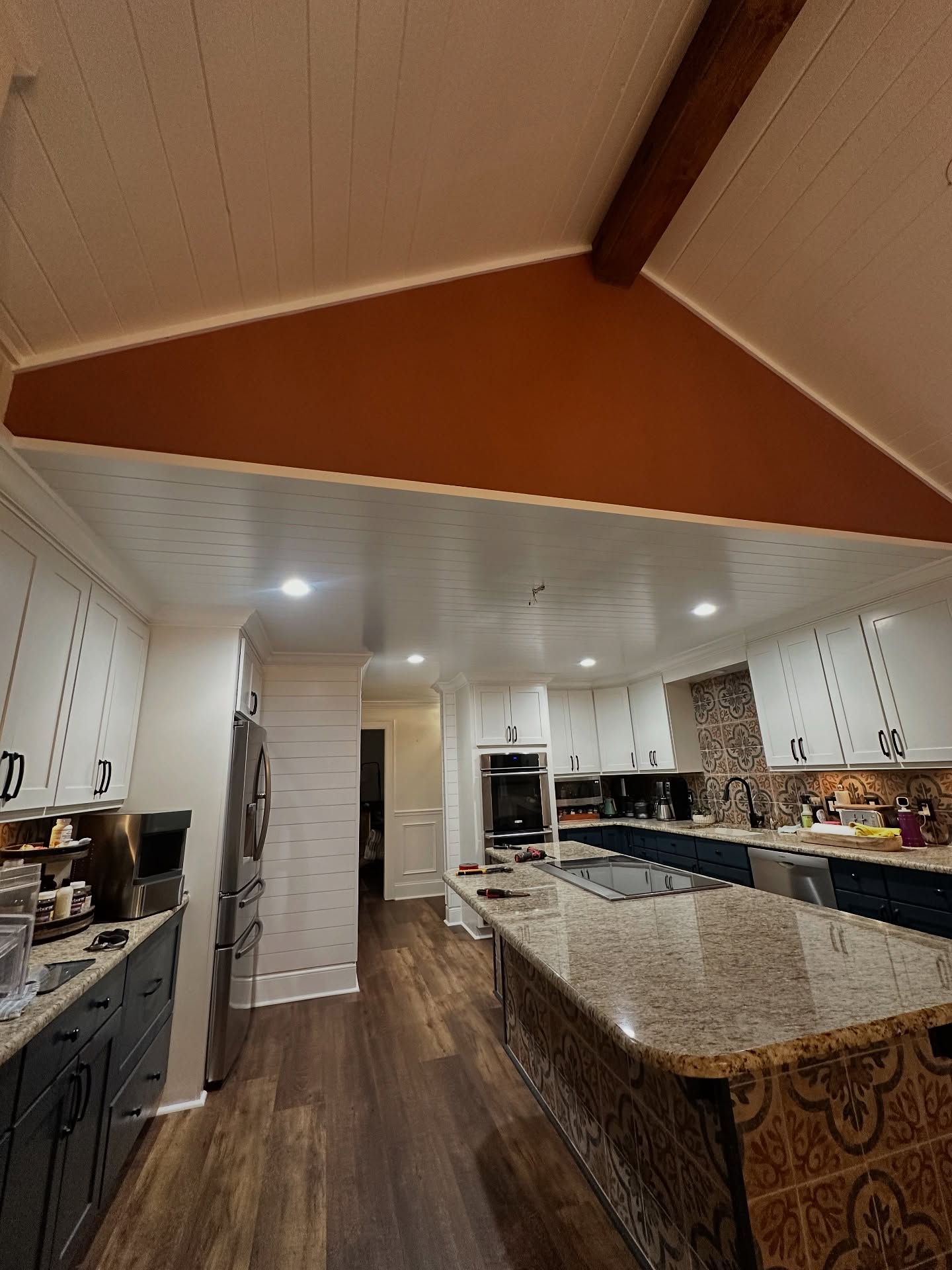
The most overlooked surface in the house
Most people pour everything into walls and floors and never look up. But the ceiling is a full surface of the room, and working it is one of the quietest ways to make a space feel built instead of assembled. The trouble is the terms. Coffered, box beam, and tray get used loosely, and they mean three different things. Here's the plain-English version, and how to tell which one your room can actually carry.
What each one is
Box beam ceiling. Beams run across a flat ceiling in one direction, sometimes both. They're hollow, built up from finished boards instead of solid timber. They add rhythm and a sense of architecture without giving up much height. Box beams are forgiving. Stain them and they read rustic or traditional. Paint them out to match the ceiling and they become pure geometry, shadow and line. For a standard-height room, box beams are the right call more times than not.
Coffered ceiling. A grid of beams crossing in both directions, with recessed panels between them. Those panels are the coffers. It's the most formal of the three and the most involved, because every intersection has to be laid out precisely and hold consistent across the entire room. There's nowhere for a wandering layout to hide when you're staring straight up at it. Coffered ceilings earn their place in dining rooms, offices, and great rooms with the height to carry them.
Tray ceiling. A different animal from the other two. A tray is a recessed center section stepped up above the surrounding ceiling, built into the home's framing rather than added to it. Plenty of Northeast Florida homes already have one. A plain tray is a natural candidate for trim, a beam detail, or a deliberate paint treatment. Anything that makes it read as a feature instead of a step in the drywall.
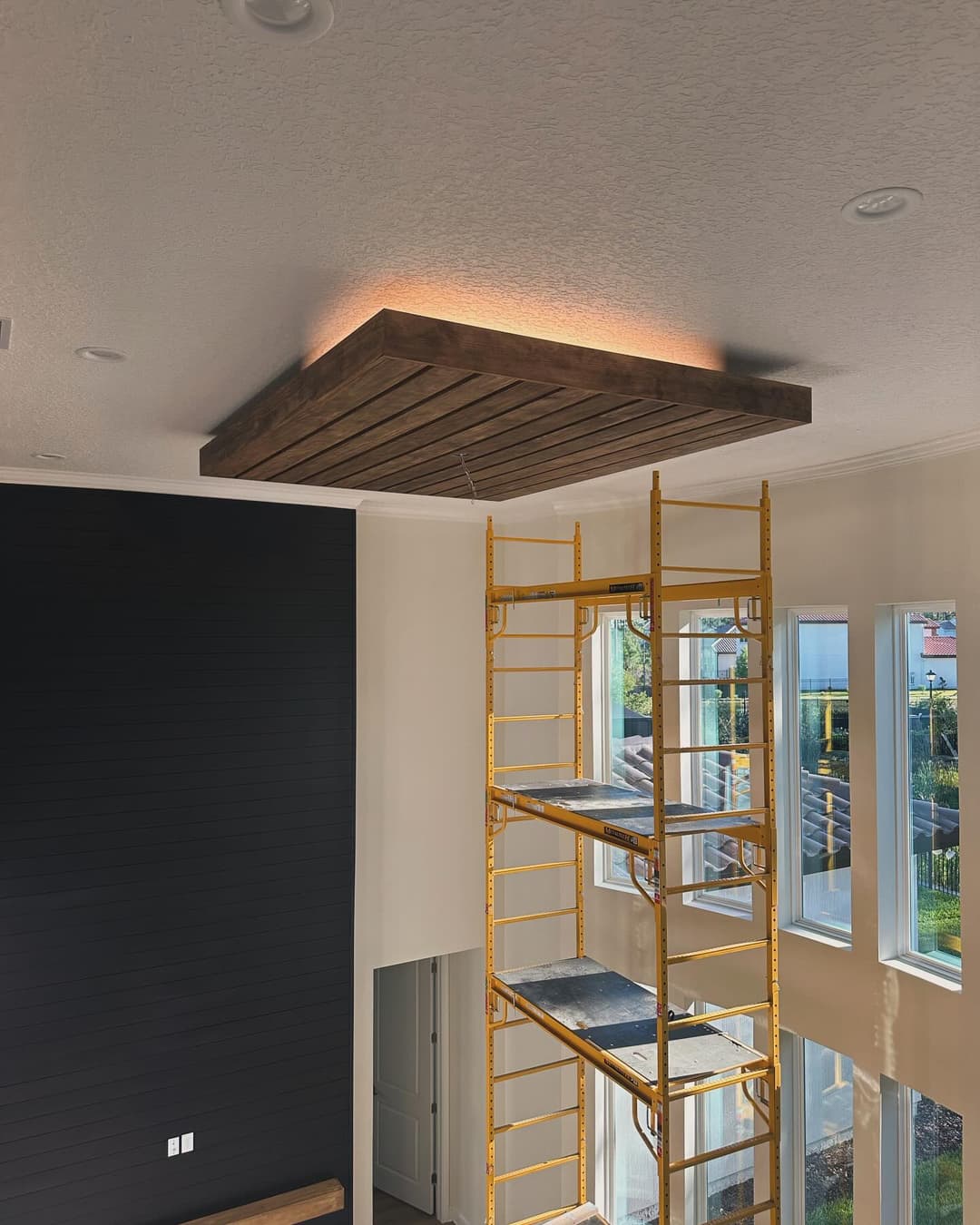
Height and size: what your room can carry
Ceiling height is the first question. Every time. Beams and coffers take up vertical space, so they need room to give. Box beams work comfortably from standard heights on up. A full coffered grid wants something taller than standard. Push it into a lower room and the whole ceiling starts pressing down on you. Room size matters just as much. A deep coffer pattern crowds a smaller room where two clean box beams would sit exactly right. In a large great room the equation flips: a single beam looks adrift, and a fuller grid finally has space to do something.
This is the judgment call that's hard to make from a photo and easy to make standing in the room. When we come out, we look at the height, the proportions, and the light before we recommend anything.
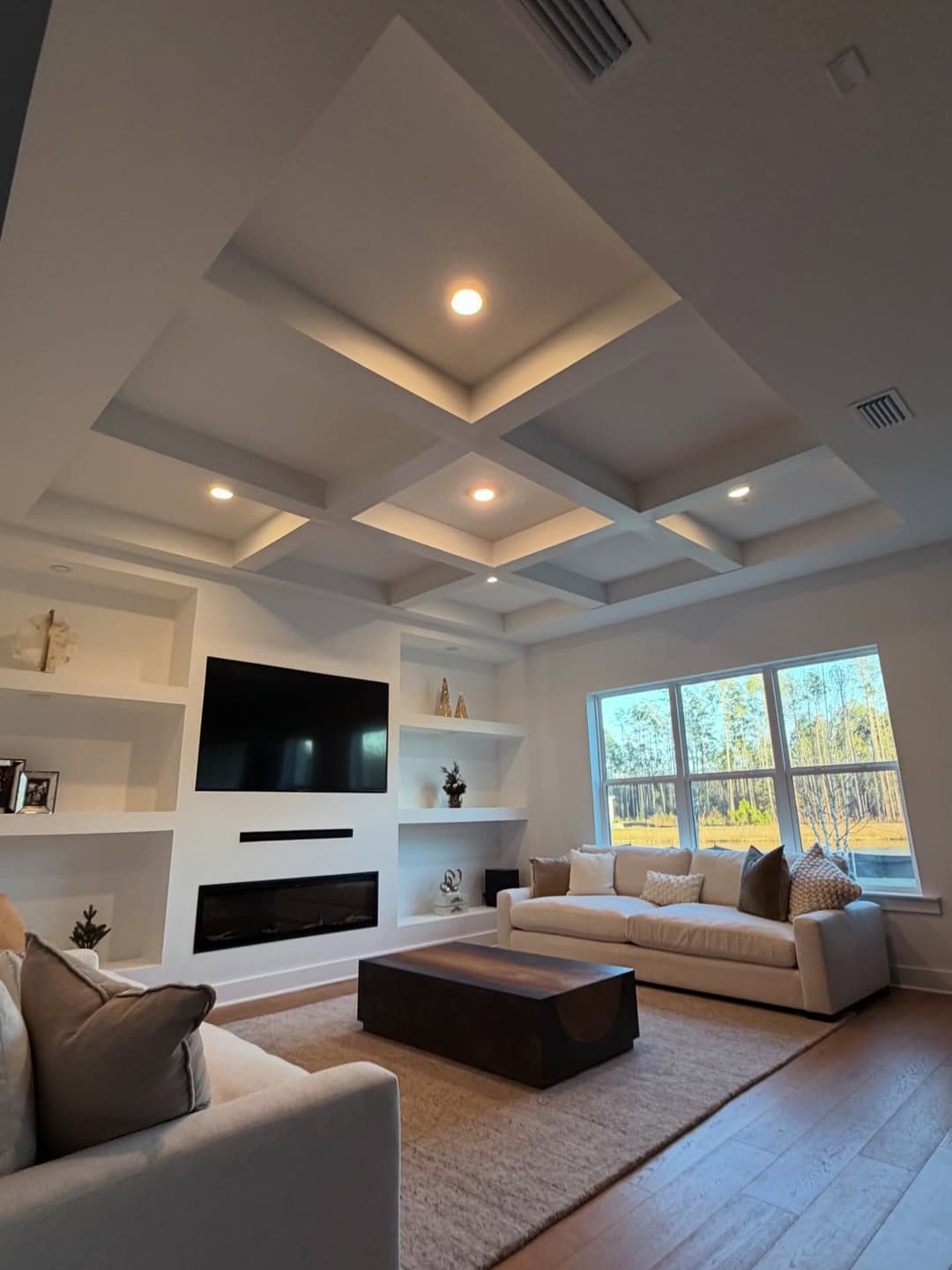
Cost, relatively speaking
No hard numbers here, but the order is predictable. A tray-ceiling enhancement is the most accessible of the three, since the recess is already framed in and you're adding trim or a beam detail to what's there. Box beams are a step up, scaling with how many beams you run and how long the runs are. A full coffered ceiling is the most significant, and not just for the lumber. It's the layout. Every coffer has to match its neighbors. The precision is as much of the job as the material.
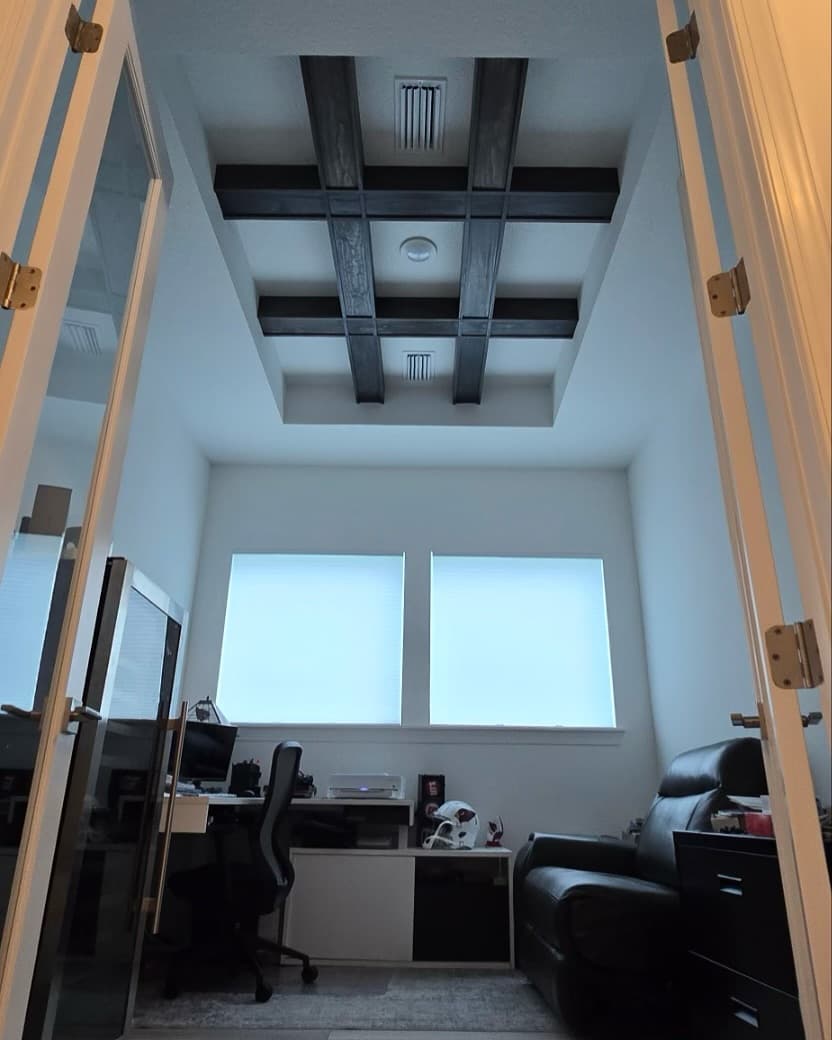
Matching the style of the home
A ceiling treatment should look like it was always there. The Mediterranean and coastal-transitional homes you see around Ponte Vedra and St. Augustine suit stained box beams or a restrained coffered grid. Cleaner contemporary interiors want everything painted out, so the geometry reads as shadow and proportion instead of wood. The goal is a ceiling that feels original to the home, not something grafted on later.
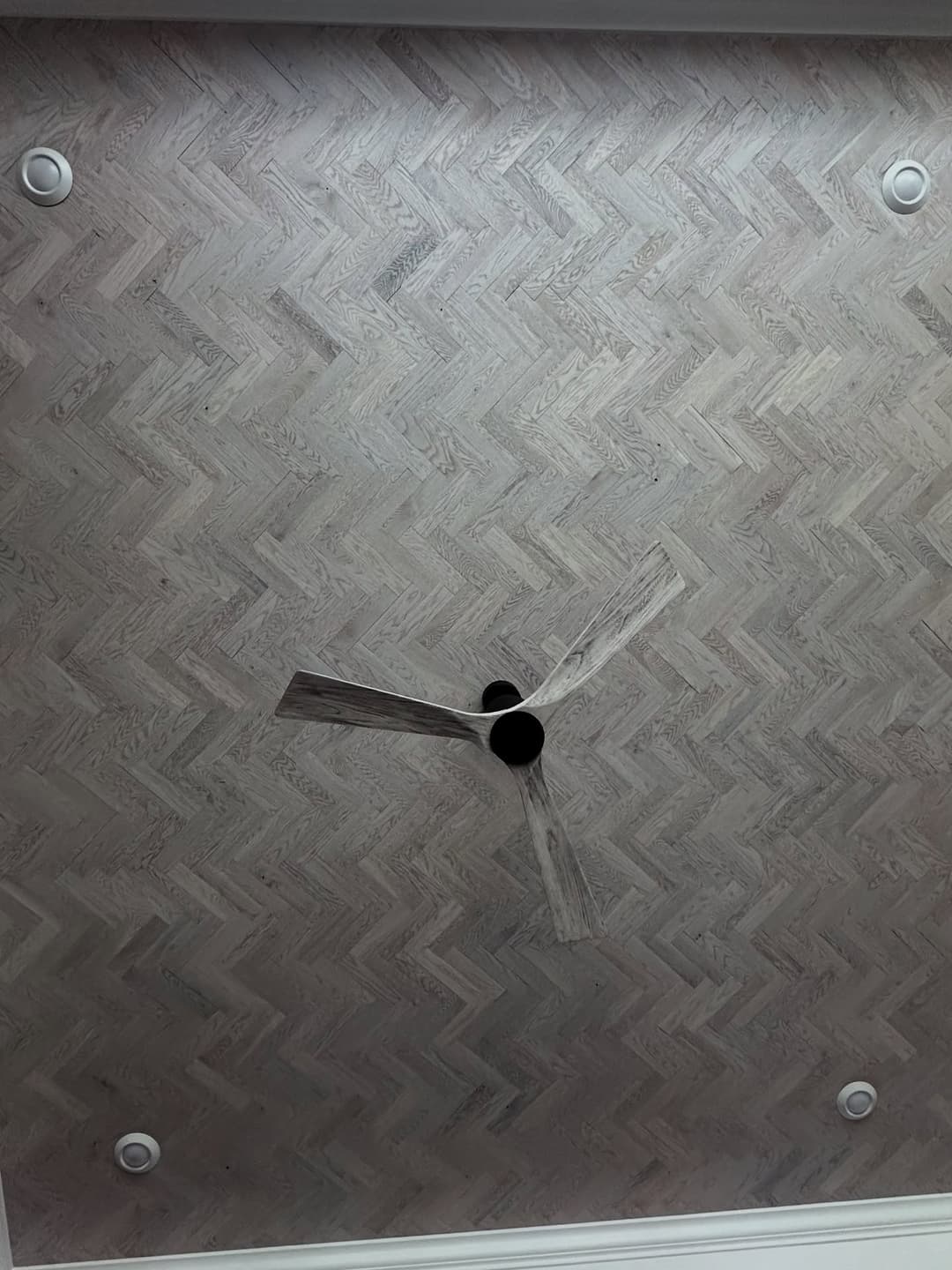
Looking up at your own ceiling
If you have a tall great room that feels unfinished overhead, or a plain tray that never became the feature it was framed to be, a ceiling treatment is the highest-impact, least-disruptive work we do. No floors pulled up. No rooms gutted. You can see how we approach it on our beams & ceilings service page and look through finished rooms in the portfolio.
If you're not sure what your room can carry, that's the easiest thing in the world to sort out in person. Request a consultation and we'll look up together.
By consultation
Built to last.
Finished to impress.
We take on a limited number of projects each season so each home gets our full attention. Share your project and we’ll respond within 24 hours to see if it’s the right fit.
Insured · $1M general liability · 230+ Google reviews, 5.0