Guides
The Paint We Trust on Built-Ins: Sherwin-Williams Emerald Urethane
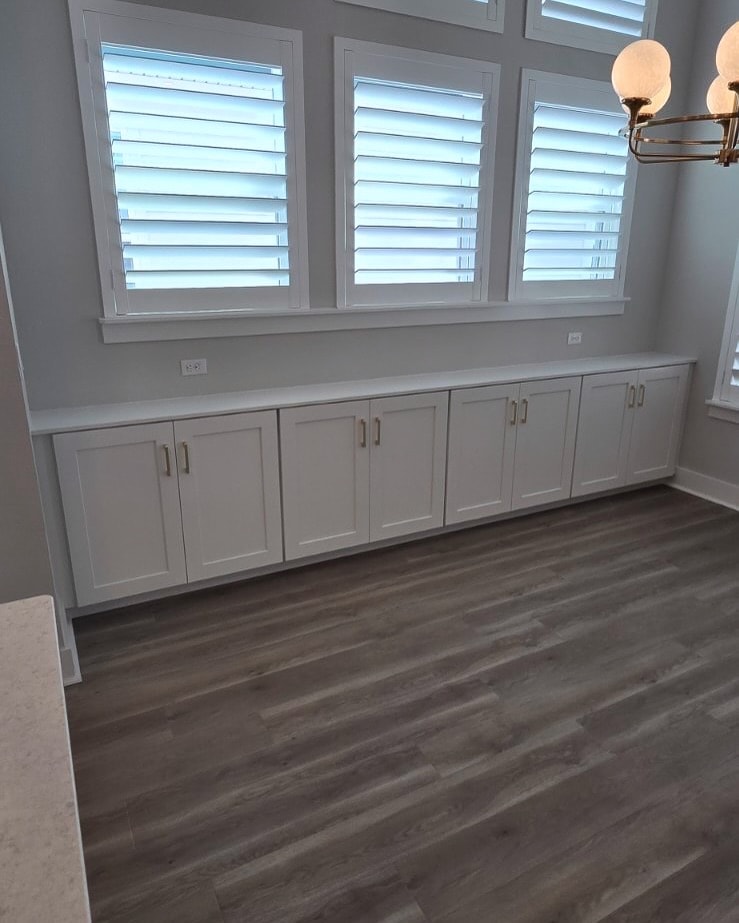
Somewhere in almost every consultation, a client leans in and asks the real question: "Will the paint chip?" Usually there's a story behind it. A friend's painted cabinets peeling around the handles. Shelves that stayed faintly tacky and grabbed everything set on them. So when they ask what paint we use and whether "cabinet paint" is a real thing or a marketing upcharge, we take the question seriously.
Here's the straight answer: cabinet paint is real, the difference is real, and the product we've settled on after years of built-ins across Jacksonville and St. John's County is Sherwin-Williams Emerald Urethane Trim Enamel. Nobody pays us to say that. It's just what's in the sprayer.
Why wall paint fails on cabinets
Wall paint is engineered for a surface nobody touches. Your walls don't get gripped, slid across, or loaded with books, so wall paint dries to a relatively soft, flexible film. That's fine for walls. Put that same film on a cabinet door and every weakness shows up fast.
Fingernails catch the edge at the pulls and it chips. It never cures hard, so it stays faintly soft. Set a stack of dishes on a wall-painted shelf for a month and they'll stick, then lift paint when you pull them free. That sticking is called blocking, and it's the signature failure of wall paint on shelving. Scrubbing a greasy fingerprint burnishes the sheen right off. None of this means the painter did bad work. It means the product was never built for hands and objects.
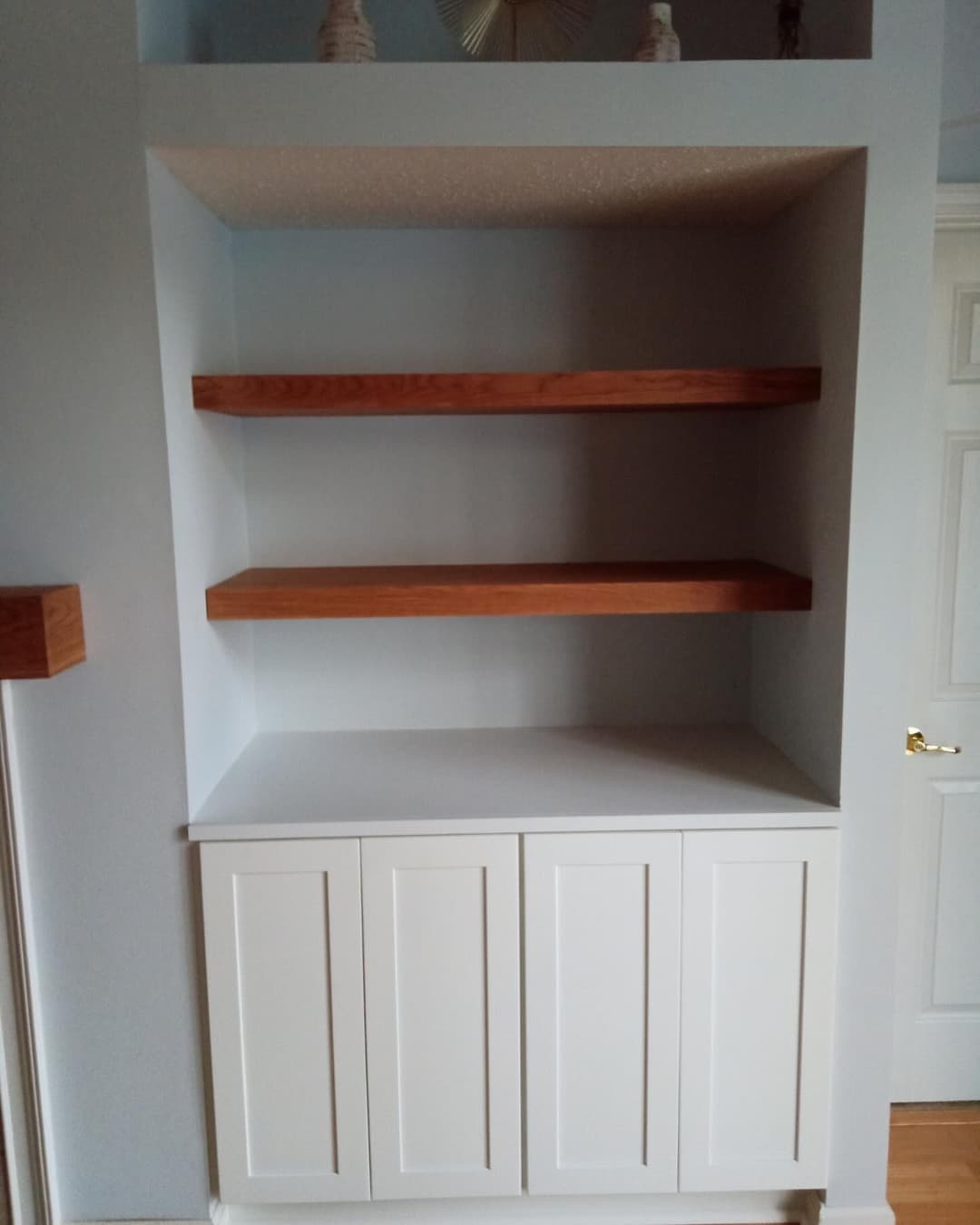
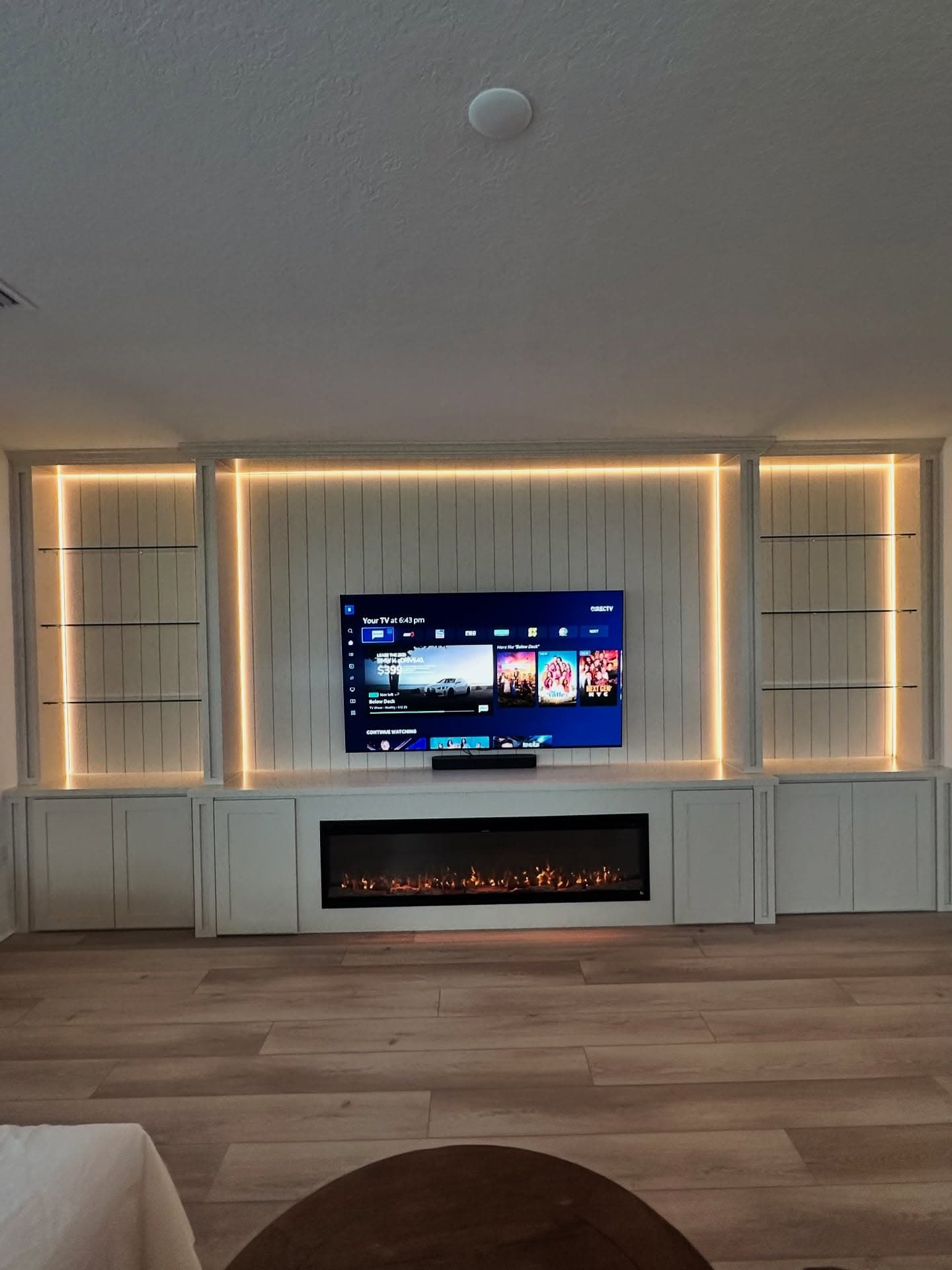
A piece like the niche built-in above gets touched every day for decades. Painted cabinet below, stained shelves above. The finish is the part of the build your hands actually meet, which is why we're pickier about it than almost anything else.
What Emerald Urethane is, in plain English
Emerald Urethane is Sherwin-Williams' urethane-modified trim enamel, their premium product for cabinets, trim, and doors. Skip the chemistry. In practice it goes on like paint, then cures into a hard, furniture-grade film. Closer to what you'd expect on a factory cabinet than anything that came off a wall.
The urethane-modified part is what buys the hardness. A trim enamel is built for exactly the abuse cabinets take: fingers on edges, objects sliding on shelves, the vacuum bumping the toe kick. Is it the only good cabinet enamel out there? No. But it's the one we've sprayed on years of built-ins and keep coming back to, because we've stood in clients' houses years later and seen how it held.
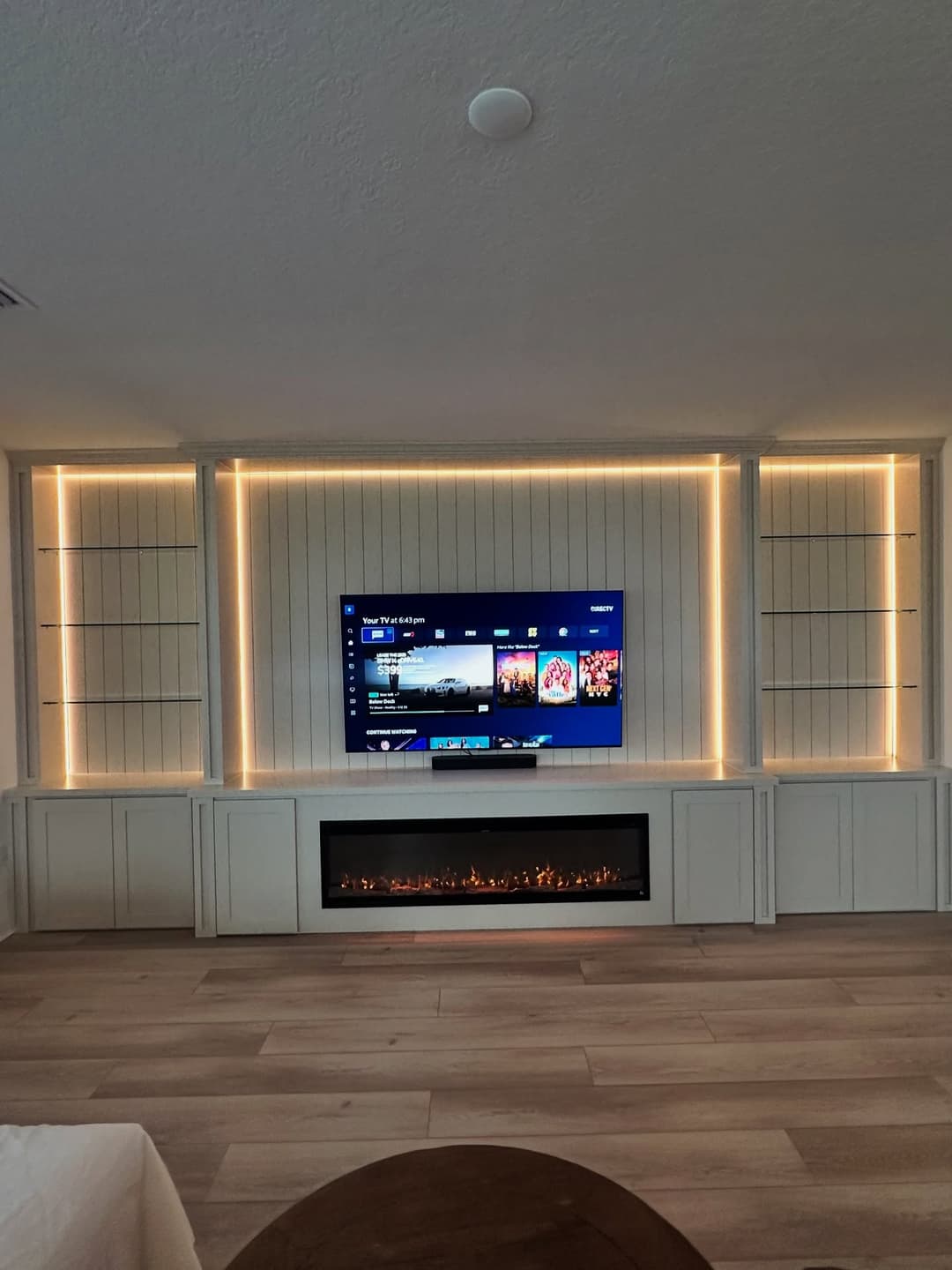
Chips, blocking, and cleanability. The things you actually feel.
Chips: a cured enamel shrugs off the everyday contact that flakes wall paint. Rings tapping drawer fronts. Keys tossed on a shelf. Hit any painted finish hard enough with a corner of something and it'll mark; we're honest about that. But daily handling is what kills wall paint on cabinetry, and daily handling is exactly what an enamel is built for.
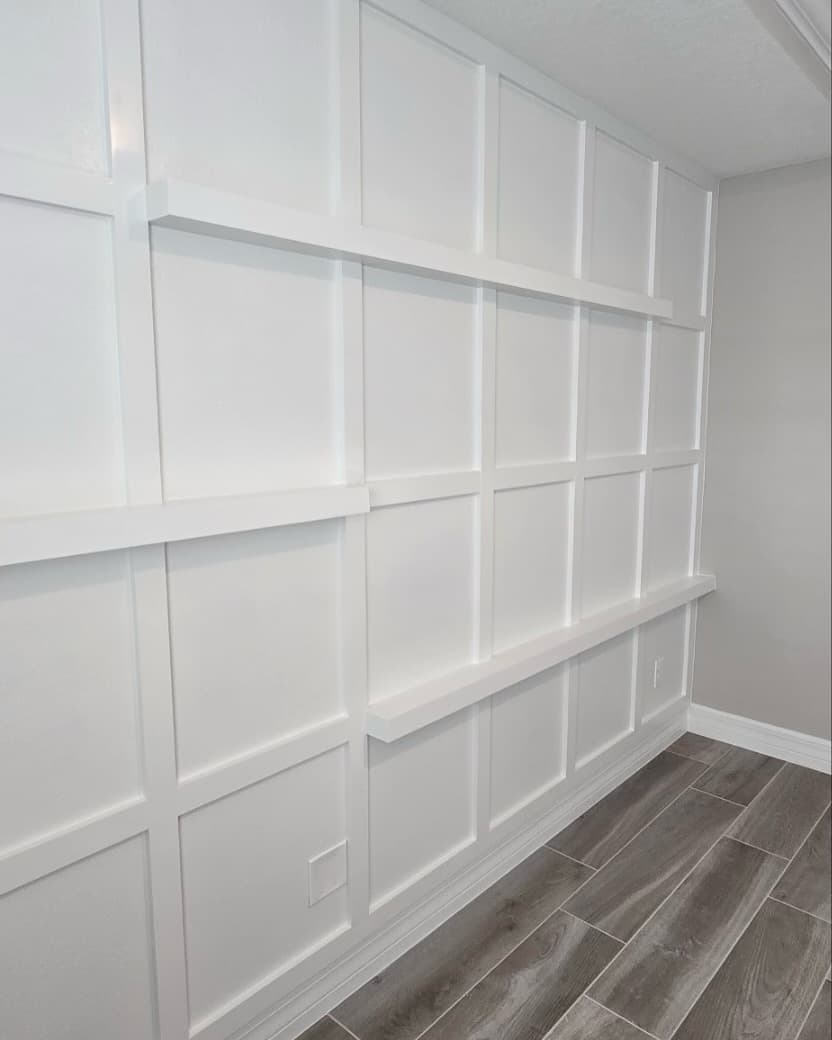
Blocking: this is the one homeowners feel most on built-ins, because built-ins are mostly shelves. Emerald Urethane cures hard enough that books, dishes, and decor sit on it without bonding to it. The display ledges on the grid wall below hold what they hold, and everything lifts off clean. That's the whole test.
Cleanability: a hard film wipes. Fingerprints around the pulls, a splash near the coffee maker, kid-level smudges on a toe kick. Damp cloth, done, sheen intact. On soft paint that same wipe can leave a shiny burnished patch you'll see in raking light forever.
Why we spray it instead of brushing
The product is half the finish. The application is the other half. We spray our built-ins with Graco sprayers, because a sprayed coat of this enamel levels out into a smooth, even film with no brush marks. Run your hand across a door and it feels like it came out of a factory. Enamels are formulated to level, and spraying gets the most out of that. Brushed coats of the same paint are good, but they're not the same surface.
Whenever the piece allows it, we spray in controlled conditions rather than fighting dust and overspray in your living room. Doors, drawer fronts, and shelves get laid flat and sprayed on all faces. It's slower than rolling paint on assembled boxes. And it's the difference you feel every time you open a drawer.
Sheens we suggest, and where
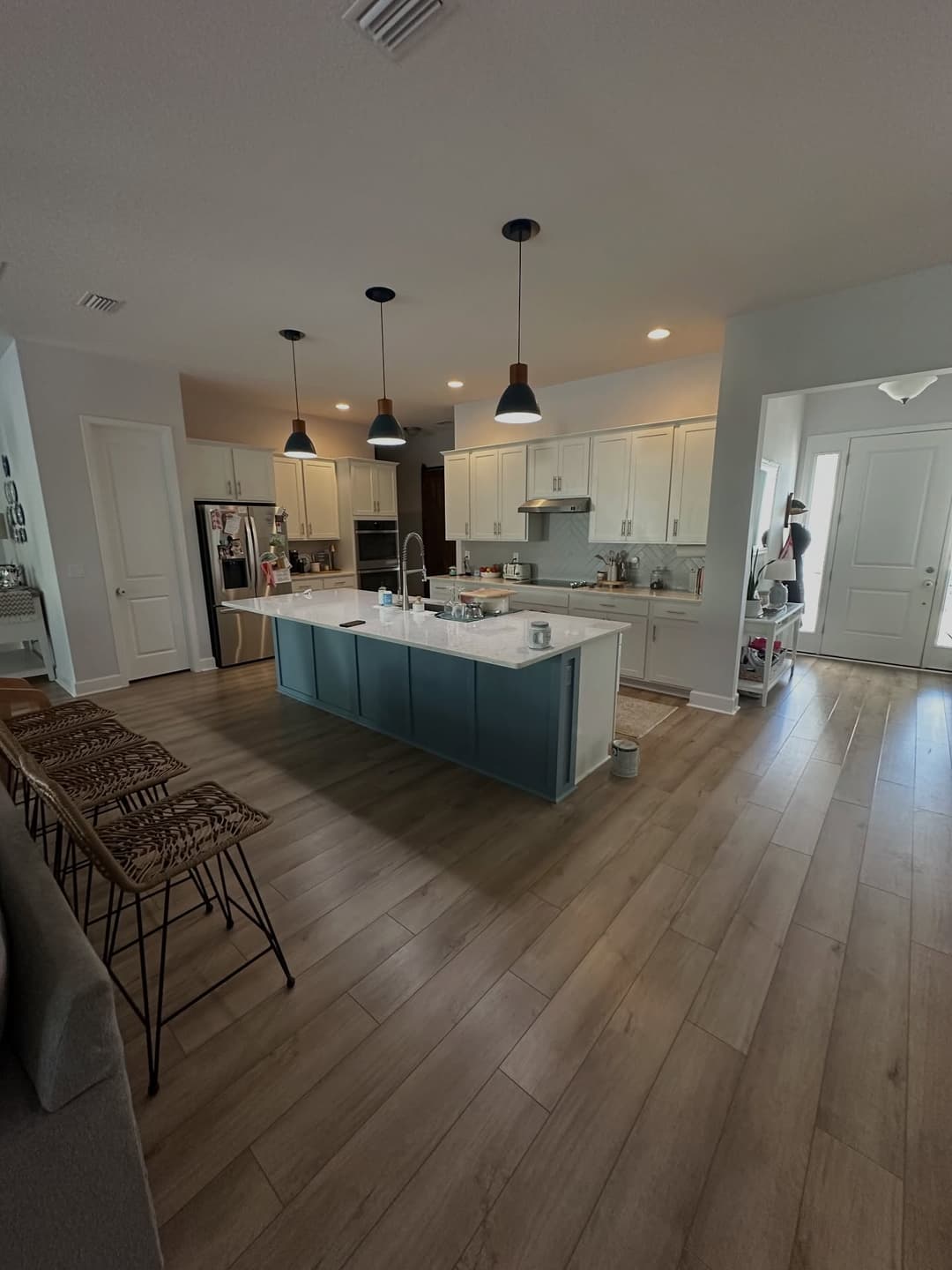
Sheen is a usage call more than a style call. On cabinet doors, drawer fronts, and shelving we usually land on satin or semi-gloss. Enough sheen to wipe clean and take handling, without turning every panel into a mirror that telegraphs dust. Semi-gloss earns its place in hard-use spots and on pieces that want a little formality. Satin is the quiet default that photographs well and hides fingerprints better, like the kitchen below with its blue island and white perimeter.
One thing worth flagging: the higher the sheen, the more prep matters, because gloss shows every flaw underneath. That's not a reason to avoid it. It's a reason the sanding and priming steps aren't optional.
What to ask any painter quoting your built-ins
You don't have to hire us, but ask whoever you hire these four questions. What exact product are you using? You want a named trim enamel, not "premium interior paint." Spraying or brushing, and where? What's the prep? Sanding and an appropriate primer should be in the answer, not "it's self-priming, we'll go right over it." How long before I can load the shelves? A pro will tell you cured and dry aren't the same thing and give you a real answer for the product they're using.
Vague answers to those questions are how people end up with sticky shelves. We wrote more on vetting trades in our guide to hiring a finish carpenter in Jacksonville, and you can see the finish quality we're describing across our custom built-in work. Budget questions are covered in what custom work costs in Jacksonville.
Painted built-ins don't have to chip, peel, or stick. The failures you've seen were product and prep failures. Not a law of nature. If you want to talk through the finish on a piece you're planning, we're easy to reach.
By consultation
Built to last.
Finished to impress.
We take on a limited number of projects each season so each home gets our full attention. Share your project and we’ll respond within 24 hours to see if it’s the right fit.
Insured · $1M general liability · 230+ Google reviews, 5.0