Guides
What Size Linear Fireplace Should You Get? A Real Answer
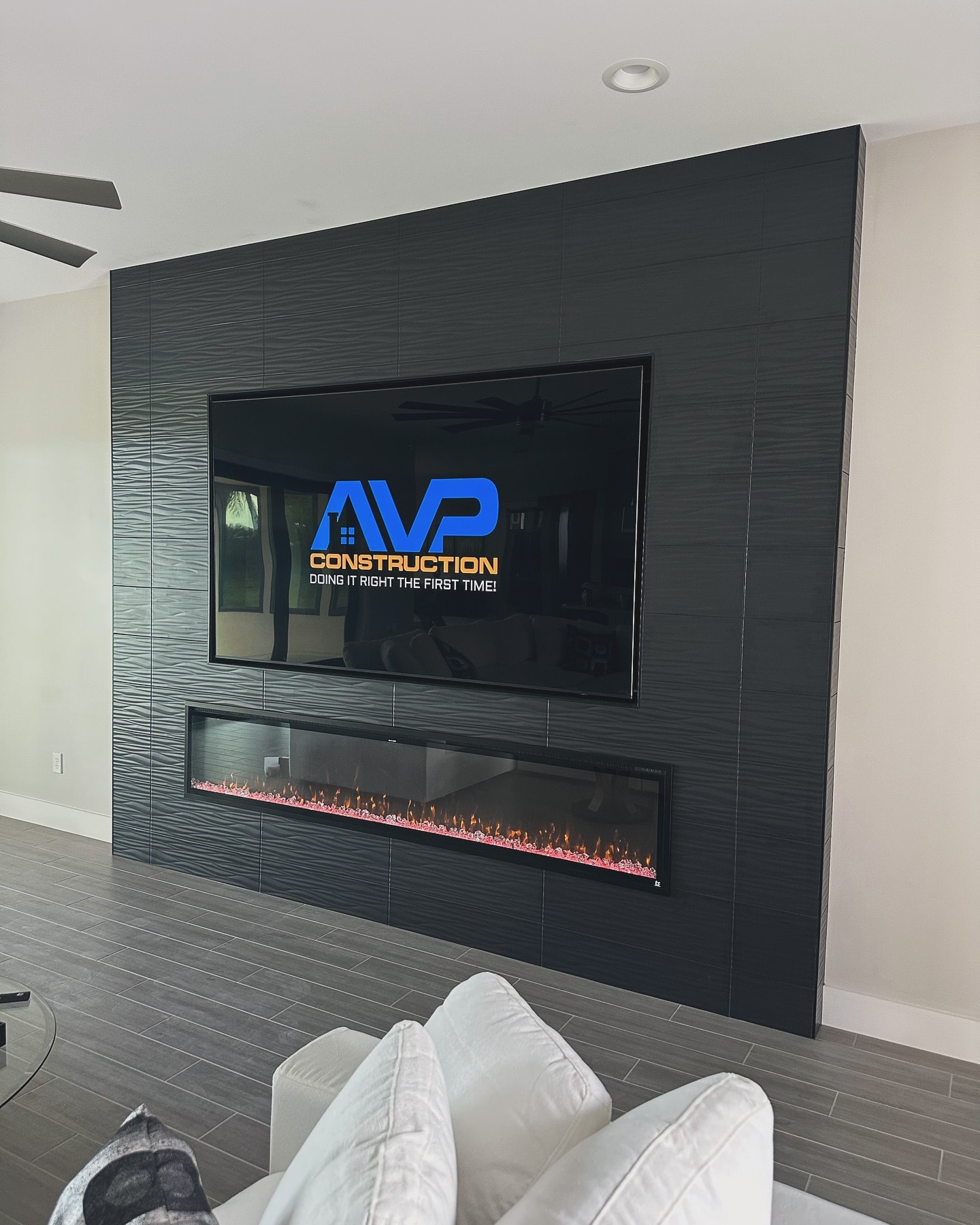
The size question comes up on every single media wall we quote. It usually arrives with a specific fear attached: "I don't want it to look tiny under the TV, but I also don't want it taking over the room." Both versions of that fear are legitimate. We've been called in to rebuild walls where someone got it wrong in each direction.
Sizing a linear fireplace isn't guesswork. There's a logic to it, and once you hear it, you'll probably know your answer before we even show up with a tape measure.
The mistake: sizing the fireplace to the room
The most common error we see is homeowners picking a fireplace size based on square footage. "It's a small living room, so we'll get the small one." That instinct comes from heating appliances, where output is matched to room size. A linear electric fireplace isn't primarily a heater. Its heat output runs about like a space heater regardless of how wide the flame window is.
What the fireplace actually has to relate to is the wall. Its width, its height, and everything else living on it. A modest room with a tall or wide feature wall can carry a big fireplace. A huge room with a narrow chase between two windows can't. Size to the composition, not the floor plan.
The TV-to-fireplace proportion rule we use
Here's the shorthand we use on nearly every design: the fireplace should be at least as wide as the TV above it, and it usually looks best a size wider. The fireplace is the base of the composition. When the base is narrower than what sits on top, the whole wall feels top-heavy. Like a bookshelf balanced on a shoebox.
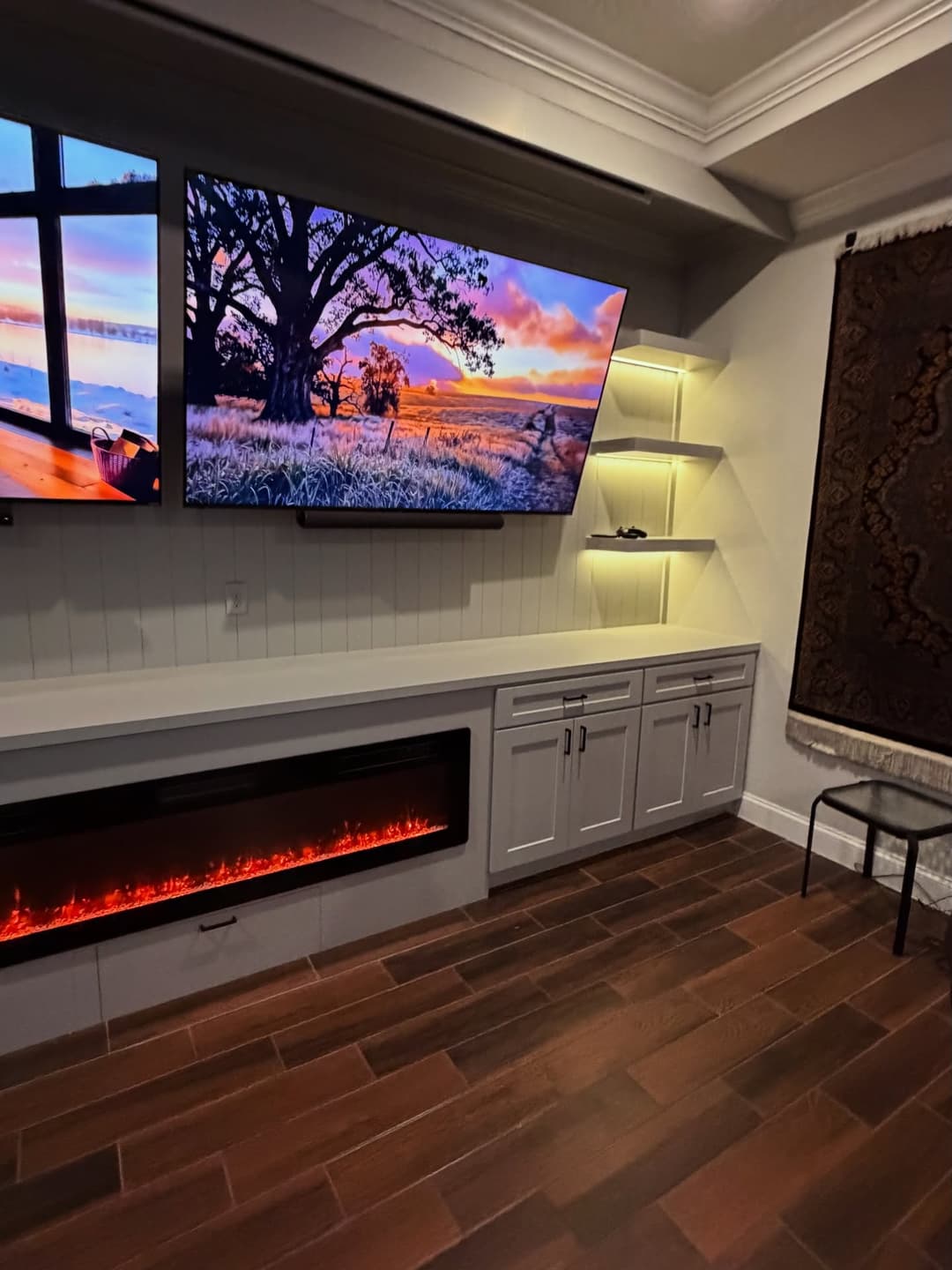
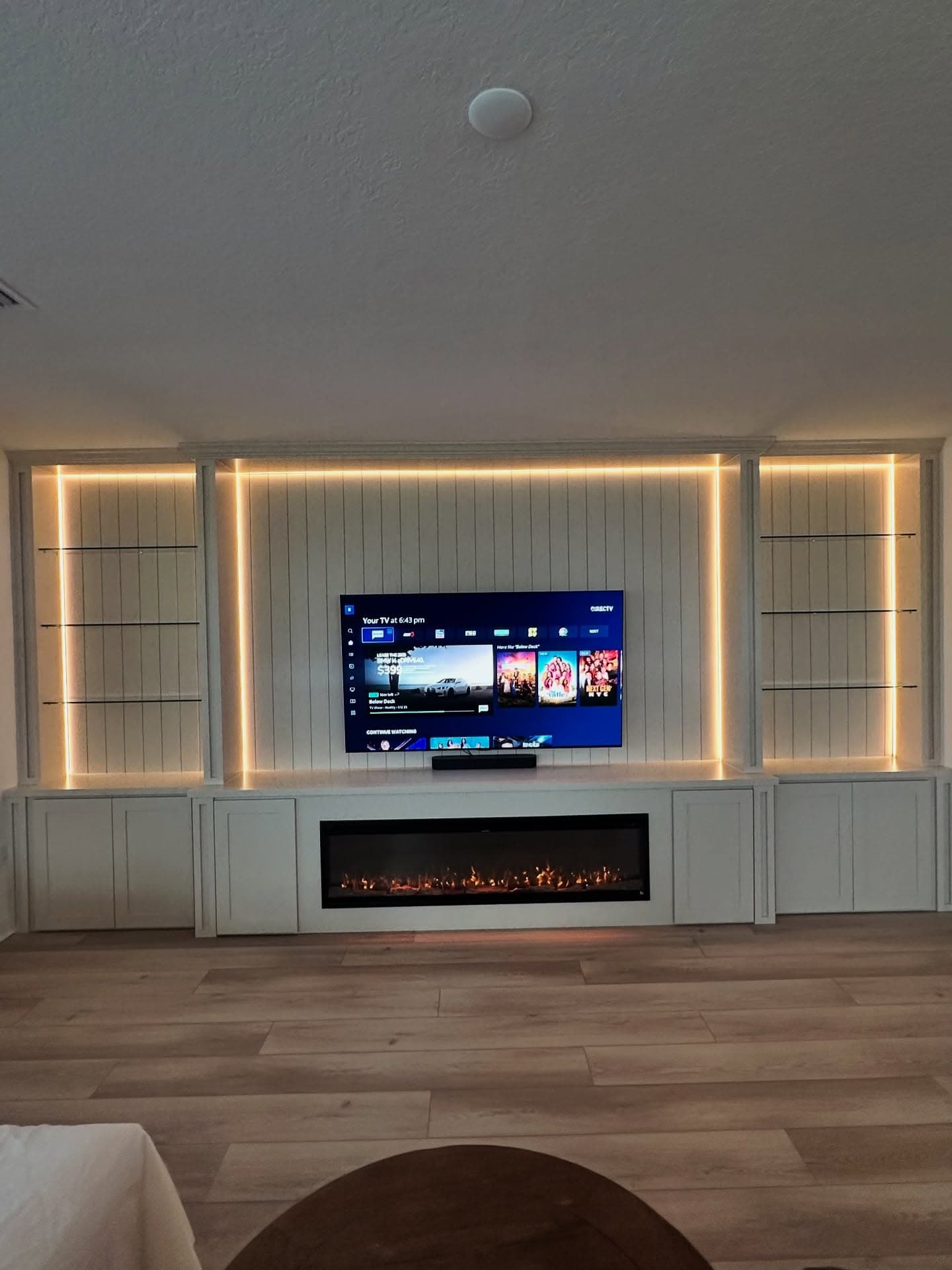
A 65-inch TV is roughly 57 inches wide, so a 60-inch fireplace holds its own underneath it, and a 72 looks intentional. Under a 75-inch or 85-inch TV, we're almost always talking 72 inches or wider. When the fireplace and TV are staggered rather than stacked, the rule relaxes. That's the situation in the wall below, where the flame runs under a long counter with cabinets to the side and the two elements aren't being compared edge-to-edge anymore.
When a 50-inch is plenty
Fifty inches gets treated like the runt of the litter, and it doesn't deserve it. On a wall segment around eight feet wide, under a 55- or 65-inch TV, a 50-inch flame line is genuinely well-proportioned. Bedrooms, dens, and flex rooms are natural 50-inch territory.
It also earns its spot on classic mantel-style designs. When there's a wood mantel and floating shelves involved, the fireplace reads as part of a framed vignette rather than a full-width architectural line. A 50 sits comfortably inside that frame. The white shiplap wall with its natural wood shelves is exactly that situation.
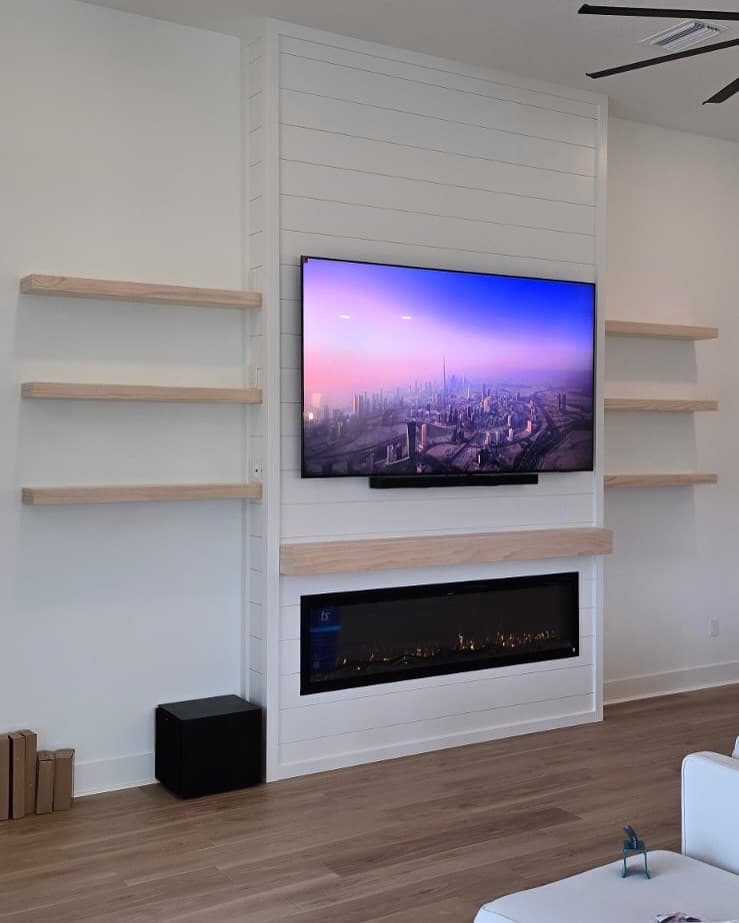
The honest test: stand back and picture the flame line's width against the TV and the wall edges. If it spans a similar visual territory to the TV, you're in good shape. If it looks like a mail slot, go up a size.
When we push clients to 60, 72, or wider
There are walls where we'll tell you plainly that the small unit will look wrong. Two-story great rooms are the main one. Northeast Florida builders love a two-story great room. All that vertical height needs a proportionally strong base, and a modest flame line at the bottom of an eighteen-foot wall reads like a night-light. The soaring black wall below, with its LED edge glow, only works because the fireplace holds the base with real width.
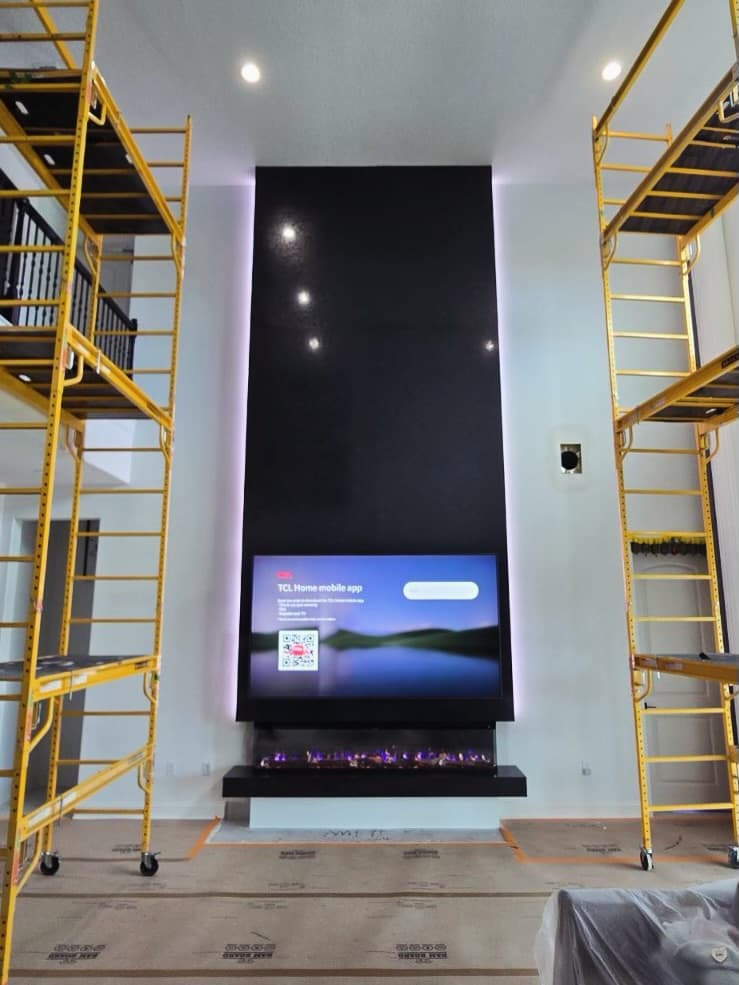
We also push wider when the wall is a full uninterrupted span with no cabinets or shelves breaking it up, because the fireplace and TV are the only two horizontal elements and they need to feel related. And if you're mounting a very large TV, the math simply follows the screen up. This is one of the reasons we don't love sight-unseen orders. The right answer lives on your wall, not in a product listing. It's the same conversation we have about what custom work costs in Jacksonville. The wall dictates the answer.
What changes in the build when the fireplace grows
Going bigger isn't just a different SKU. A wider insert means a wider framed chase, which shifts stud layout, changes where the outlet lands, and affects how much surround material we're running. On walls with cabinetry, a wider firebox can eat into base cabinet space. Storage and fireplace width sometimes negotiate with each other.
None of that is a reason to size down. It's a reason to pick the size before we build, because the opening is framed to the exact insert. What doesn't change much is the electrical story: bigger flame window, same regular household power, with a heater that still draws about what a space heater does.
Get the proportions right and the payoff is a wall where everything agrees with itself. Mantel, shelves, flame line. All of it, the way the shiplap build below does.
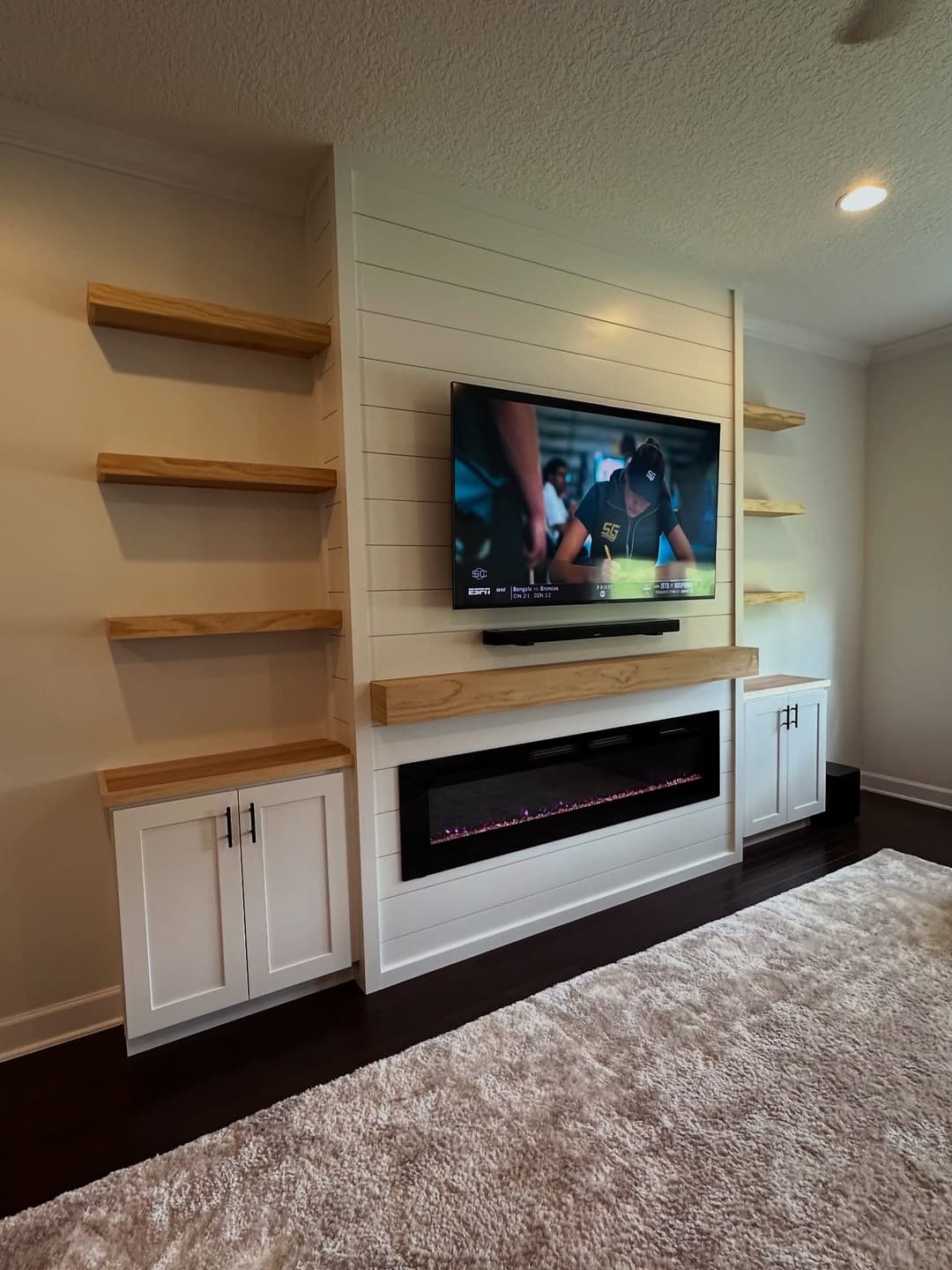
If you want a second opinion on your wall, send us a photo and rough dimensions through the form below. We can usually tell you the right size range in one look. And you can see how different widths play out across real rooms in our portfolio, including a feature wall we built in eTown where the sizing conversation went exactly like this article.
Some product links above are affiliate links. If you buy through them we may earn a small commission, at no extra cost to you. We only point you to materials we actually use on the job.
By consultation
Built to last.
Finished to impress.
We take on a limited number of projects each season so each home gets our full attention. Share your project and we’ll respond within 24 hours to see if it’s the right fit.
Insured · $1M general liability · 230+ Google reviews, 5.0