Guides
Is a Custom Pantry Worth It? An Honest Look at the Alternatives
Here's the question behind the question, and I'll say it plainly so you don't have to: a closet-store kit or a big-box shelving system costs less than hiring us. So what does custom actually buy you? That's a fair thing to ask. It deserves a straight answer, not a sales pitch.
We build custom pantries across Jacksonville and St. John's County, and we'll tell you upfront. Some pantries genuinely don't need us. Here's how we'd help you figure out which kind yours is.
What the kits do well (and we'll be fair)
The wire-and-track systems and the melamine closet kits exist for a reason. They're fast. A handy homeowner can knock one out in a weekend. The track-and-bracket versions are adjustable, so you can move shelves as your needs change. And for a small reach-in closet with straight walls, they mostly work.
If you're renting, planning to move within a couple of years, or just need something better than the single sagging wire shelf the builder left you, a kit is a reasonable stopgap. We'd rather you know that than find out after paying for custom you didn't need.
Where the kits fall apart
The kits are designed for a pantry that doesn't exist: a perfect rectangle with square corners and no obstructions. Real pantries in real Northeast Florida houses have angled walls under stairs, deep blind corners, water heater platforms, outlets in odd places, and drywall that hasn't been plumb since the slab cured.
So the kit gets installed with gaps. The corner becomes a black hole where the panko bread crumbs go to expire. The shelves stop eight inches short of the ceiling because that's the tallest standard upright. And every component is sized to the manufacturer's catalog, not to your cereal boxes, your Costco runs, or your air fryer.
Then there's the material itself. Wire dumps small items through the gaps and prints lines into flour bags. Melamine sags under canned goods on any span past a few feet, and once the particleboard core swells at a chipped edge, there's no fixing it. You replace it.
What custom changes
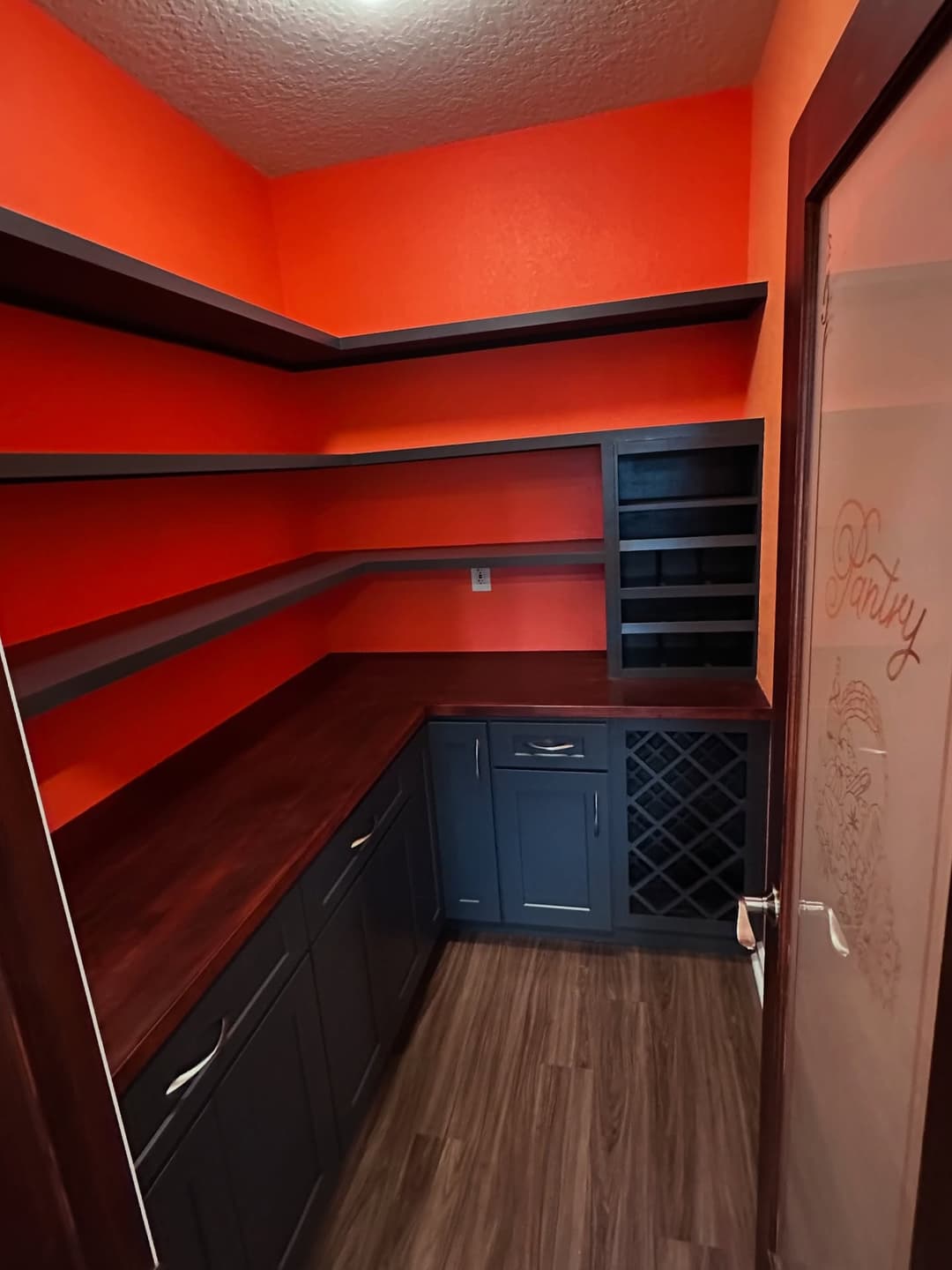
Custom means the pantry is built to your walls, not to a catalog. The shelving above, solid wood shelves over stained counters with a lattice wine rack worked into the run, was scribed to that specific room, corner to corner, floor to ceiling. No gaps, no dead zones, no wasted foot of air above the top shelf.
It also means the layout is built around your actual habits. Shallow shelves up high where cans and jars live so nothing hides behind anything. Deep drawers down low so heavy stuff pulls out to you instead of you crawling in after it. Counter space at working height. If you own a lot of tall bottles or you buy rice in twenty-pound bags, we plan for that specifically.
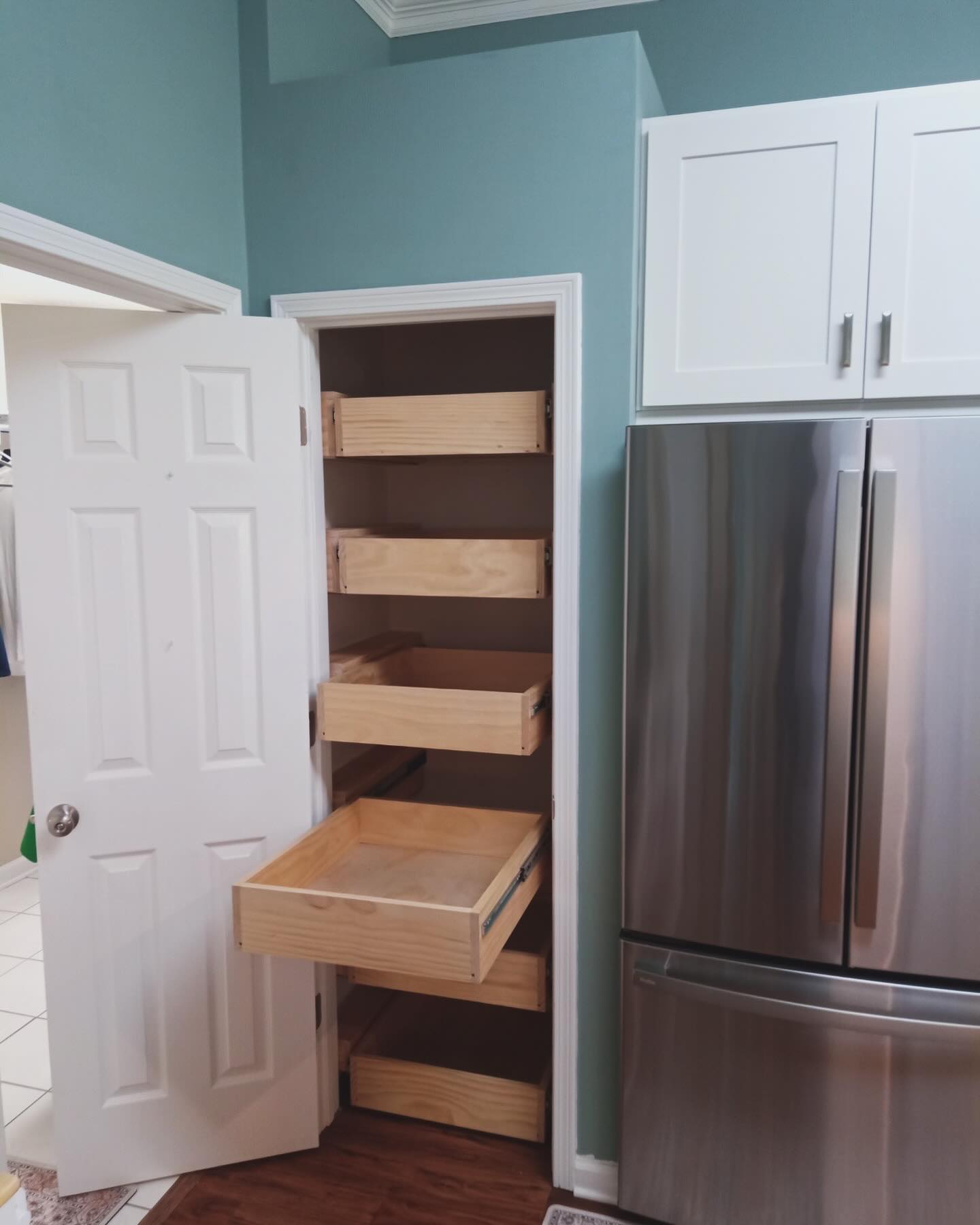
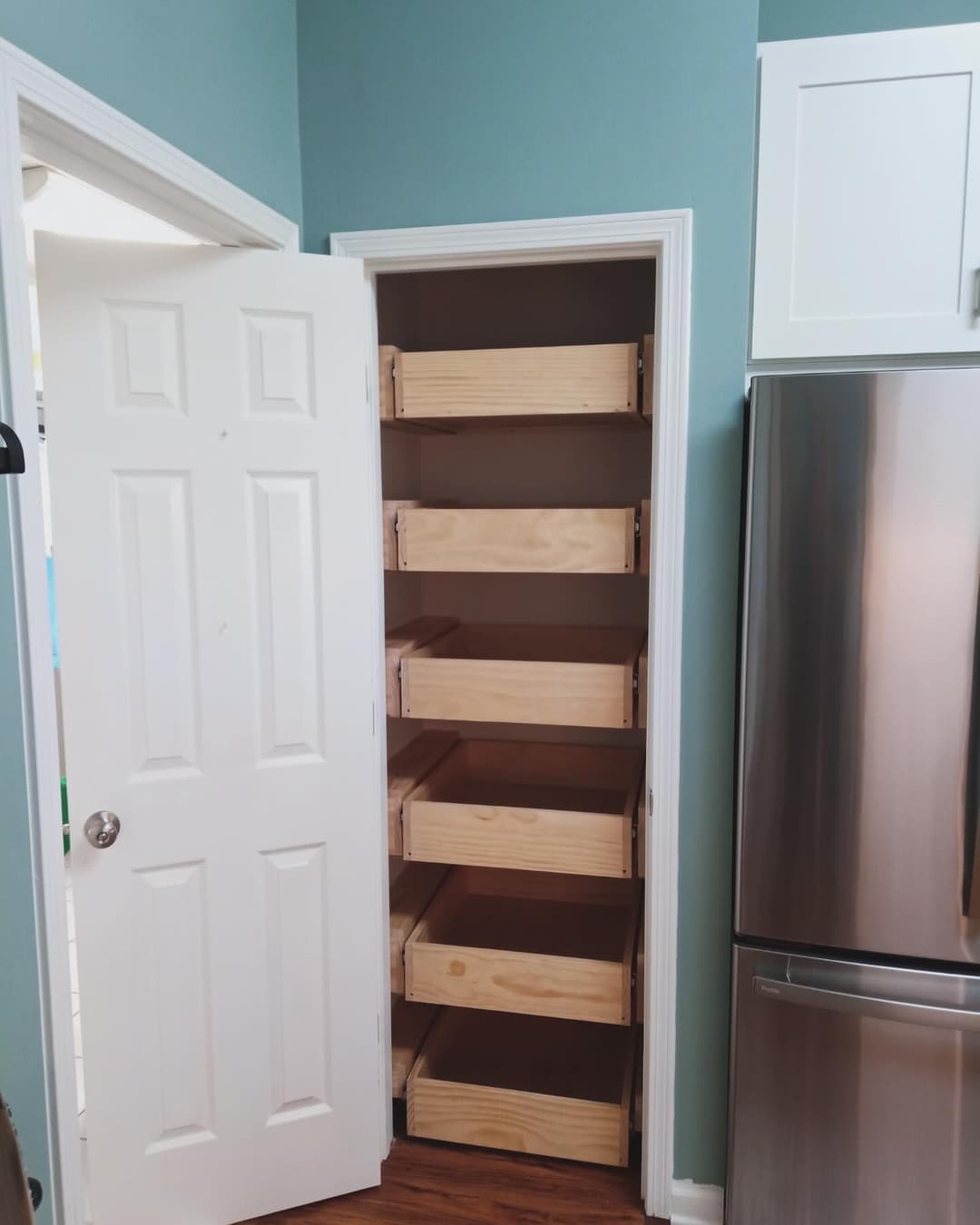
And it doesn't have to mean gutting the room. One of the most common upgrades we do is keeping the closet and replacing the guts. Pull-out solid wood drawers on full-extension slides below, tucked into an ordinary closet pantry beside the fridge. Everything in that closet now rolls out into the light instead of vanishing into the dark.
The countertop-and-outlet trick
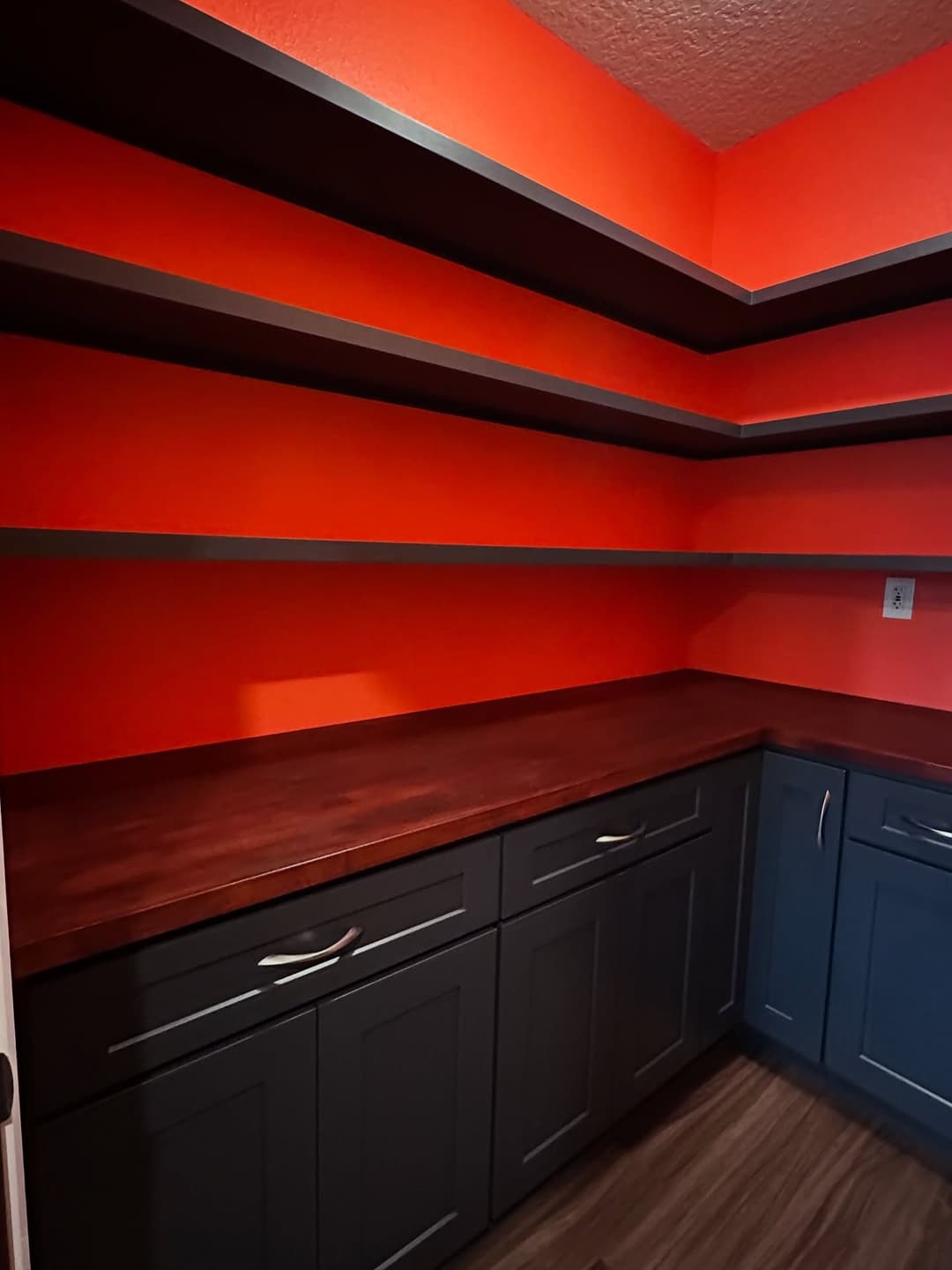
Here's an upgrade kits simply can't offer: a counter with power. We build a stretch of countertop into the pantry, usually stained wood, and put outlets in the backsplash zone. The coffee maker, toaster, and air fryer move off your kitchen counters and live in the pantry, plugged in and ready, behind a door you can close.
Clients tell us this one change did more for their kitchen than the kitchen remodel they'd been putting off. The pantry below, with its dark floating shelves over navy cabinets and a wood counter, works exactly that way. It's a back-of-house workstation, not just a closet with food in it.
A wire kit holds food. A built pantry absorbs the countertop clutter, the small appliances, the paper towel stockpile, and the stuff that currently has no home. Your kitchen gets that square footage back. That's the real difference, and it has nothing to do with how the shelves look.
How to decide which you need
Our honest sorting test, the same one we use in consultations:
- Go with a kit if: your pantry is a small, square reach-in; you're fine with the corner and the top foot of wall going unused; and you mainly need "more shelves" rather than a different kind of storage.
- Go custom if: the room has odd angles or a deep corner; your kitchen counters are hosting appliances that deserve a home; you want drawers, counters, or wine storage; or you've already replaced one sagging kit and you're done doing it again.
- Think resale: a kit leaves with the moving truck's donation pile. A built pantry is part of the house, and it photographs like part of the house. We get into that math in our guide on whether built-ins add home value.
On budget, we don't quote numbers in articles because every room is different, but our breakdown of what custom work costs in Jacksonville explains what moves the number, and a pantry is one of the smaller custom projects we take on.
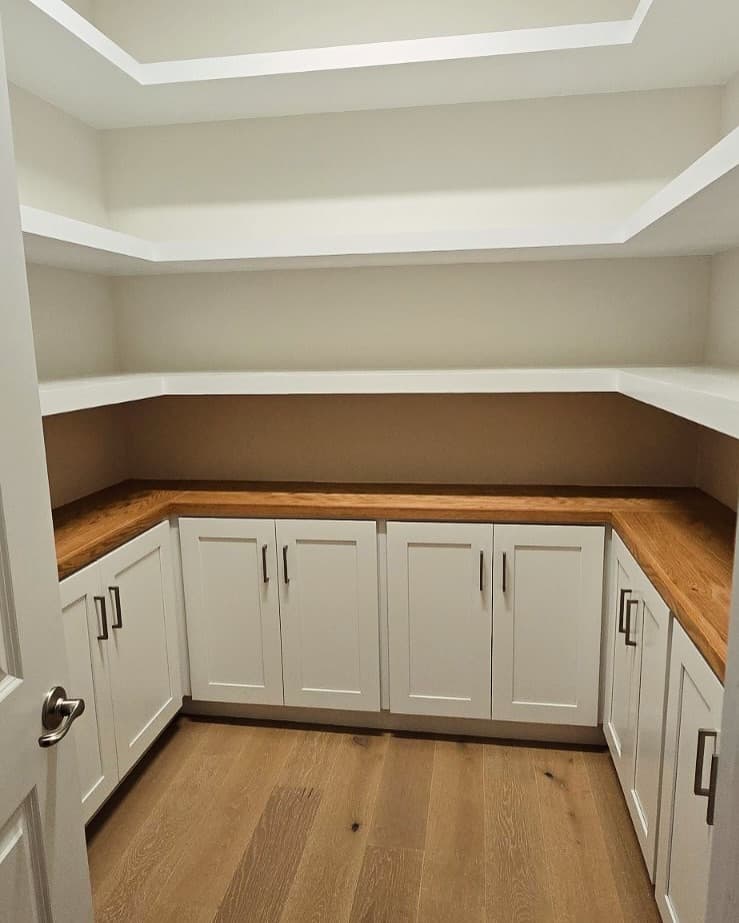
What a custom pantry looks like in practice
The walk-in above, wraparound floating shelves, shaker cabinets, wood counters, started as builder wire racks like everyone else's. If you want to see how these projects actually come together, we documented a recent custom pantry build in Middlebourne, and the same thinking carries over to the laundry room storage we built in Nocatee. Our pantry and mudroom page shows more of the range.
If you're staring at wire racks and trying to figure out which camp you're in, send us a photo of the room. We'll give you the same honest read we just gave you here, including "a kit is fine" if that's the truth.
By consultation
Built to last.
Finished to impress.
We take on a limited number of projects each season so each home gets our full attention. Share your project and we’ll respond within 24 hours to see if it’s the right fit.
Insured · $1M general liability · 230+ Google reviews, 5.0