Guides
Wire Racks vs. Wood Shelving in the Pantry: What Holds Up
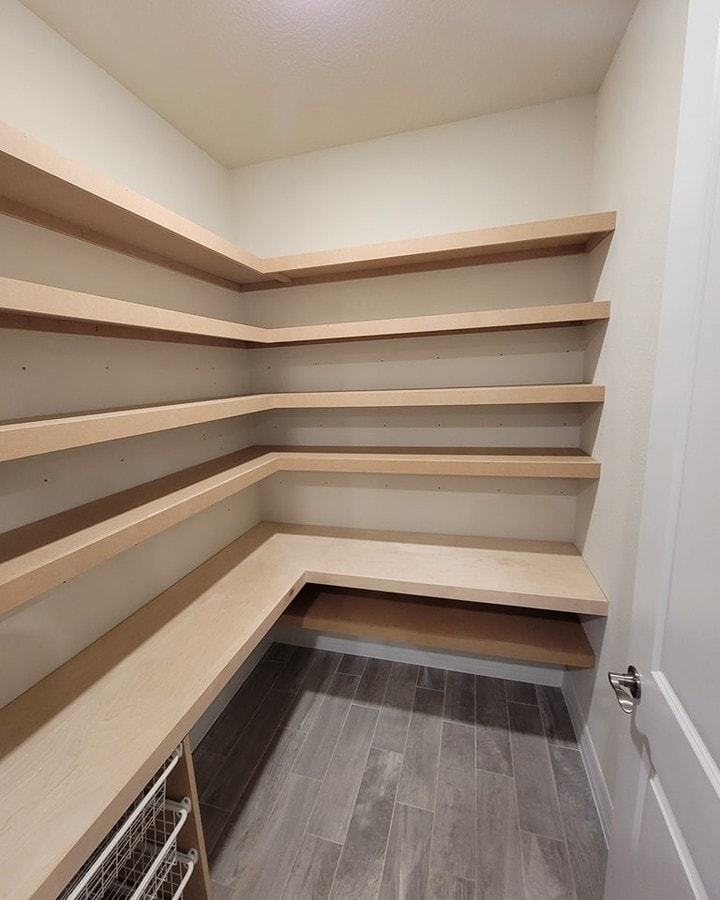
If your house was built in the last twenty years, we can probably describe your pantry without seeing it: white vinyl-coated wire racks, one per wall, hung on plastic clips, with a row of cans tipping through the gaps and a bag of flour bowing the middle shelf toward the floor. You didn't pick those racks. Nobody picks those racks.
The question we get on almost every pantry consultation is the same: is wood shelving actually better, or just more finished-looking? And does it hold up in Florida humidity, or will it warp while the wire just keeps rusting? Fair questions. Here's how we work through them.
Why every builder pantry has the same wire racks
Wire shelving is in your pantry for one reason: it's the cheapest thing that passes inspection. It ships flat, cuts with bolt cutters, and a crew can rack an entire house in a morning. Every closet and the pantry, done before lunch. For a builder pricing hundreds of homes, that math wins every time.
Wire has one honest virtue: air moves through it. That mattered more in the era of damp linen closets than it does for a pantry full of boxed pasta. What you actually live with is the downside list. Small items fall through or tip over on the ribs. Bottles wobble. The coating yellows, then cracks, then the steel underneath rusts faster here than it does in a dry climate. And because the racks hang from clips in drywall, a heavy load pulls the whole thing off the wall at the worst possible moment. If you've never had a wire shelf let go under a case of water bottles, ask a neighbor. Someone on your street has that story.
What wood shelving changes on day one
The first change is flat. A wood shelf is a continuous surface, so everything stands up. Spice jars, soup cans, the honey bottle that used to live sideways. You stop needing shelf liner to make the shelf usable, which was always a clue the product was wrong.
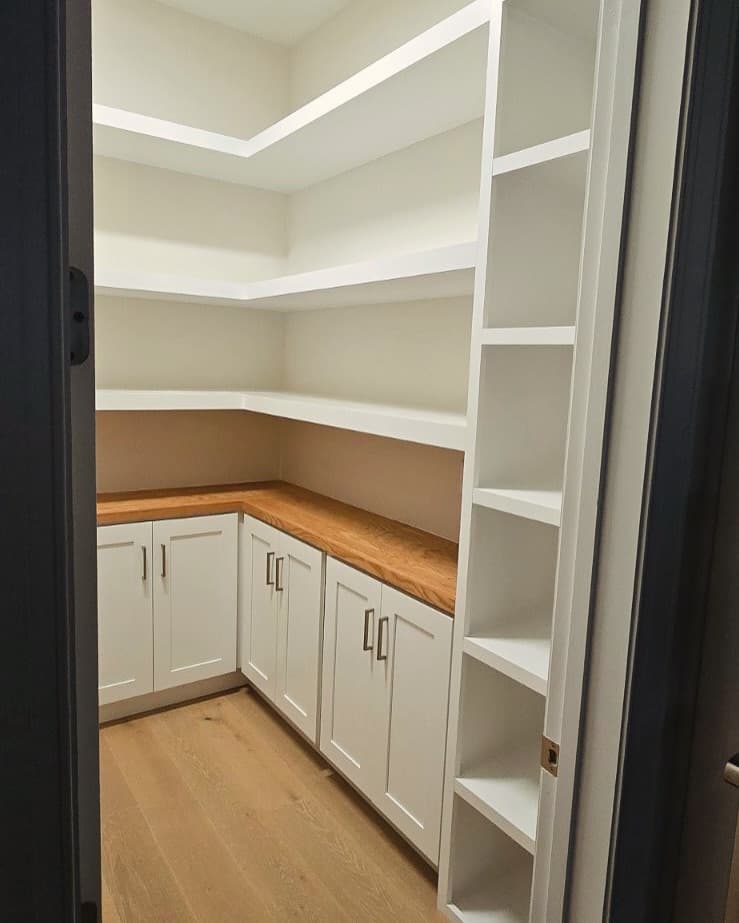
The second change is real capacity. We anchor our shelving into studs or into blocking we add inside the wall, not into drywall clips, and we size the shelf material to the span it has to carry. Canned goods are heavy. A fully loaded pantry shelf can be one of the most loaded surfaces in the house, so we build for that, the same way we built our wraparound pantry shelving on a recent Middlebourne job in St. Johns County. The wraparound layout in the photo above does something wire physically can't: it turns the corners into usable space instead of a gap between two racks.
The third change is the one people don't expect: the pantry starts reading like part of the house. Stained oak shelves or painted shelves with a cleat and a trimmed front edge look like furniture. That sounds cosmetic until you notice you're keeping it organized because it finally looks worth organizing.
The sag and moisture questions, honestly
Sag first, because wood gets blamed for it unfairly. Any shelf sags if you span it too far. Wire included. Wire just sags in a bouncier, more obvious way. The fix isn't the material, it's the engineering: right thickness for the span, support where the load lives, and cleats or brackets that carry weight into the framing. A properly built wood shelf loaded with cans stays flat for decades. A big-box particleboard shelf on plastic pins does not, and that's usually the "wood sags" story people have heard.
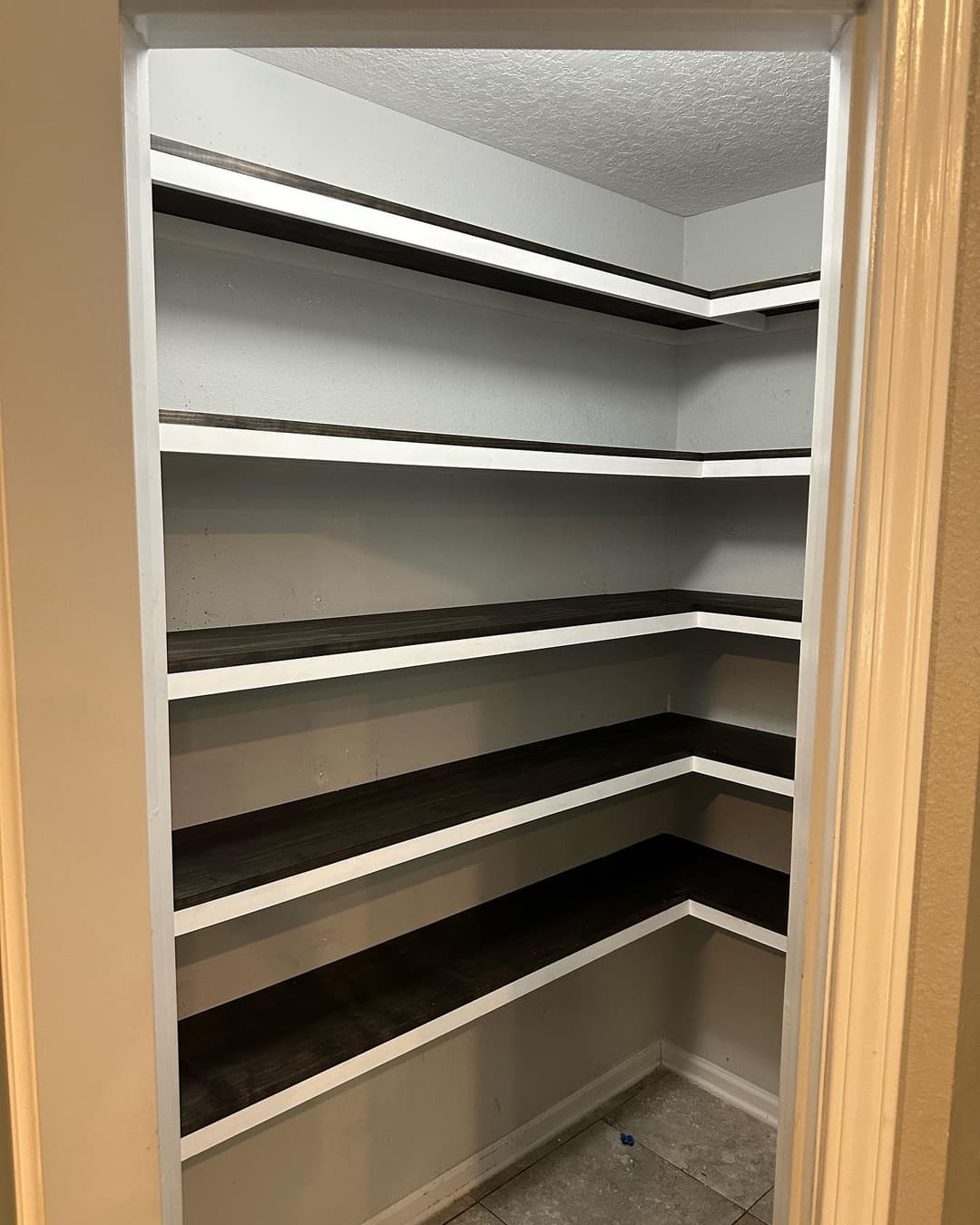
Now humidity, the Florida question. Wood moves with moisture. We won't pretend otherwise. The way we deal with it is straightforward: stable materials, meaning quality plywood or properly dried solid stock rather than bargain particleboard, and finish on every face, including the edges and undersides you'll never look at. A shelf sealed on all six sides takes on and releases moisture slowly and evenly, so it doesn't cup. The dark stained corner unit above has been through plenty of Jacksonville summers' worth of humidity swings by design, not luck.
One more finish note: we spray our painted shelving with a urethane-modified trim enamel. Sherwin-Williams Emerald Urethane is our usual. It cures to a hard film that resists blocking. That's the trade term for things sticking to a painted surface, and it's exactly what you don't want under a heavy stand mixer. Wall paint on a shelf stays soft and grabs whatever sits on it. Cabinet-grade enamel doesn't.
Adjustable vs. fixed: what we actually build
Homeowners often assume they want every shelf adjustable, because the wire system promised flexibility and then nobody moved a shelf for ten years. Our honest take: most pantries want mostly fixed shelves at well-planned heights, with maybe one adjustable zone.
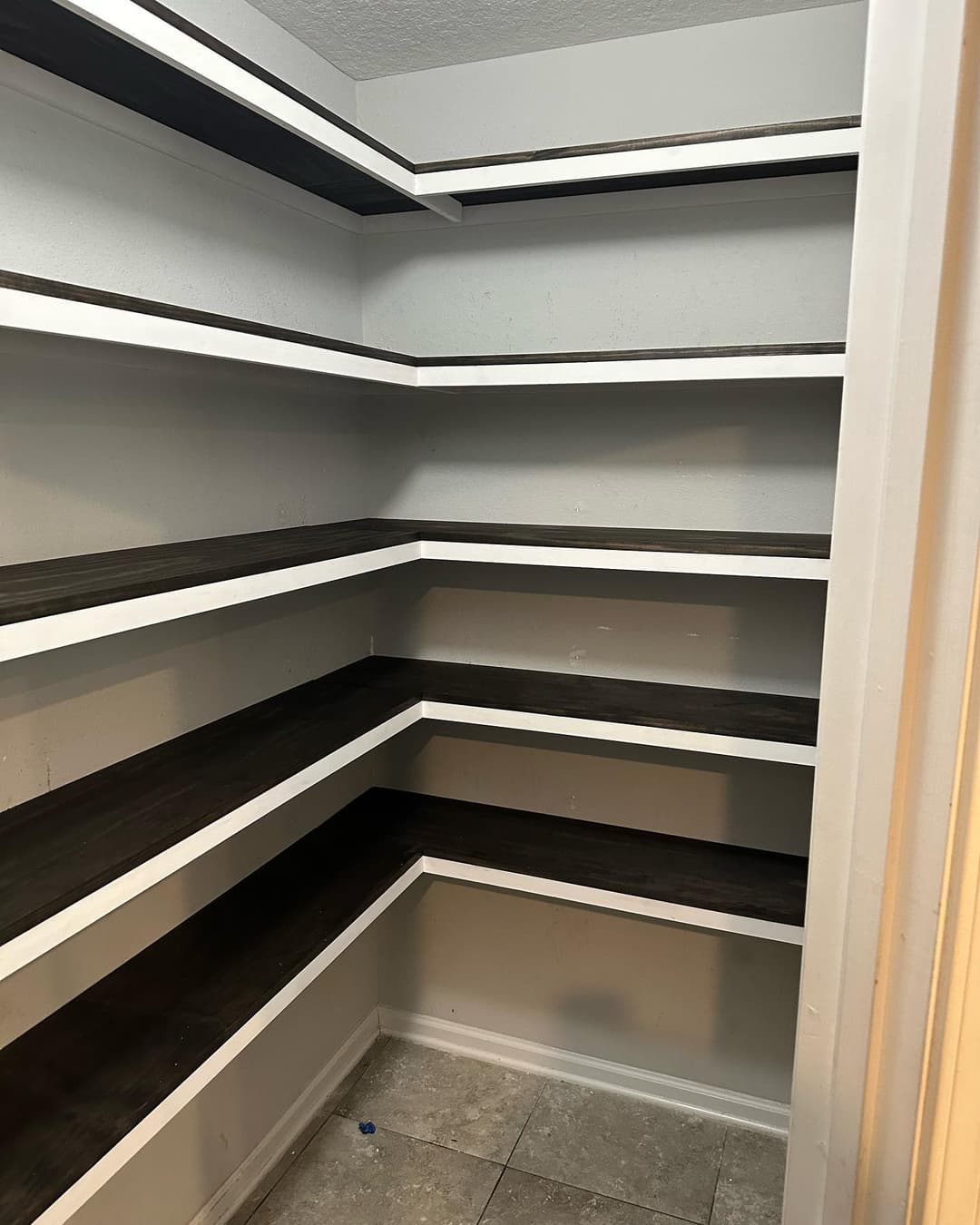
Fixed shelves are stronger. The supports become structure. And they let us plan heights around real things: tall cereal boxes, the air fryer, a case of seltzer down low. We'll measure your actual tallest items during the consult. Then, if your household changes a lot, we'll build one bank on adjustable pins so it can flex. The corner pantry below is built that way. Fixed wraparound shelves doing the heavy lifting, spaced for how the family actually shops.
A weekend swap vs. a full custom pantry
There are really two versions of this project, and we'll be straight about both.
The weekend-scale version is a rip-and-replace: wire comes off, wall gets patched and painted, wood shelving goes up in roughly the same positions. It's a contained, one-to-two-day job for us, and it fixes ninety percent of the daily annoyance. If that's all your pantry needs, that's what we'll tell you.
The full custom version treats the pantry as a small room that deserves real design: a counter for landing groceries or parking small appliances, drawers or cabinets below, shelving tuned by zone, sometimes wine storage or lighting. Something like the build below, with counters, floating shelves, and lattice wine storage, is a different animal from a shelf swap. Closer in scope to the laundry room storage build we did in Nocatee. Costs vary with size and materials, so rather than throw numbers here we'll point you to our guide on what custom work costs in Jacksonville.
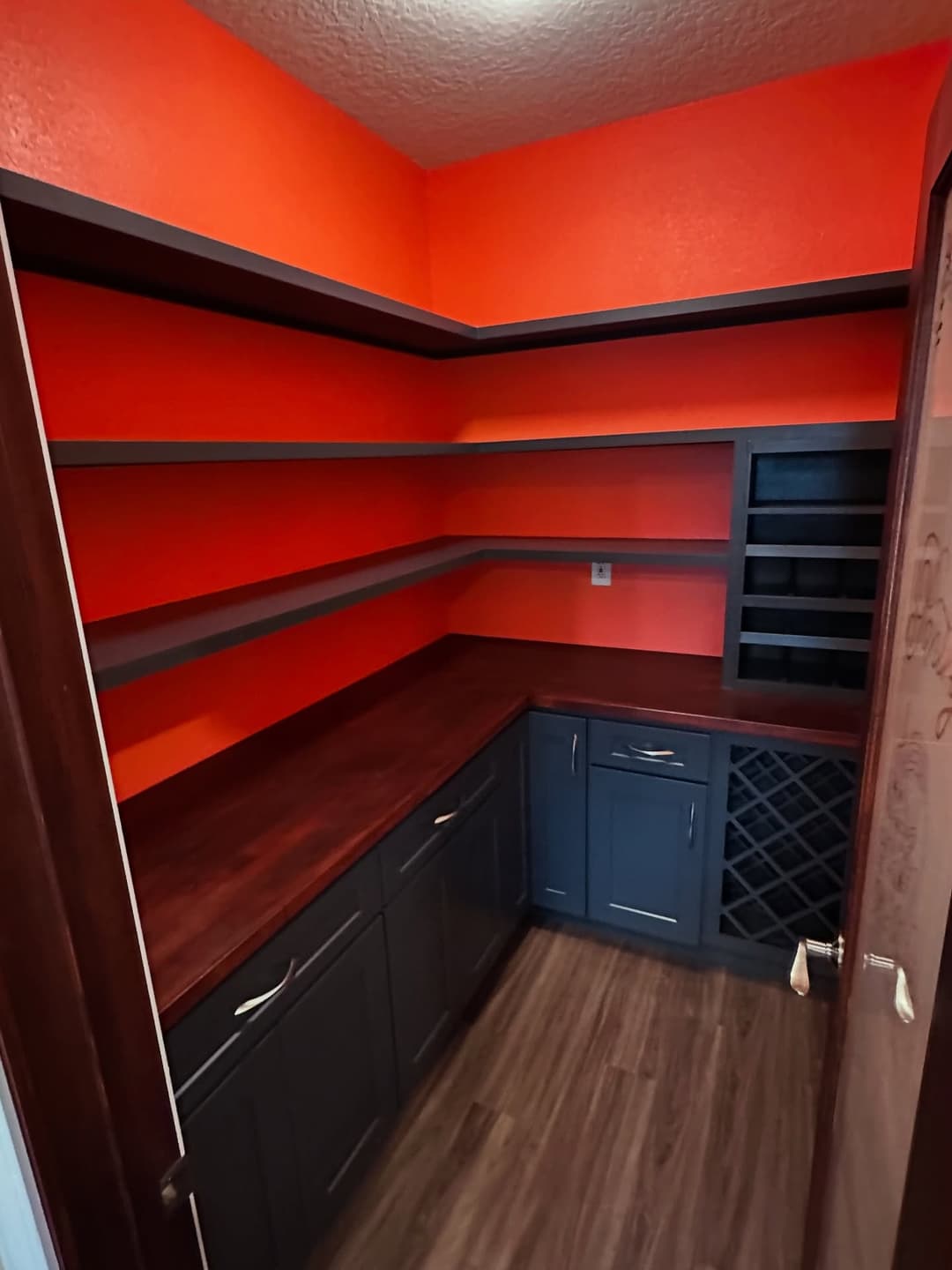
Which version is right depends on how you use the space, and honestly, on how much the current setup bothers you. Plenty of clients start with the swap and call us back a few years later for the counter and drawers.
The short version
Wire racks are a builder's cost decision, not a storage decision. Once they start sagging, rusting, and tipping your cans over, replacing them isn't vanity. Wood shelving, built to the span and sealed for our climate, holds more, holds it flat, and makes the pantry a room you're not apologizing for. You can see more of our pantry and mudroom work if you're weighing it.
If your wire racks are on their last plastic clip, we're happy to come take a look and tell you which version of this project your pantry actually needs.
By consultation
Built to last.
Finished to impress.
We take on a limited number of projects each season so each home gets our full attention. Share your project and we’ll respond within 24 hours to see if it’s the right fit.
Insured · $1M general liability · 230+ Google reviews, 5.0