Guides
Fireplaces with Kids and Pets in the House: What We Build Differently
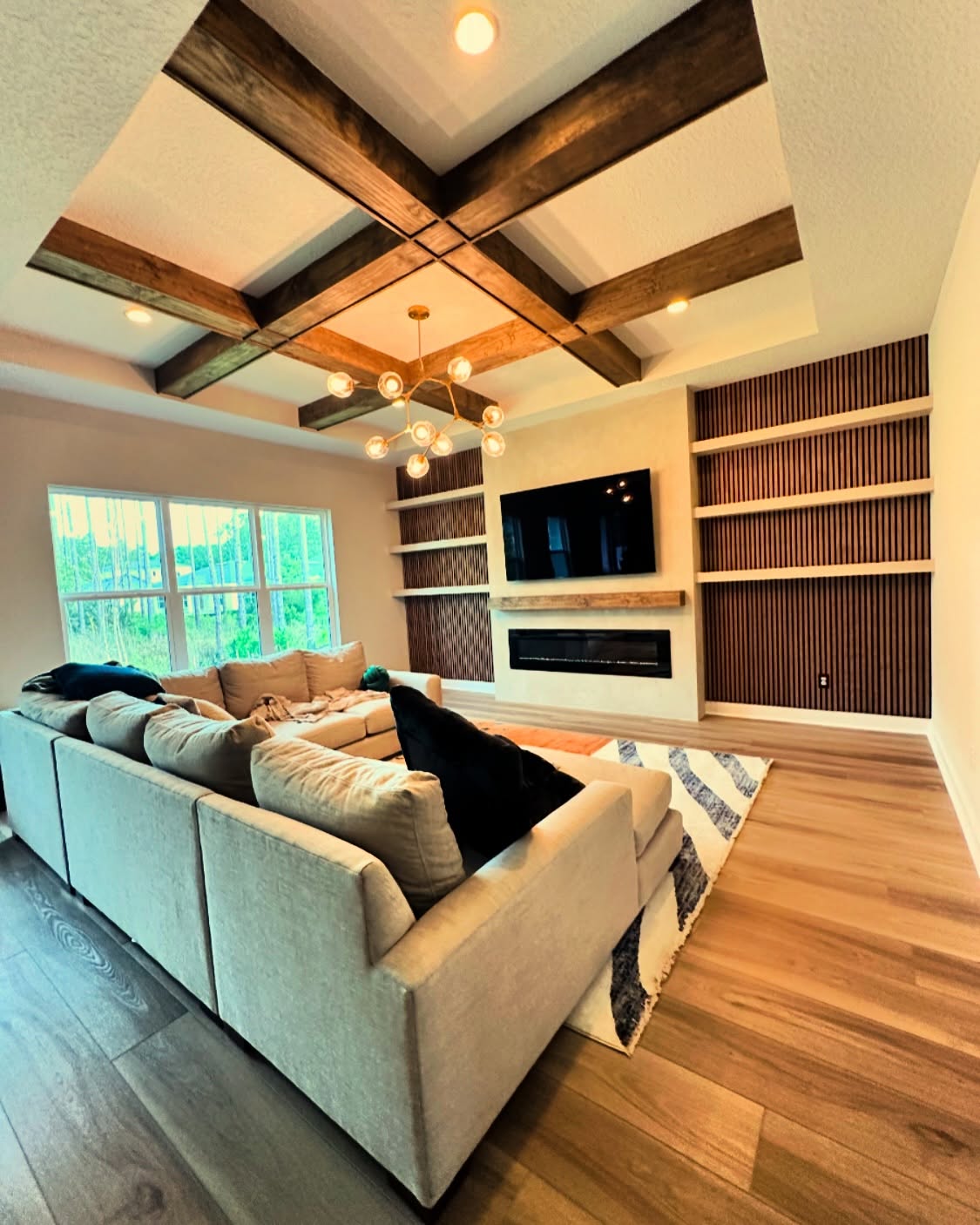
Every parent asks this one quietly, usually near the end of the consultation: "Is this thing safe with a two-year-old in the house?" Sometimes it's a toddler, sometimes it's a golden retriever whose tail clears coffee tables. Either way, the picture in their head is the same. Hot glass at kid height, sharp corners, and a wall of heavy stuff a climbing child could pull over.
We're parents too, so we take the question seriously instead of brushing it off with "it's fine." Here's the honest version, and what we actually change in a build when little hands and wagging tails are part of the plan.
The honest answer on glass temperature
With a wood or gas fireplace, the glass front gets dangerously hot. That's where the burn-risk reputation comes from, and it's deserved. An electric insert works differently. There's no flame behind the glass, just LED light, and the heat comes from a blower that pushes warm air out of a vent, usually along the top of the unit in the models we install.
So the glass on a linear electric fireplace stays far cooler than gas glass. Warm when the heater's been running, yes. The kind of surface that injures a curious hand pressed against it, no. And when you're running flames with the heat off, which is most of the year in Florida, the glass is doing nothing but glowing.
We won't quote you a temperature spec, because it varies by unit and we don't invent numbers. But we install these things with our bare hands and service them with our bare hands, and the difference from a gas unit isn't subtle.
Why electric is the kid-friendliest option by far
Stack the risks side by side. No open flame. No gas line, so no leaks and no carbon monoxide. No embers, no pokers, no log that shifts. No scorching surround. The one genuinely hot spot is the heater vent, a strip of moving warm air in the same category of caution as a hair dryer, and it's only active when the heat's on.
Add the unglamorous-but-real safety features: these units shut off automatically if they overheat, and everything's controlled from a remote you can set on top of the mantel, out of reach. Of all the ways to put fire-shaped ambiance in a family room, this is the one we'd choose for our own kids' playroom level of the house. And in some builds, that's literally what it is.
Mounting height as a safety tool, not just a look
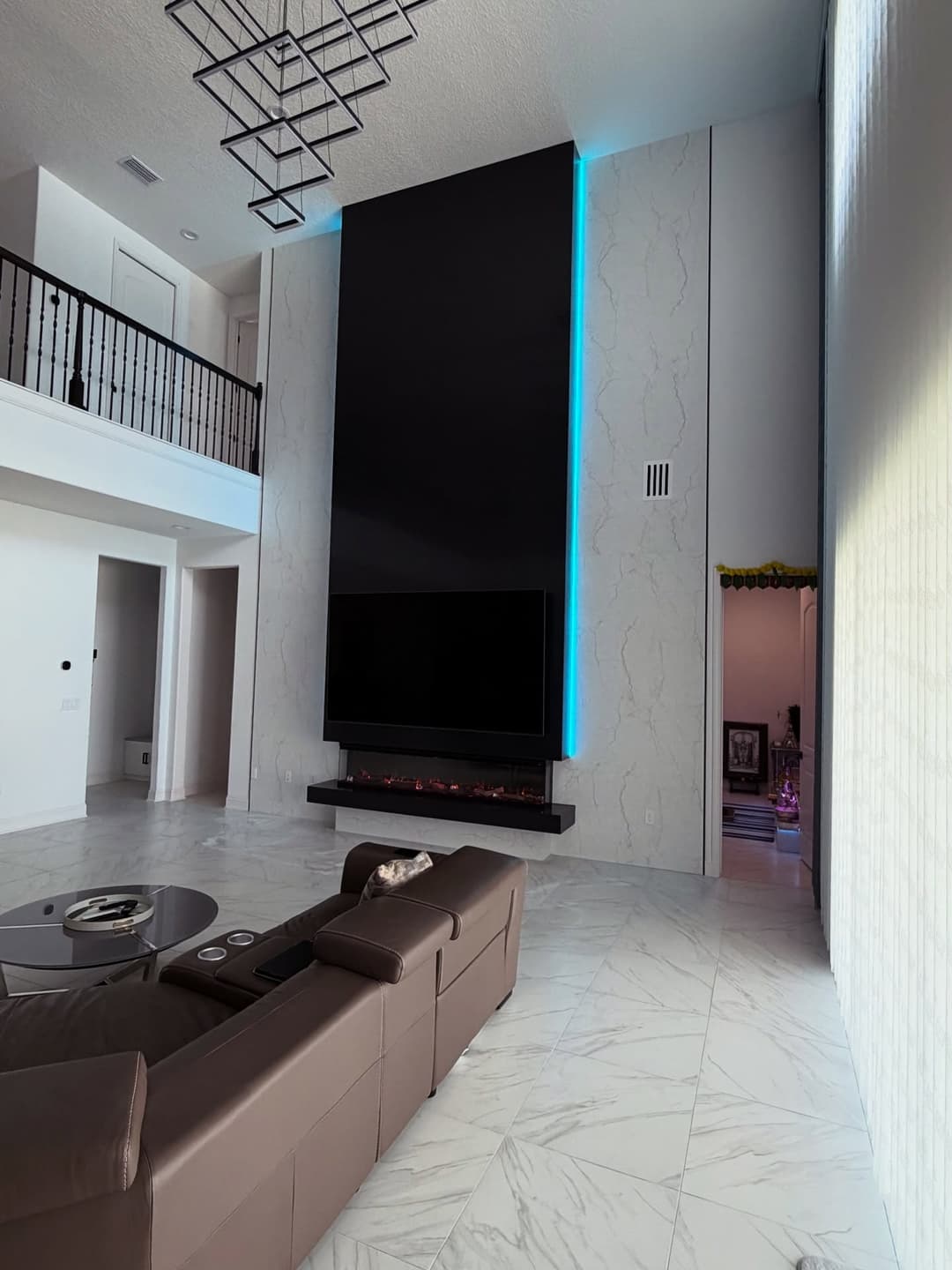
There's a practical advantage hiding inside the "floating fireplace" look everyone favors: raise the insert off the floor and you've moved the glass and the heater vent above toddler-and-tail territory without adding a single gate or guard.
That soaring black wall above is a two-story family room. Notice where everything lives. The fireplace sits up off the floor, the TV is recessed, and the lowest stretch of wall is smooth panel with nothing to grab, pull, or burn. That wasn't an accident. The parents asked us the same question you're asking.
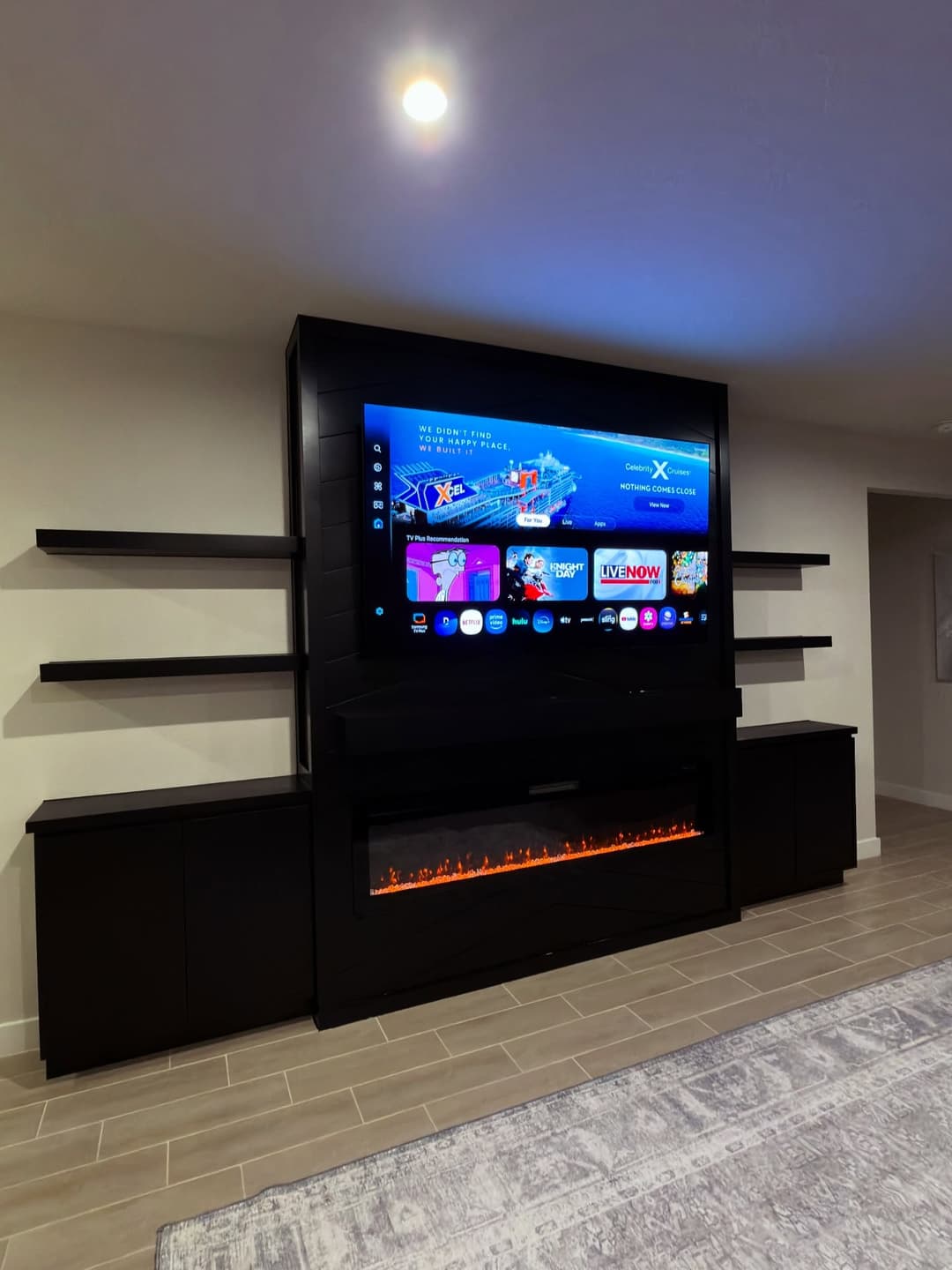
Base cabinets do the same job from below. In the black media wall above, the insert rides on top of a run of closed cabinets. The flames sit at adult eye level, the toy bins hide behind soft-close doors, and there's nothing at floor level but smooth panel.
Rounded edges, recessed hearths, and other quiet details
The fireplace is actually the easy part. The thing that catches kids in real life is corners. A raised stone hearth at forehead height is the classic living-room injury, which is why we usually skip the raised hearth altogether in family builds, or keep it flush and low.
Beyond that: we ease or round the outside corners on mantels and counters that sit at kid height. Anything tall gets built in and fastened to the wall framing. A built-in can't tip over the way a furniture-store media console can, which makes a custom wall one of the more practical ways to hold a big TV. Cords are sealed inside the wall where nobody can chew or yank them, and doors get soft-close hinges so there are no slammed fingers.
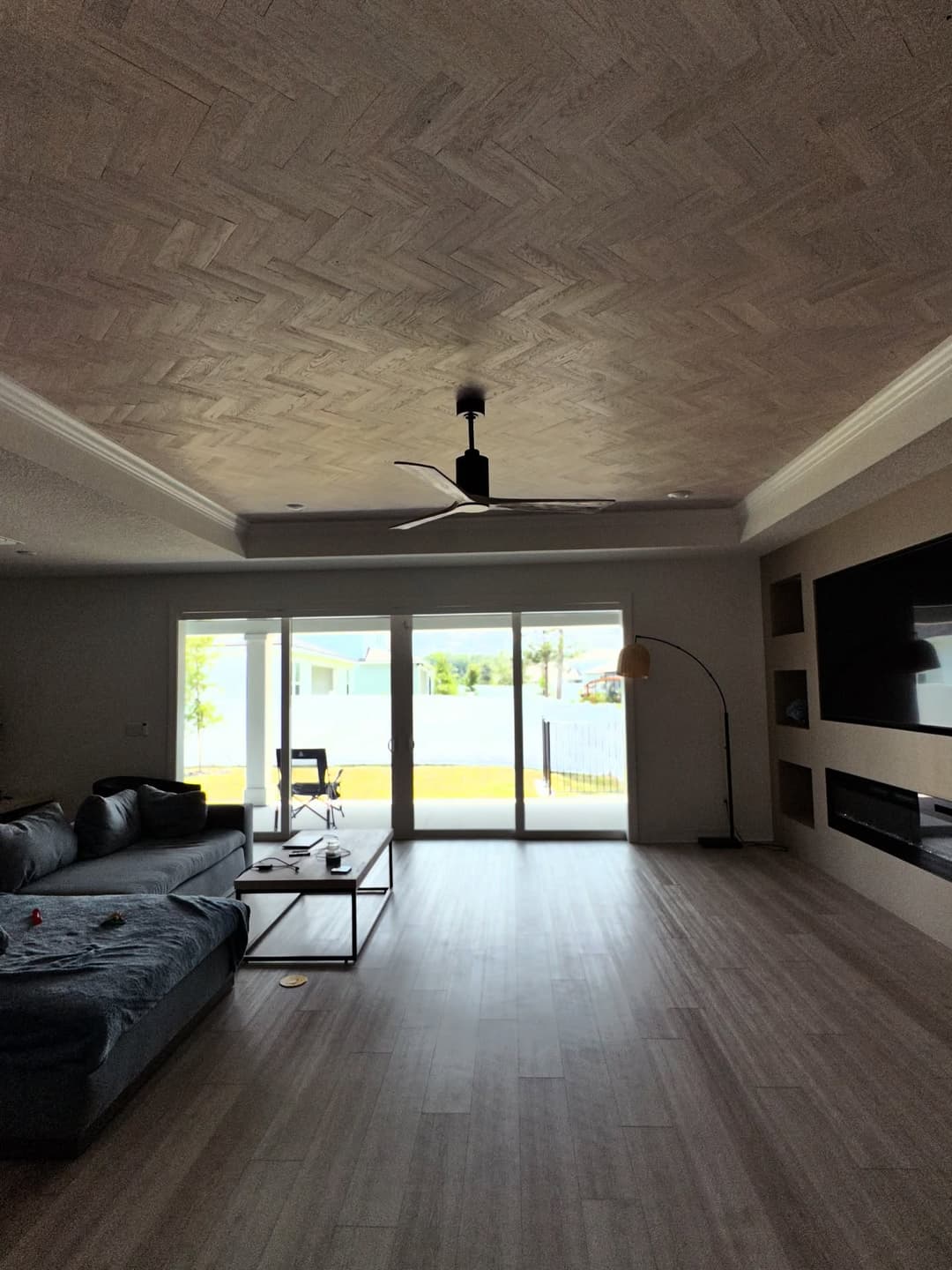
None of this looks like "safety equipment," and that's the point. The room above, herringbone tray ceiling, linear fireplace, crown molding, reads as a well-considered living room. The kid-proofing is invisible because it's built in, not bolted on.
What we ask parents during the design visit
When there are kids or pets in the house, our consultation questions shift a little. How old are the kids? Are we designing around a crawler today or a ten-year-old with a game console? Where does the dog actually lie down, and is that spot about to be in front of a heater vent? Do you want closed storage low (toys go in, chaos disappears) and open shelves high? Should the remote and the breakables live above the mantel line?
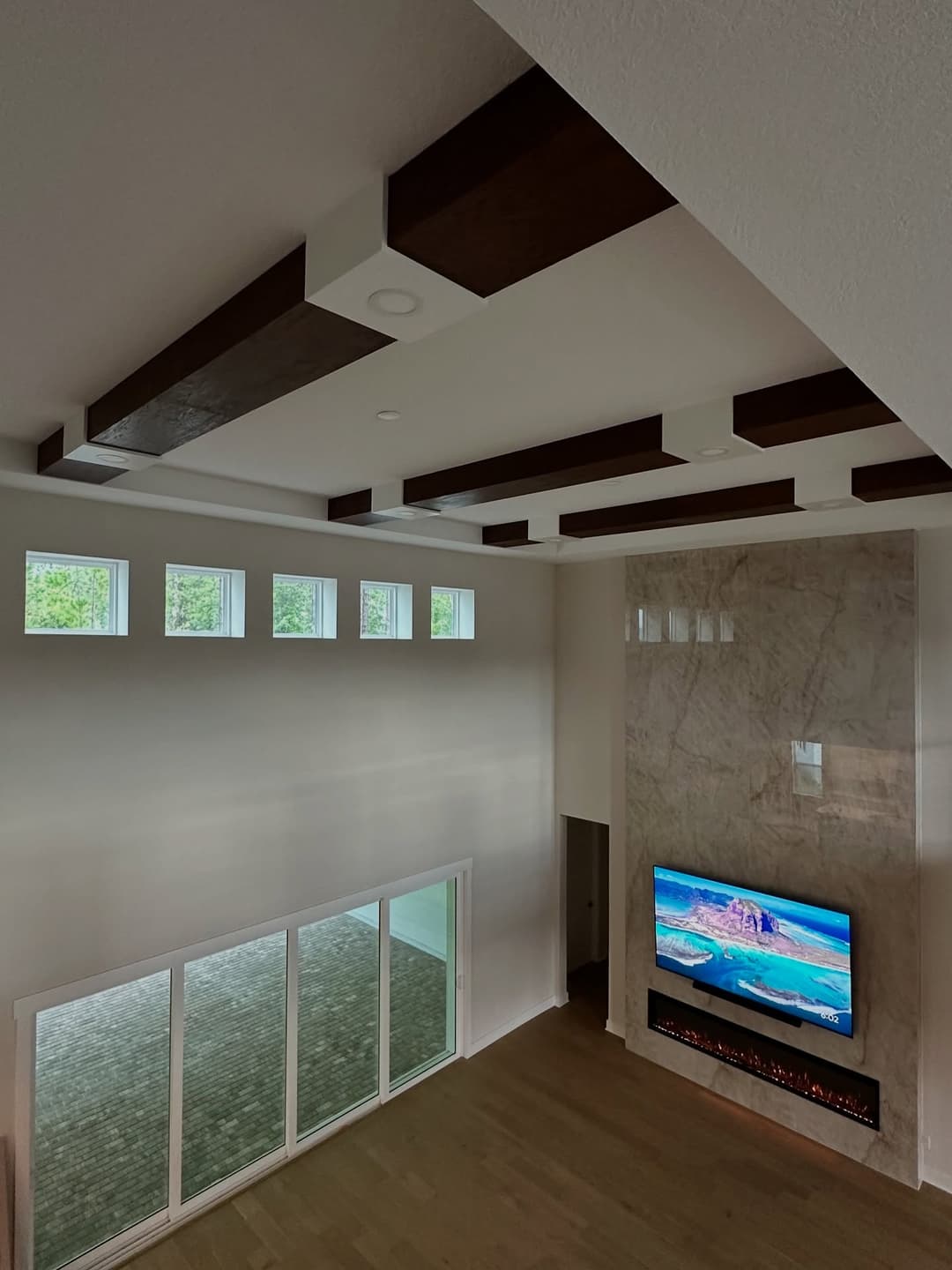
Sometimes the answer changes the whole layout. Heavy texture and display shelving up high, like the beamed two-story room above, with tough, wipeable, grab-proof surfaces down low. If ceiling work is on your radar while we're at it, our coffered vs. box beam ceiling guide covers those options in the same plain English.
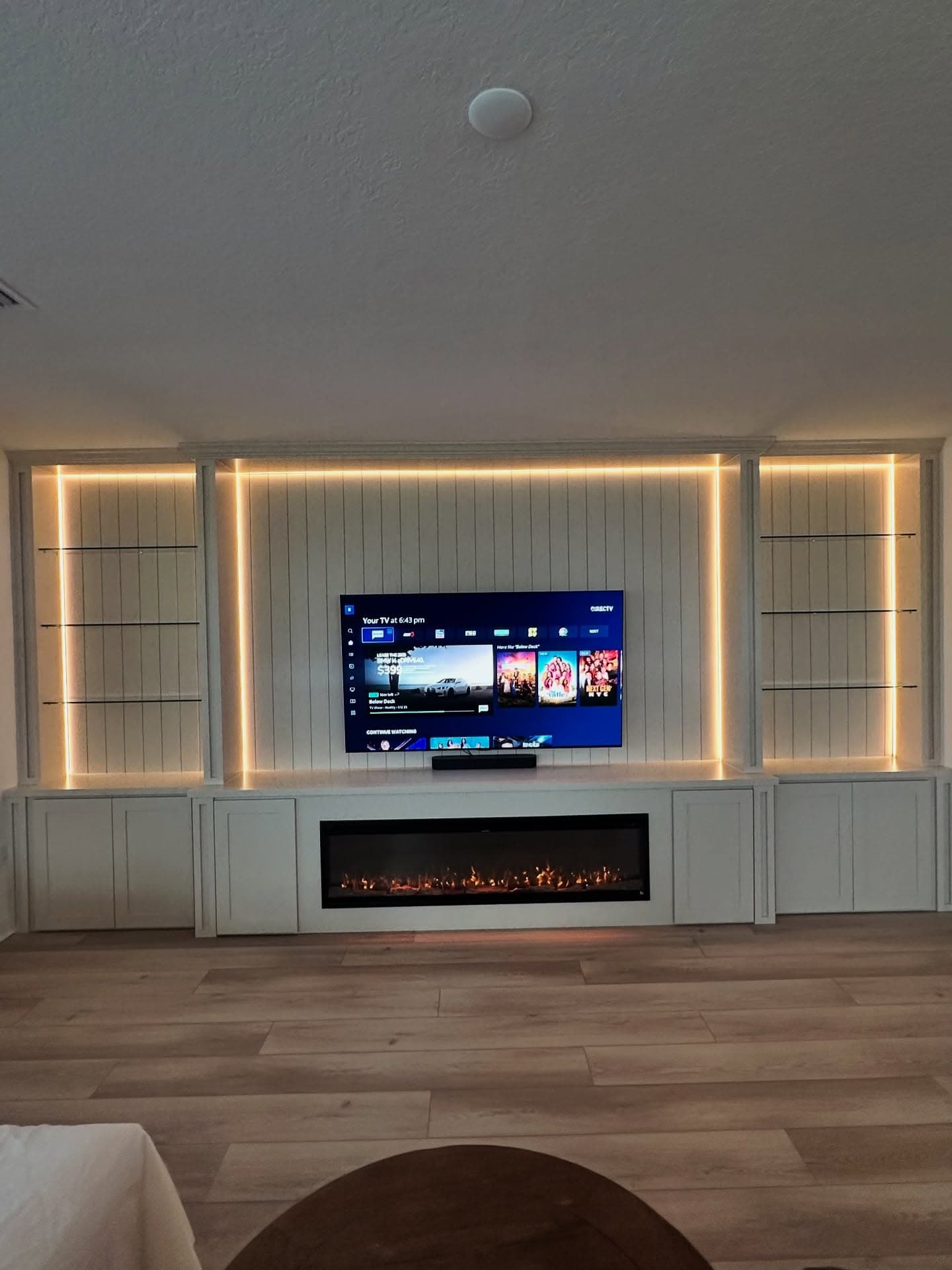
A fireplace media wall isn't something a family has to wait on until the kids are older. Built right, it's safer than the TV-on-a-console setup most living rooms have now. That's the standard across our custom built-in work, and if you want to see how these walls hold up in real family homes, our Tamaya entertainment center build is a good place to start.
Have a specific concern we didn't cover, a climber, a chewer, a tail like a whip? Bring it up at the consultation. We've probably built around it before.
Some product links above are affiliate links. If you buy through them we may earn a small commission, at no extra cost to you. We only point you to materials we actually use on the job.
By consultation
Built to last.
Finished to impress.
We take on a limited number of projects each season so each home gets our full attention. Share your project and we’ll respond within 24 hours to see if it’s the right fit.
Insured · $1M general liability · 230+ Google reviews, 5.0