Guides
Where Do All the Wires Go? How We Make Cords Disappear
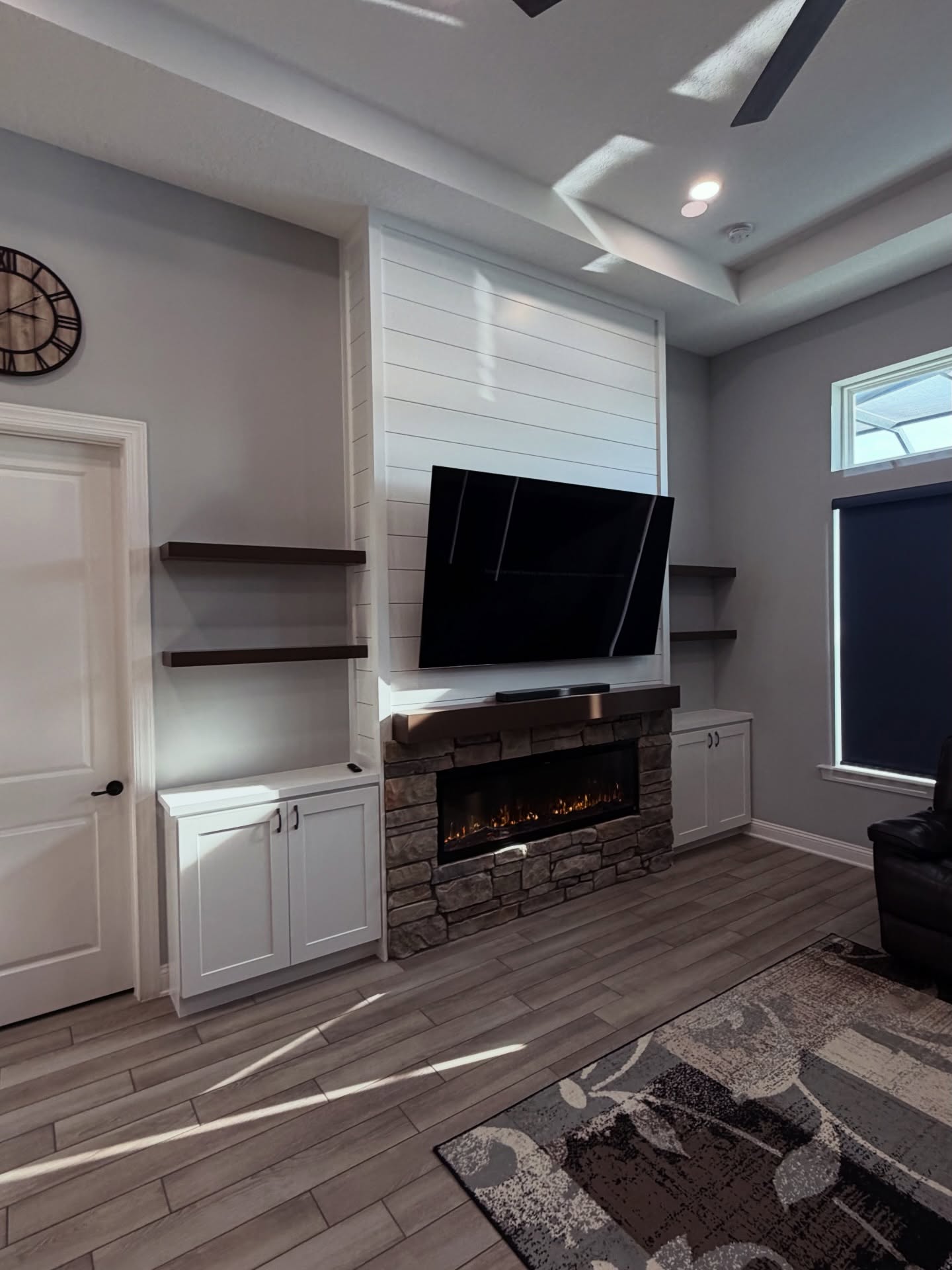
You can spend real money on a media wall and one dangling HDMI cable will undo all of it. Homeowners know this. It's why "but where do all the wires go?" comes up in nearly every consultation we do. The TV, the soundbar, two game consoles, a cable box, a router, and now a fireplace. That's a lot of cords for a wall whose entire job is looking clean.
The answer isn't a magic product. It's a plan, made before the first board goes up. Here's how we handle wiring on every media wall we build around Jacksonville and St. John's County. And no, it never involves a plastic cord channel stuck to your drywall.
The wall is only as clean as its wiring plan
A custom media wall has something a furniture console never will: hollow space. Between the framing and the finished surface there's room to run power and cables completely out of sight, and behind the cabinet doors there's room for every ugly black box you own. But that space only helps if the routing is decided before the wall closes up.
Retrofitting wires after the fact means holes, patches, and compromises. Planning them first means the fireplace, the TV, and the shelf lighting all power on with not one visible cord. That planning session is a real part of what you're paying a pro for. It's the kind of thing worth asking about when you're vetting a finish carpenter in Jacksonville.
The inventory we take before we build
Early in design, we make you list everything that will ever live on or in this wall. It's a less obvious list than people expect:
- The TV. Power plus whatever feeds it. HDMI from below, or just apps and Wi-Fi.
- The soundbar. Its own power and a connection to the TV, and a decision about whether it mounts, sits on a shelf, or hides in a niche.
- Consoles, cable box, streaming gear. Power, HDMI runs, and a signal path for remotes.
- The router, if it lives here. In a lot of Florida homes the main jack lands in the living room.
- The fireplace. An electric insert runs on household power, but the outlet has to be positioned where the unit expects it, inside the framed cavity.
- The lighting. LED strips need low-voltage runs and a hidden spot for their drivers.
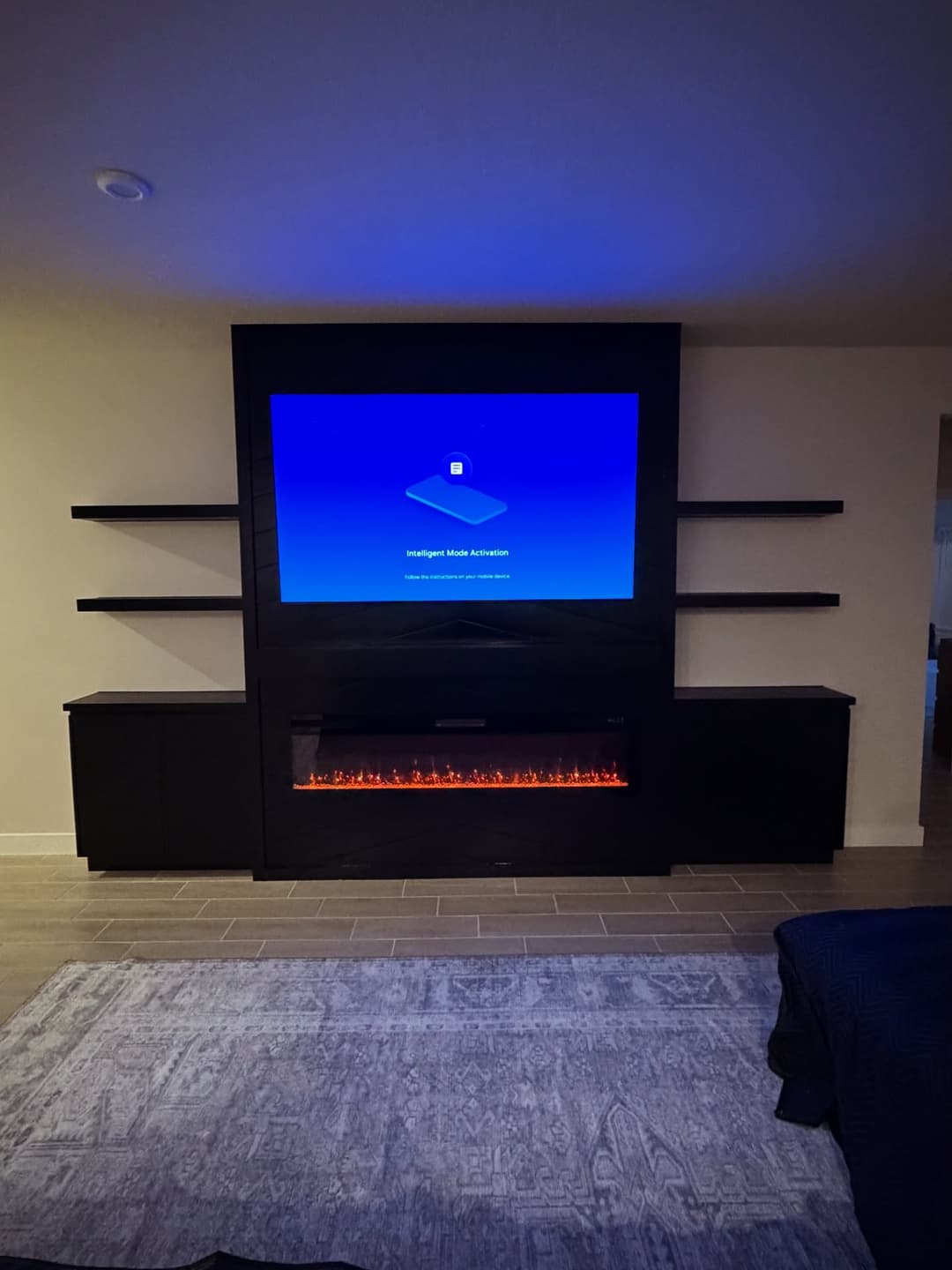
Every item gets a home and a route on paper first. The dark wall below has a fireplace, a TV, and lit floating shelves. Three separate systems, zero visible wiring. All of it was mapped before the panels went on.
In-wall power and recessed outlets
The core move is straightforward: put power where the gear is, so no cord ever has to travel in the open. A recessed outlet sits behind the TV so the plug doesn't push the screen off the wall. The fireplace gets its own outlet inside the cavity. Cabinets get outlets inside them so consoles and boxes plug in right where they sit.
New circuits and outlets are licensed-electrician work, and we coordinate that on every job. We frame, they wire, we close it up. One thing we push for every time: the fireplace shouldn't share a circuit with the TV and everything else. The insert's heater draws about what a space heater does, and that's exactly the kind of load you want on its own breaker. Not stacked on top of your entertainment gear.
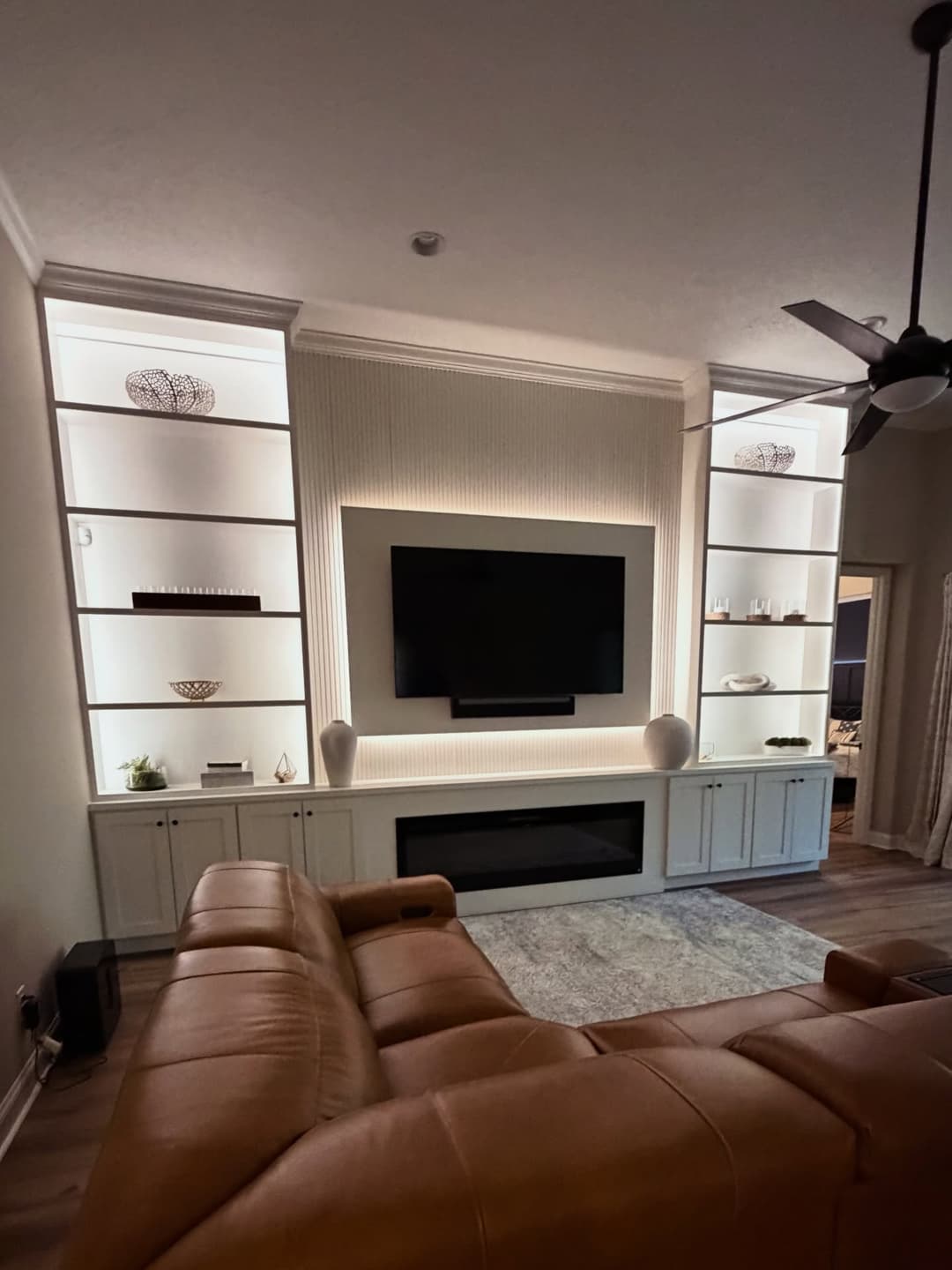
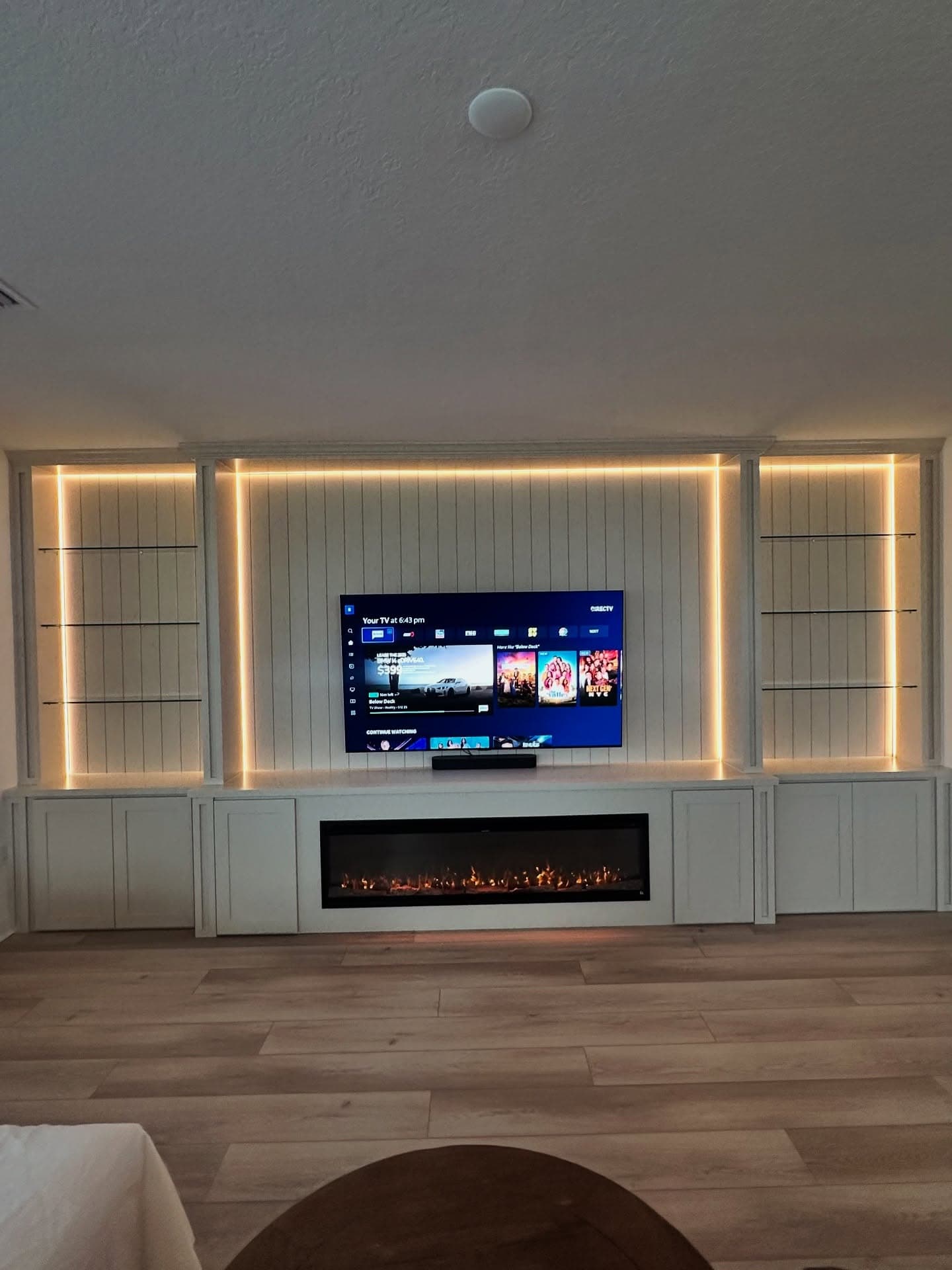
For signal cables, HDMI mostly, we run them through the wall cavity in smooth, gentle paths from the TV down to the equipment zone. On a wall like the fluted one above, with its backlit towers, the TV panel conceals a service loop of slack so the TV can come off its mount without a fight.
Where the gear actually lives
Consoles and boxes need three things: power, air, and a signal path for controllers and remotes. That's why base cabinets are our default answer. Doors hide the gear. We build in ventilation so a console running a four-hour session isn't baking in a sealed box.
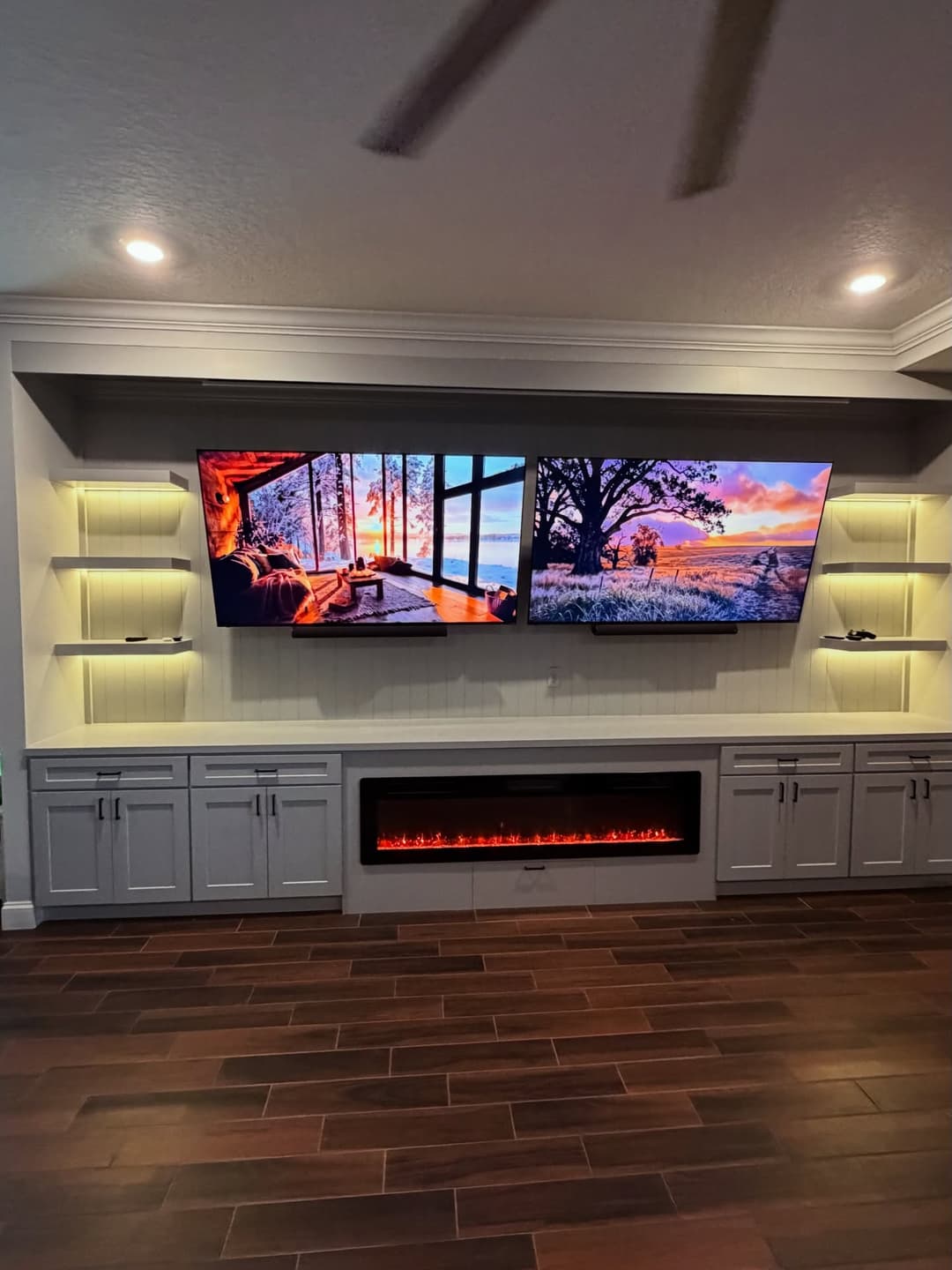
Modern game controllers are wireless and most remotes work over Bluetooth or Wi-Fi now, so closed doors usually aren't a problem. For the stubborn old cable box, small repeaters fix it. The build above houses two TVs' worth of equipment behind shaker doors and you'd never know. On a recent build in Tamaya, the client's entire rack of gear, consoles, receiver, network equipment, disappeared into the base cabinets of the entertainment center with nothing visible but the TV and the flames.
The empty conduit trick
Here's our favorite piece of cheap insurance. Before the wall closes, we run an empty flexible conduit from behind the TV down to the cabinet zone. Nothing in it. Then someday, when there's a new cable standard, or you add a camera, or the next TV needs something HDMI can't handle, you pull the new wire through in five minutes instead of opening the wall.
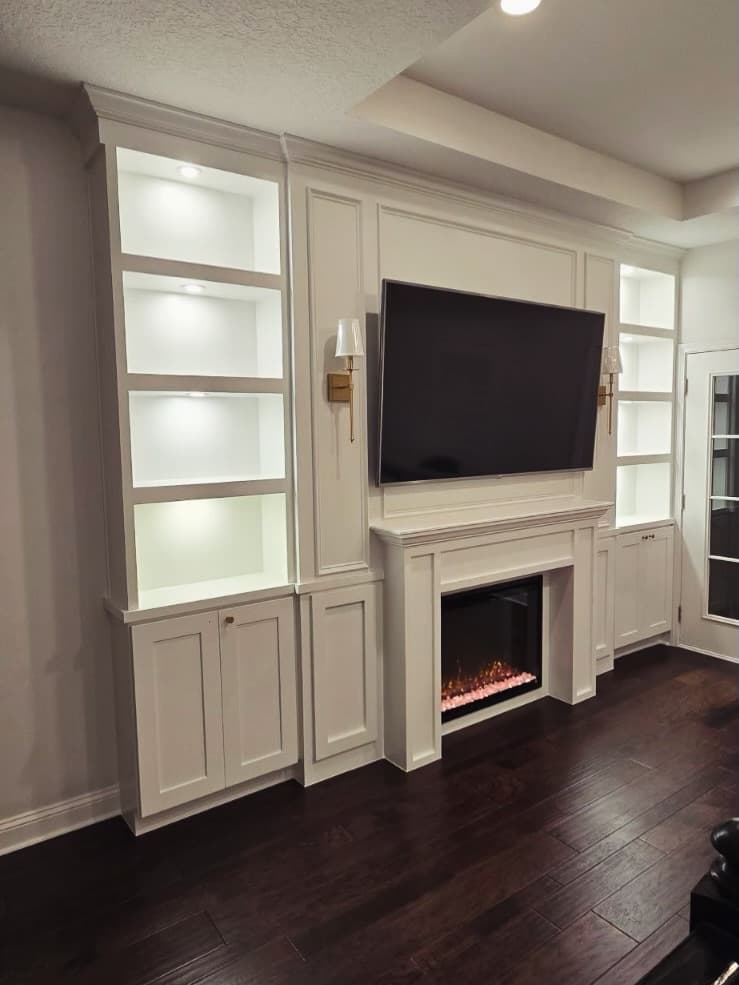
It costs almost nothing on build day and it has saved several of our clients from surgery on a finished wall. Even a traditional build like the one above, with its sconces and lighted bookcases, has modern wiring bones behind the millwork. That's the standard we build custom built-ins to.
If your current setup is a nest of cords behind a console, that's fixable. Send us a photo of the wall and we'll talk through what a clean version would look like.
By consultation
Built to last.
Finished to impress.
We take on a limited number of projects each season so each home gets our full attention. Share your project and we’ll respond within 24 hours to see if it’s the right fit.
Insured · $1M general liability · 230+ Google reviews, 5.0