Guides
Do You Need a Mantel Over an Electric Fireplace?
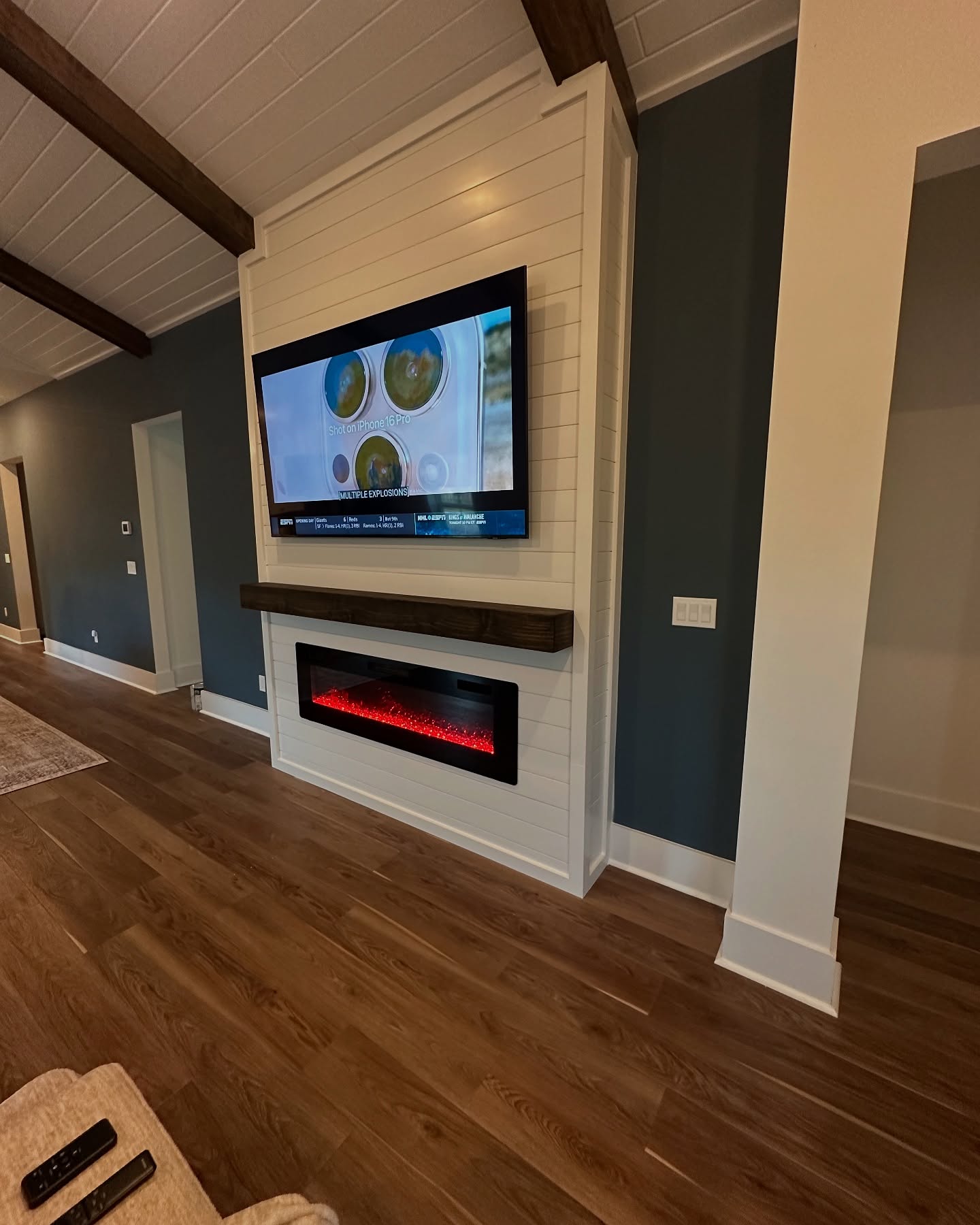
Somewhere between picking the fireplace and picking the paint, almost every client asks us the same thing: do we actually need a mantel? Some people worry a mantel will date the wall. They're picturing the heavy oak shelf in their parents' house with the doilies on it. Others can't imagine December without somewhere to hang stockings, but they're nervous about parking a wood beam a few inches above a firebox.
Honest answer up front: no, you don't need one. And also: a good one is still among the most satisfying things we build. This is a style decision, not a safety decision, and here's how we'd walk you through it at a design visit in Jacksonville or St. John's County.
Mantel or no mantel is a style fork, not a rule
With an old wood-burning fireplace, the mantel had actual jobs. It capped the masonry, pushed heat and soot away from the wall above, and gave the room a shelf. With a linear electric insert, none of that applies. No code requirement, no soot, nothing structural riding on it.
So the question becomes purely visual. A mantel adds a horizontal line and a piece of natural material, and it pulls the wall toward warm and traditional. Think shiplap, stained wood, a hearth feeling. Skipping the mantel lets the surround run clean and uninterrupted, which reads modern: fluted panels, slat walls, tile or marble-look surfaces going straight up to the ceiling.
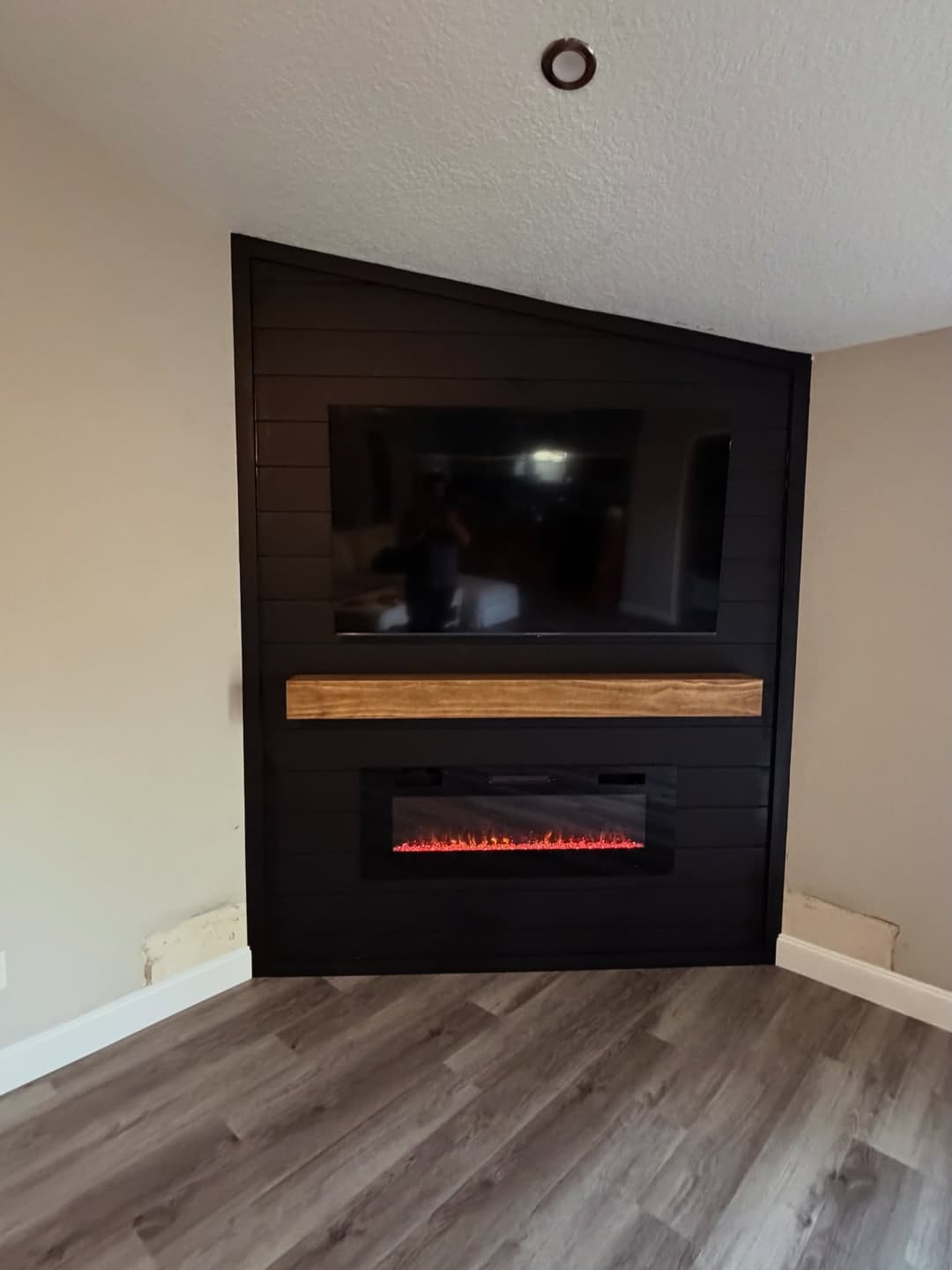
Neither is the right answer by default. We've built black shiplap walls where a single stained mantel is the whole personality of the room, like the corner fireplace below, and we've built mantel-less walls that stop people at the front door. The right answer depends on your house, not on trends.
Will a wood mantel scorch over an electric fireplace?
This is the fear behind half the mantel questions we get, and it's the easiest one to put to rest. The flames in an electric insert are LEDs. Light, not fire. The only real heat comes from the built-in heater, which draws about what a space heater does and blows warm air out through a vent, usually at the top or bottom face of the unit, aimed into the room rather than up the wall.
That's a completely different situation from a wood or gas firebox pushing combustion heat up the chase. We still follow the manufacturer's clearance guidance on every install. We're not interested in shortcuts. But the clearances for electric units are modest, and a wood beam at a reasonable distance above the insert is a non-issue. The wall below has a dark stained mantel sitting comfortably over a blue-flame electric insert, and it'll look exactly like that in ten years.
One habit we build in: we think about where the heat vent exhausts before we place anything directly in its path. That's planning, not danger. Five minutes at layout and it's done.
The wood beam mantel everyone asks for
If you do want a mantel, the one people point to in our photos is almost always a chunky wood beam. Often white oak, sometimes stained darker to pick up floors or furniture. It floats on hidden hardware, so there are no corbels or brackets. Just a clean piece of timber against the surround.
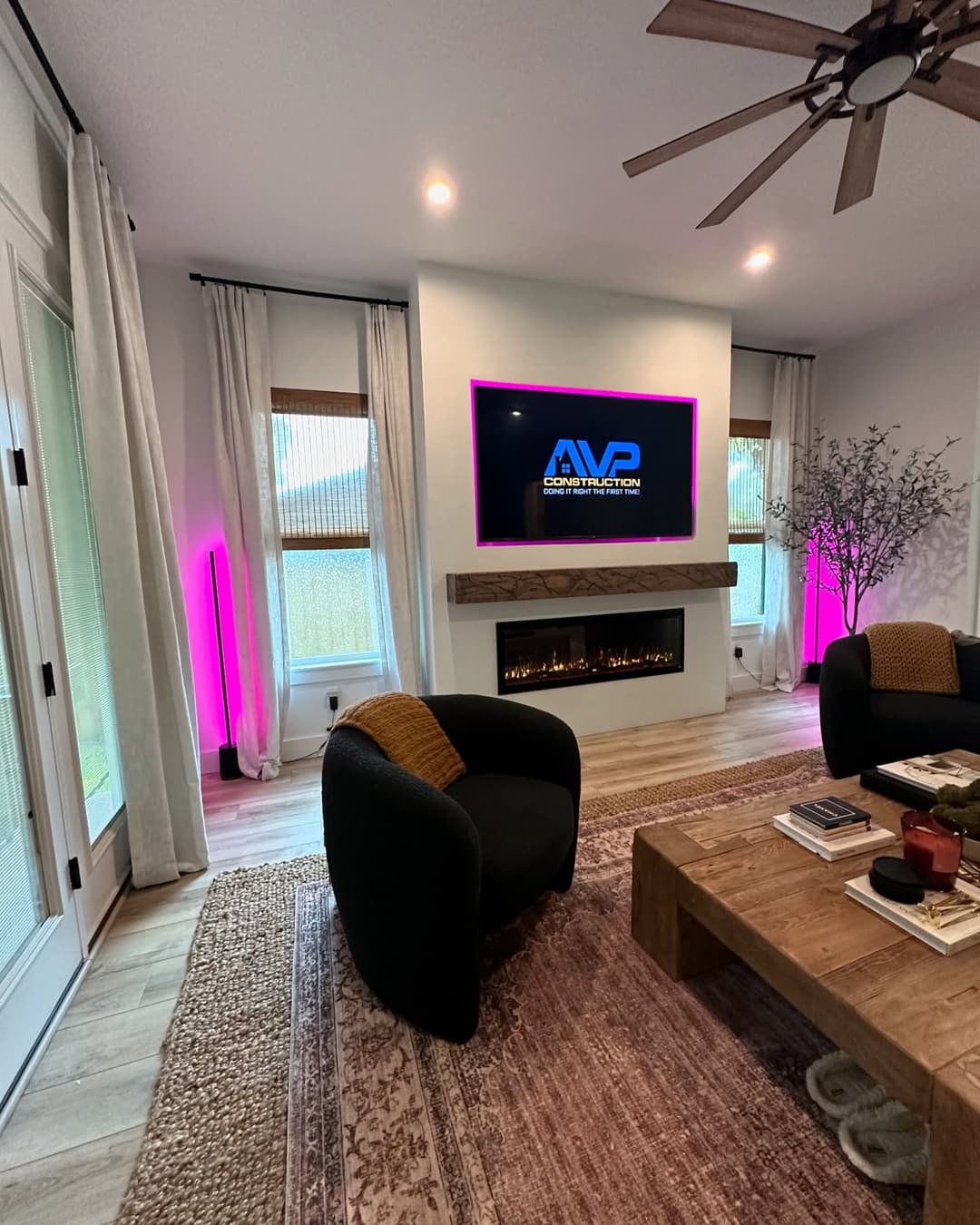
What we like about a beam is that it carries a lot of warmth for a small footprint. On a white shiplap wall it keeps things from going sterile. On a stone or tile surround it softens all that hard material. And yes, it holds stockings, garland, and the framed photos, which is genuinely the reason some clients want one. That's a fine reason. We built a mantel and feature wall in World Golf Village where the beam was the client's non-negotiable from day one, and you can see how it anchors the whole room in that St. Augustine project.
Fair warning on the trade-off: a real solid beam costs more than a paint-grade shelf, and material choices like this are one of the bigger levers in a quote. We break that down in our guide to what custom work costs in Jacksonville.
Mantel-less walls that still feel finished
The worry with skipping the mantel is that the wall will look like a TV screwed to some paneling. That happens when the surround has no depth or detail. Not because the mantel is missing.
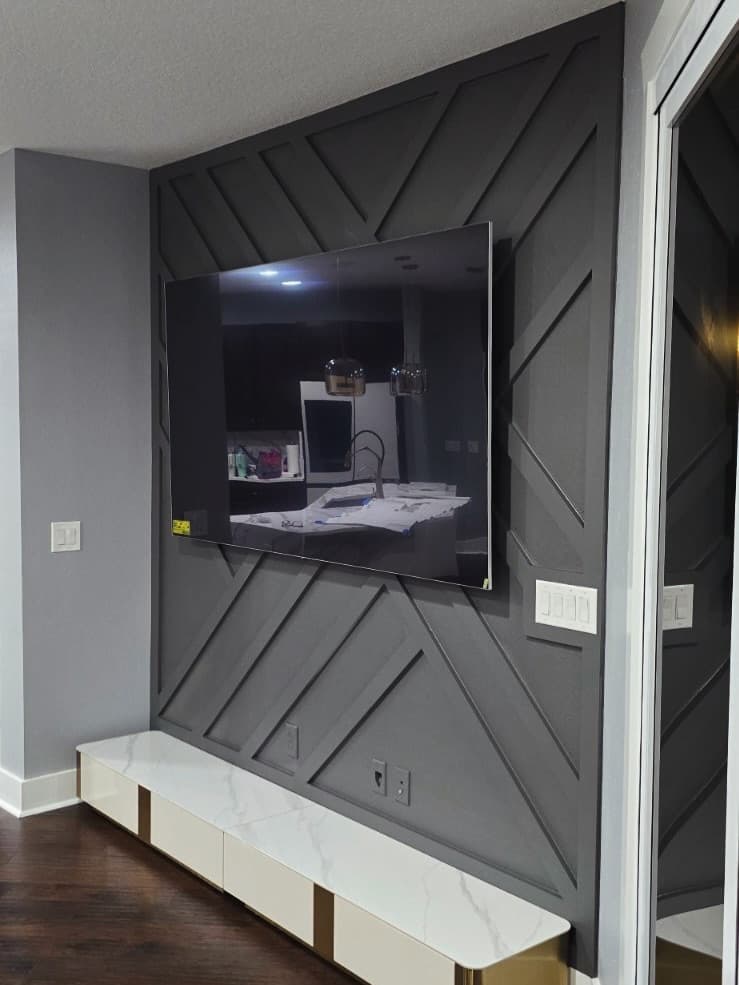
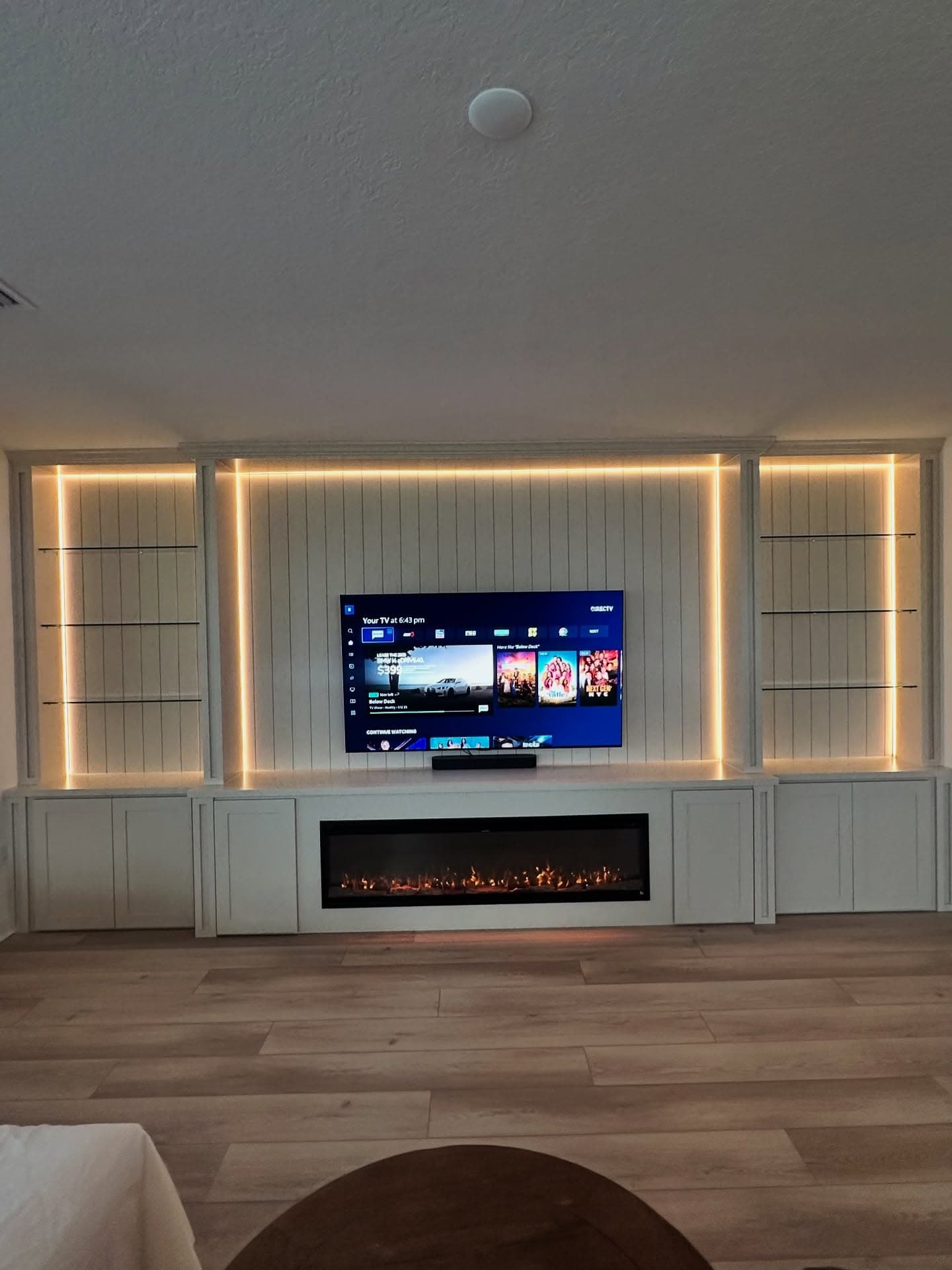
What makes a mantel-less wall feel deliberate: the material runs full height so the eye travels floor to ceiling, the TV sits recessed or on a dedicated panel instead of hanging proud of the wall, and lighting does the finishing work. LED accent lighting is a signature move of ours for exactly this reason. A soft glow behind the TV or along a reveal line gives the wall dimension that a shelf would otherwise provide. The chunky-oak wall below is about as minimal as we build, and nobody has ever called it unfinished.
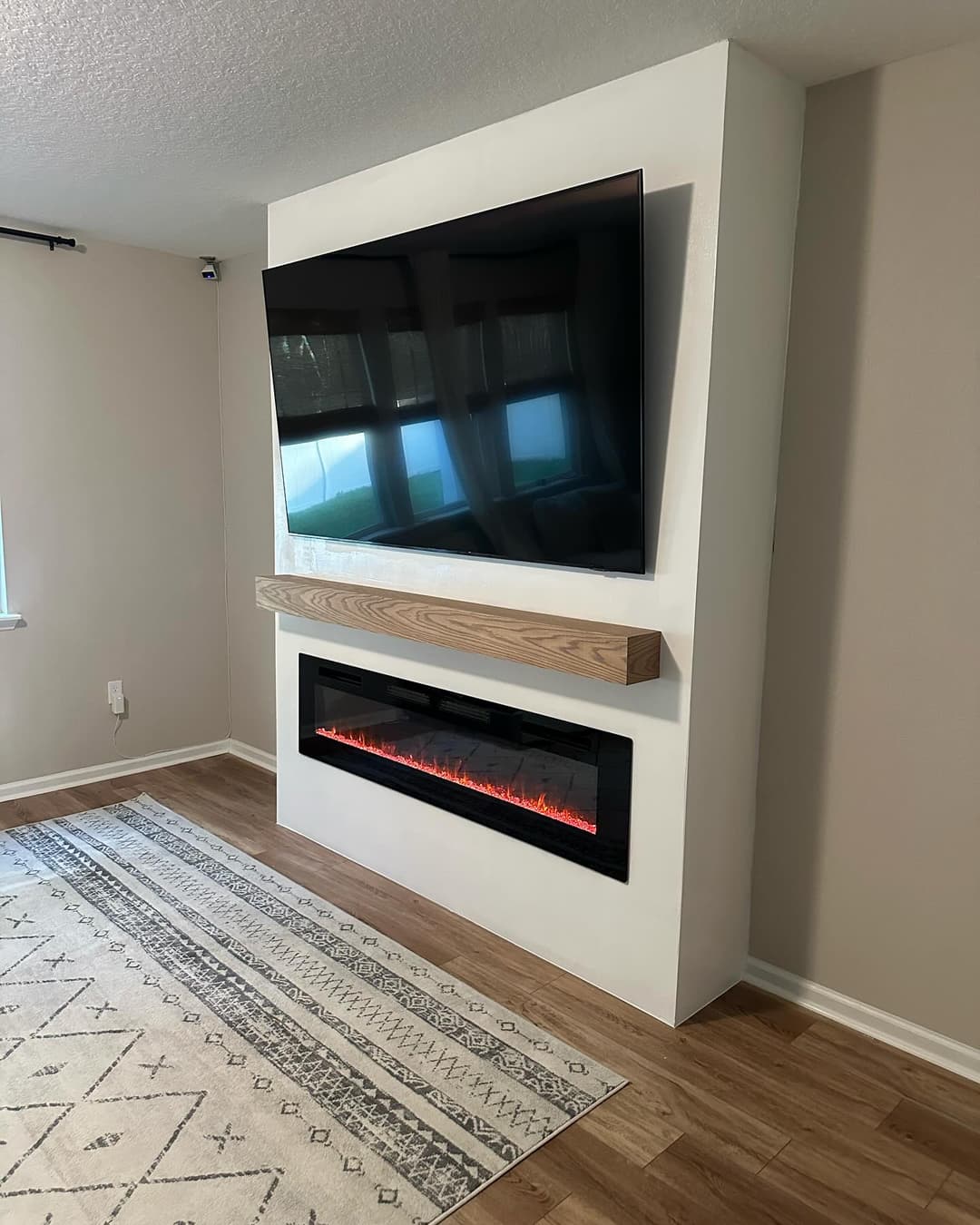
Solve the TV height and the mantel together
Here's the practical bit people miss: a mantel pushes the TV up. Beam plus breathing room above it means the screen starts higher than it would on a bare wall, and if the ceiling is standard height, that can put the TV above comfortable viewing.
So we always solve both at once. We do a sit-down test at the design visit. You on your actual couch, us holding a tape measure, working backward from where your eyes land. Sometimes that means a slimmer beam. Sometimes it means the mantel shifts lower and the insert floats a touch higher. Occasionally it means we tell you honestly that on this wall, with this ceiling, the mantel costs more comfort than it's worth, and we'd skip it. That's the kind of conversation you should expect from anyone building a custom entertainment wall.
If you're stuck on mantel-or-not, send us a photo of your wall and tell us how your family actually uses the room. We'll give you a straight answer, and a design consultation is easy to set up.
Some product links above are affiliate links. If you buy through them we may earn a small commission, at no extra cost to you. We only point you to materials we actually use on the job.
By consultation
Built to last.
Finished to impress.
We take on a limited number of projects each season so each home gets our full attention. Share your project and we’ll respond within 24 hours to see if it’s the right fit.
Insured · $1M general liability · 230+ Google reviews, 5.0