Guides
Will the Fireplace Cook the Woodwork? What We Put Next to Heat
You're about to pay for custom cabinetry and then park a heat source in the middle of it. The question we hear is completely reasonable: won't the fireplace warp the shelves, crack the paint, or slowly yellow everything around it?
Short answer: not the way we build them. But "trust us" isn't an answer, so here's where the heat in a modern electric insert actually goes, what the manufacturers require, and what we do beyond that on every media wall we build around Jacksonville & St. John's County.
Where the heat actually goes in a modern insert
The picture in most people's heads comes from wood-burning fireplaces. A firebox radiating heat in every direction, baking whatever's near it. Electric inserts don't work like that. The flames are LED light, and light doesn't cook cabinetry. The only real heat comes from a built-in heater, and it exits through a directional vent on the face of the unit, blowing out into the room. Not up the wall. Not into the framing behind it.
That heater draws about what a space heater does. Nobody worries that the space heater in their bedroom is going to warp the dresser three feet away. Same physics here. Run the flames with the heat off, which is most of the year in Florida, and the unit is barely warmer than the TV above it.
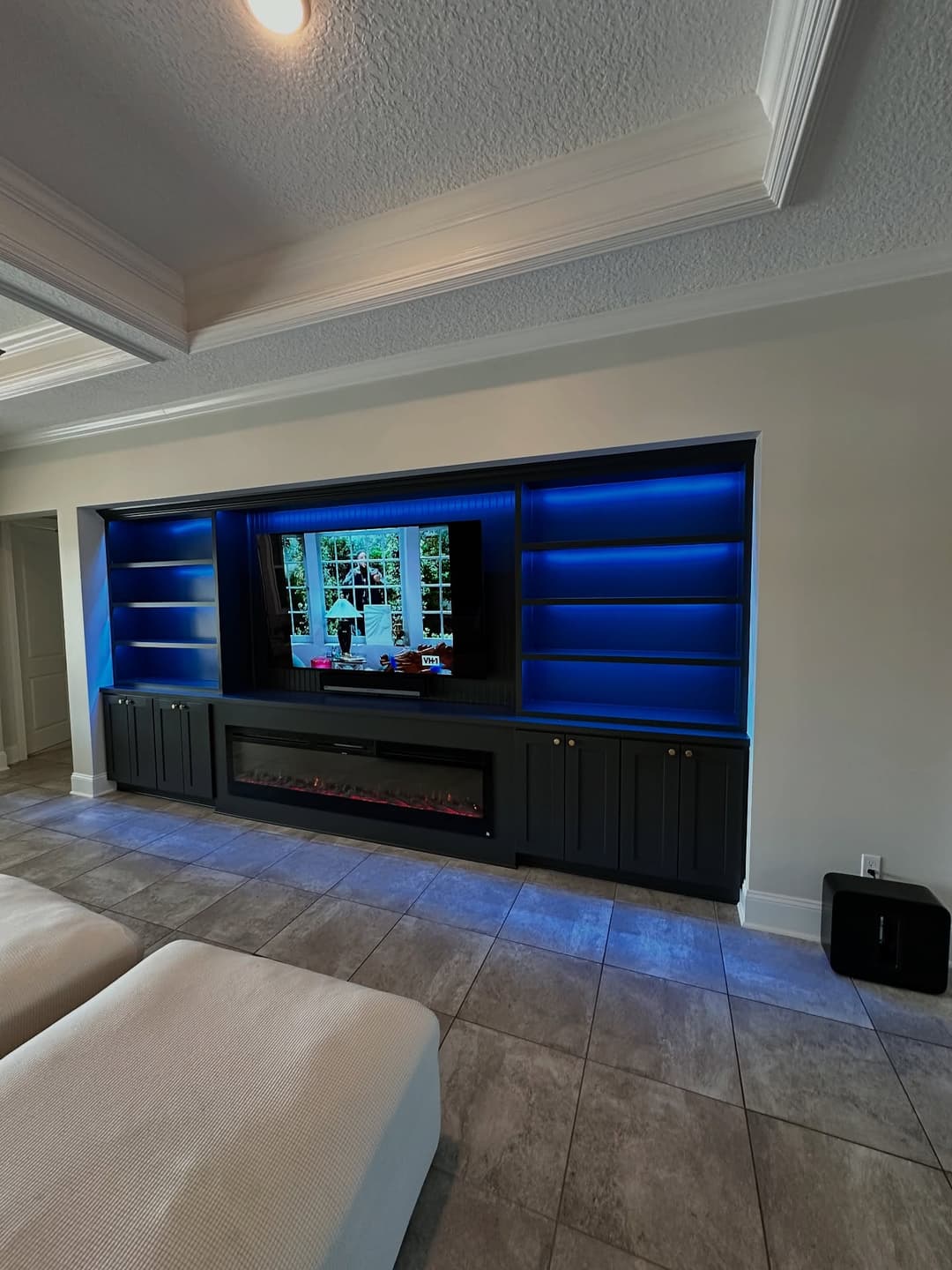
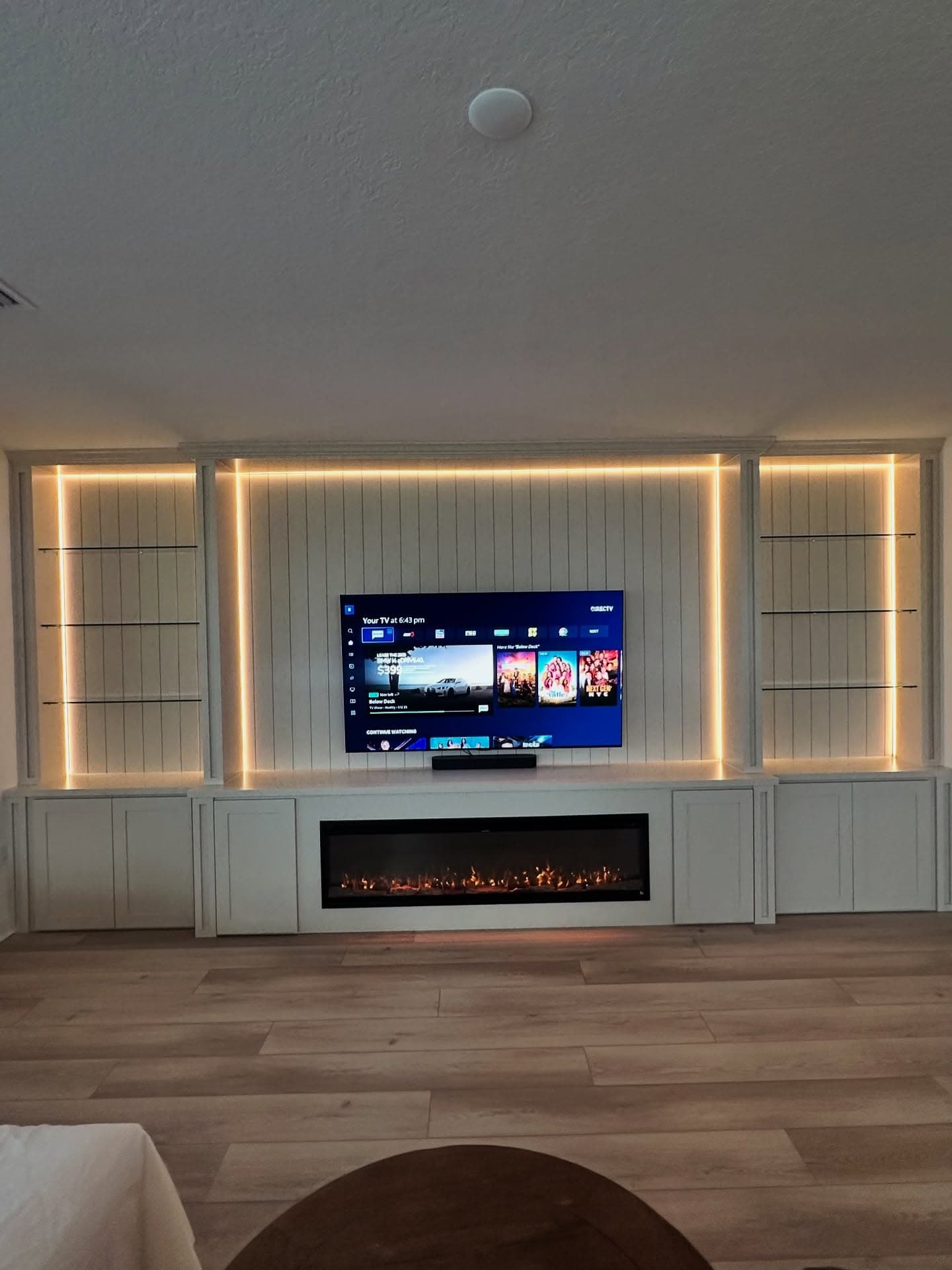
That's why you'll see builds like the black entertainment center above, with a long fireplace sitting directly inside painted cabinetry and lit shelving. That layout would be reckless with a gas or wood firebox. With a properly installed electric insert, it's Tuesday.
Manufacturer clearances, and how we build past them
Every insert ships with a manual specifying minimum clearances: how close combustible material can sit to the unit, especially near the heat vent, and how much open space the vent needs. Those numbers are the legal floor, and we treat them as exactly that. A floor, not a target.
In practice, we frame the opening with margin beyond the spec, keep shelving and trim details out of the vent's airflow path, and make sure nothing the manufacturer calls combustible sits inside the keep-out zones. The framing around the insert is built so air can move where the unit expects it to. None of this shows in the finished photos, which is the point. It's the unglamorous engineering under the finished wall.
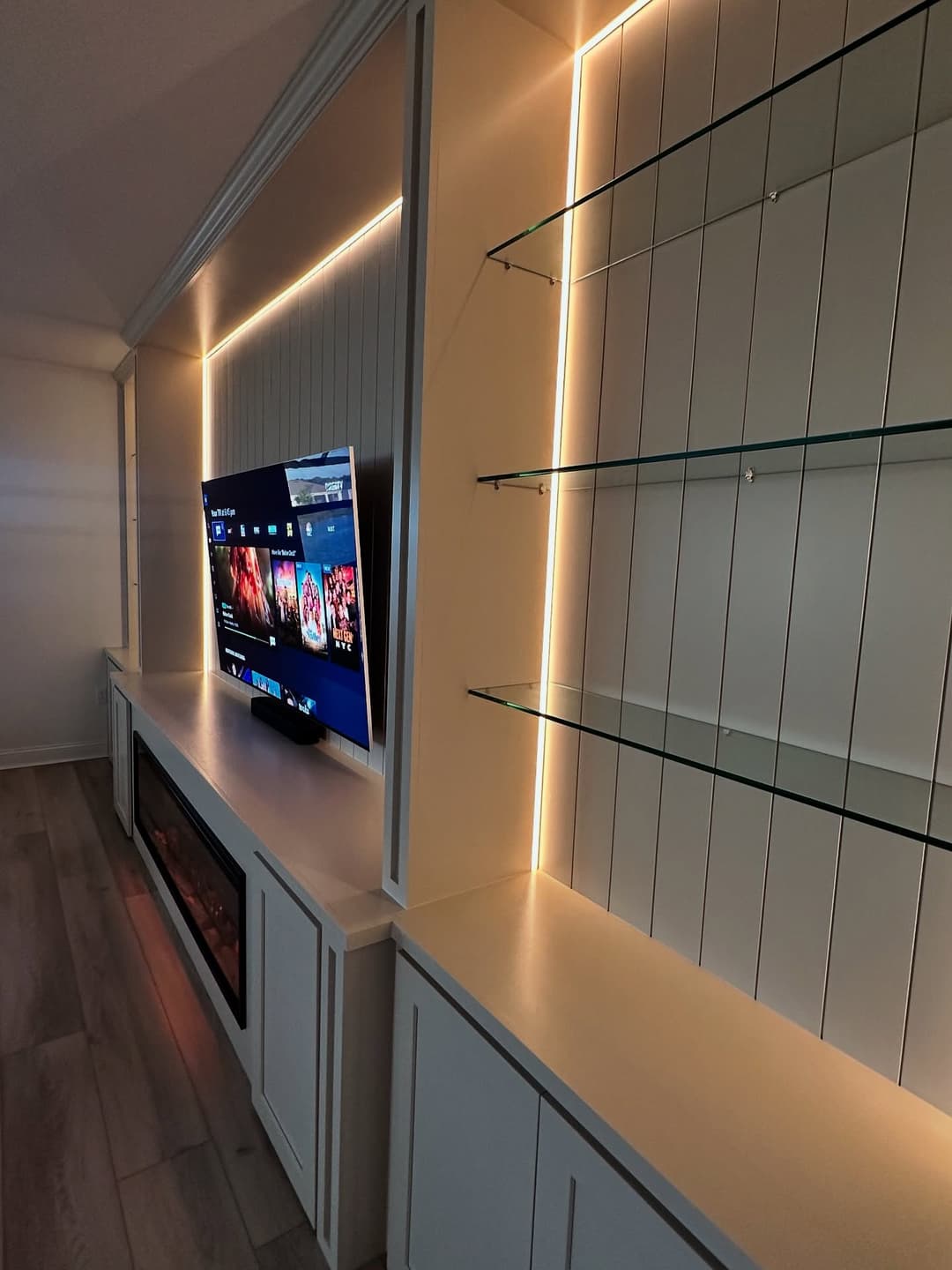
The white built-in above, with LED-framed panels and glass shelves wrapping the fireplace, only looks casual about clearances. Every gap and reveal around that insert is where the manual says it should be, plus our margin.
Materials that shrug heat off, and ones we keep away
Material choice is the second layer of protection. Directly around the opening, non-combustible surrounds, tile, stone, stacked stone, marble-look panels, are never bothered by a warm face. Painted millwork nearby holds up fine at electric-insert temperatures. The sprayed finishes we use are cured hard and won't soften from a warm room, and the yellowing people remember from old fireplaces came mostly from smoke and combustion residue. Electric produces neither. No soot, no smoke, no film on the finish.
What we're more careful with: anything plastic-adjacent right at the vent path, LED strips too close to the heat outlet, and delicate specialty finishes directly in the airflow. Those aren't hard problems. They're layout decisions we make on paper before the first board is cut, the same way we plan every custom built-in.
This concern is solved in every photo we post
Here's a reframe that settles most nerves: browse our portfolio and you're looking at years of fireplaces living inside painted woodwork, some of them running since we founded the company in 2020. Floating shelves inches from fireplace openings. White finishes that are still white. Like the all-white wall below, recessed TV, linear fireplace, floating shelves, everything in close company, no scorch marks, no drama.
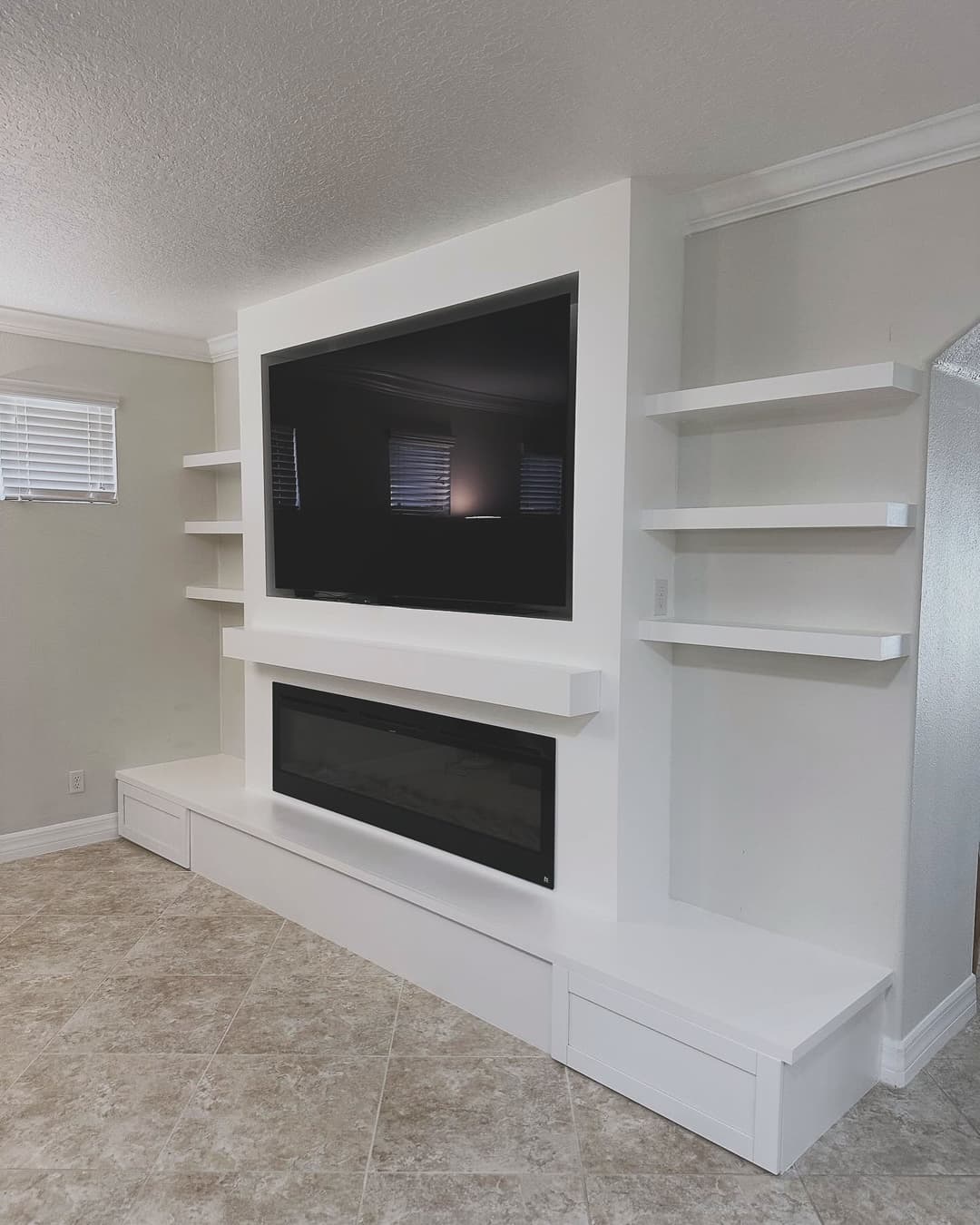
If electric inserts damaged surrounding millwork, we'd be out of business. Our whole trade is putting fine woodwork next to these units. Builds like our entertainment center with fireplace in Tamaya are exactly this combination, holding up in a real client's home.
The one setup we refuse to build
Now for the honest caveat. Everything above applies to electric. A wood-burning firebox with combustible built-ins crowding it is a different conversation entirely. The clearance requirements are far stricter, and there are configurations we simply won't build because no finish detail makes them right. If you have an existing wood-burning fireplace and want cabinetry wrapped tight around it, we'll either design to its much larger clearances or talk you toward converting to an electric insert.
The other thing we won't do: bury an insert with its vents blocked because a design photo demanded it. Any builder who'll trap the airflow to match an inspiration picture is telling you something about the rest of their work. It's one of the tells we cover in how to hire a finish carpenter.
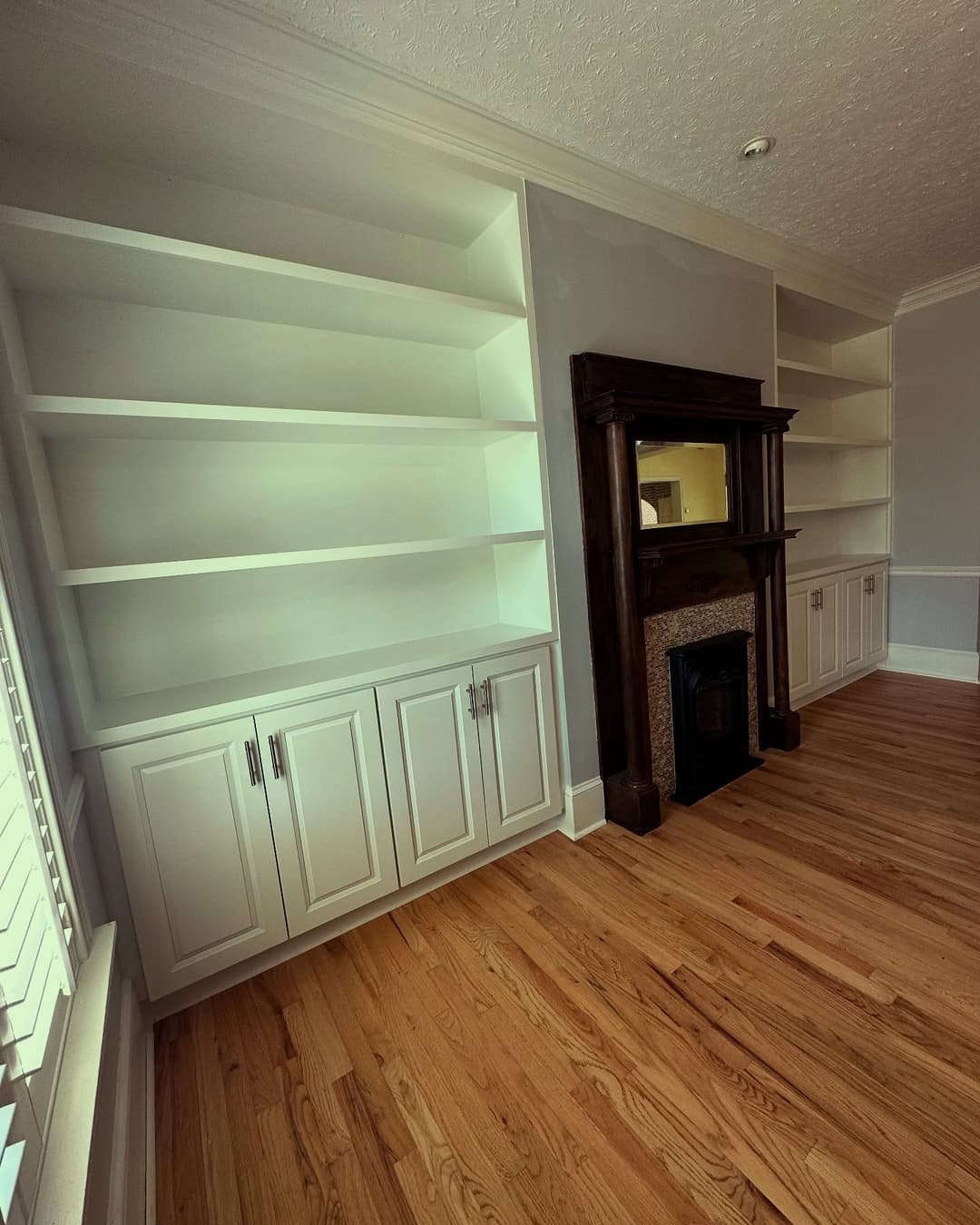
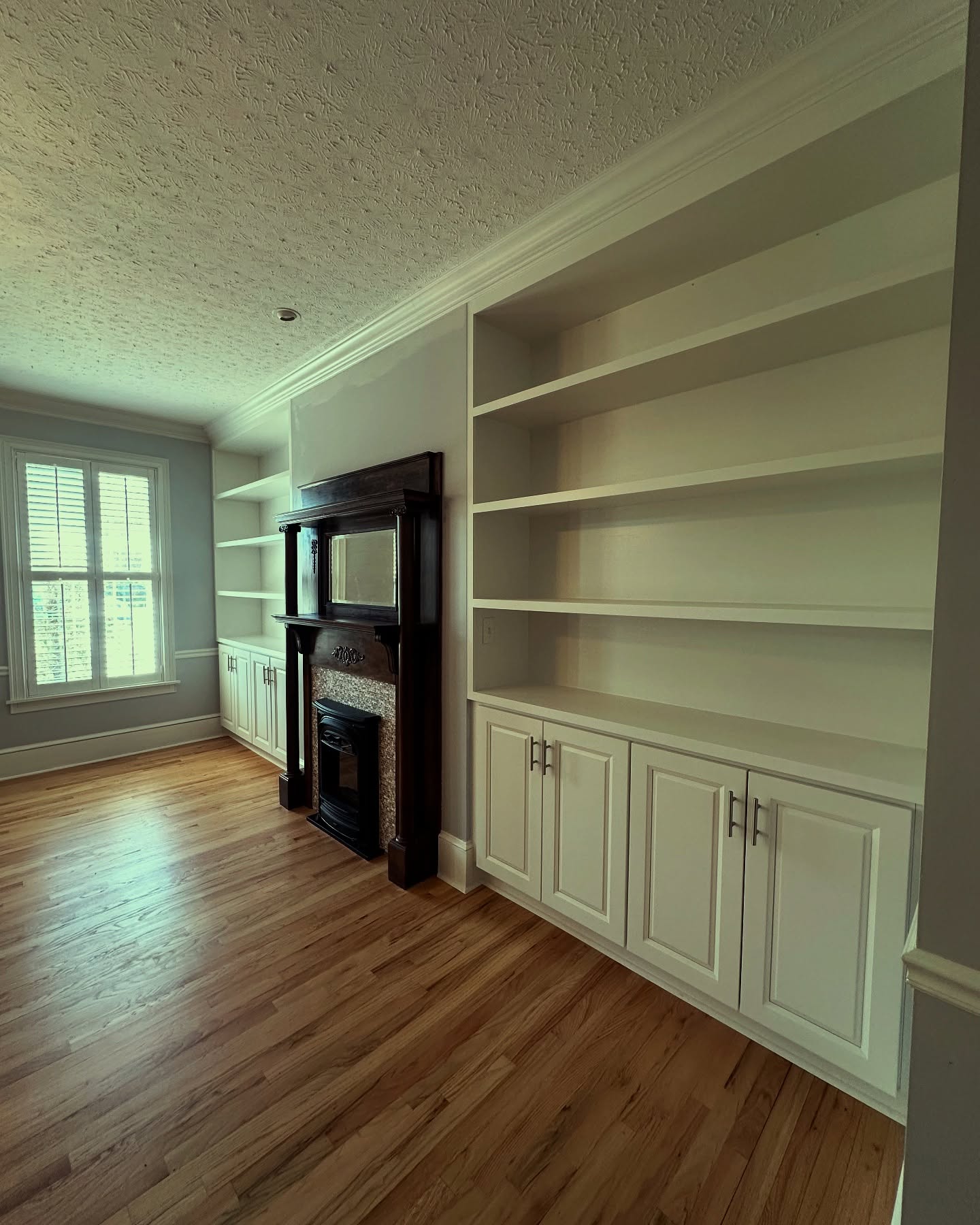
And for older homes with an existing masonry fireplace and a well-preserved antique mantel, like the dark wood one above flanked by white built-ins, we build the cabinetry to respect the original clearances rather than crowd them. The house's history and the rulebook can both win.
If you're picturing a fireplace inside custom woodwork and want someone to walk the actual wall with you, get in touch. We'll tell you exactly what goes where, and why it'll still look right in twenty years.
By consultation
Built to last.
Finished to impress.
We take on a limited number of projects each season so each home gets our full attention. Share your project and we’ll respond within 24 hours to see if it’s the right fit.
Insured · $1M general liability · 230+ Google reviews, 5.0