Guides
Shiplap Around a Fireplace: Beautiful or a Bad Idea?
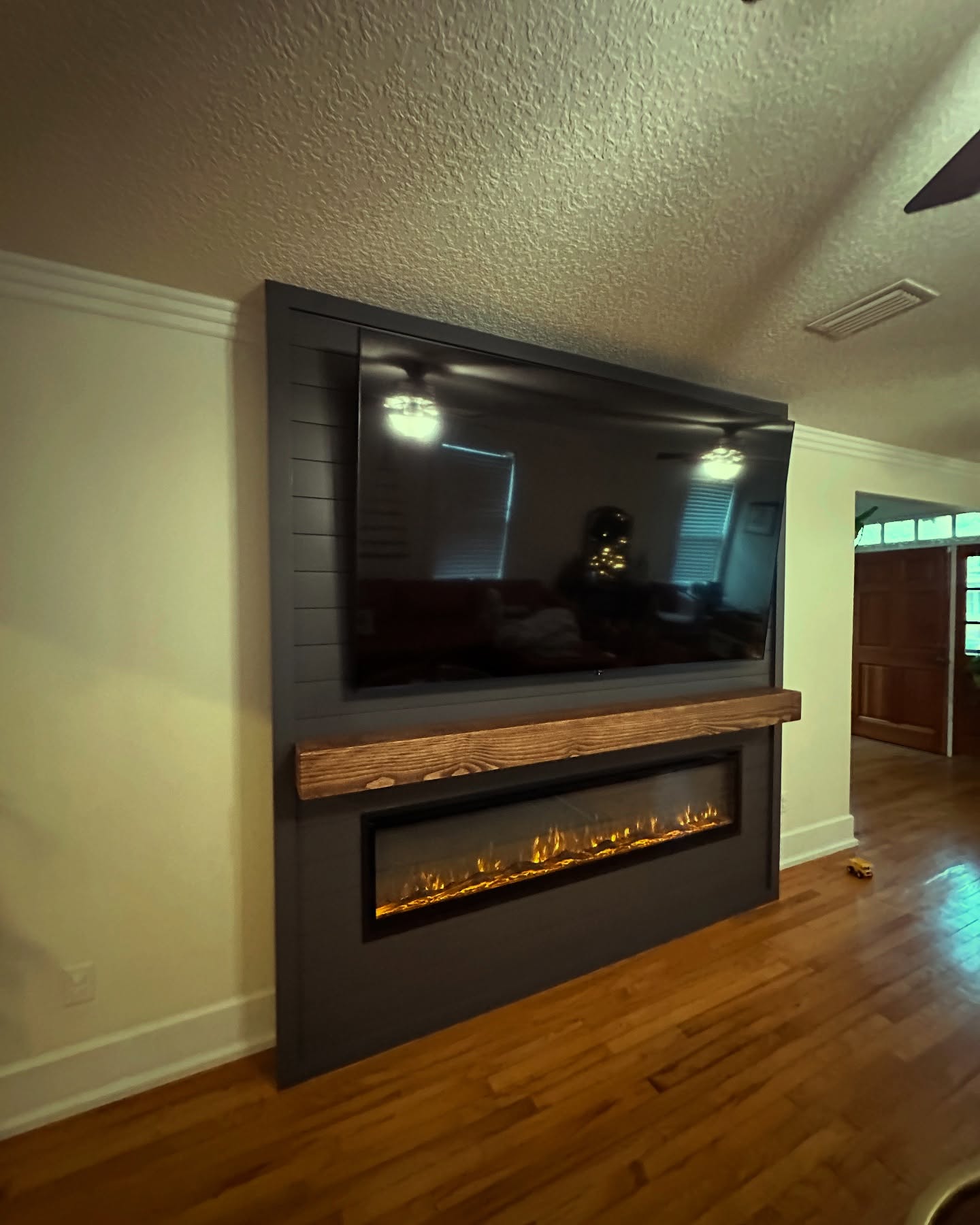
Two worries, usually in the same phone call. One: "Is wood right next to a fireplace even safe?" Two: "Is shiplap over? I don't want a wall that screams 2016 farmhouse."
Both are fair. Both have better answers than you'd expect. Here's how we talk it through with homeowners across Jacksonville and St. Johns County.
The safety question first. Electric changes everything.
If we were wrapping a wood-burning firebox in pine boards, you'd be right to worry, and the building code would back you up. But nearly every fireplace we build around is a linear electric insert, and that changes the math completely.
The flames in an electric unit are LED light. No combustion, no embers, no chimney heat soaking into the wall. The only warm part is the heater vent, which pushes air out the front, away from the surround, and the heater draws about what a space heater does. You can run the flames with the heat off entirely.
We still respect the manufacturer's clearances on every install. That's just doing the job right. But shiplap around an electric fireplace is a solved problem, not a risk. We build it weekly.
One practical note for Northeast Florida: humidity moves wood more than heat ever will. That's why we use stable, paint-grade stock and leave proper expansion gaps, so the wall looks as flat in August as it did in January.
Shiplap's real superpower: warmth without weight
Here's why shiplap keeps earning its spot. It adds texture at exactly the right volume. Stone shouts. Big tile makes a statement. Shiplap quietly makes a flat drywall wall feel finished and intentional, with shadow lines that catch lamplight in the evening.
It also ties the fireplace wall to the rest of the house, because it's paintable millwork in the same family as your trim and doors. And it's one of the friendlier surrounds on the budget, though the full number depends on the whole wall. We broke that down in what custom work costs in Jacksonville.
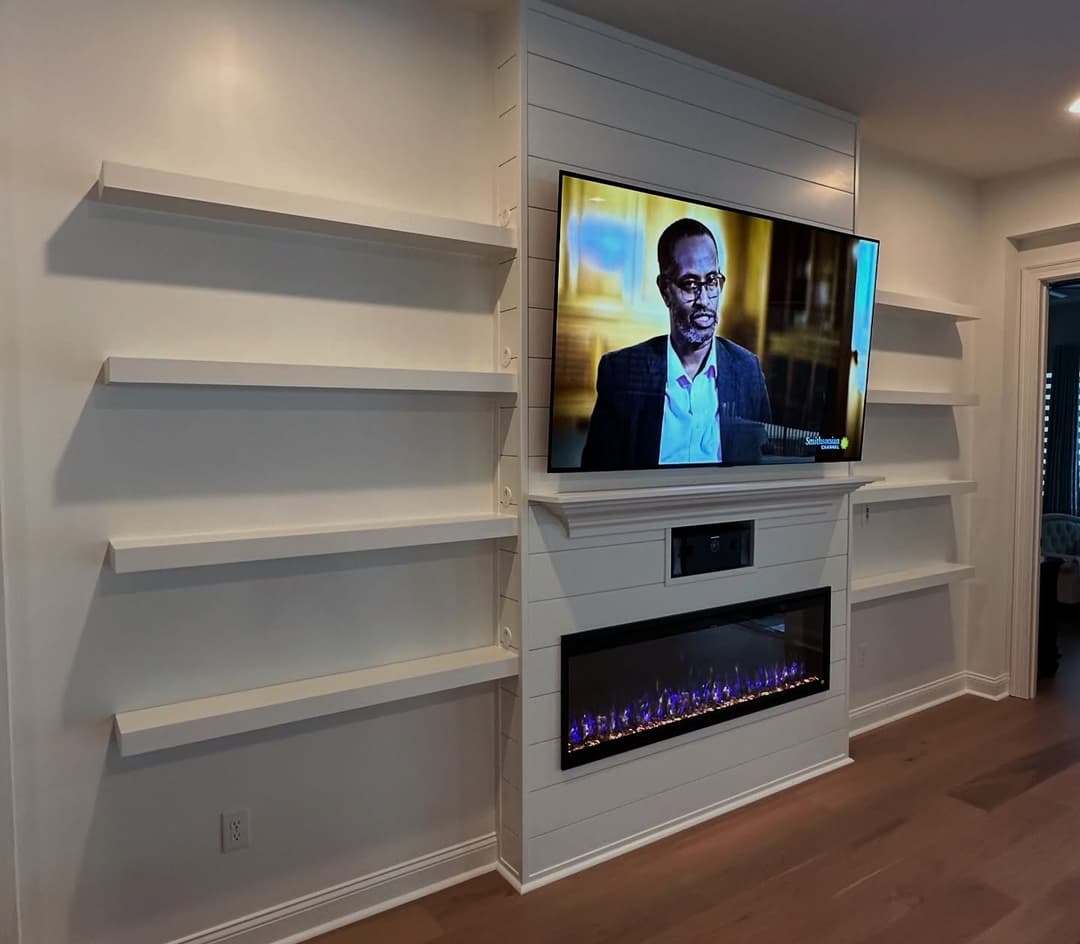
The white wall above is the classic version: shiplap, mantel shelf, floating shelves, linear fireplace. Simple, bright, and very hard to get tired of.
Board width and gap size change the personality more than people expect. Wide planks with a pronounced gap feel relaxed and coastal. Narrow boards with a tight nickel gap read tailored and modern. We'll mock up a few spacings on the actual wall before committing, because the difference at full scale is bigger than any sample photo suggests.
Styling it away from farmhouse
Shiplap didn't invent farmhouse, and it doesn't have to stay there. The farmhouse read comes from the accessories: barn doors, rustic signs, distressed everything. Not from the boards themselves. Horizontal planking has been in coastal cottages, cabins, and classic American homes for a century.
To push it modern: keep the gaps tight, run a clean linear fireplace instead of a traditional insert, square off the mantel or skip it, and keep the styling minimal. Run the boards vertically and it stops reading farmhouse at all.
Another move is making shiplap part of a larger composition. When it's the backdrop for floating shelves, base cabinets, and a linear fireplace, it reads as one layer of a designed wall. Not a weekend project. A wood mantel gives the painted boards one piece of natural material to play against. White oak is our usual pick.
If you're weighing shiplap against other paneled looks, we wrote a full comparison of shiplap vs. board and batten that walks through the feel of each one.
Color: white is not the only answer
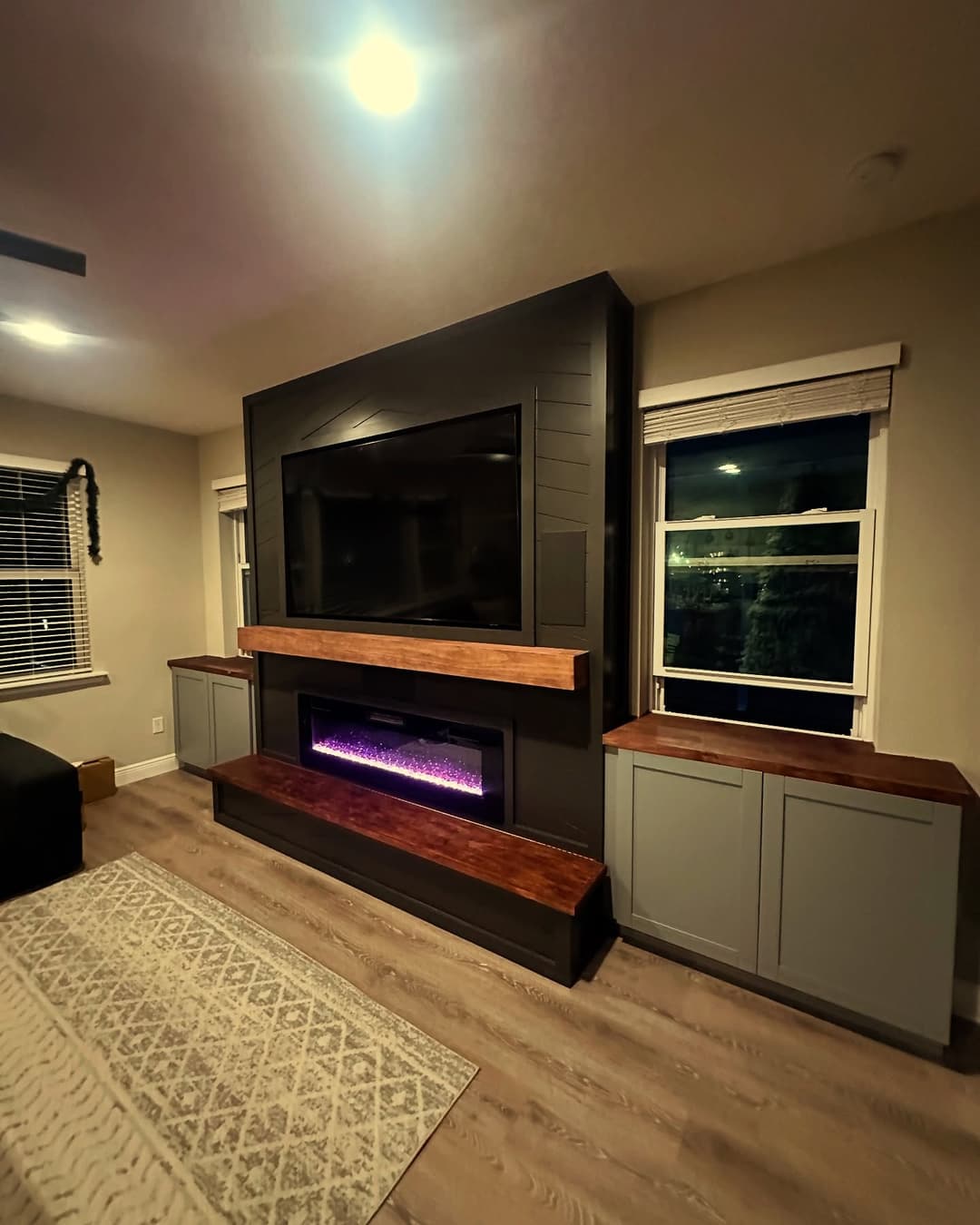
This is the fastest way out of the farmhouse box. The charcoal shiplap wall above: deep color, wood mantel, hearth bench. It reads moody and current, nothing like a fixer-upper rerun. Black, slate blue, and greige shiplap walls are some of our favorite builds.
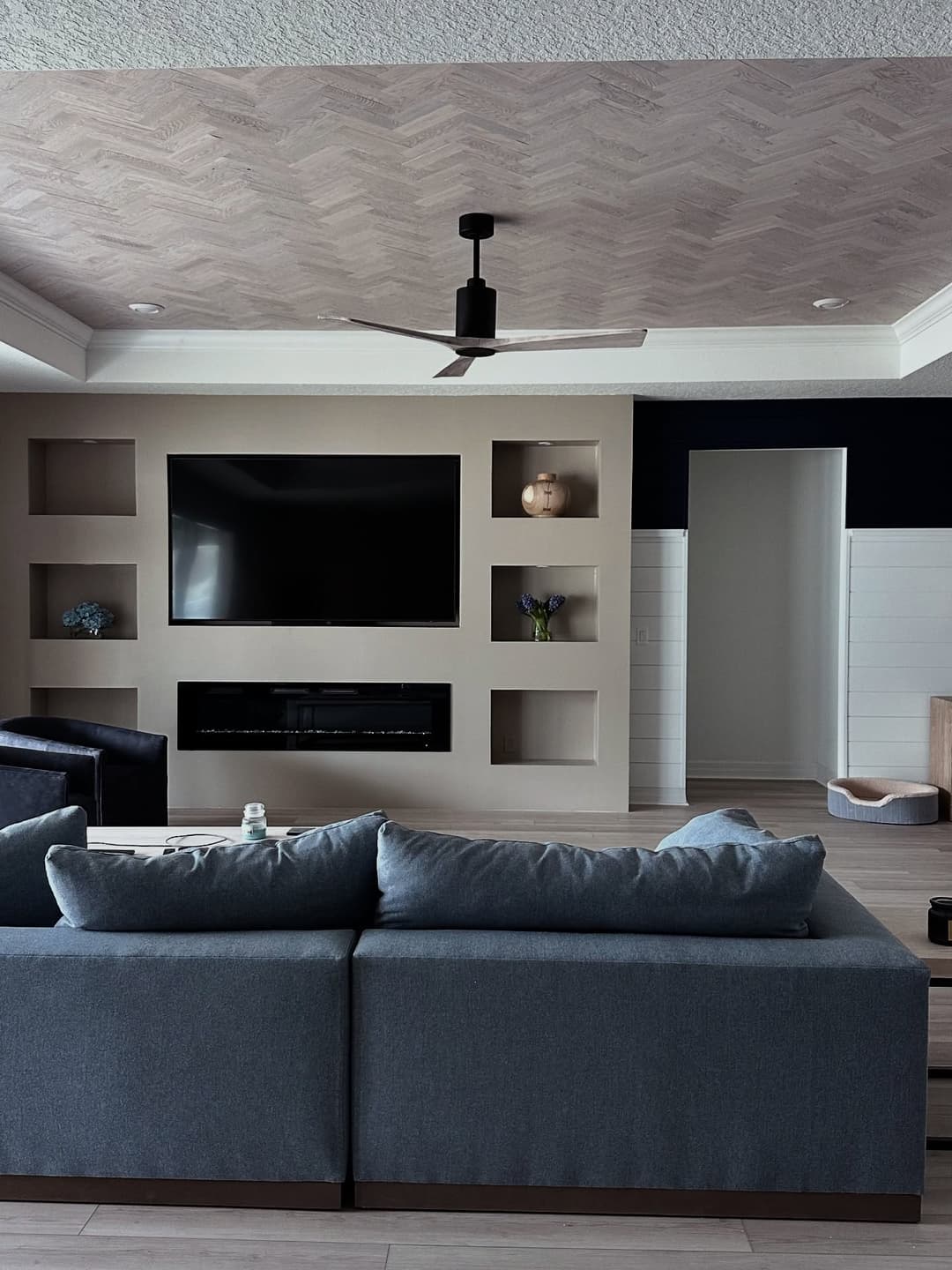
Warm neutrals work too. The greige wall above shows how far a soft, earthy tone gets you. Texture, lit niches, zero farmhouse. Darker paints carry a practical bonus as well: they kill TV glare and let the screen visually disappear into the wall.
One tip we give everyone going darker: keep the sheen soft. Flat and matte finishes hide fingerprints and make touch-ups invisible. Anything glossy turns every board line into a highlight reel.
Walls of ours that make the case
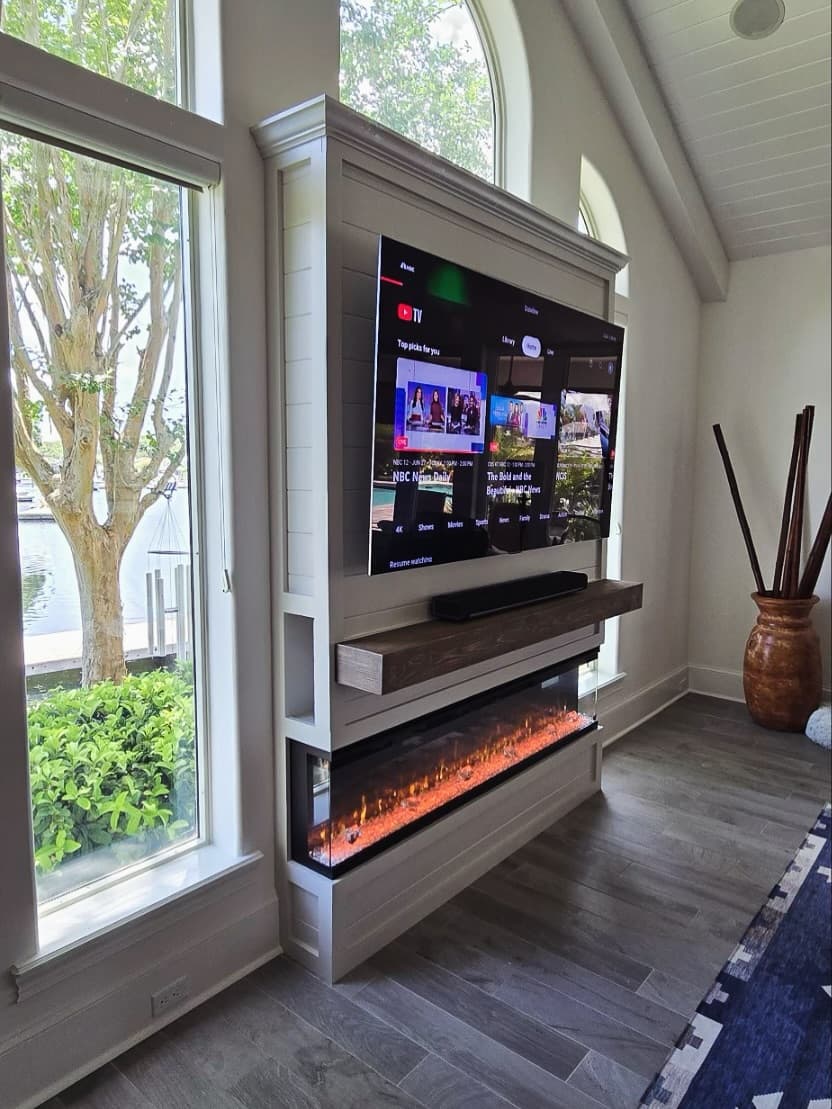
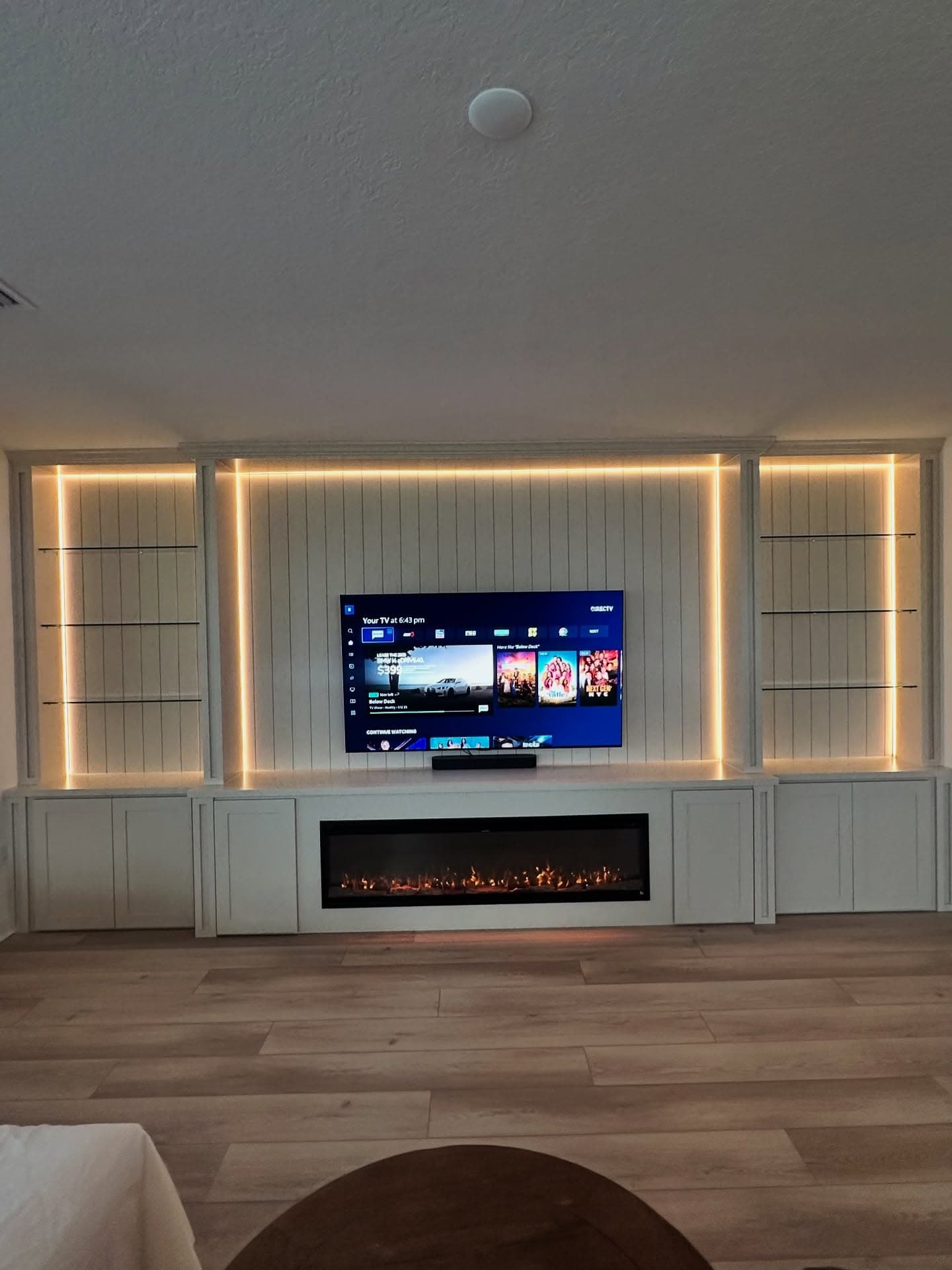
The photo above wraps shiplap around a three-sided fireplace under a rustic mantel. The texture doing its quiet work while the fire stays the star. We've built versions of this all over Northeast Florida, like this shiplap entertainment center with an electric fireplace in Pecan Park and a shiplap wall with floating shelves out in RiverTown.
Worth noting: both of those walls started as flat, empty drywall in newer builds. No chimney, no fireplace, nothing. A blank wall is honestly the easiest starting point there is for this kind of work.
Safe or a bad idea? With an electric insert and honest detailing, shiplap is one of the safest bets in the catalog. Safe from heat, and safe from the trend cycle, as long as the color and styling are chosen for your house instead of for a hashtag.
Send us a photo of your wall and we'll tell you straight whether shiplap suits it or whether we'd steer you somewhere else.
Some product links above are affiliate links. If you buy through them we may earn a small commission, at no extra cost to you. We only point you to materials we actually use on the job.
By consultation
Built to last.
Finished to impress.
We take on a limited number of projects each season so each home gets our full attention. Share your project and we’ll respond within 24 hours to see if it’s the right fit.
Insured · $1M general liability · 230+ Google reviews, 5.0