Guides
Is It Safe to Put a TV Above a Fireplace? (The Question We Get Weekly)
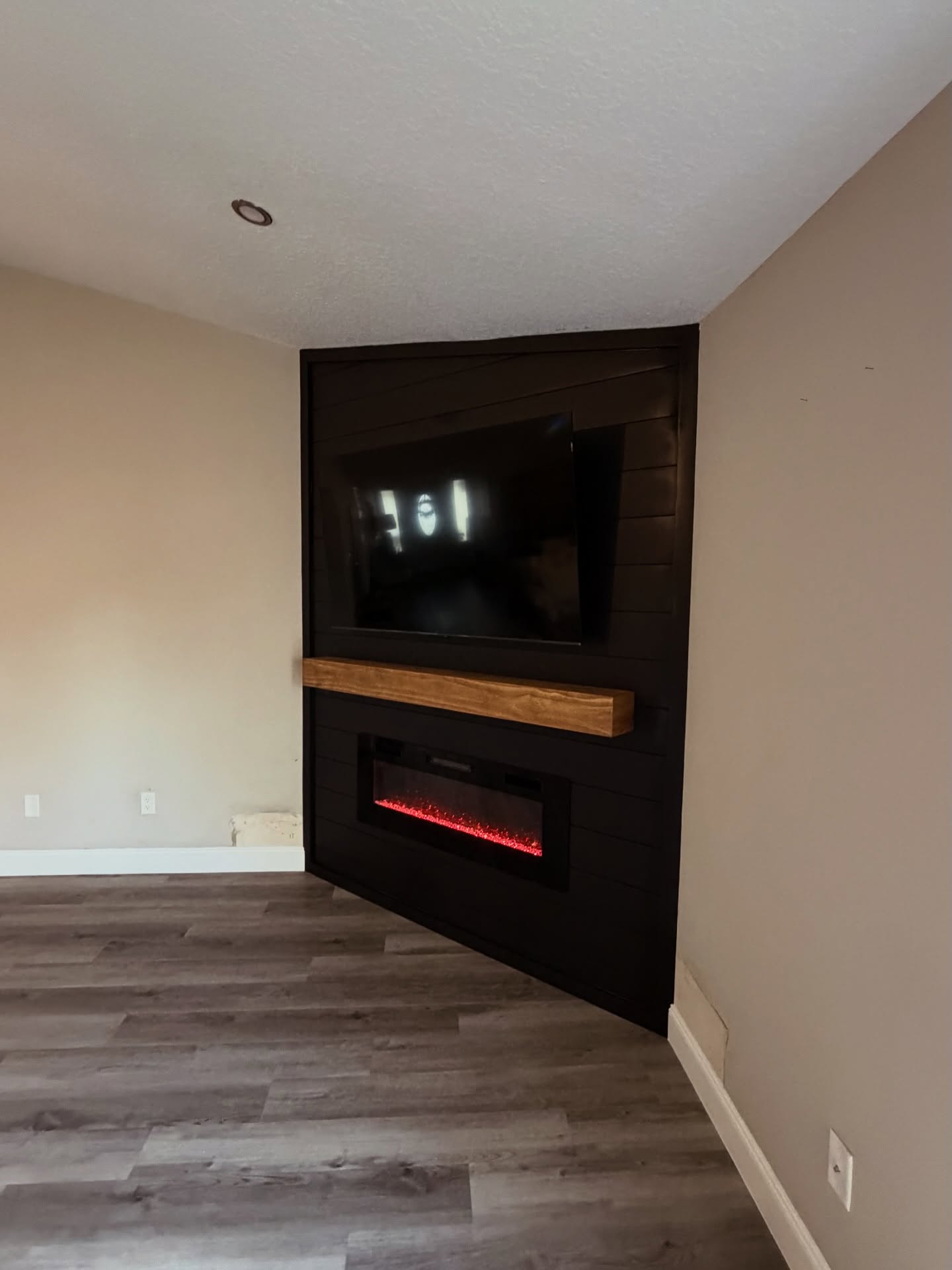
This one comes up every week: "Is it actually safe to hang the TV over the fireplace? I read somewhere that the heat ruins them and voids the warranty." Usually it's one spouse asking on behalf of the other, hoping we'll settle a standing argument.
We can settle it. Short version: with the electric inserts we install, and the way we build the wall around them, yes, it's safe. But the concern didn't come from nowhere, so it deserves a straight answer before we move on.
Where the fear comes from
The old advice was written for wood-burning and gas fireplaces. For those, it was sound advice. A real firebox pushes serious heat up the face of the wall, and the masonry above it gets hot enough that mounting sensitive electronics there was genuinely asking for trouble. TV manufacturers do specify operating temperature limits in their fine print, and "never put the TV over the fireplace" became gospel.
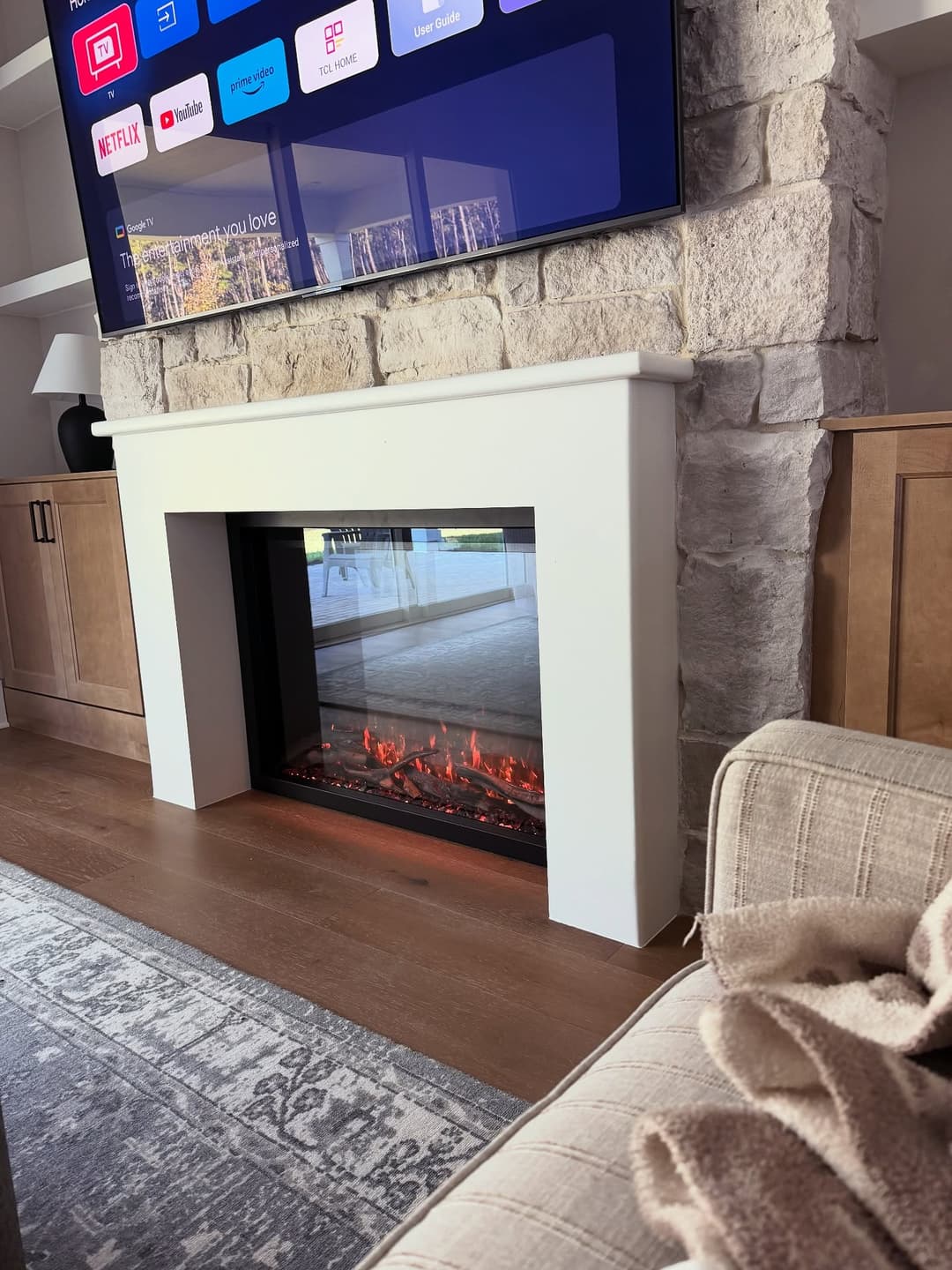
Still fair advice for a roaring wood fire. The problem is the advice outlived the context. Most fireplaces going into Jacksonville and St. John's County living rooms today aren't wood or gas. They're linear electric inserts, and the physics are completely different. Even on builds where the surround is traditional stone with a full mantel, like the one below, the insert behind that classic face is electric.
Why electric changes the math
An electric insert's flames are LED light. They produce essentially no heat at all. The heat comes from a separate fan-forced heater, about like a space heater, and here's the key part: it exits through a directed vent, typically blowing out and forward from the face of the unit, not rolling up the wall like a wood fire's convection plume.
That means the wall surface a foot above an electric insert stays close to room temperature even with the heater running. And the flames and heater are separate switches. Many of our clients run flames-only most of the year, in which case the "fireplace" is generating about as much heat as the lamp next to the couch. The TV above it simply isn't living in a hostile environment.
The clearances we build to anyway
So can we just cram everything together? We don't. Every insert ships with manufacturer clearance requirements, minimum distances to the TV, the mantel, and combustible trim, and we treat those as the floor, not the target. Where the design allows, we build in extra breathing room beyond spec, because that margin costs nothing during framing and holds up forever.
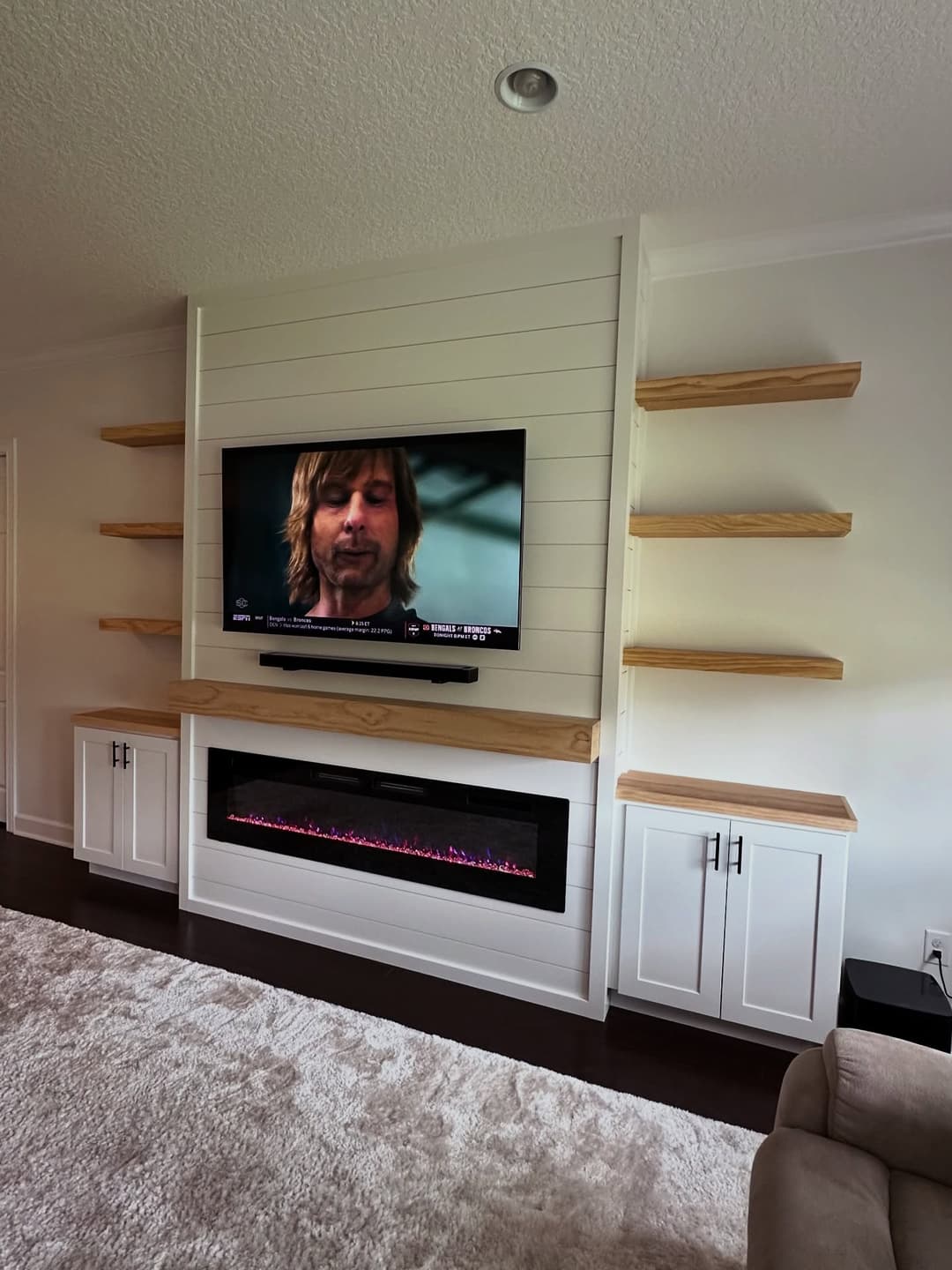
A mantel between the fireplace and the TV, like the natural wood shelves and mantel on the shiplap wall below, adds a physical ledge that interrupts any rising warm air before it reaches the screen. It answers a safety question and a design question at the same time. Our favorite kind.
We also think about the TV's own recess. When a TV sits in a niche, we make sure it has ventilation space around it. TVs generate their own heat, and a snug unventilated pocket is harder on the electronics than the fireplace below ever will be. It's the kind of thing a good finish carpenter should be able to walk you through before the build, not after.
TV height: the sit-down test we do with every client
Here's the honest part: on most of these walls, the bigger risk to your comfort isn't heat. It's height. A TV mounted too high gives you a mild case of front-row-at-the-movies neck every night. And fireplace walls tempt people to push the TV up and up to make room for everything below it.
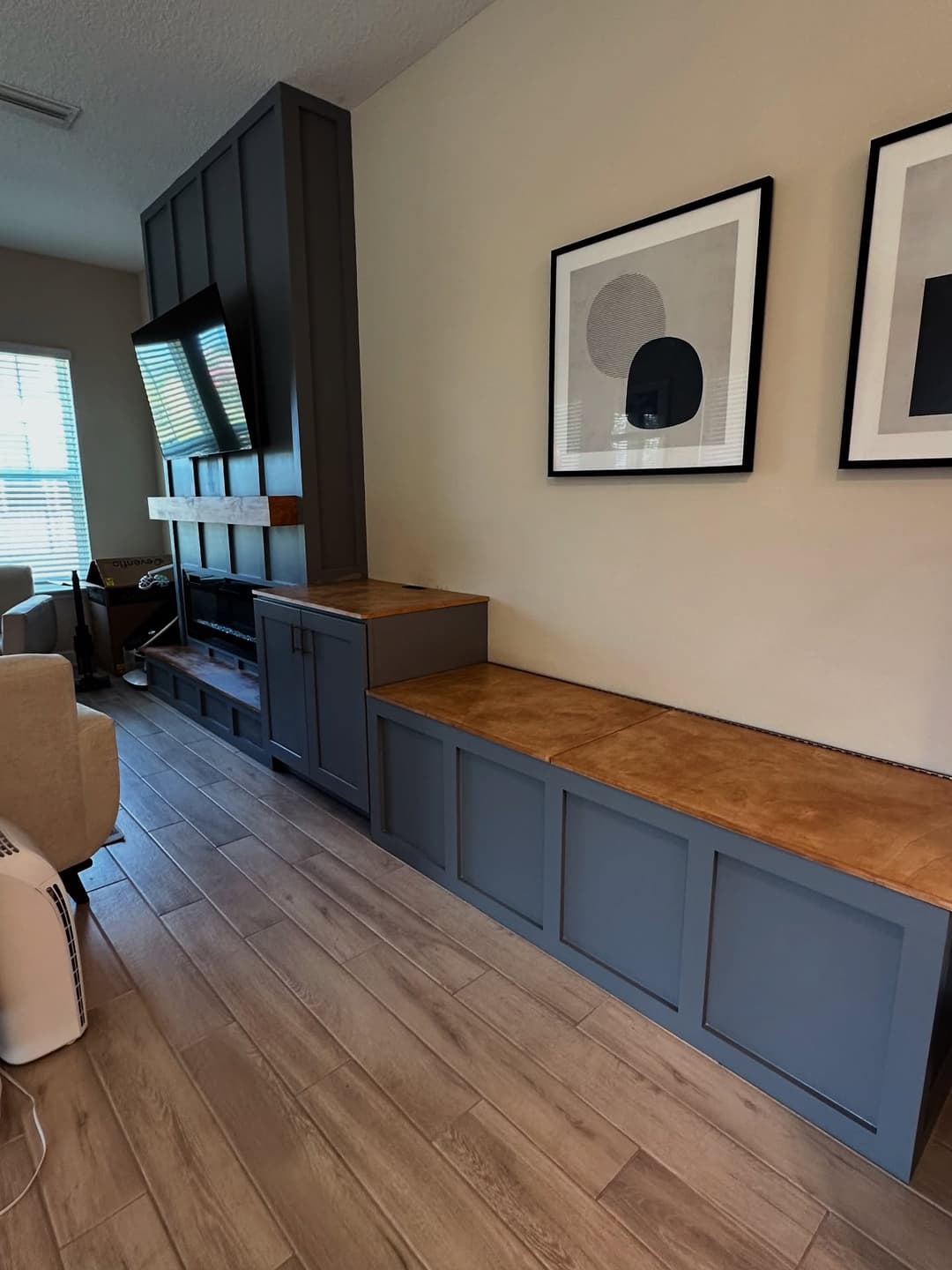
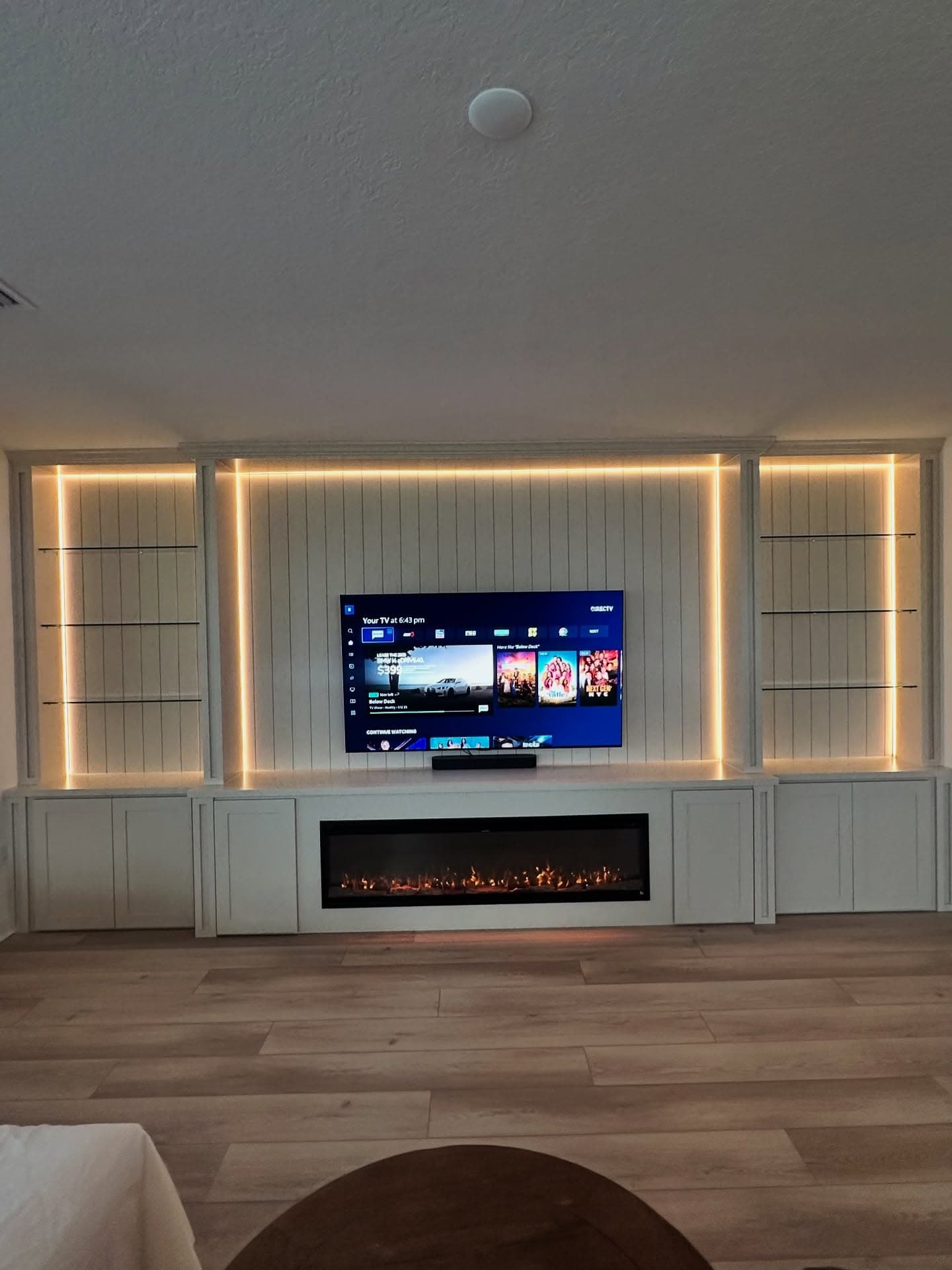
So we do a low-tech thing that works. We have you sit in your actual sofa, in your actual watching position, and we mark where your eyes naturally rest on the wall. The center of the screen wants to land near that line, or a little above it in a fireplace stack. Then we design downward, fireplace, mantel, hearth, to fit under that mark, rather than letting the fireplace push the TV wherever it lands. Sometimes the answer is offsetting the TV entirely, like the board and batten wall below where the bench and fireplace sit low so the screen can stay at eye level.
If the numbers won't work, big fireplace, tall mantel, low ceiling, we'll say so and redesign. We're not going to ask you to adjust your posture.
Signs a setup was done wrong
A few things we notice on walls we're asked to fix: a TV that's warm to the touch along its bottom edge after the heater runs, a heat vent aimed straight up at the screen, discolored or hazy finish on the mantel underside, and a screen so high everyone slouches to watch it. Each one traces back to the same root. The fireplace and TV were treated as two separate installs instead of one composition.
When one crew designs the whole wall, the vent placement, clearances, mantel, and screen height all get decided together, and the question you're asking now gets answered on paper before anything gets built. Sometimes the right answer is moving the TV off the stack entirely. The chevron shiplap wall below puts the screen beside an arched shelf nook rather than over the flames, and the room is better for it.
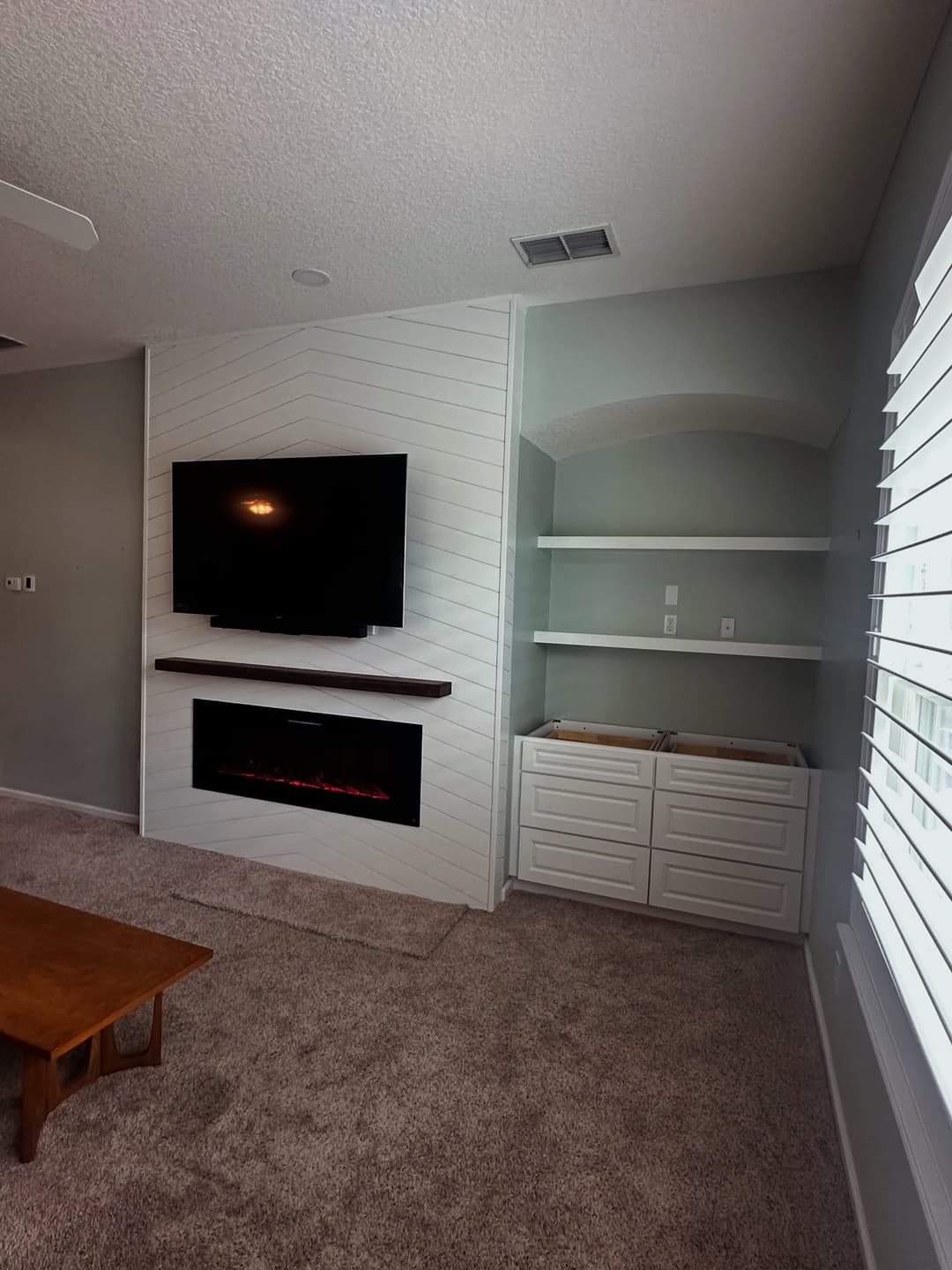
If you're looking at your wall and wondering whether your layout will work, that's a conversation we have all the time. Take a look at our media wall builds or a recent TV fireplace wall in Courtney Oaks, St. Augustine, and use the form below when you're ready to talk through yours.
Some product links above are affiliate links. If you buy through them we may earn a small commission, at no extra cost to you. We only point you to materials we actually use on the job.
By consultation
Built to last.
Finished to impress.
We take on a limited number of projects each season so each home gets our full attention. Share your project and we’ll respond within 24 hours to see if it’s the right fit.
Insured · $1M general liability · 230+ Google reviews, 5.0