Guides
Why We Spray Our Built-Ins (and What That Means for Your Finish)
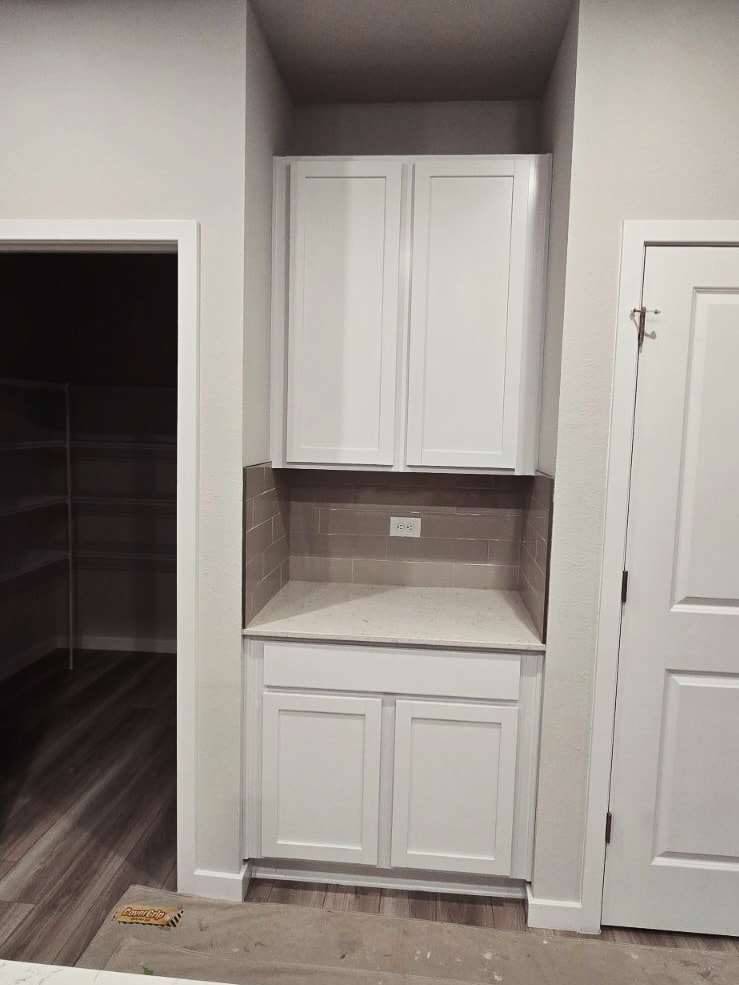
This usually starts at a friend's house. You're standing in their kitchen, you run your hand across a cabinet door, and you feel it. Ridges. Brush strokes frozen in the paint, roller stipple on the flat panels. Looks fine from six feet away. Disappointing from six inches. And now you're wondering if that's just what painted built-ins are.
It's not. That's what brushed built-ins are. We spray ours, and the difference is the whole reason people mistake our painted cabinetry for factory furniture. Here's what spraying actually means, why we pair it with a specific Sherwin-Williams product, and the part people are usually most nervous about: what the process looks like inside a house you're living in.
Run your hand across it
A sprayed finish lands as a fine, even mist. The paint settles into a uniform film and levels out as it dries. No stroke direction, no lap marks, no stipple. Just a smooth, continuous surface that feels closer to a piano lid than a painted board. That's the touch test, and it's the fastest way to tell how any painted cabinetry was finished.
Brushing drags the paint into place. Even a skilled hand leaves texture, because that's what bristles do. On a wall you'd never notice. On a cabinet door at eye level next to your coffee maker, a surface you touch every single day, you notice forever.
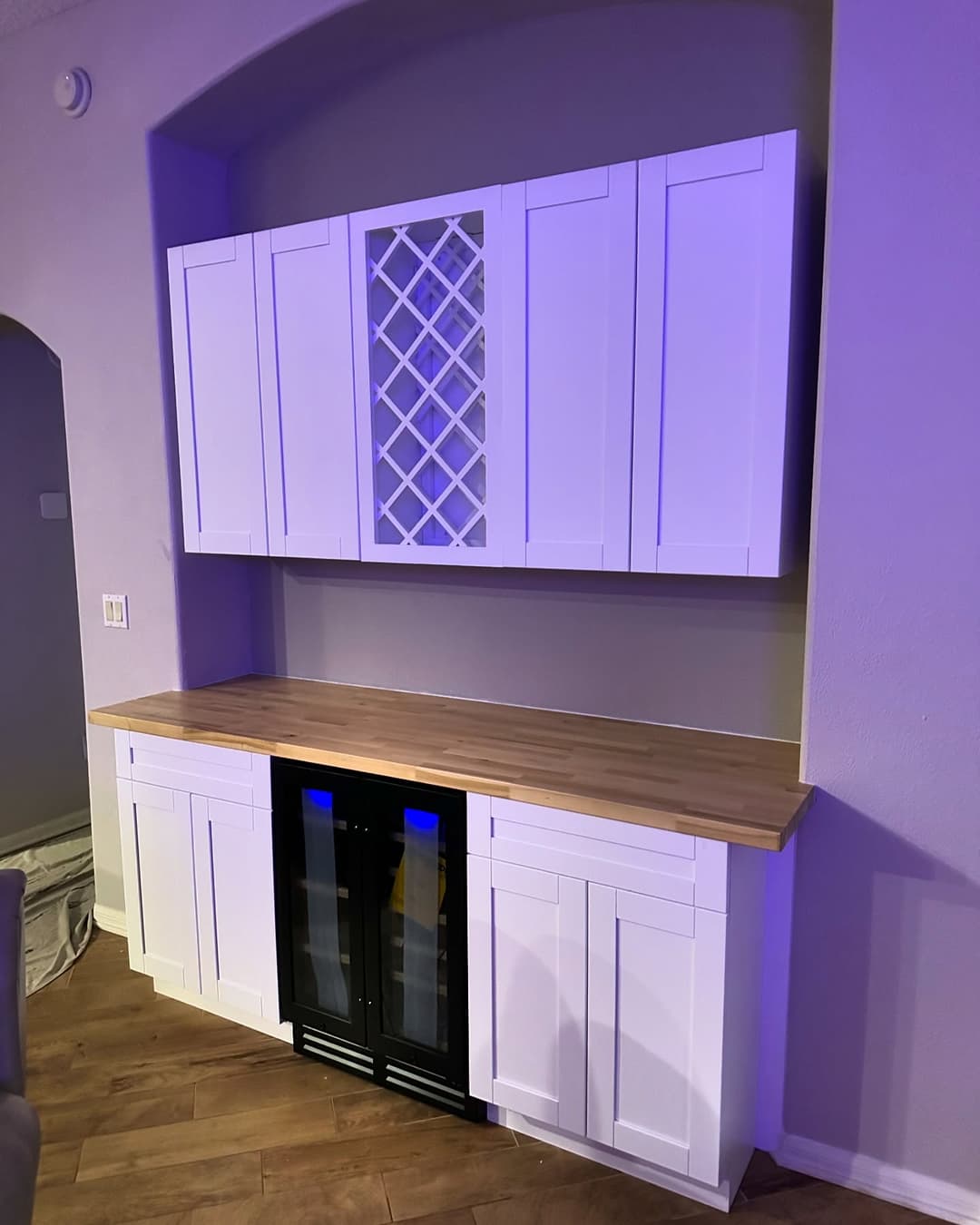
The dry bar above is a good example of what spraying buys you. Those shaker doors, the arched niche, the lattice wine rack. Every face and edge carries the same glassy, even film. A brush simply can't lay paint into a lattice like that without leaving buildup in the corners.
What spraying looks like in a lived-in house
Now the honest part, because "spraying" makes people picture a fog of paint drifting onto their sofa. Done right, it's the opposite. Controlled and contained. Here's our routine.
Whatever can leave, leaves. Doors, drawer fronts, and shelves come off and get sprayed flat, where the finish levels best. What stays gets tented. We mask and plastic off the work zone floor to ceiling, seal the openings, and protect the floors. Inside that containment, we spray the cabinet boxes and face frames with our Graco sprayers, which atomize the paint finely and put it exactly where it's aimed.
We schedule the spraying in concentrated windows so the disruptive part of the job is short, then reassemble once everything has properly hardened. When the plastic comes down, there's no overspray on your floors and no paint smell lingering in the sofa. Just finished cabinetry. If a contractor can't describe their masking and containment plan in that kind of detail, that tells you something.
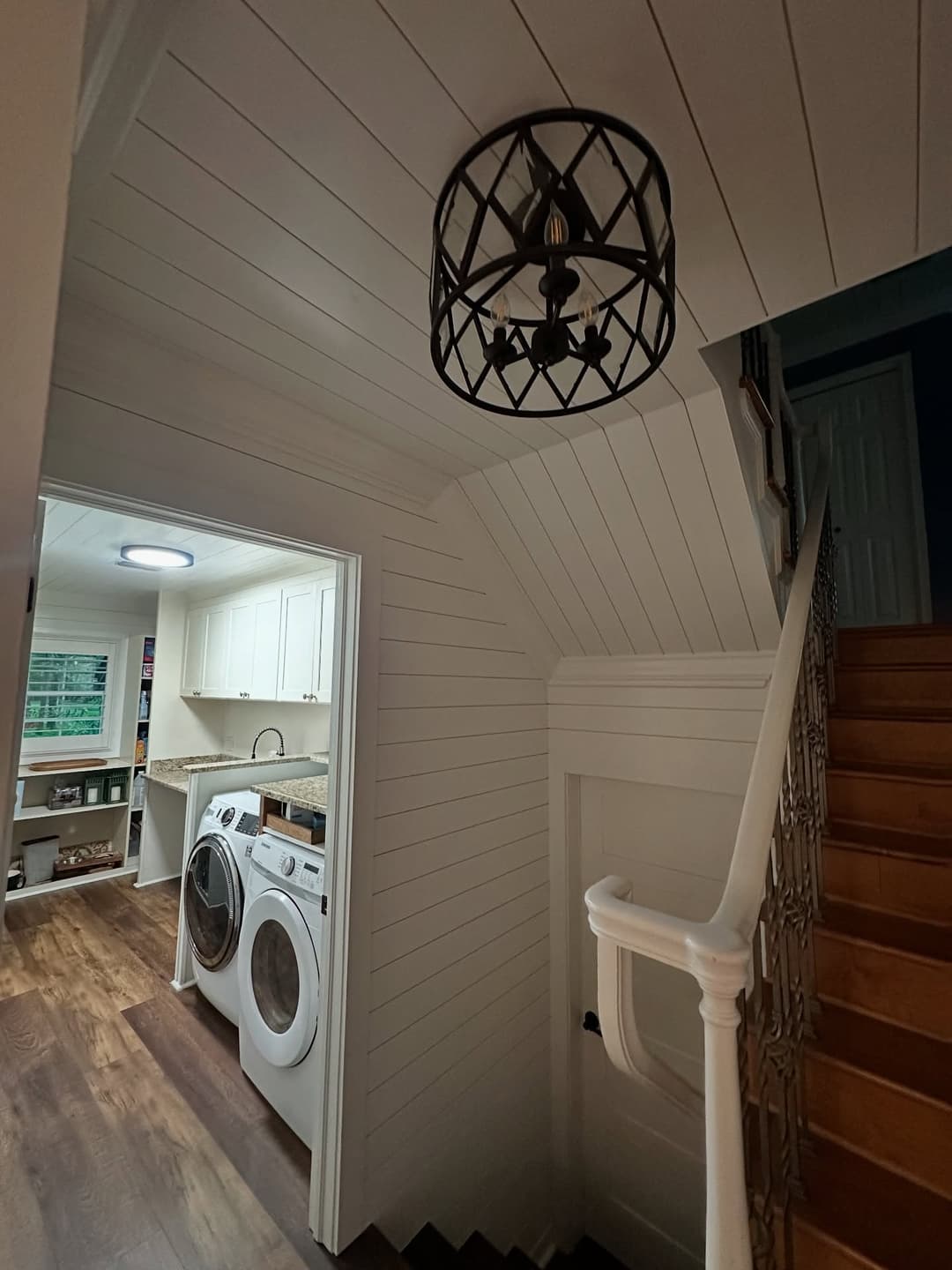
That stair-nook and laundry build above is the kind of job where containment earns its keep. Tight quarters, adjacent finished rooms, a family living around the work the whole time.
The paint half of the equation: Emerald Urethane
The sprayer is only half the story. The other half is what's in the cup, and for built-ins ours is almost always Sherwin-Williams Emerald Urethane Trim Enamel. It's a urethane-modified trim enamel, meaning it's engineered for cabinets and millwork rather than walls, and it does three things wall paint can't.
- It cures hard. Wall paint stays relatively soft, which is fine on a wall nobody touches. On a shelf or a door it chips, scuffs, and peels under handling. Emerald Urethane cures to a hard, furniture-grade film that shrugs off fingernails, keys, and kids.
- It resists blocking. Blocking is when things stick to a painted surface: books glued to a shelf, doors that grab their frames. Softer paints do this for ages. A cured trim enamel doesn't.
- It wipes clean. Fingerprints and food smudges come off with a damp cloth instead of taking the finish with them.
The paint and the method genuinely need each other. Sprayed on, Emerald Urethane levels into that smooth furniture film. The same product brushed will still cure hard, but you've locked the brush texture in. And a sprayer full of ordinary wall paint gives you a smooth finish that's too soft to survive on cabinetry. Right paint, right tool. You need both.
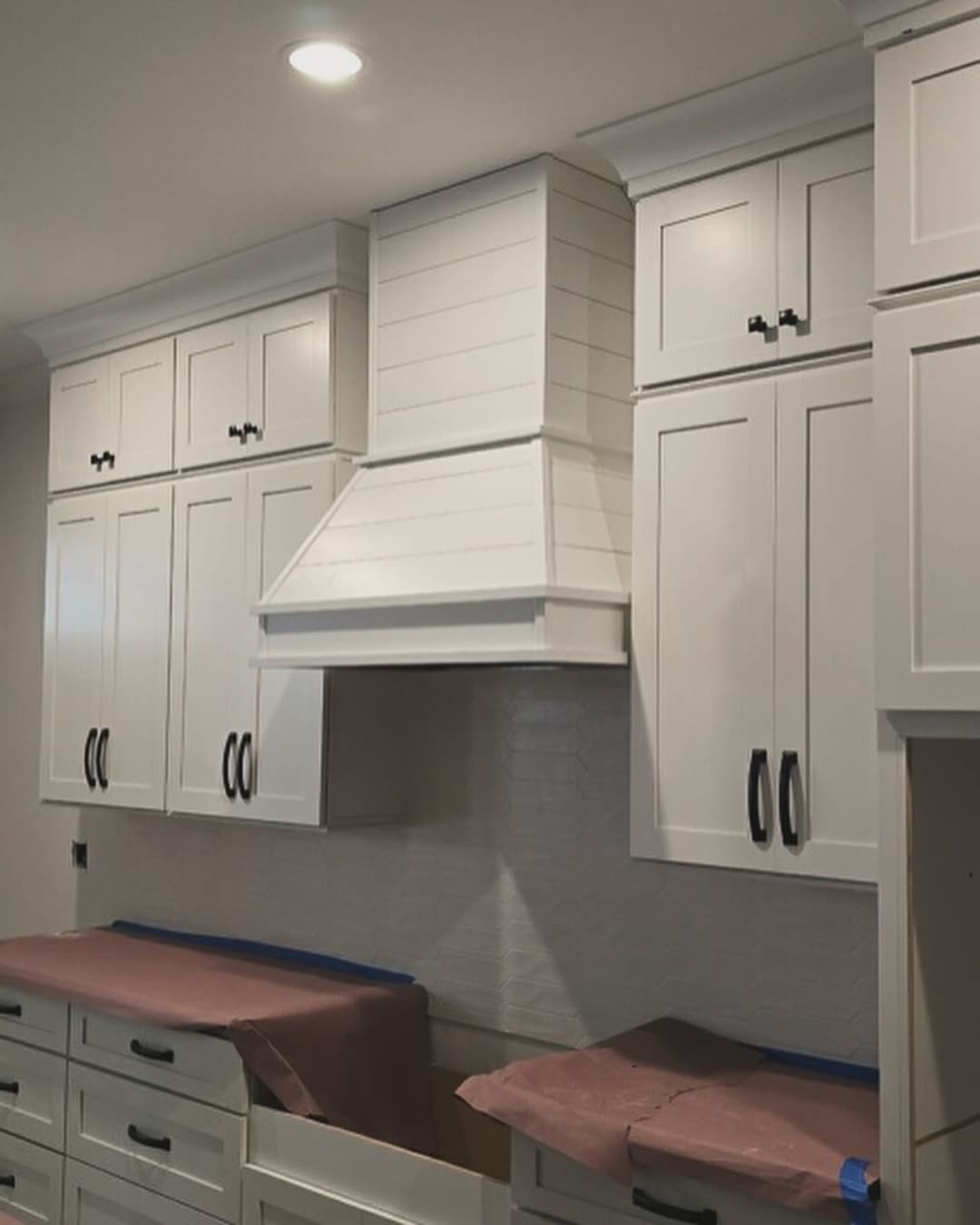
Vent hoods like the shiplap one above are the stress test for this. Steam, grease, and constant wiping right at the stove. That's exactly where a hard, cleanable enamel proves the difference.
Where a brush still belongs
We're not anti-brush. We're anti-brush-marks-on-your-doors. A brush is still the right tool for plenty of things: caulk lines and tight touch-ups, small repairs after installation, and site conditions where containment isn't practical. Good finish work is knowing which tool the moment calls for, and we carry both on every job.
Touch-ups down the road work the same way. Because we finish in standard, documented Sherwin-Williams colors, a future ding can be filled and touched in with the same product. And for anything bigger, doors and drawer fronts can come off and be re-sprayed flat. That's one of the quiet long-term advantages of a sprayed system. We keep the color and sheen on record for every built-in we deliver.
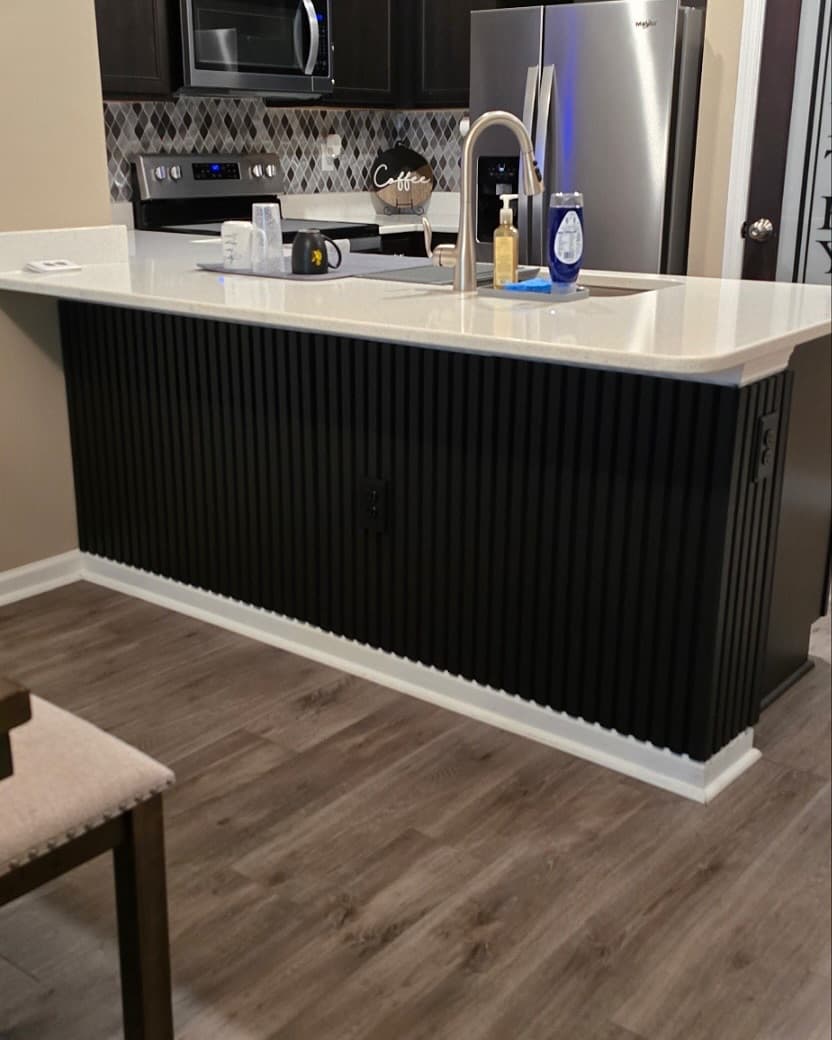
Spraying isn't only for white shaker, for what it's worth. The black fluted island wrap above is sprayed too. Dark colors are the least forgiving finish there is, since every ridge catches light. That's precisely when the sprayer matters most.
Questions to ask anyone painting millwork in your home
If you're getting quotes, from us or anybody, these five questions will sort the finishers from the guys with a wall brush and optimism. Do you spray or brush cabinetry, and with what equipment? What product specifically, and is it a trim enamel or a wall paint? Do doors and shelves come off to be sprayed flat? What's your masking and containment plan? And will you leave the color and sheen on record for future touch-ups?
Vague answers to those are how you end up feeling ridges at your own coffee maker. We cover the bigger vetting picture in our guide to hiring a finish carpenter in Jacksonville, and the finish spec is part of what moves pricing, which we break down honestly in what custom work costs in Jacksonville.
If you've got built-ins in the works and want a finish you'll still be glad to run a hand across in ten years, we'd be glad to talk through the details on your project.
Some product links above are affiliate links. If you buy through them we may earn a small commission, at no extra cost to you. We only point you to materials we actually use on the job.
By consultation
Built to last.
Finished to impress.
We take on a limited number of projects each season so each home gets our full attention. Share your project and we’ll respond within 24 hours to see if it’s the right fit.
Insured · $1M general liability · 230+ Google reviews, 5.0